





 Portuguese
  English
  Spanish
  4 min of reading
  0 comments


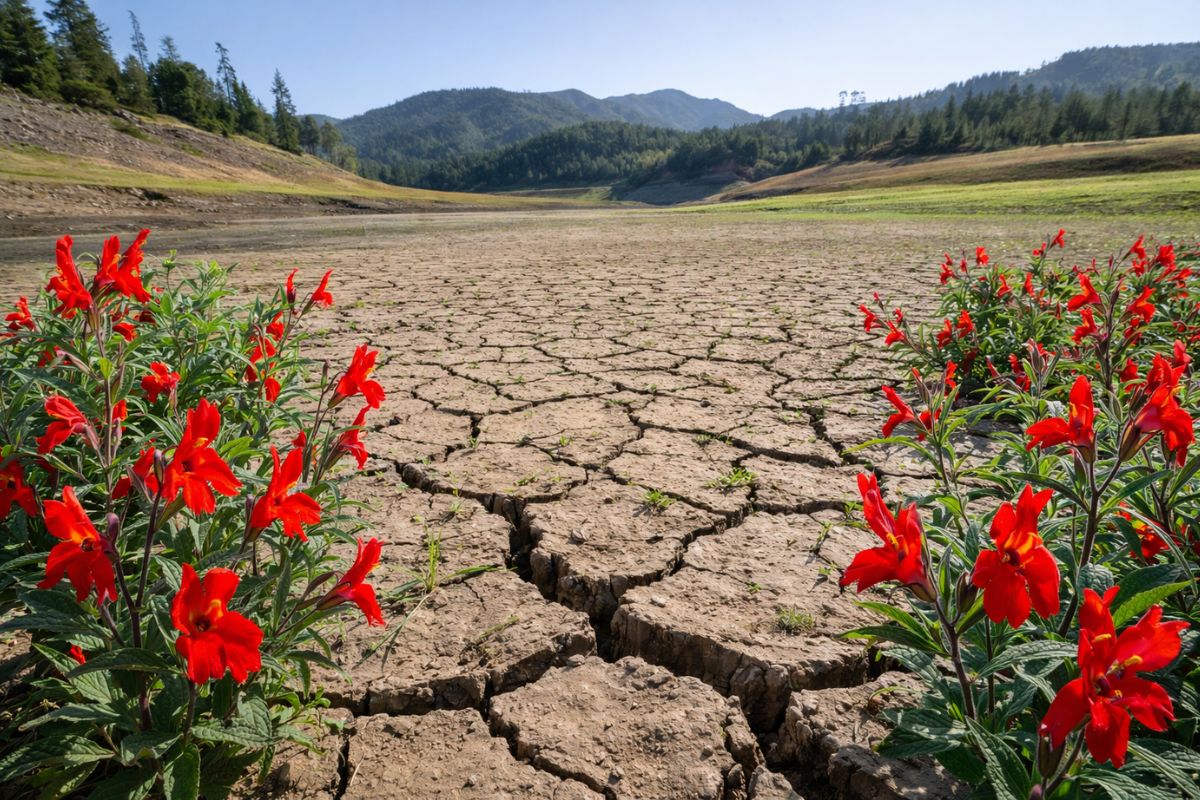
Between 2012 and 2015, the megadrought in California brought down entire populations of a plant sensitive to water shortages, but the survivors genetically changed and recovered faster afterward, in a result that repositions the debate about climate adaptation
A wildflower that depends on a lot of water managed to react to a severe drought in California and gave scientists a rare signal that evolution can act in a short time. The case draws attention because the response appeared in a short period, even with the population under intense pressure.
The practical effect of this discovery is direct. Some of the species affected by extreme heat and water shortages may have some capacity for rapid adaptation, especially when the life cycle is short and reproduction occurs at a fast pace.
Extreme Drought Put Entire Populations at Risk Between 2012 and 2015
The observed species was the scarlet monkeyflower, a plant that grows near streams and needs moist environments to stay alive. During the megadrought that hit California between 2012 and 2015, several populations suffered a sharp decline.
-
NASA has set a date for the beginning of the end of Earth, and it won’t be an asteroid or an explosion: the planet will slowly lose its oxygen over the course of 1 billion years because the Sun is getting hotter every day.

-
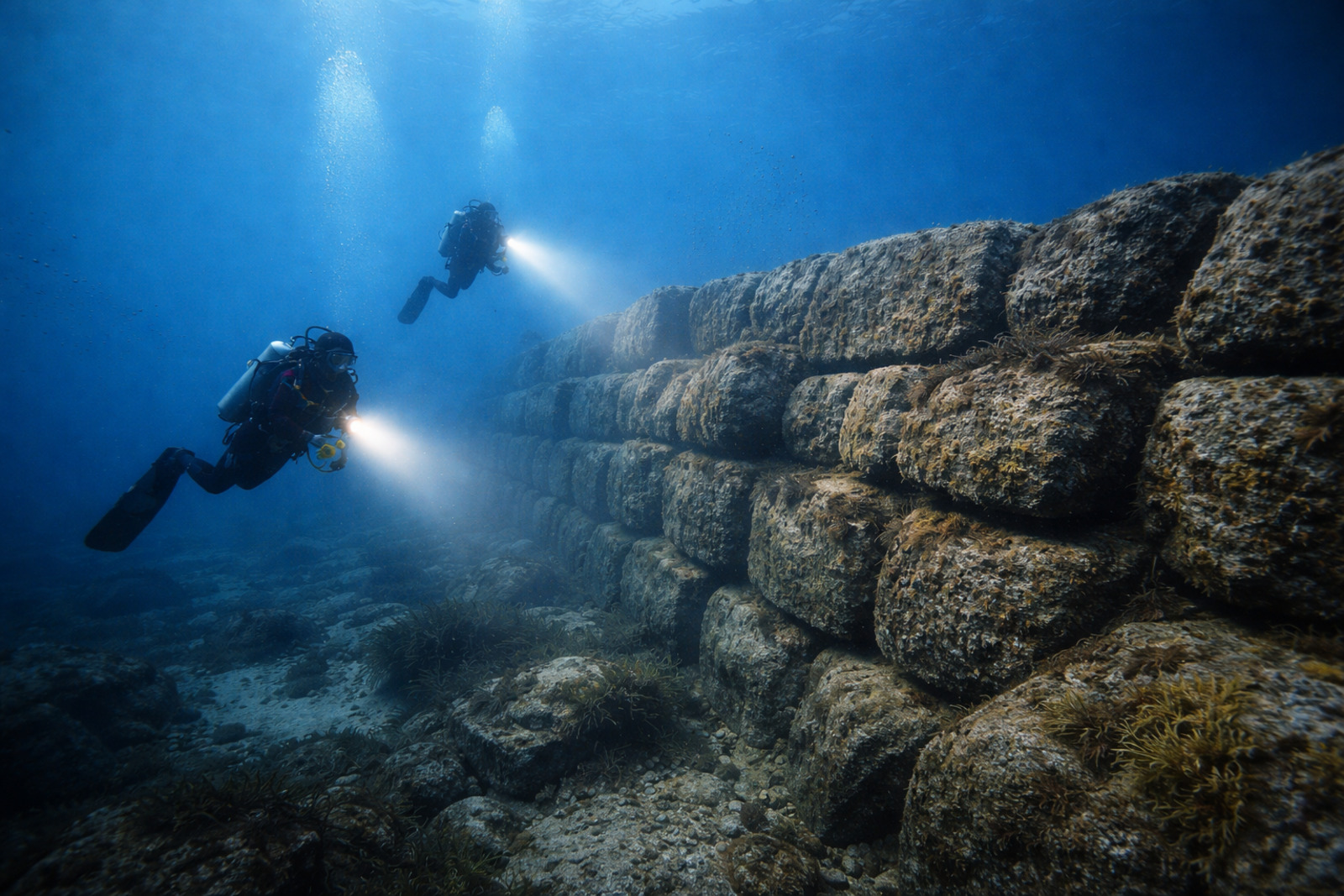
Archaeologists have discovered a colossal submerged wall in the Atlantic, dating back 7,000 years and weighing 3,300 tons, regarded as the largest prehistoric submerged structure ever found in France.
-
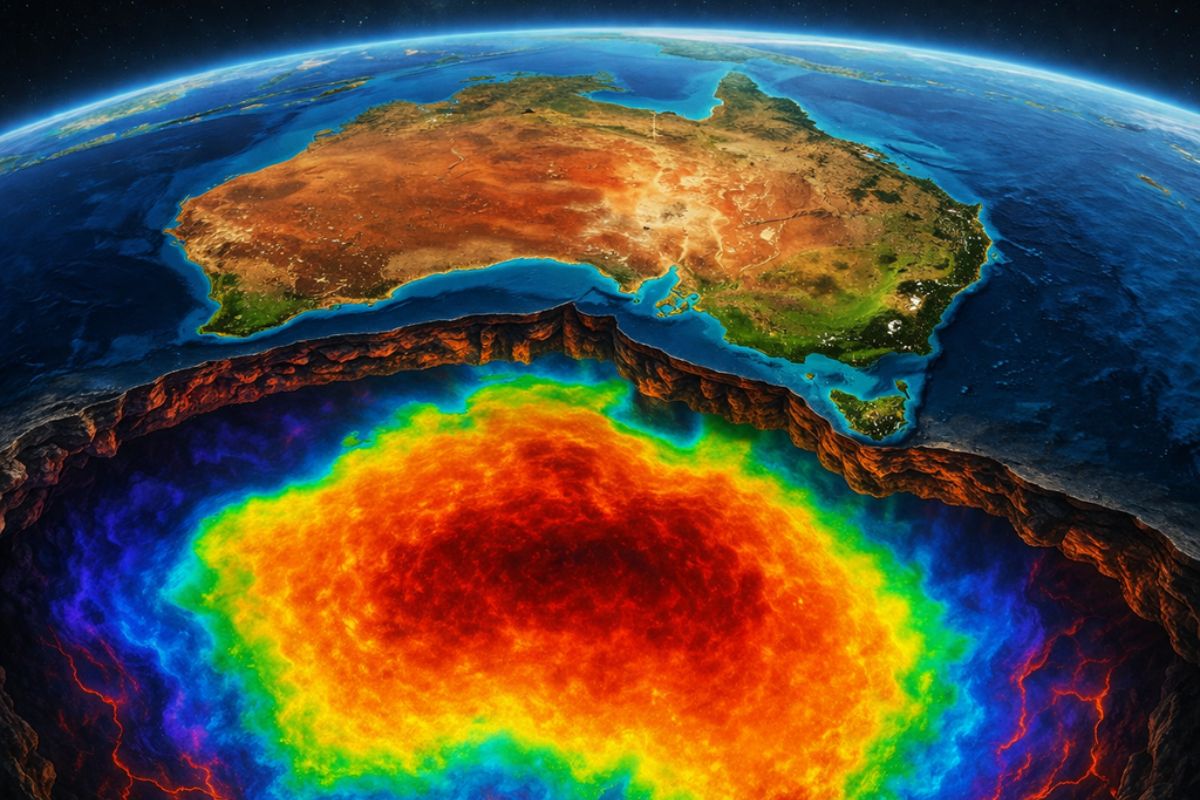
Scientists have discovered a gigantic magnetic anomaly hidden beneath the soil of Australia that mirrors the shape of the entire continent and holds geological records of two and a half billion years that could change what we know about the Earth.
-
The heatwave that has been affecting Brazil in recent weeks is coming to an end: a cyclonic vortex is moving in during Holy Week with heavy rains, and a cold air mass is already threatening to lower temperatures in the South starting in April.


In some areas, the impact was total. Three local populations disappeared, showing that the drought advanced beyond the limit supported by part of the species.
Plant That Depends on Water Showed Reaction in Just 3 Years
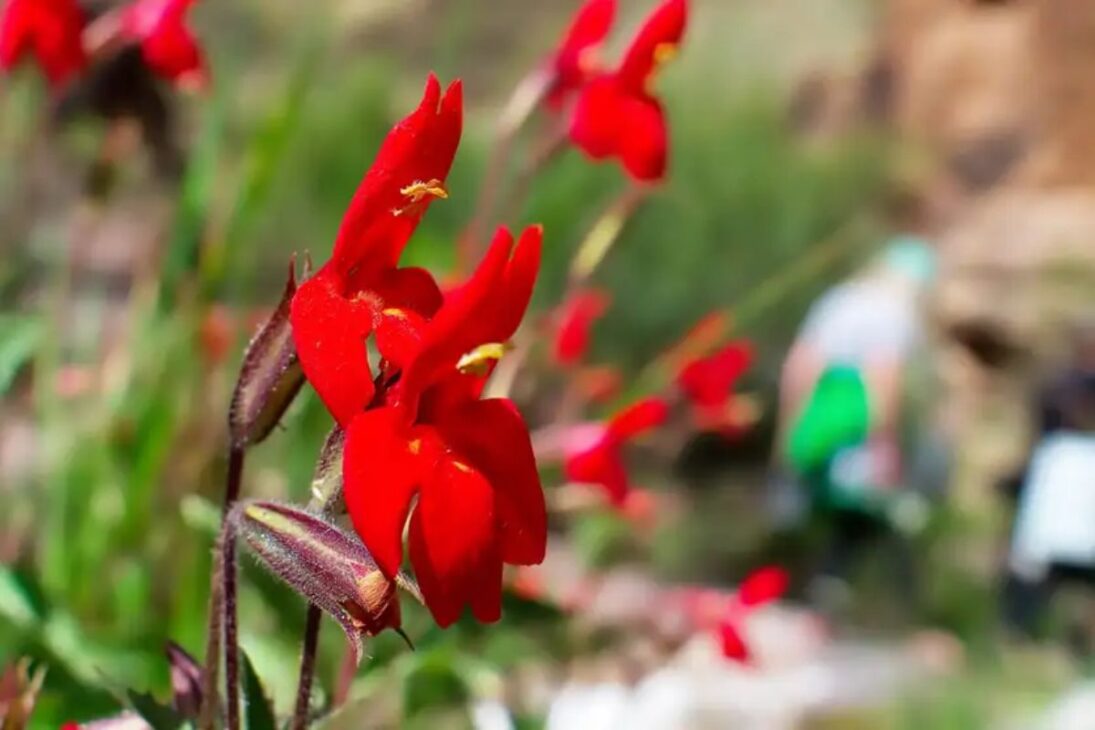
The populations that survived underwent genetic changes associated with drought tolerance. This process occurred in just 3 years, a period considered very short for such a visible adjustment under natural conditions.
After the drought, it was precisely these populations that began to grow back faster. The result suggests that genetic change helped not only in immediate survival but also in subsequent recovery.
Study Monitored the Species Since 2010 in Several Locations
The researchers began monitoring the plant in 2010, observing its performance in different locations throughout the area where it lives. Samples were also collected for DNA sequencing, allowing the comparison of biological responses before, during, and after the drought.
According to New Scientist, a British science and technology magazine, the combination of population decline, genetic adaptation, and subsequent recovery is what supports the idea of evolutionary rescue in a natural environment.
Evolutionary Rescue Appears When the Species Changes to Avoid Extinction
This type of response is called evolutionary rescue. In simple terms, this occurs when a species threatened by very strong pressure can change quickly enough to avoid collapse.
The idea had already appeared in laboratory studies, but demonstrating this movement in nature is much more difficult. To do so, it is necessary to show that the population declined due to a real threat, that there were genetic changes, and that this change actually helped in recovery.
Rapid Change Does Not Guarantee Protection Against a Century of Warming
The case of the flower does not mean that all species will be able to cope with an increasingly hot planet. A drought lasting a few years is serious but does not, by itself, represent the entire weight of decades of consecutive temperature increases and extreme events.
There is another important limit. When the population shrinks too much, it loses genetic diversity, which is precisely the material necessary for continued evolution. The more strong impacts in sequence, the less this capacity for reaction tends to be.
Long-Lived Species Have Less Chance of Rapid Response
Animals and plants with long generations face a greater obstacle. As they reproduce more slowly, they also accumulate evolutionary changes at a slower pace, which reduces the chance of a rapid response to rapidly changing climates.
This reinforces a central point in the climate debate. Evolution can help in some cases, but it does not eliminate the growing risk for species already pressured by heat, drought, and abrupt changes in the environment.
The discovery opens up space for a less fatalistic view of part of wildlife. In certain contexts, nature can still react before collapse, especially when there is biological time for it.
At the same time, the signal of hope comes surrounded by clear limits. Global warming amplifies the threat while reducing the margin for adaptation, and this changes the strategic interpretation.






Seja o primeiro a reagir!