





 Portuguese
  English
  Spanish
  3 min of reading
  0 comments


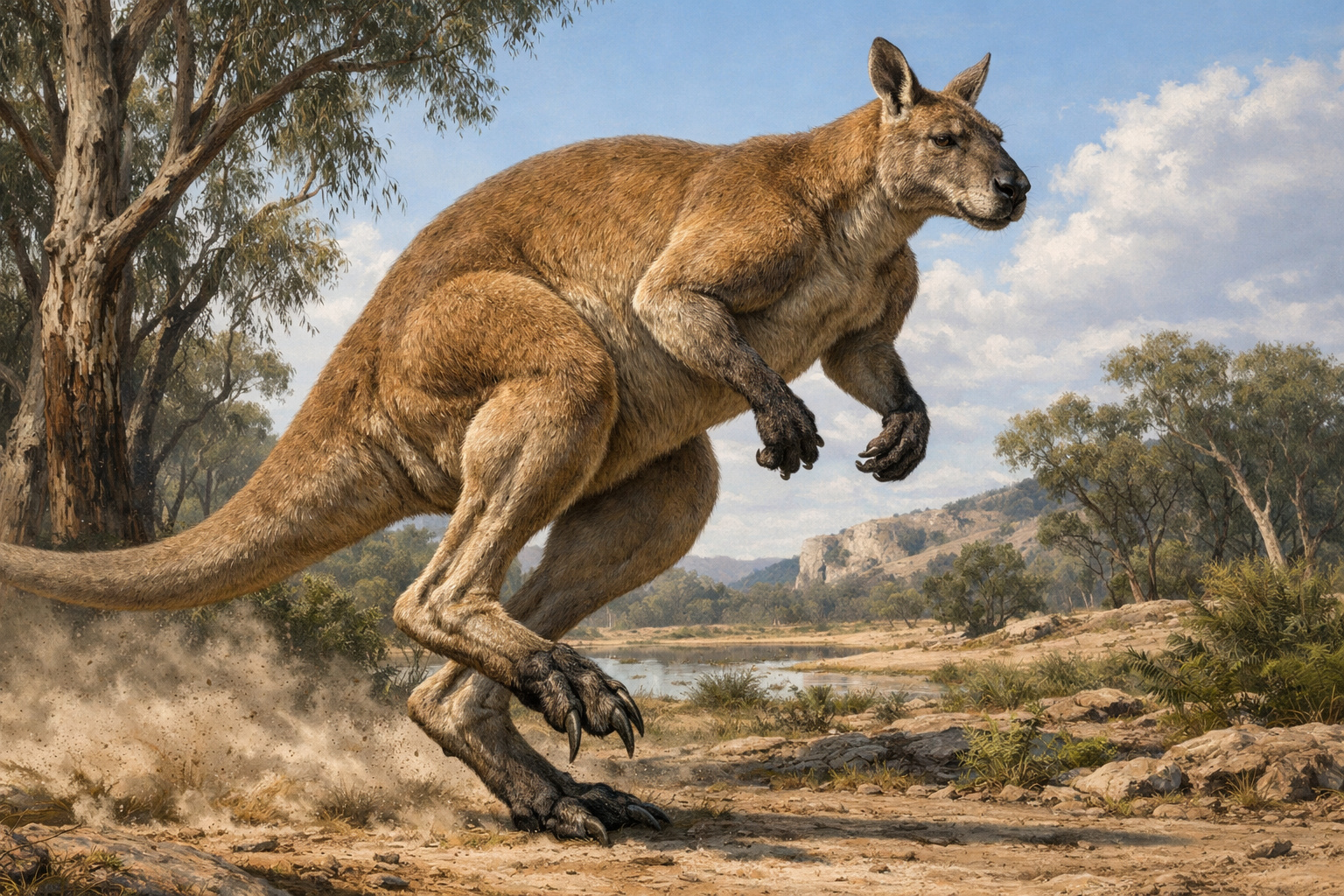
Anatomical Study Reveals That Prehistoric Kangaroos of the Pleistocene Had Bones, Tendons, and Joints Compatible With Jumping, Contradicting the Idea That They Only Moved Slowly and Uprightly
The image of kangaroos jumping across the arid interior of Australia is one of the most iconic of the country’s fauna. However, new scientific discoveries indicate that this scene may have been even more impressive during the Pleistocene, a period marked by animals of much larger proportions than today’s. Giant kangaroos, over two meters tall and weighing more than 250 kilograms, may have been capable of jumping — something that had been considered unlikely for decades.
The information was revealed by researchers from the universities of Manchester and Bristol in the UK, in partnership with the University of Melbourne in Australia, according to a study published in the scientific journal Scientific Reports. According to the scientists, the detailed analysis of the anatomy of these prehistoric animals reveals that their body structures were more versatile than previously thought.
For a long time, it was believed that the extreme size of these kangaroos made jumping biomechanically unfeasible. The dominant hypothesis argued that such heavy animals would easily rupture their Achilles tendons when attempting to jump, forcing them to adopt a slow and almost human-like locomotion, walking upright on their hind legs. However, new data points to a very different scenario.
-
With a cost per shot close to zero, the DragonFire laser could change naval warfare in 2027 and provide British ships with nearly unlimited defense against drones.

-
A British startup creates tires that generate electricity in electric vehicles when passing over potholes, speed bumps, and cracks.

-
Scientists have created robots made with living cells that have their own nervous system, swim on their own, explore the environment, and self-organize without any genetic engineering, and now they want to do the same with human cells.

-
Students create a solar-powered ambulance that operates without a plug, without fuel, and still keeps medical equipment running in remote areas.


Bones, Tendons, and Feet Indicate Real Jumping Ability Over Short Distances

To reach this conclusion, researchers analyzed the bones of the hind limbs of 63 species of kangaroos and wallabies, including living and extinct animals. In total, 94 modern specimens and 40 fossils were examined, allowing for a detailed comparison between current species and prehistoric giants.
Based on modern species, the team estimated the size and thickness of the tendons needed to withstand the forces generated during jumping. Next, the scientists examined the heel bones of the giant kangaroos to check for attachment points compatible with tendons of that size. Additionally, they measured the width and length of the fourth metatarsal — the bone in the foot most susceptible to fracture during the impact of jumping.
The results were consistent: all extinct species analyzed had robust bones, reinforced joints, and suitable anchoring areas for large tendons. These factors indicate that, from an anatomical standpoint, giant kangaroos had the necessary “engineering” to jump without compromising their physical integrity.
Jumping Was Not the Norm, but Part of the Locomotor Repertoire
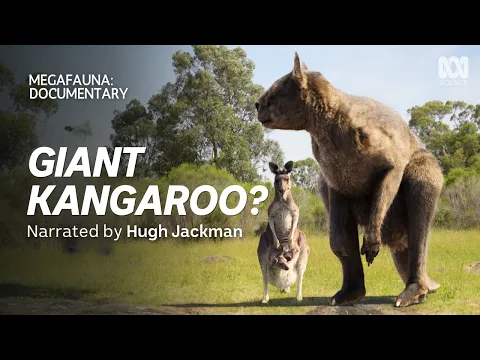

Despite the discovery, scientists emphasize that this does not mean these animals moved by jumping constantly like modern kangaroos. On the contrary, the most likely behavior was predominantly walking locomotion, with an upright posture, curiously reminiscent of a large, furry bipedal dinosaur.
Still, the data suggest that jumping was part of these giants’ locomotor repertoire. It would have primarily been used in specific situations, such as crossing uneven terrain, natural obstacles, or quick escapes from predators. “Although jumping was likely not the primary mode of locomotion, our findings suggest that it could be used in short bursts of speed,” say the authors of the study.
Thus, the discovery not only challenges old concepts about the biomechanics of these animals but also broadens the understanding of the diversity of survival strategies adopted by Australian megafauna. Once again, fossils show that the past of life on Earth was much more complex — and surprising — than previously imagined.
Source: Sciencealert









-

Uma pessoa reagiu a isso.