





 Portuguese
  English
  Spanish
 3 min of reading


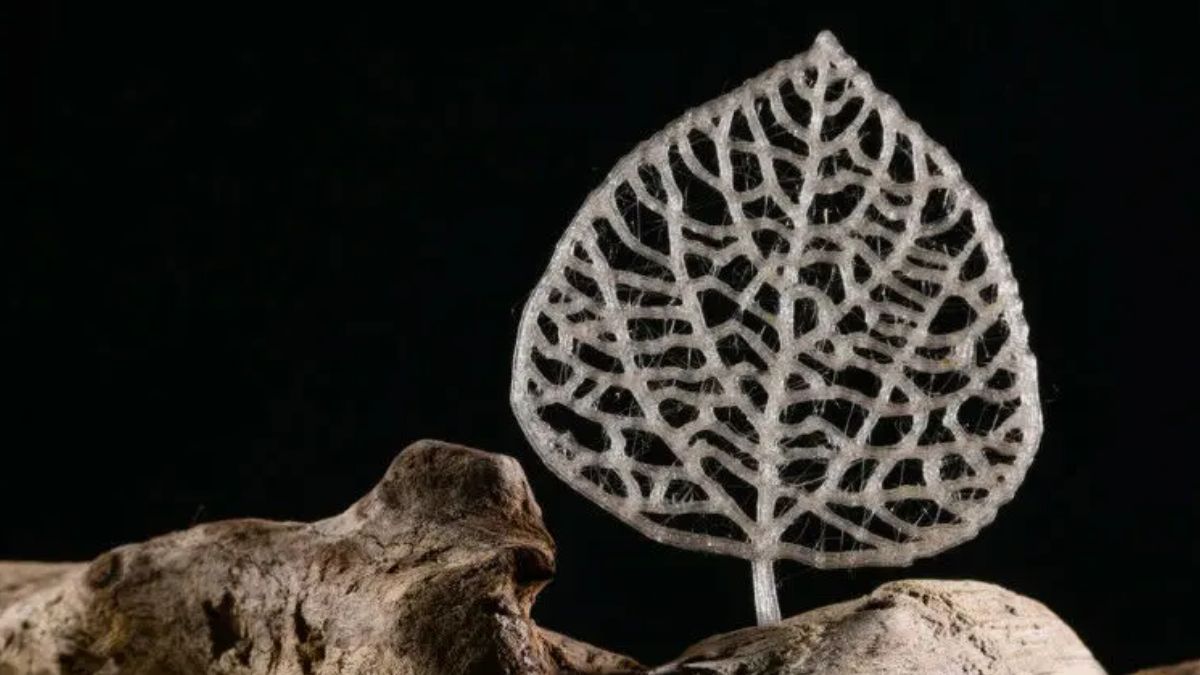
Scientists From Sweden Managed to Develop a Biodegradable Plastic That Will Revolutionize the Packaging Industry
Researchers from the Renowned Institute of Science in Switzerland, EPFL, managed to develop a new biodegradable plastic very similar to Polyethylene Terephthalate (PET). It is made from biomass obtained from corn cobs and promises to revolutionize the packaging industry. After all, this new plastic can be broken down by bacteria into smaller particles, thus becoming sustainable and preventing it from remaining in nature for many years.
The material created is as strong as conventional PET, used in packaging and shopping bags. Some tests indicated that it could be a great substitute for PET in packaging for medications, electronic components, food, and even textile products. Additionally, it can be chemically recycled or broken down into smaller parts because it is biodegradable. Check out more about this innovation in the article.
Check Out the Video Below What Is a Biodegradable Plastic and How Is It Produced

New Plastic Is Sustainable, Degrades in the Environment, and Is Produced From the Residual Biomass of Corn Cobs
The new plastic that can replace PET has only advantages. One of them is that it makes use of residual corn cobs, thus preventing waste. Another important aspect is that it can eliminate plastic bottles and shopping bags that are left lying around and that take up to 2,000 years to decompose. In other words, the process is favorable for the entire productive chain.
-
NASA issues a warning for the feared Godzilla El Niño that could change the planet’s climate in 2026 with extreme warming of the Pacific capable of causing devastating droughts in some regions and historic floods in others simultaneously.

-
Archaeologists discover a 100-meter ship graveyard in a submerged Greek city, and what has appeared on the seabed of Libya could change what was known about this ancient port.

-
You buy the refrigerator and still have to see ads: Samsung starts displaying advertising on appliances and generates negative reactions among consumers.
-
What can really trigger large volcanic eruptions? Research suggests that gas returning to the magma may be more dangerous than gas escaping from it.


“We essentially turn wood or other inedible plant material, such as agricultural waste, into cheap chemicals to produce plastic precursor in a single step. By keeping the sugar structure intact within the molecular structure of the plastic, the chemistry is much simpler than current alternatives.”
Jeremy Luterbacher, one of the study’s authors, in an interview with MyScience (2022).
This discovery was only possible thanks to preliminary studies published in 2016. In this study, they managed to stabilize pieces of the material obtained from biomass and contained the destruction in the extraction process. From there, they continued the studies and refined the material until they achieved technical parameters similar to those of conventional plastic.
The Addition of Another Chemical Component in the Formulation Made the Material More Resistant
The major problem that scientists faced before publishing the 2016 study was the lack of stability in the bond between the crafted pieces. However, they replaced a primary chemical component in the formulation and managed to form a large stable network.
“By using a different aldehyde – glyoxylic acid instead of formaldehyde – we can simply attach ‘sticky’ groups on both sides of the sugar molecules, allowing them to act as building blocks of plastic. By using this simple technique, we can convert up to 25% of the weight of agricultural waste, or 95% of purified sugar, into plastic.”
Lorenz Manker, one of the study’s authors in an interview with MyScience (2022)
In this sense, this creation is so positive that it will bring a sustainable plastic to the market, truly effective and at a more accessible cost. The product created will allow application in packaging across various segments, from food to electronic equipment.
Moreover, this is not all. The team of scientists created fibers to use in the textile sector to make clothing pieces. Additionally, the material also allows for use in filaments that feed 3D printing machines.
“The plastic has very interesting properties, especially for applications such as food packaging. And what makes the plastic unique is the presence of the intact sugar structure. This makes it incredibly easy to produce because you don’t have to modify what nature gives you, and simple to degrade because it can revert back to a molecule that is already abundant in nature.”
Jeremy Luterbacher, one of the study’s authors, in an interview with MyScience (2022).
Finally, this achievement from EPFL will be very beneficial for the sector and may arrive in Brazil in the coming years.





Seja o primeiro a reagir!