





 Portuguese
  English
  Spanish
  4 min of reading
  0 comments


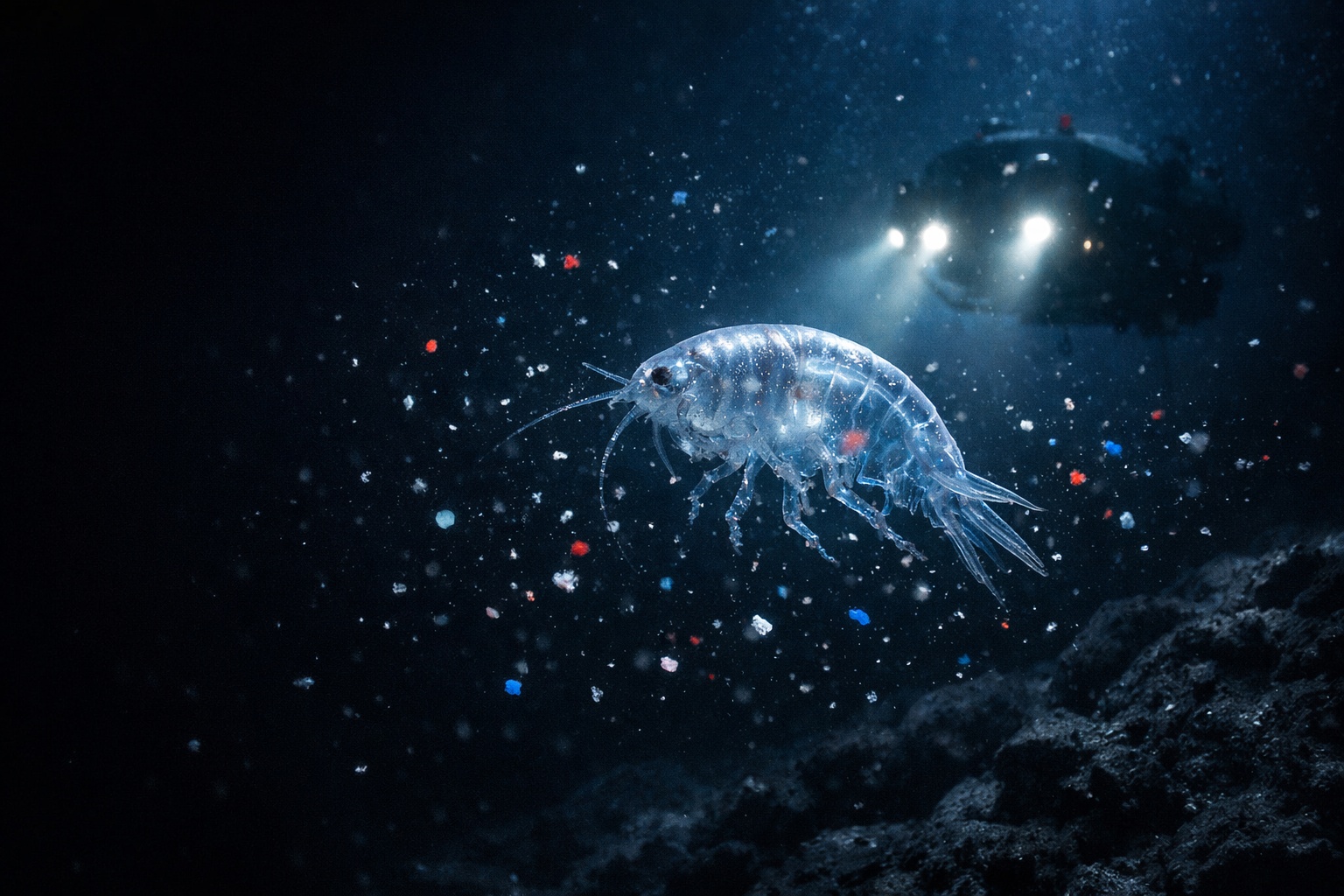
Scientific Studies Identify Microplastics at 6,800 Meters in the Mariana Trench and Confirm That Pollution Has Already Reached the Deepest Hadal Zones of the Ocean.
Plastic pollution is no longer a problem restricted to the ocean surface. Recent scientific research has confirmed the presence of microplastics at depths of over 6,800 meters, including in the Mariana Trench, regarded as the deepest known point on Earth. This discovery reinforces a growing alert within the scientific community: even the most remote, isolated, and inhospitable ocean regions are now showing clear signs of contamination from plastic waste generated on land.
Microplastics in Hadal Zones: What the Studies Reveal
The hadal zones correspond to oceanic regions below 6,000 meters in depth. For a long time, it was believed that these areas remained virtually untouched by human activity due to their distance and extreme conditions.
However, water and sediment samples collected by scientific expeditions identified thousands of microplastic particles per cubic meter in some measurements taken in the Mariana Trench.
-
Motorola launched the Signature with a gold seal from DxOMark, tying with the iPhone 17 Pro in camera performance, Snapdragon 8 Gen 5 that surpassed 3 million in benchmarks, and a zoom that impresses even at night.

-
Satellites reveal beneath the Sahara a giant river buried for thousands of kilometers: study shows that the largest hot desert on the planet was once traversed by a river system comparable to the largest on Earth.

-
Scientists have captured something never seen in space: newly born stars are creating gigantic rings of light a thousand times larger than the distance between the Earth and the Sun, and this changes everything we knew about stellar birth.

-
Geologists find traces of a continent that disappeared 155 million years ago after separating from Australia and reveal that it did not sink, but broke into fragments scattered across Southeast Asia.

The fragments include synthetic fibers, particles from the degradation of packaging, and secondary microplastics resulting from the fragmentation of larger objects.
These findings demonstrate that contamination is not limited to coastal areas or surface currents.
How Plastic Reaches Over 6,000 Meters in Depth
The transport of microplastics to great depths occurs through various physical and biological mechanisms.
Some particles slowly descend through the water column after undergoing biofouling—a process in which microorganisms adhere to the surface of plastics, increasing their density and facilitating sinking. Another portion is transported by deep ocean currents or incorporated into organic aggregates that precipitate toward the bottom.

Additionally, marine organisms ingest microplastics in the upper layers and, as they migrate vertically or release waste, contribute to the transport of these particles to deep zones.
This set of processes creates a continuous flow of waste from the surface to the abyssal and hadal regions.
Contamination Also Affects Deep-Sea Organisms
Research has also identified microplastics within organisms collected from great depths. This indicates that pollution is not restricted to the physical environment but is already integrated into the marine food chain.
The presence of plastic particles in hadal organisms demonstrates that contamination reaches biological levels, raising questions about ecological impacts that are still poorly understood.
While the effects on deep ecosystems are under investigation, data confirms that plastic pollution has already surpassed geographical barriers considered natural.
The Mariana Trench as a Symbol of Global Pollution
The Mariana Trench reaches depths exceeding 10,900 meters at its maximum point, known as Challenger Deep. Detecting microplastics at depths near 6,800 meters in this region is significant not only due to the depth itself but also because of the area’s geographical isolation.
The area is far from major urban centers and intense commercial routes, reinforcing the global nature of plastic waste dispersion.
Plastic released into the environment does not remain static; it circulates, fragments, and redistributes throughout the oceanic system.
Microplastics: An Invisible but Persistent Problem
Microplastics are particles less than 5 millimeters in diameter. They can be classified as primary—produced already at microscopic size—or secondary, resulting from the fragmentation of larger items exposed to solar radiation and mechanical wear.
Because they are lightweight and resistant to biological degradation, these particles persist for decades or centuries. Even when they fragment, they do not disappear; they only become smaller and harder to remove.
The presence at depths exceeding 6,000 meters shows that the problem is neither superficial nor temporary.
Global Distribution, but Measurements Still Limited
Science confirms the presence of microplastics in multiple oceanic trenches and deep environments. However, continuous global monitoring in hadal regions is still limited due to technical challenges in access.
The existing samples are sporadic, collected by submersibles and specialized equipment. This means that the exact extent of contamination is still being mapped.
Nonetheless, the available data is sufficient to confirm that plastic pollution has reached the planet’s most extreme environments.
Environmental and Scientific Implications
The discovery raises three central questions:
- First, it demonstrates that there is no marine region isolated from human influence.
- Second, it suggests that deep biogeochemical cycles may be altered by persistent synthetic particles.
- Third, it reinforces that plastic waste management is a global challenge, not just a coastal one.
The deep ocean, once seen as a final untouched refuge, is already part of the global circulation system of pollutants.
Depth Is No Longer a Barrier
The detection of microplastics at over 6,800 meters confirms that plastic pollution has surpassed geographical and environmental limits once considered unreachable just a few decades ago.
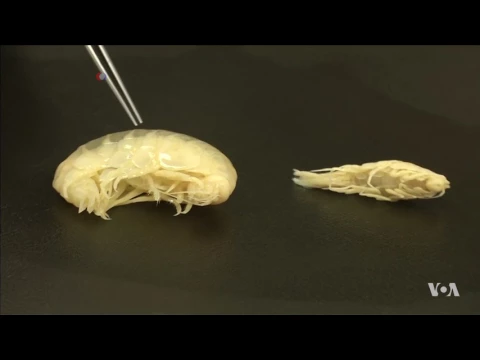

The hadal zones, marked by extreme pressure, permanent darkness, and near-freezing temperatures, have not prevented the arrival of particles generated by human activities on the surface.
The contamination of the planet’s deepest point is not just a scientific data point; it is a clear indicator that human impact extends throughout the ocean column, from the surface to the greatest known depths.








Seja o primeiro a reagir!