





 Portuguese
  English
  Spanish
  4 min of reading
  0 comments



3D Printed Flexible Ceramic Arises from an Intelligent Composite That Supports Tension, Bending, and Compression, Absorbs Impacts, and Promises Industrial-Scale Production.
The 3D printed flexible ceramic has moved from a lab idea to a concrete path for becoming a material for real use. Researchers in the United States developed a composite that allows the ceramic to bend under load, absorb energy, and withstand heavy mechanical stresses without fracturing.
This advancement addresses a classic challenge in materials science: how to scale shape-memory ceramics from the microscopic to large scale without cracking.
The proposal combines functional ceramic particles directly incorporated into metal through a solid-state manufacturing process, opening applications in defense, infrastructure, aerospace, and even high-performance sports equipment.
-
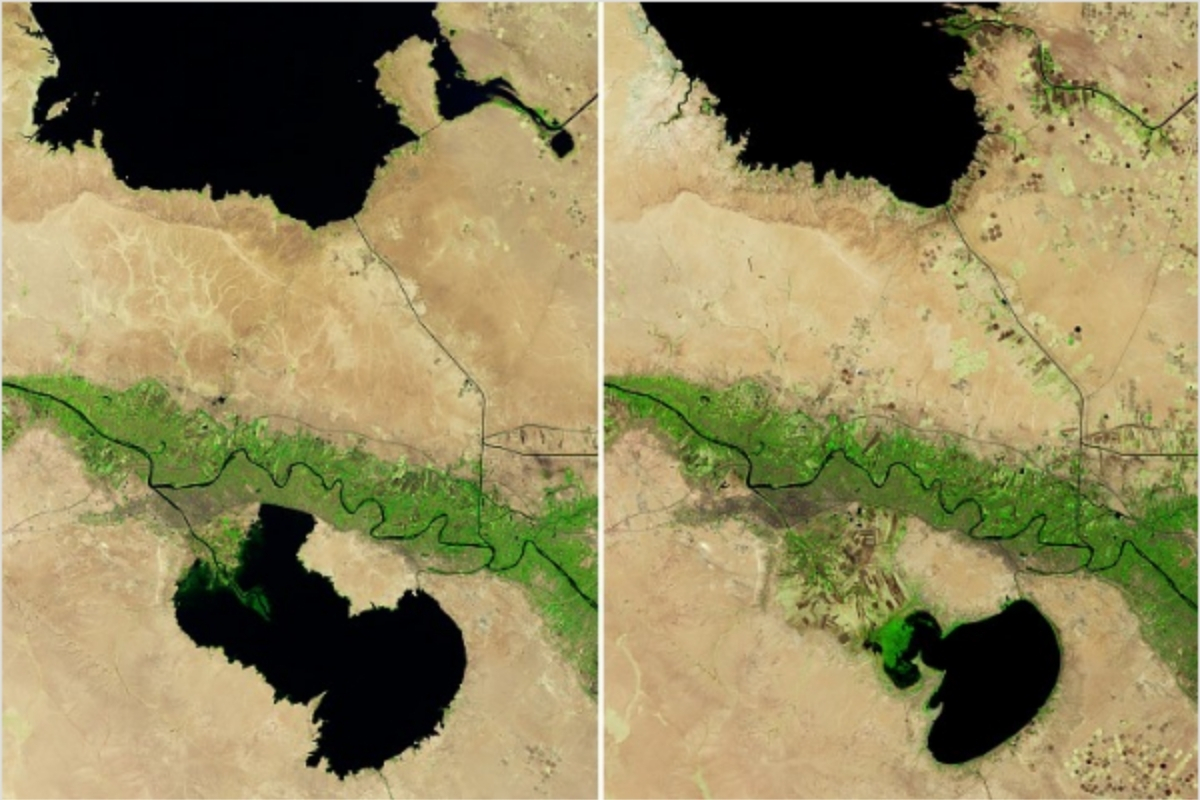
Collapse in sight in Iraq: satellite images captured by NASA show the country’s largest reservoir dramatically drying up.
-
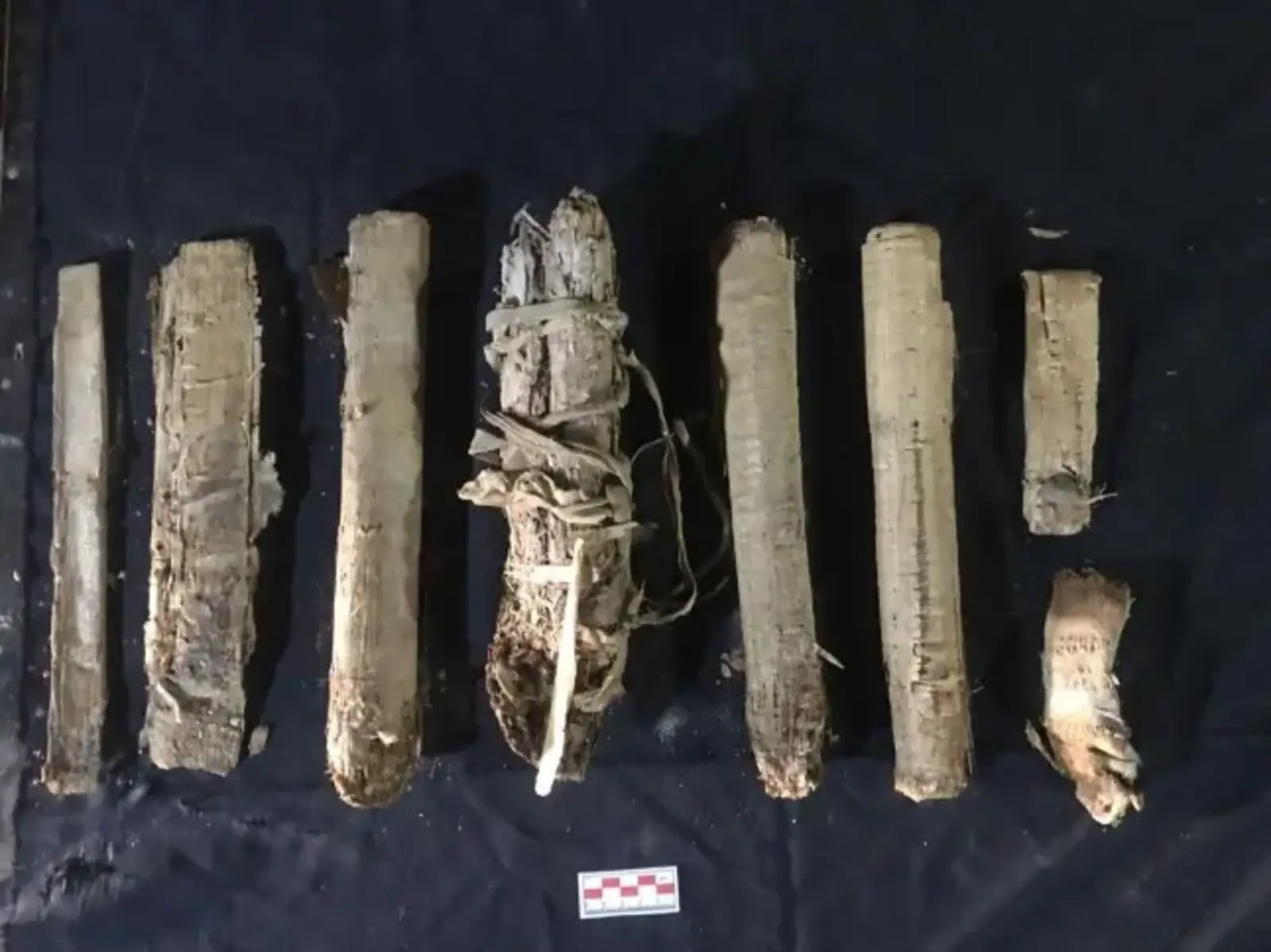
Archaeologists open a tomb in Luxor and find 3,000-year-old papyri still sealed in a ceramic vessel, alongside colorful coffins stacked in 10 rows and linked to the mysterious singers of Amon.
-
Before the space shuttle existed, NASA put a “wingless airplane” made of wood to fly at over 190 km/h towed by a car and then launched from a C-47, and this strange experiment practically proved that it was possible to re-enter the atmosphere and land on a runway like a conventional airplane.

-
In Japan, a 150 kg humanoid robot named AIREC has begun testing to assist patients, change diapers, and alleviate a crisis where there is only 1 candidate for every 4.25 positions for elderly caregivers.

Why Shape-Memory Ceramics Have Always Hit the Same Limit
Shape-memory ceramics attract attention because they can alter their internal structure under stress or heat and then return to their original shape.
They can also absorb energy and move without gears, reminiscent of the logic of alloys like nickel-titanium used in medical devices.
The problem is that until now, this behavior was limited to the microscopic scale. When attempts were made to grow the material, the typical fragility of ceramics resulted in fracture, stalling large-scale production.
What Makes 3D Printed Flexible Ceramic Different from Common Ceramics
The central difference is that it is not about “pure ceramic” trying to be bendable. The team created a composite where tiny shape-memory ceramic particles are embedded in a metallic matrix.
This allows the material to dissipate energy through phase change under stress rather than concentrating the load until it breaks.
In practice, the ceramic ceases to be the weak point and becomes the functional part of the composite, contributing to strength and impact absorption.
The AFSC Process and Solid-State Manufacturing That Enables Scale
To produce the material, the researchers used a process called Friction Additive Deposition, known by the acronym AFSC in English. The technique joins materials below the melting point, rotating them under intense pressure.
The result described is a strong, defect-free composite, in which the ceramic can undergo transformation under stress to dissipate energy.
Another highlighted advantage is that the material can be 3D printed in large quantities and maintain full density right after printing, something relevant for industrial-scale manufacturing.
Who Led the Research and What Was the Focus of the Project
The research was led by Hang Yu, PhD, associate professor of materials science and engineering at Virginia Tech. He had been seeking a solution to this problem since his postdoctoral work at MIT.
The work included Donnie Erb, a doctoral student, and Nikhil Gotawala, PhD, a postdoctoral researcher at the same university. The group demonstrated how to incorporate functional ceramic particles directly into metal using a solid-state manufacturing process.
What the Composite Supports and Why It Is Called Multifunctional
According to the study description, the composite supports tension, bending, and compression. Energy absorption occurs through a stress-induced martensitic transformation, which helps dissipate impacts and vibrations.
The researcher himself describes the material as multifunctional because it adds functionality to a metal that already serves a specific application.
It’s a conceptual leap: instead of replacing the entire material, you enhance what already works.
Where 3D Printed Flexible Ceramic Can Be Used in Practice

The team points out possibilities in vibration damping and impact absorption in defense, infrastructure, and aerospace systems. There is also mention of sports equipment, where vibration and weight matter.
An cited example is using a metal with integrated ceramic in the shaft of a golf club to reduce vibration while keeping the set lightweight.
The logic can extend to parts exposed to stresses, vibrations, and impacts, precisely where traditional ceramics fail due to fragility.
From the Laboratory to Production: What Changes with Industrial Scale
The research highlights the first-time creation of ceramic-metal matrix composites with shape memory on a large scale using a scalable solid-state 3D printing process. This point is the game changer: it’s not just proving it works, it’s showing it can be manufactured in volume.
The study was published in the journal Materials Science and Engineering: R: Reports, and the work also reinforces Virginia Tech’s role in advanced manufacturing, with research related to friction additive deposition and stirring with support from institutions such as the NSF and the U.S. Army Research Laboratory.
If the 3D printed flexible ceramic really reaches the market, do you see more impact first in defense and aerospace or in infrastructure and everyday products?







-

-

4 pessoas reagiram a isso.