





 Portuguese
  English
  Spanish
  4 min of reading
  0 comments


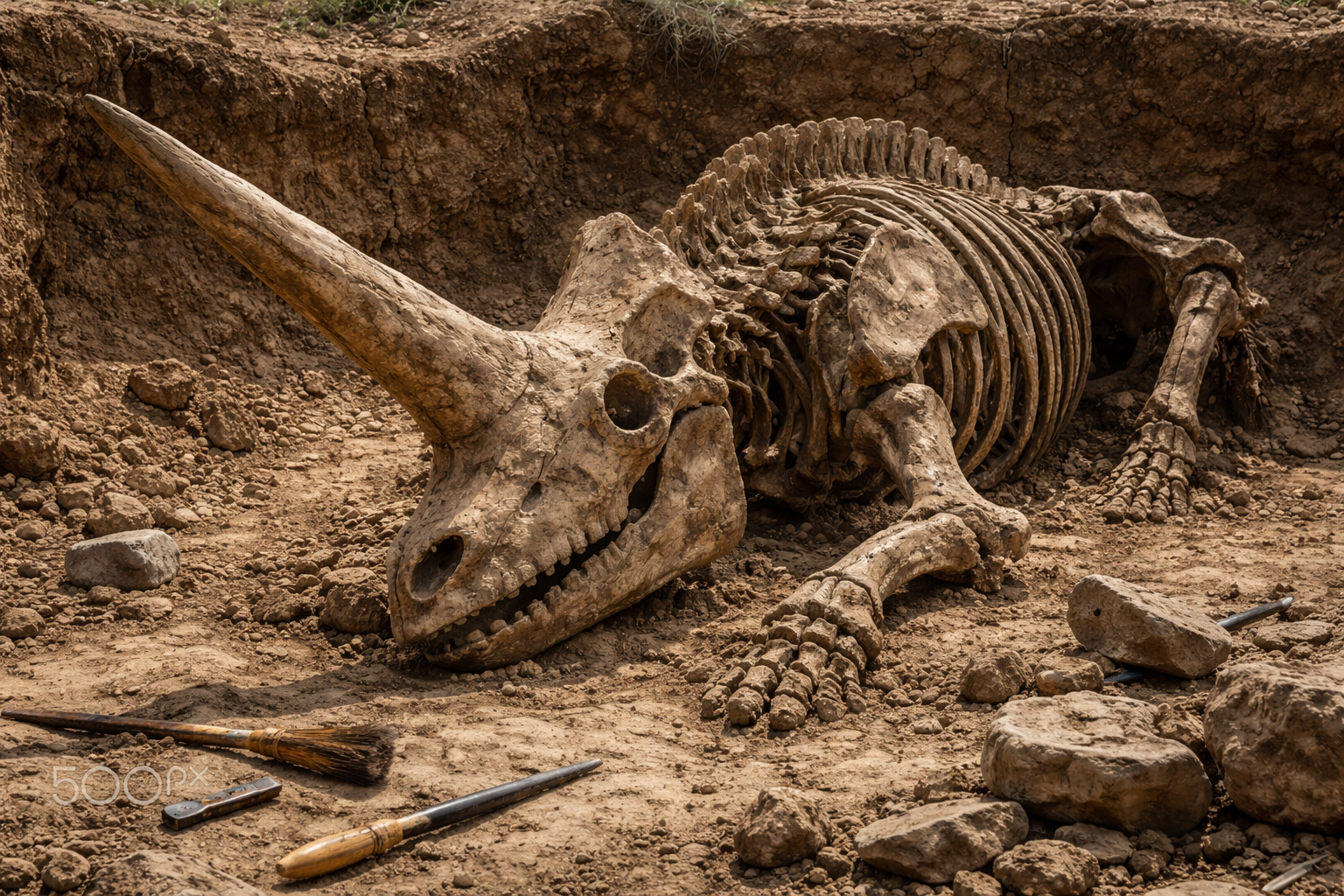
Scientific Discovery Helps to Understand the Real Animal Behind One of Humanity’s Most Known Myths, Besides Revealing Historical and Cultural Curiosities About the Unicorn
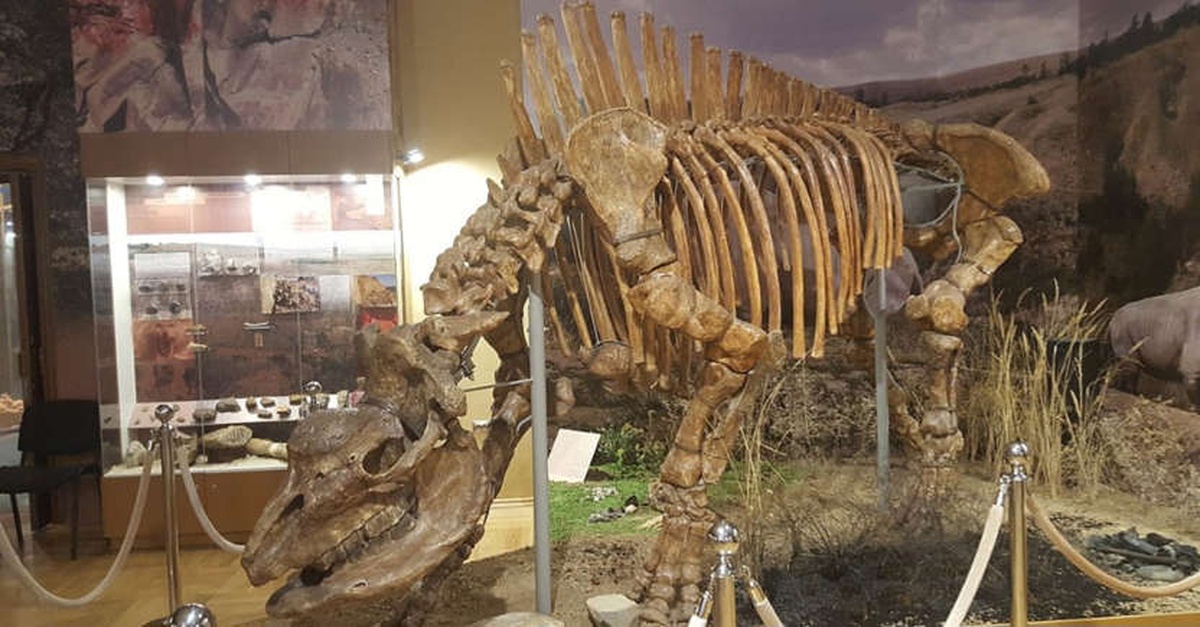
A curious scientific discovery has once again attracted the attention of researchers and the public interested in natural history and mythology. A fossil dated to about 29,000 years was identified in Kazakhstan, being associated with the Elasmotherium sibiricum, a extinct species commonly called the “Siberian unicorn”. Despite the curious name, experts explain that the animal was not a mythical unicorn, but rather a huge prehistoric rhinoceros with a large horn projecting from its snout.
This animal stood about 2 meters tall and approximately 4.5 meters long, capable of weighing up to 4 tons, according to scientific estimates. Because of this remarkable physical characteristic, researchers believe that the appearance of the Elasmotherium sibiricum may have influenced ancient legends about creatures with a single horn, something that over time ended up solidifying in popular imagination.
Historical Origins of Unicorn Legends
Throughout history, the unicorn figure has been described as a horse-like animal with a spiraled horn on its forehead, an image that has consolidated in the popular imagination across different cultures. One of the earliest recorded references appears in the writings of Ctesias, a Greek physician and historian from the 5th century BC, who described exotic animals in ancient accounts.
-
Remains with battle wounds of over 100 soldiers from the Roman Empire are found beneath a football field in Vienna, leaving everyone surprised.

-
Elon Musk notes Brazil and lowers the price of his internet, Starlink, promising to connect all corners of the country with affordable plans, 10,000 satellites, and 1 million active users in the national territory!

-
Man creates an infinite source of FREE electricity at home with a PVC wind turbine using a repurposed motor.

-
An aquatic seed consumed for centuries in Asia is going viral in the West after studies highlighted its antioxidant compounds and potential anti-inflammatory properties. It pops like popcorn, has low fat content, and is already being called the new functional snack.


These narratives helped fuel stories about rare and mysterious creatures. Later, during the Middle Ages, a period roughly between the 5th and 15th centuries, the unicorn became a symbol of purity and innocence. In this context, the creature began to be frequently associated with the Virgin Mary, being depicted in tapestries, sculptures, and religious paintings, which further strengthened its presence in European cultural tradition.
Similar Creatures in Different Cultures
Besides the European tradition, other cultures also feature figures reminiscent of the unicorn. In Chinese mythology, for example, there is the Qilin, known in Japan as Kirin, a creature considered a symbol of prosperity and good luck. This being is described as a hybrid formed from characteristics of different animals, reinforcing the idea of extraordinary creatures in mythological narratives.
Similarly, some Native American traditions also mention creatures resembling single-horned animals. However, in these cultures, descriptions vary and do not exactly correspond to the classical European model of the unicorn. Among the San ethnic groups in southern Africa, animals associated with a horn also appear in cultural traditions, being considered responsible for bringing rain, which is why rituals were performed during dry periods.
Historical Records and Archaeological Interpretations
Archaeological research has also brought curious interpretations regarding possible representations of unicorns. In caves in South Africa, scientists found rock paintings that appear to depict animals with only one horn. However, researcher David Mendel Witelson, an expert in South African rock art, explains that many of these interpretations may be incorrect.
According to him, the animals represented may have two horns, but the lateral positioning in the drawings creates the impression of only one. Historical accounts are also found in the records of English explorer John Barrow (1764–1848). In his travel diaries, Barrow mentioned local stories about one-horned creatures living in wild regions, but stated that he never managed to observe such creatures, classifying these accounts as local traditions.
The Unicorn in Modern Popular Culture
Even though it is a mythical figure, the unicorn remains present in contemporary culture. Today, the creature frequently appears in movies, books, and products linked to the fantasy universe, reinforcing its presence in the collective imagination. A well-known example arises in the Harry Potter series, written by J.K. Rowling.
In the book “Harry Potter and the Sorcerer’s Stone”, published in 1997, unicorns are described as magical creatures that live in the Forbidden Forest of Hogwarts. In the story, unicorn blood has powerful magical properties, capable of prolonging life. However, the narrative highlights that drinking this blood comes with severe moral consequences, as the act costs the creature’s life.
The Real Rhinoceros and the Animal Behind the Myth
Despite the fantastic stories, real animals also exhibit characteristics that resemble the concept of the unicorn. The rhinoceros, for example, has species that possess only one prominent horn, which reinforces the possible connection between reality and myth.
Currently, there are five species of rhinoceroses in the world. Among them are the white rhinoceros and the black rhinoceros, which live in Africa, along with the Indian rhinoceros and the Sumatran rhinoceros, found in Asia. However, despite being extremely strong animals, the greatest predator of the adult rhinoceros remains humans.
Calves can be attacked by lions, tigers, and hyenas, which also contributes to the risks faced by the species. Additionally, the recovery of populations is slow, as females give birth to only one calf every two years, a factor that increases their vulnerability to poaching.
In the meantime, the discovery of the so-called “Siberian unicorn” shows how science can help explain possible origins of ancient myths.
But after all, did stories like that of the unicorn arise solely from human imagination, or could they have been inspired by real animals that lived thousands of years ago?







Seja o primeiro a reagir!