





 English
  Francês
  Alemão
  Italiano
  Japonês
  Norueguês
  Portuguese
  Spanish
  3 min of reading


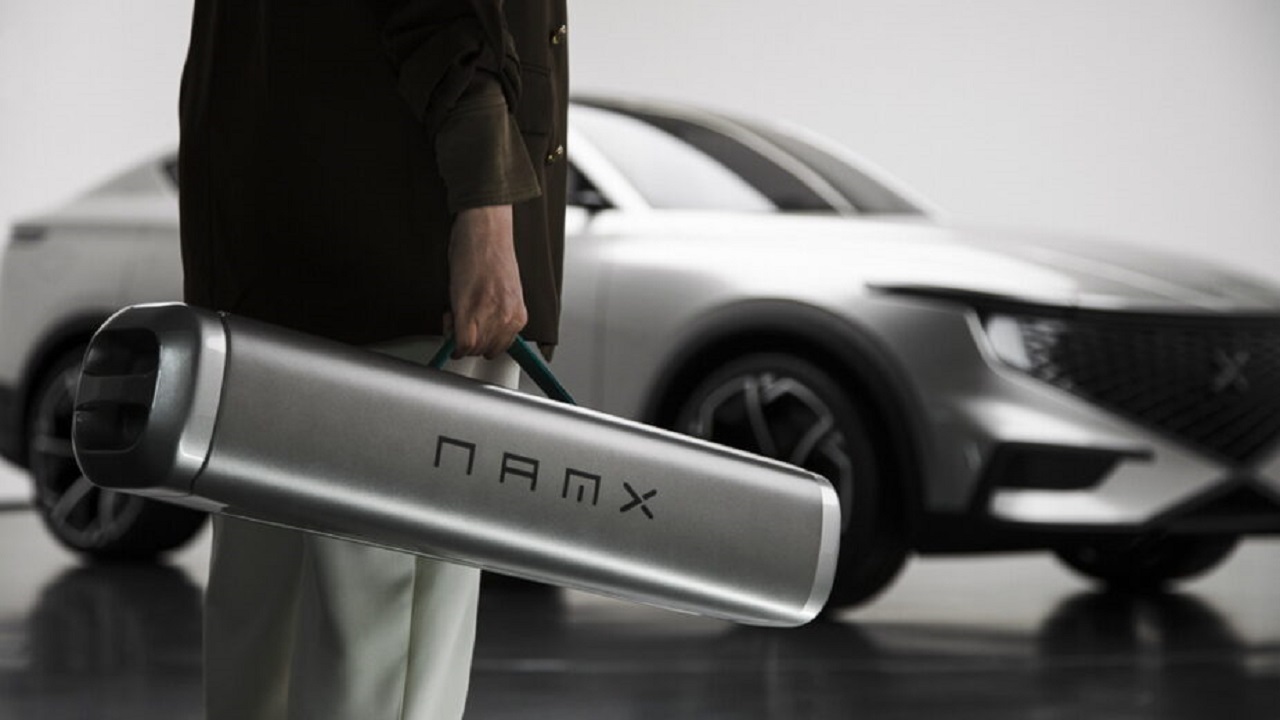
IFM Scientists in Australia Developed a New Process That Can Store and Transport Hydrogen Powder, Potentially Changing the Landscape of the Automotive and Renewable Energy Markets.
Storage and transportation remain a significant challenge in the deployment of hydrogen as a clean energy source in industries and transportation of the future. Two problems for which scientists at the Institute of Advanced Materials at Deakin University (IFM) have found solutions. As mentioned earlier, these problems are well-known. In addition to the process of obtaining hydrogen being very costly and requiring large amounts of energy to separate it from other elements in nature, this chemical element is always linked to others, and its storage is also expensive and complex.
Scientists Manage to Store Hydrogen in Powder Form


Stored as a gas, hydrogen hydrogen requires expensive high-pressure tanks that exceed 600 bar of pressure. When stored as a liquid, hydrogen needs temperatures lower than -252 °C to remain in that state, resulting in high energy costs.
Neither liquid nor gas: Australian scientists at Deakin University’s Institute of Advanced Materials have managed to store hydrogen in powder form. This new process, first presented in the scientific journal Materials Today, demonstrates a new way to separate, transport, and store large amounts of gas safely, using a small fraction of energy and generating zero waste.
-
Engineers propose a fourth traffic light for intersections – the change promises to affect crossings, queues, and waiting times.

-
Chevrolet Suburban Z71 lands in Brazil with a V8 engine, off-road design, air suspension, seven seats, and colossal size, a rare version imported for around R$ 1.3 million with luxury and exclusivity.

-
The Chevrolet Onix 1.0 turbo achieves 17.7 km per liter on the highway and ranks among the three most economical cars in Brazil in 2026, alongside two more expensive Toyota hybrids available at dealerships.

-
Little sister of the Hilux: Toyota launches Land Cruiser FJ with 4 radical versions, 2.7 engine with 166 hp and 4×4 traction with locking.
The discovery is so significant and shows such a big advancement in the knowledge of gas separation and storage that the principal investigator, Dr. Srikanth Mateti, claims to have repeated the experiment 20 to 30 times just to believe what he had accomplished. According to Mateti, everyone was completely surprised, but every time tests were conducted, the same results were obtained.
Powdered Hydrogen Does Not Require Harsh Chemicals
The process for generating powdered hydrogen discovered by the scientists is based on mechanochemistry and involves capturing hydrogen through mechanical forces, using a steel ball mill along with boron nitride powder.
Inside this device, hydrogen is placed, causing the gas to become trapped in the boron nitride powder. According to the rotation of the chamber at an increasing speed, the collision of the balls with the powdered hydrogen and the chamber wall triggers a reaction, resulting in gas absorption into the powder.
According to the IFM researchers, from that moment on, it is very easy to store and transport hydrogen at room temperature and pressure. According to the scientists, there is no waste. The process does not require harsh chemicals and does not generate by-products. Boron nitride itself is classified as a level 0 chemical, meaning it is highly safe and stable.
Powdered Hydrogen Can be Produced on a Large Scale
Once absorbed into this material, hydrogen can be safely and easily transported. To be released, the process is also not complex; it just needs to be heated in a vacuum.
At this stage of the investigation, IFM scientists have managed to test the process on a small scale, separating about two to three liters of material.
The researchers now hope for support from the industry so that the process can be expanded into a pilot project. According to Mateti, a new alternative has been presented that does not require high pressure or low temperatures and provides a much cheaper and safer way to develop products such as hydrogen-powered vehicles. This discovery is the result of 30 years of development and research.










Seja o primeiro a reagir!