





 Portuguese
  English
  Spanish
  5 min of reading
  1 comment


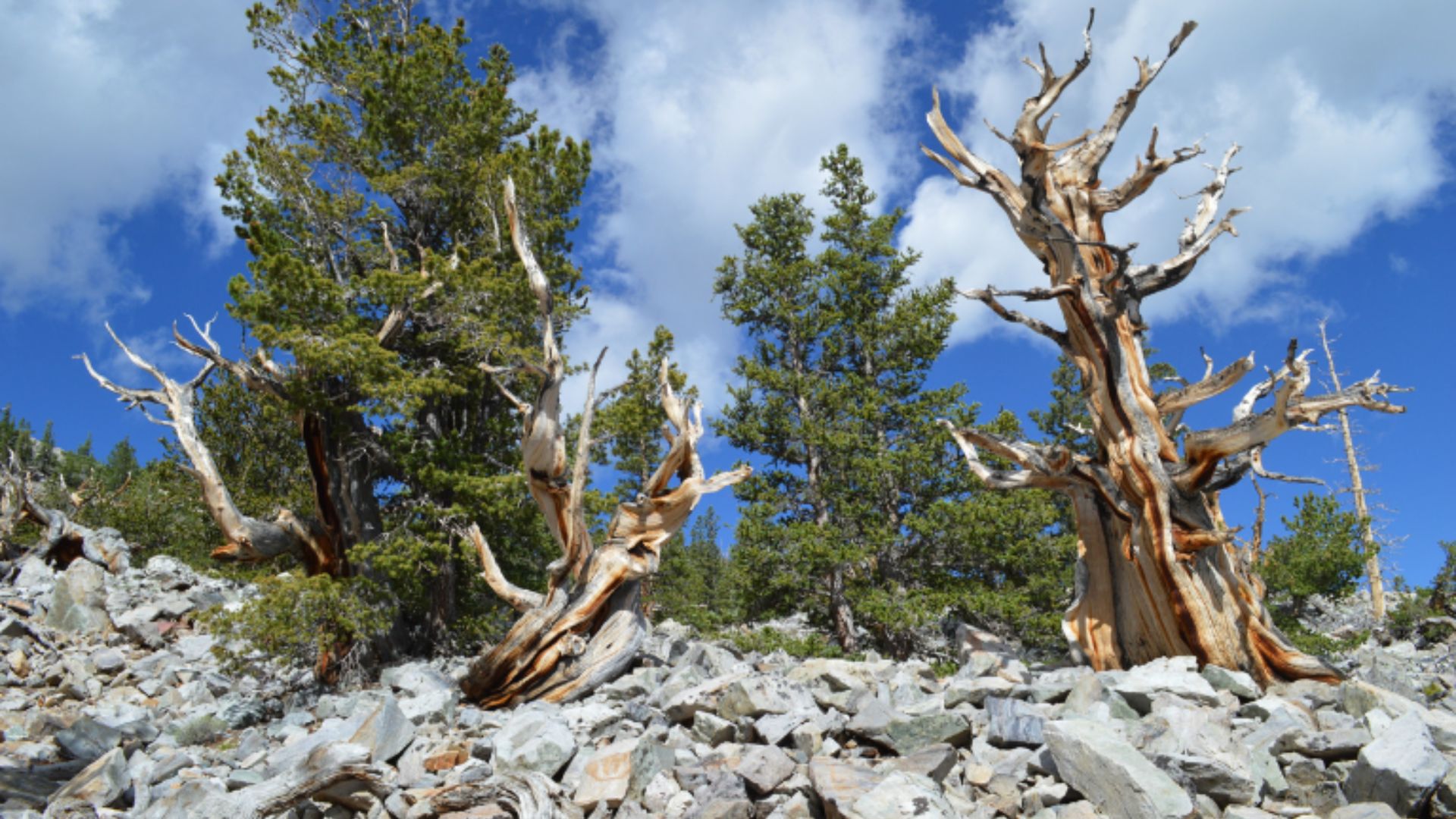


Case In The United States Exposed Ethical Limits Of Scientific Research By Revealing, After The Cut, The Extraordinary Age Of An Ancient Pine Tree That Had Withstood Extreme Conditions For Almost Five Thousand Years In An Isolated High Mountain Region.
In 1964, a decision made during a scientific study led to the cutting down of a millennia-old bristlecone pine, later identified as one of the oldest non-clonal living beings ever recorded.
Known as Prometheus, the tree was located in a high mountain area on Wheeler Peak, in eastern Nevada, United States, and was eventually felled with the approval of the country’s forest service, in an episode that would become a global reference in the debate over the ethical limits of research and environmental preservation.
The case gained prominence mainly for what came afterward.
-
He started running at 66 years old, broke records at 82, and is now a subject of study for having a metabolic age comparable to that of a 20-year-old, in a case that is intriguing scientists and inspiring the world.

-
Oldest tree on the planet reappears after 130 years of searches: Wattieza, 385 million years old, was 10 meters tall and had no leaves or seeds; Gilboa fossils in New York solved the mystery in 2007.

-
A 48-square-meter house assembled in hours with 4,000 bricks made of recycled plastic that does not absorb moisture, has natural thermal insulation, and costs less than 90,000 reais in a complete kit.

-
Luciano Hang revealed that Havan’s air fleet has already accumulated more than 20,000 landings, 10,000 flight hours, and 6 million kilometers traveled, and he says that without the planes, the company would never have grown so quickly.


When analyzing the trunk, researchers counted 4,862 growth rings, with the caveat that, in such harsh conditions, a ring does not always form every year.
Therefore, the estimated age was around 4,900 years, with the possibility of being even greater, which reinforced the perception that the tree had been lost without its true uniqueness being fully understood at that moment.
Thousand-Year-Old Pine Tree Of Wheeler Peak Withstood Extreme Climate For Millennia

Prometheus was growing near the tree line on Wheeler Peak, the highest mountain in the Snake Range.
In the region, the intense cold, constant winds, and low water availability limit the presence of vegetation and impose an unusual life rhythm even for conifers.
Nevertheless, bristlecones like Prometheus thrive precisely because they grow slowly, with dense wood and great resistance.
In extreme environments, this slow development helps conserve energy and endure long periods of drought and harsh winters, making the group a reference for research on climate and plant longevity.
As natural climate changes occurred over thousands of years, the pine remained alive on a remote slope, difficult to access and far from major centers.
The tree existed many centuries before widely known historical records, and its story attracted attention precisely because it contrasted the organism’s persistence with the quick demise caused by human action.
Scientific Research In 1964 Led To The Authorized Cutting Of The Tree
At that time, researcher Donald Rusk Currey, then a graduate student, was on-site investigating ancient trees through growth rings, a method used to reconstruct environmental conditions and historical climate series.
When attempting to collect samples, Currey encountered practical limitations that, according to various reports gathered later, hindered obtaining a satisfactory wood core with usual drilling.
The versions of what happened vary.
One claims that the sample extraction equipment got stuck or broke in the trunk.

Another states that the collection was not working as expected, either due to the trunk’s size or difficulties in reading the samples.
There are also reports that a complete section would facilitate analysis, although this path would be destructive.
The common point in the available accounts is that the cutting took place with the authorization of the U.S. Forest Service, the agency that managed the area at the time.
Given these circumstances, a team with a chainsaw felled the pine and removed sections of the trunk for processing and study.
This measure, treated as part of a more permissive research practice in that context, would end up becoming a frequently cited example of the clash between scientific objectives and the conservation of rare organisms.
Ring Count Revealed Exceptional Age After The Cut
The significance of the episode only solidified after the ring count.
The analyzed material revealed 4,862 growth rings, a number that, by itself, already placed the tree among the oldest in the world.
Experts and institutions point out, however, that in very hostile environments, there can be years without ring formation, which supports the estimate of around 4,900 years and keeps the discussion about the actual age of Prometheus ongoing.
The fact that the extraordinary age was not recognized as a record before the cut is one of the elements fueling the controversy.
Later records indicate that Currey was seeking very old trees and believed he was facing a specimen thousands of years old, but the exact scope of what was being lost only became evident when the trunk had already been cut.
The repercussions spanned decades and began to be cited in reports, essays, and analyses about the risks of irreversible interventions.
In many of these accounts, the episode appears as a cultural turning point.
Science, which would gain less invasive instruments and techniques, would also face a stronger public demand for protection protocols for unique natural heritage.

The Prometheus Case Became A Symbol Of Change In Environmental Preservation
The story of Prometheus began to circulate as a permanent alert about the potential cost of decisions made with incomplete information.
In the environmental debate, the case is remembered as an example that institutional authorization and academic purpose do not eliminate the risk of irretrievable losses when the subject of study is rare and irreplaceable.
In Nevada, the episode is also connected to the memory of the region now protected by conservation units and visited by those interested in bristlecones and high mountain landscapes.
The area where Prometheus lived is part of the current Great Basin National Park, created in 1986, and the presence of these trees remains one of the park’s highlights.
Even without the individual that became known as Prometheus, the set of bristlecones on Wheeler Peak remains relevant for climate studies and for understanding plant longevity.
At the same time, the episode continues to be cited as a reminder that research methods and management rules may need to evolve as science more precisely identifies the value and rarity of what is before it.
If the advancement of knowledge depends on access to ancient natural records, how can scientific investigation and protection be balanced when the studied material is an irreplaceable living being?








So, Allison, did anyone bother to proof-read this? Even the title? How concerned should I be for a “5-year-old tree”. Or how about the image caption talking about “felling of a thousand-year-old” tree? Come on man, just have someone who knows something something about this have a look.