





 Portuguese
  English
  Spanish
  3 min of reading
  0 comments


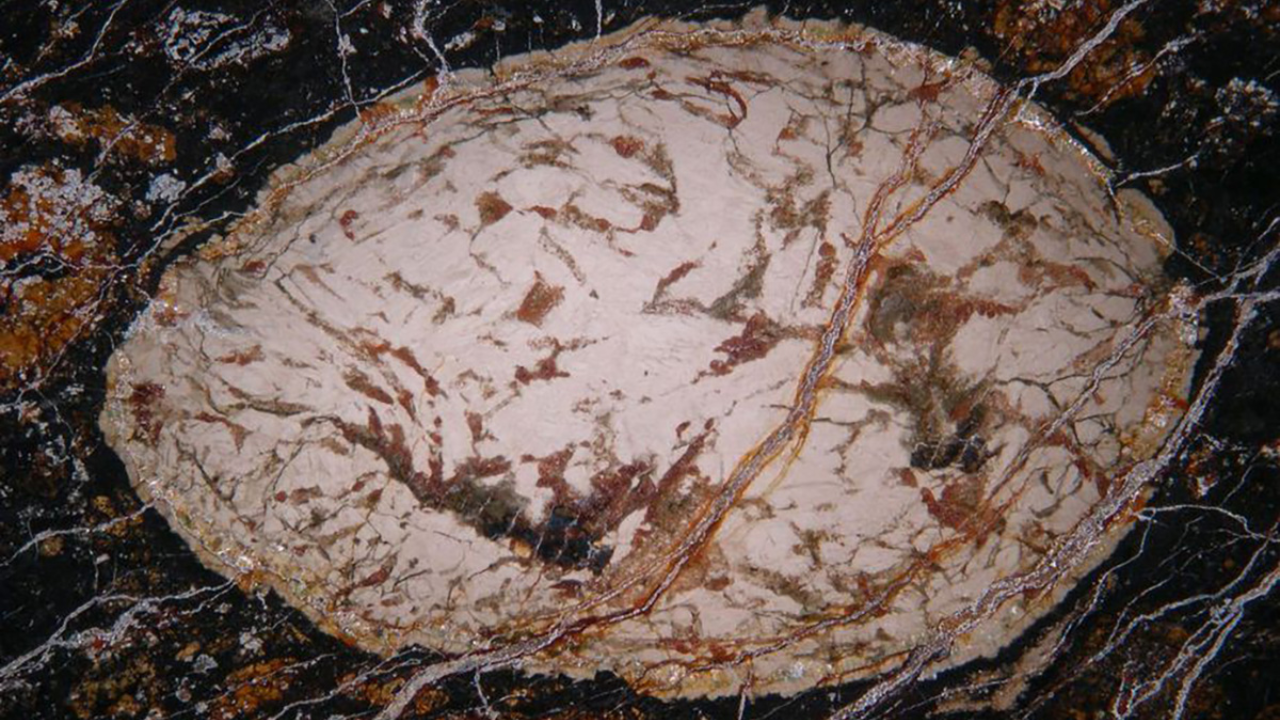
Meet Krotite, a Rare and Ancient Mineral Discovered by Scientists That Could Change Our Understanding of the Formation of the Universe.
A fascinating discovery is attracting the attention of scientists: an extremely rare and ancient mineral found in meteorites that have traveled for billions of years. Krotite, as it is called, is not only rare but also a very ancient mineral that challenges our understanding of the formation of the universe and the history of the Solar System.
The discovery of this rare and ancient mineral offers scientists a unique insight into the early moments of the formation of the Solar System.
The Discovery of the New Mineral in Meteorites
In 2011, scientists made an extraordinary discovery by finding krotite, a rare and ancient mineral, in a meteorite called NWA 1934.
-
Motorola launched the Signature with a gold seal from DxOMark, tying with the iPhone 17 Pro in camera performance, Snapdragon 8 Gen 5 that surpassed 3 million in benchmarks, and a zoom that impresses even at night.

-
Satellites reveal beneath the Sahara a giant river buried for thousands of kilometers: study shows that the largest hot desert on the planet was once traversed by a river system comparable to the largest on Earth.

-
Scientists have captured something never seen in space: newly born stars are creating gigantic rings of light a thousand times larger than the distance between the Earth and the Sun, and this changes everything we knew about stellar birth.

-
Geologists find traces of a continent that disappeared 155 million years ago after separating from Australia and reveal that it did not sink, but broke into fragments scattered across Southeast Asia.

This meteorite had traveled through the cosmos for billions of years before landing on Earth.

The discovery of this rare and ancient mineral is crucial for understanding the conditions of deep space and how minerals began to form.
Krotite, a mineral with a unique composition, could only have formed at extreme temperatures, higher than those found on our planet, making it a rare and ancient mineral here on Earth.
Click here to read the article!
Characteristics and Formation of Krotite
Krotite is a mineral composed of calcium, aluminum, and oxygen.
This mineral forms only under exceptional conditions, with temperatures so high that they are comparable to those found in star formation regions or in the disk that gave rise to our Sun.
These extreme conditions are typical of ancient places, such as the solar nebula, where the Solar System began to form about 4.6 billion years ago.
This rare and ancient mineral offers a privileged view of the environment that existed at the dawn of the Solar System.
The Relevance of the Mineral to Scientists
For scientists, krotite is a unique window into the early days of the Solar System, being a rare and ancient mineral that reveals secrets about how planets and other celestial bodies formed.
Meteorites like NWA 1934 act as time capsules, preserving minerals like krotite in their original state, allowing scientists to study these rare and ancient minerals as they were billions of years ago.
By studying these minerals, scientists can better understand the formation of our own planet.
Krotite and Its Secrets
The discovery of krotite is one of the most important in modern science.
This rare and ancient mineral not only provides clues about the early Solar System but also connects us to Earth in unexpected ways.
For example, certain types of aluminous cement have a composition almost identical to that of krotite, a rare and ancient mineral that has existed for billions of years.
Through this discovery, scientists can learn more about how the Solar System formed and even about new possibilities for materials here on Earth.
Krotite reminds us of the cosmic forces that shaped the universe and how rare and ancient minerals can reveal much about the formation of our planet.
Source: SoCientifica








Seja o primeiro a reagir!