





 Portuguese
  English
  Spanish
  3 min of reading
  0 comments


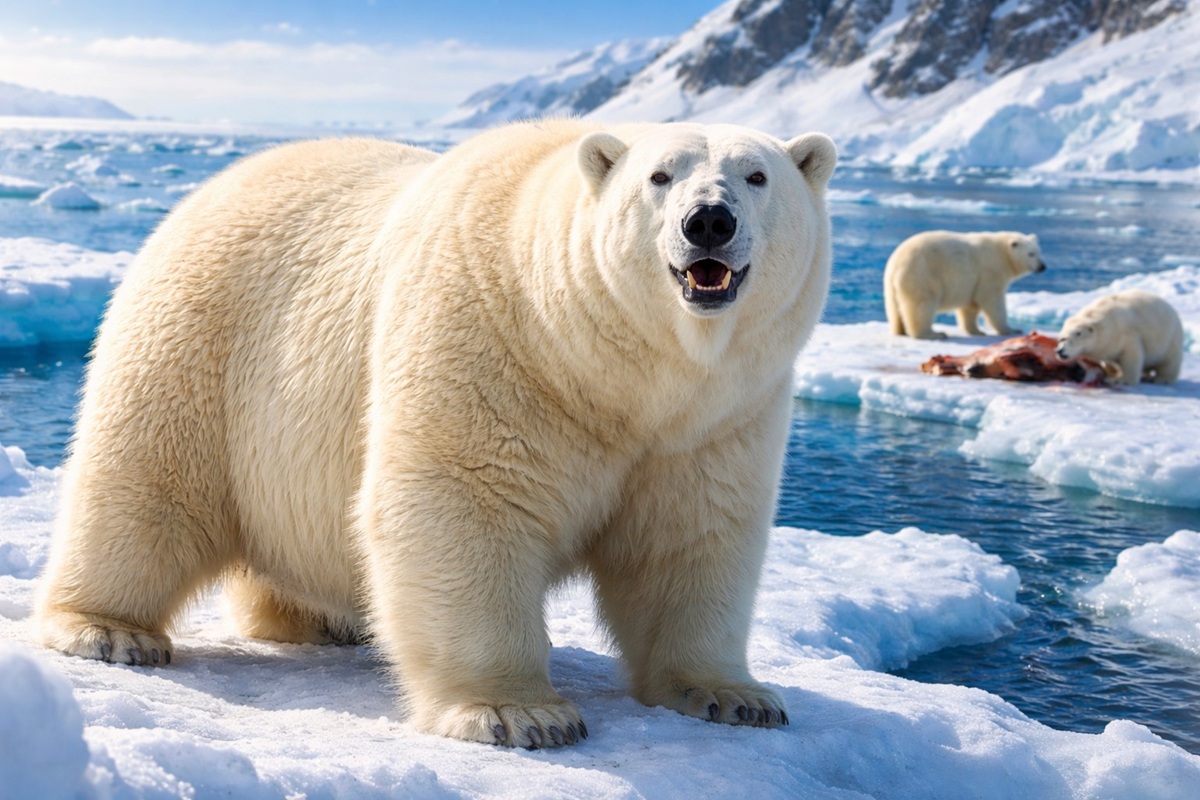
Monitoring Conducted by Norwegian Researchers Over 27 Years, with Detailed Measurements of Weight and Size of Almost 800 Animals in Svalbard, Indicates That the Local Population of Polar Bears Kept Good Physical Condition and Reproductive Capacity Despite Significant Loss of Sea Ice in the Arctic
Scientists from the Norwegian Polar Institute identified that a population of polar bears in Svalbard maintained good physical condition between 1992 and 2019, after analyzing almost 800 animals, indicating adaptation to the melting sea ice in a region of the Arctic.
Long-Term Monitoring Reveals Positive Physical Condition
Researcher Jon Aars has been monitoring polar bears in the Svalbard archipelago for over 20 years. He led a team that measured the weight and size of almost 800 individuals over 27 years.
The data collected between 1992 and 2019 showed that the animals had good body conditions. According to the researchers, the bears were able to survive, maintain appropriate weight, and continue reproducing during the analyzed period.
-
While Brazil wants to end the 6×1 work shift, the president of Argentina wants 12 hours for his workers, increasing political tension in the country.

-
The village where two rivers run side by side without mixing in Santarém and Alter do Chão reveals some of the most beautiful freshwater beaches on the planet.
-
Mars is accelerating, and scientists have discovered that the planet’s day is getting shorter, revealing surprising signs of internal activity.

-
Artemis 2 is set to launch on April 1 at 7:24 PM to orbit the Moon with four astronauts, but a class X solar flare and coronal mass ejection could interfere with communications and threaten the launch.


Loss of Sea Ice Did Not Prevent Local Adaptation
Aars expressed surprise at the results, stating that there had been significant loss of sea ice since the beginning of the monitoring. For years, scientists have warned that the reduction of ice could put the species at risk.
Some forecasts indicated that the bears should already be struggling. However, data from Svalbard suggests that the local population managed to adjust to smaller areas of sea ice, countering these initial expectations.
Prey Concentration May Increase Hunting Efficiency
The researchers suggest that the decrease in ice may have concentrated seals, the bears’ main prey, in smaller areas. This concentration may have facilitated hunting during certain periods.
Aars noted that the results indicate that bears need less sea ice than previously thought. This conclusion is restricted to the studied area and the analyzed period, without automatic generalizations.
Increasing Use of Land Environment Expands Diet
The study also pointed out changes in behavior on land. With the melting ice, bears have begun to explore more of the land environment in search of food.
According to the researcher, some individuals spend up to 90% of their time on land, feeding on prey such as reindeer and walruses. This behavior represents a significant adaptation to current conditions, although still not well understood.
Limitations of the Study and Future Risks Remain
Despite the positive results, Aars emphasized that more research is needed in other regions of the Arctic. The study does not aim to predict how bears will react to ongoing warming in the coming decades.
He warned that projections indicate rapid loss of sea ice in Svalbard. Thus, the observed gains may be temporary and could reverse if environmental conditions continue to deteriorate rapidly.









-

Uma pessoa reagiu a isso.