





 Portuguese
  English
  Spanish
  4 min of reading
  0 comments


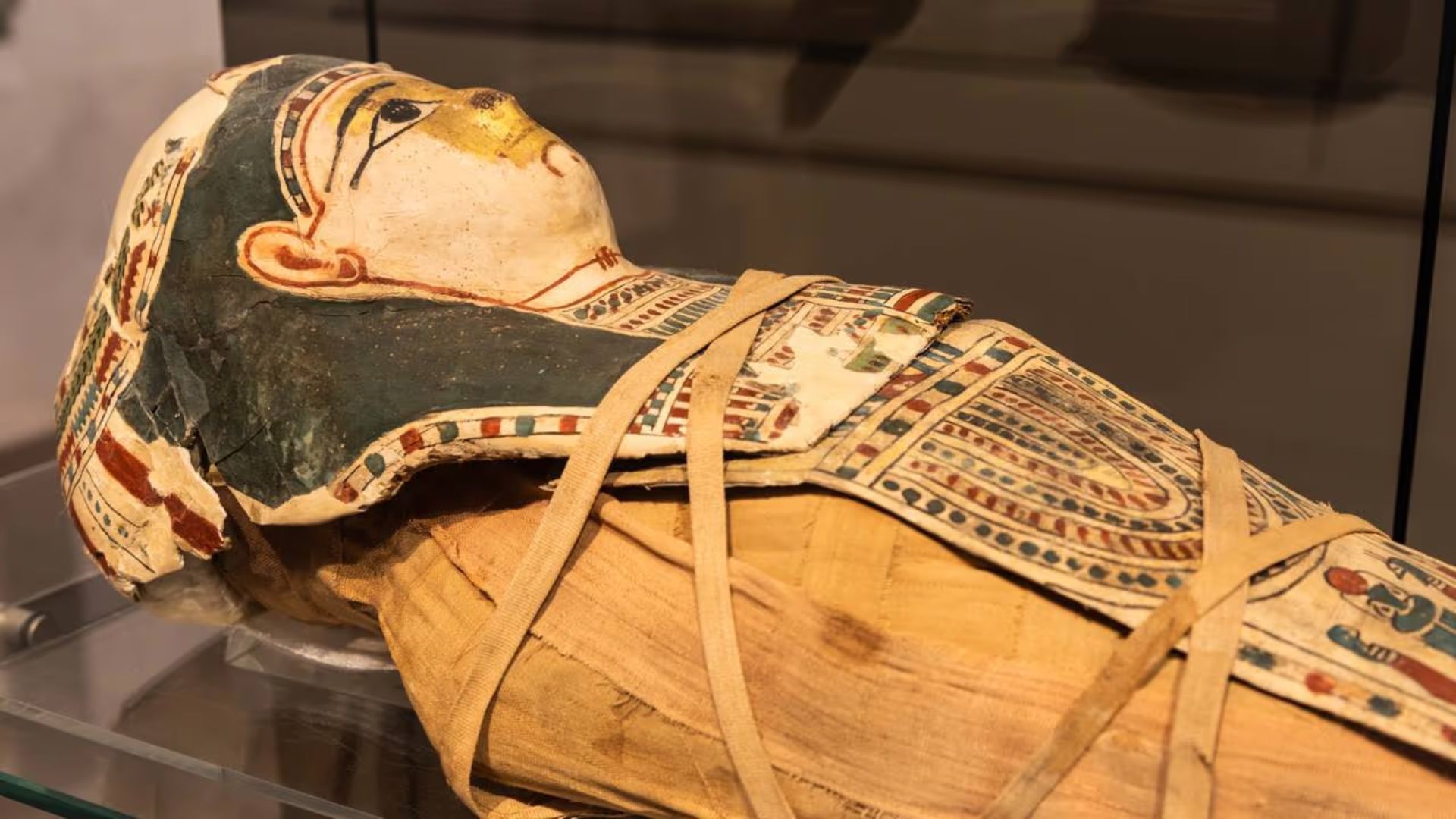
Discovery in Luxor Reveals Body Marked by Religious Symbols, Modern Analysis Techniques, and Clues About Women’s Roles in Ancient Egyptian Rituals, Expanding Understanding of Tattoos, Spiritual Beliefs, and Social Organization for Over Three Millennia.
A female mummy found in the Luxor region of southern Egypt has changed what was known about tattoos in the pharaonic period.
Imaging tests revealed more than 30 designs spread across the neck, shoulders, arms, and back, with icons related to protection and religiosity.
The set, dated to the New Kingdom, with indications of the Ramesside period and transition into the early 21st dynasty in academic works, strengthens the interpretation that tattooing symbols on the skin may have been associated with ritual functions.
-
He started running at 66 years old, broke records at 82, and is now a subject of study for having a metabolic age comparable to that of a 20-year-old, in a case that is intriguing scientists and inspiring the world.

-
Oldest tree on the planet reappears after 130 years of searches: Wattieza, 385 million years old, was 10 meters tall and had no leaves or seeds; Gilboa fossils in New York solved the mystery in 2007.

-
A 48-square-meter house assembled in hours with 4,000 bricks made of recycled plastic that does not absorb moisture, has natural thermal insulation, and costs less than 90,000 reais in a complete kit.

-
Luciano Hang revealed that Havan’s air fleet has already accumulated more than 20,000 landings, 10,000 flight hours, and 6 million kilometers traveled, and he says that without the planes, the company would never have grown so quickly.


This pattern also suggests a more visible social role for certain women in communities near major religious centers.
The mummy was located in an archaeological area known as Deir el-Medina, on the west bank of the Nile, near Luxor.
The site was inhabited by workers involved in the construction and decoration of royal tombs.
Part of the impact of the find lies in the fact that the tattoos were not limited to dots and lines.
The images are figurative and recognizable, which allowed for direct comparisons with religious repertoires documented in artifacts and representations from pharaonic Egypt.
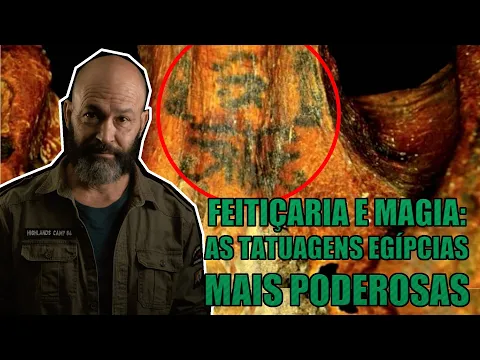

Body as a Support of Belief and Religious Identity
The tattoos identified on this mummy stand out not only for their quantity but also for their location.
Instead of being restricted to areas that are always covered, several marks appear in visible regions, such as the neck and shoulders.
For archaeologists, this indicates that they were not private marks.
These symbols would function as a body language associated with connections to deities, protective practices, and involvement in ritual activities.
Another layer of interpretation comes from the symbolic repertoire.
Studies associate some of the images with themes of spiritual support and health.
In this context, the body was not seen merely as biological, but also as an active space of relationship with the sacred.
In practice, tattoos could serve as permanent marks of protection, similar to amulets, but inscribed directly on the skin.
Technology Reveals Marks Invisible to the Naked Eye

The research gained momentum with the use of photography and infrared capture.
These techniques allow differentiation between old pigments and natural stains or residues from the mummification process.
It was this type of examination that enabled the mapping of designs that, to the naked eye, could be confused with skin irregularities.
With the processed images, researchers reconstructed the distribution of tattoos across the body.
Each symbol was compared with known iconography in temples, votive objects, and inscriptions.
The data cross-referencing does not seek to identify an individual biography.
The goal is to better define the recurring meaning of each image within the Egyptian religious universe.
Sacred Symbols and Ritual Functions
Among the motifs discussed in studies and reports are symbols widely known in Ancient Egypt.
The Eye of Horus, for example, appears associated with protection and physical integrity.
There are also records of images linked to sacred animals and flowers like the lotus, often related to renewal and symbolic rebirth.
In the specific case of this mummy, researchers highlight the combination and repetition of symbols.
The strategic placement of the images in visible areas reinforces the interpretation of an active religious role.
The more cautious reading adopted in the academic literature suggests that the woman would be associated with ritual practices.
She could act as a religious specialist, curator, or figure connected to local cults.
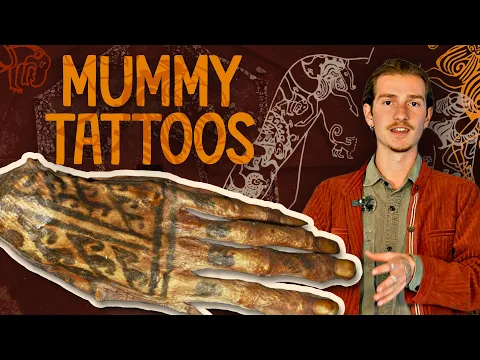
Still, studies avoid identifying a specific role. Part of the body is missing, and there are no inscriptions indicating name or formal function.
Interpretations are based on iconographic comparison and archaeological context.
Women and Visibility in Ancient Egyptian Cults
The discovery also fits into a broader debate about the role of women in Egyptian religion.
Deir el-Medina is one of the best-documented communities in Ancient Egypt.
This allows for a more detailed understanding of the daily lives of people connected to necropolises and temples.
In this context, figurative and visible tattoos on a woman suggest a relationship between body marking, social status, and religious function.
Recent research indicates that the tattooing should not be explained by a single factor.
It may integrate a complex system of beliefs involving protection, identity, and public engagement.
As imaging techniques advance, the number of mummies with identified body marks is increasing.
This suggests that the practice may have been more common than previously thought.
Findings such as those from Luxor show that technical limitations have influenced ancient interpretations.
By revealing symbols preserved for millennia, the mummy reinforces the idea that skin functioned as a permanent support of the sacred.
With new technologies revealing details invisible for centuries, how many other bodies might still provide clues capable of transforming understanding of faith, gender, and power in Ancient Egypt?








-

-

2 pessoas reagiram a isso.