





 Portuguese
  English
  Spanish
  4 min of reading
  0 comments


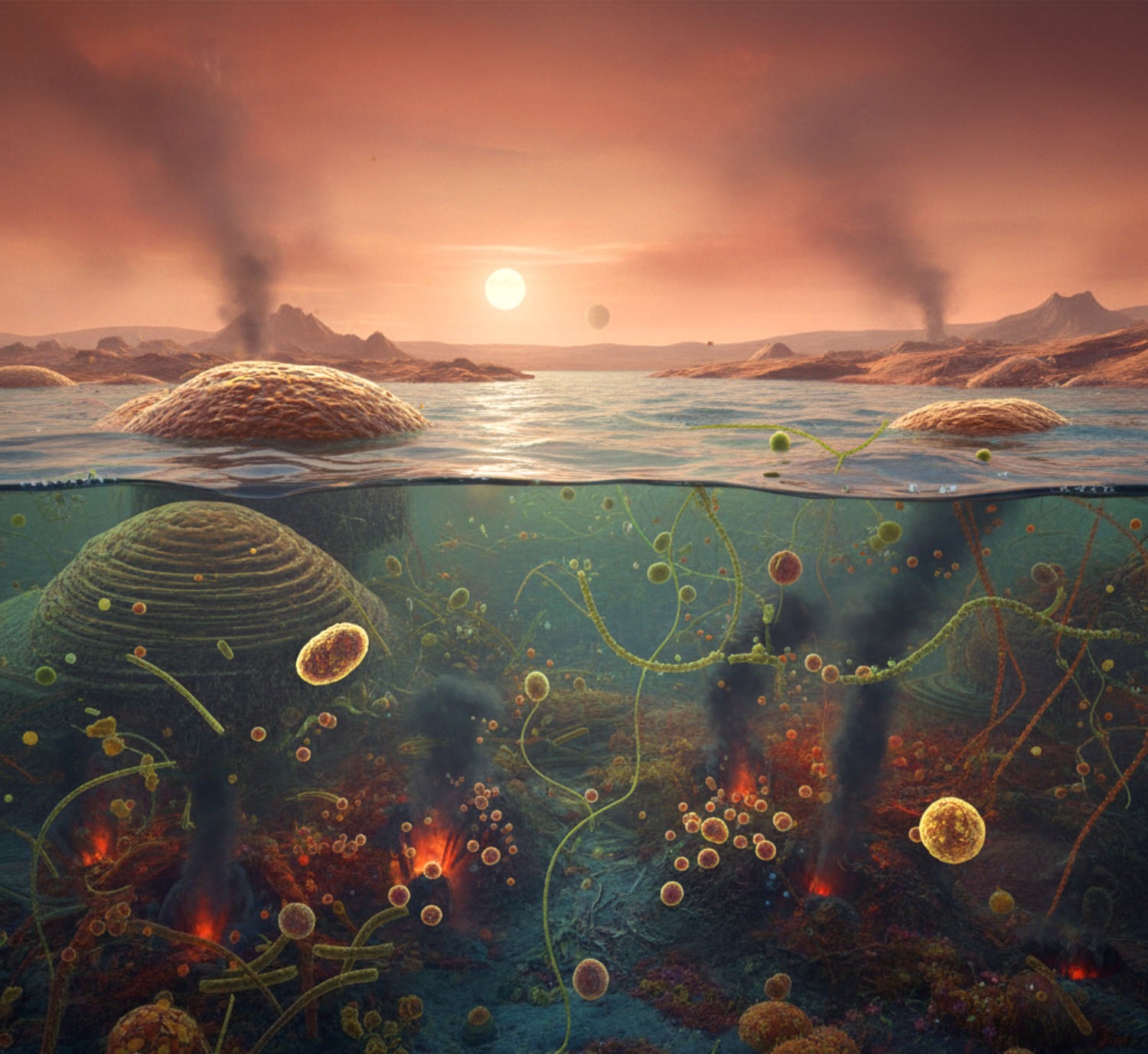
Researchers Analyzed Hundreds of Ancient Samples to Identify How Microbial Life Left Chemical Fragments Preserved in Extremely Degraded Rocks, Revealing Unprecedented Clues About Photosynthesis and Early Evolution Recorded in These Materials
Attempts to Unravel Chemical Processes Preserved in Ancient Sediments Have Opened New Possibilities for Understanding How Microbial Life Emerged and Evolved on Earth.
Early on, the researchers Faced Challenges in Determining When Photosynthesis Appeared in Relation to Atmospheric Oxygenation, but the Set of Recent Analyses Created a Clearer Picture of This Trajectory.
The Study Brought Together Hundreds of Samples and Applied Methods Capable of Differentiating Biogenic and Abiogenic Materials, as Well as Investigating Photosynthetic and Non-Photosynthetic Behaviors in Chemical Fragments.
-
While the world looks at oil, the war with Iran is already disrupting helium supply from Qatar, affecting car and iPhone chips, threatening AI expansion, and putting pressure on aluminum packaging at the highest value in four years.

-
Global warming will expose a treasure hidden under the ice of Antarctica and may spark an international dispute over gold and valuable minerals.

-
A street vendor from Praia Grande built a robot made of scrap from scooters and washing machines that pulls his popcorn cart on the beach, emits sounds, and interacts with customers, becoming an attraction on the coast of São Paulo.

-
The specifications of the Xiaomi 18 Pro Max have been leaked, and the highlight is a dual 200 MP camera with a new 22-nanometer technology that promises to consume less energy and capture details in shadows and bright areas using LOFIC HDR.


Microbial Life and the Search for Deep Signatures
The Scientists Worked with 406 Samples from Distinct Periods to Detect Signals Associated with Microbial Life. The Use of Supervised Learning Allowed the Model to Separate Elements Produced by Organisms from Those Generated Without Any Biological Participation. This Approach Made It Possible to Identify Chemical Sets Present in Paleoarchean Rocks Dating Back 3.51 Billion Years and Traces Related to Photosynthesis Recorded in Neoarchean Rocks Dating Back 2.52 Billion Years.
The Scarcity of Clear Records Led Researchers to Revisit Fragile Remnants, Such as Ancient Cells and Microbial Mats That Were Buried, Compressed, Heated, and Fractured Over Time. These Processes Destroyed Clues That Could Elucidate the Initial Formation of Life, and Therefore, the Identification of Reliable Signatures Required More Sensitive Methods to Interpret Each Preserved Fragment.
The Observation of Microscopic Fossils, Filaments, and Mineralized Structures of Ancestral Mats Remains Central to Understanding Remote Periods, but Such Records Are Scarce. Researchers Also Began Examining Biomolecules Preserved in Ancient Rocks, Especially Compounds Derived from Cellular Membranes or Metabolic Processes.
The Most Resilient Molecules Were Detected in Sediments Around 1.7 Billion Years Old. Carbon-Rich Rocks Dating Back 3.5 Billion Years Showed Isotopic Signatures Suggesting Intense Biological Activity During That Period. Nevertheless, Most Ancient Materials Do Not Preserve Fossils or Intact Molecules, as Heat and Mineral Alteration Replaced Much of the Original Elements.
Chemistry as a Witness to Microbial Life
The Molecular Fragments from These Environments Were Too Small to Reveal Reliable Details Until the Development of Specific Techniques. According to Researcher Katie Maloney, the Study Combined Chemical Analysis and Artificial Intelligence to Identify Signals That Were Not Previously Visible, Paving the Way for Interpreting Highly Degraded Compositions.
The Samples of Rocks Dating Back 2.5 Billion Years, Containing Fossilized Microorganisms, Still Preserved Evidence Pointing to Photosynthetic Processes. The Team Used High-Resolution Chemical Analyses to Decompose Organic and Inorganic Materials into Minuscule Molecular Fragments, Creating a Database to Guide the AI System.
The Model Distinguished Biological Materials from Non-Biological Ones with Precision Exceeding 90 Percent. From These Responses, It Was Possible to Identify Evidence for the Photosynthetic Origin of Compounds Found in the Gamohaan Formation in South Africa, Dating Back 2.52 Billion Years, and in the Gowganda Group in Canada, Dating Back 2.30 Billion Years.
Other Findings Revealed the Biogenicity of Molecules Preserved in Rocks from the Singhbhum Craton in India, Dating Back 3.51 Billion Years; in the Josefsdal Chert from the Barberton Greenstone Belt, Dating Back 3.33 Billion Years; and in the Jerrinah Formation in Australia, Dating Back 2.66 Billion Years.
Conversely, the Model Indicated That Compounds from the Theespruit Formations in South Africa, Dating Back 3.5 Billion Years, and Dresser in Australia, Dating Back 3.48 Billion Years, Did Not Exhibit Photosynthetic Origin. These Contrasts Reinforced the Technique’s Ability to Interpret Differences Present in Chemical Signatures.
Chemical Interpretation Guided by AI
Researcher Robert Hazen Highlighted That Ancient Rocks Hold Chemical Echoes Left by Very Ancient Biological Processes. The Application of Machine Learning Allowed for Deciphering These Echoes with Unprecedented Reliability. Maloney Emphasized That This Methodology Could Guide Searches for Organisms Beyond Earth, Expanding the Relevance of the Results.
Michael Wong Explained That Understanding the Emergence of Photosynthesis Helps Clarify the Process That Enriched the Atmosphere with Oxygen, an Essential Condition for the Evolution of Complex Life Forms. He Also Noted That the Technology Represents a New Way to Illuminate Remote Chapters of Planetary History.
Researchers Mentioned Their Intent to Analyze Anoxygenic Photosynthetic Bacteria in the Future, Considering Their Potential as Analogues of Extraterrestrial Organisms. The Team Also Observed That Spectral Signatures Studied Decades Ago Gained New Interpretations with the Use of AI.
Anirudh Prabhu Stated That Even When Degradation Hinders the Identification of Direct Signals, Models Can Recognize Subtle Clues Left by Biological Processes. The Technique Does Not Depend on Recognizable Fossils or Intact Biomolecules, Which Expands the Reach of Analyses.
Paths Opened by Artificial Intelligence
For Researchers, the Ability to Interpret Complex Chemical Data Has Opened Unprecedented Perspectives. AI Helped Organize Fragmented Information and Enabled Analyses That Were Previously Impractical, Offering an Additional Resource to Investigate Ancient Environments and Potential Extraterrestrial Scenarios. This Approach Has Expanded Understanding of Ancient Chemical Signatures and Consolidated New Possibilities for Studying Microbial Life in Different Geological Contexts.
The Research Was Published in the Proceedings of the National Academy of Sciences and Concludes an Essential Phase in the Interpretation of Signals Associated with Microbial Life. The Set of Techniques Demonstrated That Even Degraded Data Can Reveal Deep Stories About Photosynthesis, Evolution, and Environmental Transformations, Reinforcing the Decisive Role of Microbial Life in the Earth’s Chronology Preserved in the Oldest Records.








Seja o primeiro a reagir!