





 Portuguese
  English
  Spanish
  3 min of reading
  0 comments


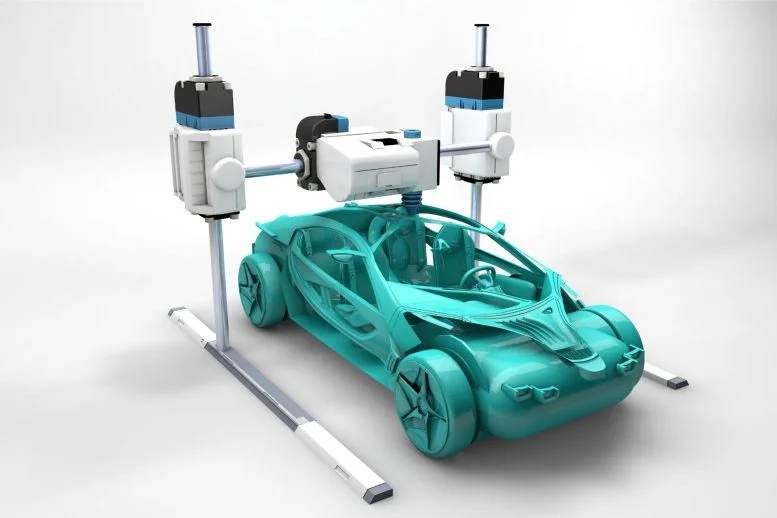
Japanese Researchers Presented An Innovative 3D Printing Technique Capable Of Manufacturing Automotive Parts With Greater Efficiency And Precision.
Researchers from Tohoku University in Japan achieved a historic technological milestone by developing a highly durable steel and aluminum alloy through 3D printing. The Japanese innovation has the potential to transform automotive parts manufacturing by combining lightness and strength, solving historical challenges in the use of multimaterials.
The Advancement In Metal 3D Printing
The metal 3D printing technique allows for the construction of objects layer by layer, joining materials precisely through heat.
This approach offers advantages such as waste reduction and the creation of customizable shapes, becoming essential in modern manufacturing.
-
While the world looks at oil, the war with Iran is already disrupting helium supply from Qatar, affecting car and iPhone chips, threatening AI expansion, and putting pressure on aluminum packaging at the highest value in four years.

-
Global warming will expose a treasure hidden under the ice of Antarctica and may spark an international dispute over gold and valuable minerals.

-
A street vendor from Praia Grande built a robot made of scrap from scooters and washing machines that pulls his popcorn cart on the beach, emits sounds, and interacts with customers, becoming an attraction on the coast of São Paulo.
-
The specifications of the Xiaomi 18 Pro Max have been leaked, and the highlight is a dual 200 MP camera with a new 22-nanometer technology that promises to consume less energy and capture details in shadows and bright areas using LOFIC HDR.


However, creating multimaterial structures — such as the integration of steel and aluminum — requires advanced solutions to overcome the formation of brittle compounds, a common problem when different metals are combined.
“Multimaterials Are A Central Theme In Additive Manufacturing Due To The Flexibility Of The Process“, explained Professor Kenta Yamanaka from the Materials Research Institute at Tohoku University. “However, brittle intermetallic compounds can arise, making the material lighter but also more brittle.“
How To Overcome The Technical Challenge
The team used a technique called Laser Powder Bed Fusion (L-PBF), which employs lasers to selectively melt metal powders.
This method was fundamental in suppressing the formation of brittle compounds such as Al5Fe2 and Al13Fe4 at the interfaces between steel and aluminum.
They found that increasing the laser scan speed favors non-equilibrium solidification, minimizing the material’s structural weaknesses. The result was a robust alloy with strong bonding interfaces, ready for industrial applications.
“It’s Not Just About Joining Two Metals And Expecting Them To Stick,” stated Seungkyun Yim, assistant professor at Tohoku University. “It Was Essential To Understand The In Situ Alloying Mechanism To Ensure Durability.”
First Practical Application
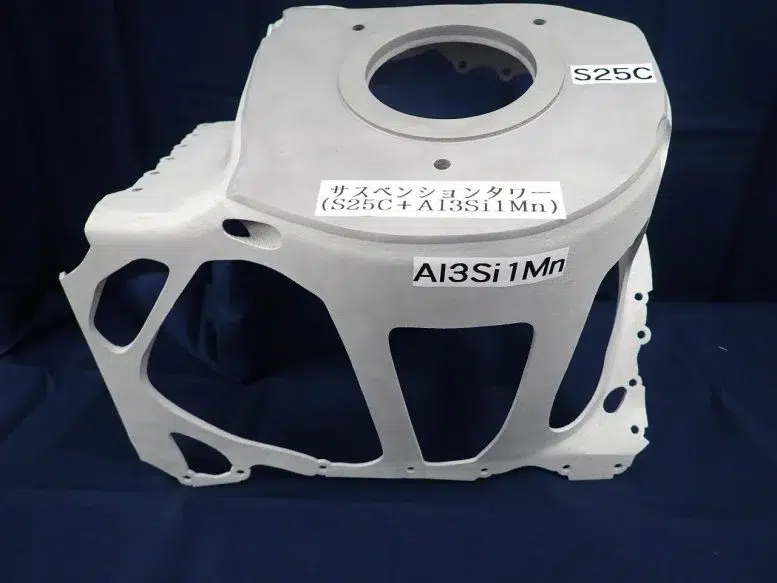
Based on this research, the group created the world’s first full-scale multimaterial automotive component.
The prototype, a suspension tower with custom geometry, combines lightness and strength in an unprecedented way.
The part, essential for vehicle performance, marks a significant advancement in the automotive sector, where reducing weight without compromising safety is a priority.
Implications For The Automotive Industry
The innovation from Tohoku University opens new possibilities for the production of lighter, more economical, and sustainable vehicles.
The reduction in the weight of components can improve the energy efficiency of vehicles, contributing to meet global demands for environmentally responsible solutions.
The researchers are already planning to apply the method to other metal combinations, expanding the use of the technique to sectors beyond automotive. This includes the creation of aerospace components and even medical equipment, where lightness and durability are equally crucial.
The results of the study were published in the journal Additive Manufacturing on November 19, 2024, highlighting the potential impact of this technology on advanced manufacturing.
With this advancement, metal 3D printing takes an important step towards a future where the combination of materials will become increasingly efficient, safe, and accessible. The hope is that innovations like this will accelerate the development of customized, high-performance products.








-

-

-

-

6 pessoas reagiram a isso.