





 Portuguese
  English
  Spanish
  6 min of reading
  0 comments


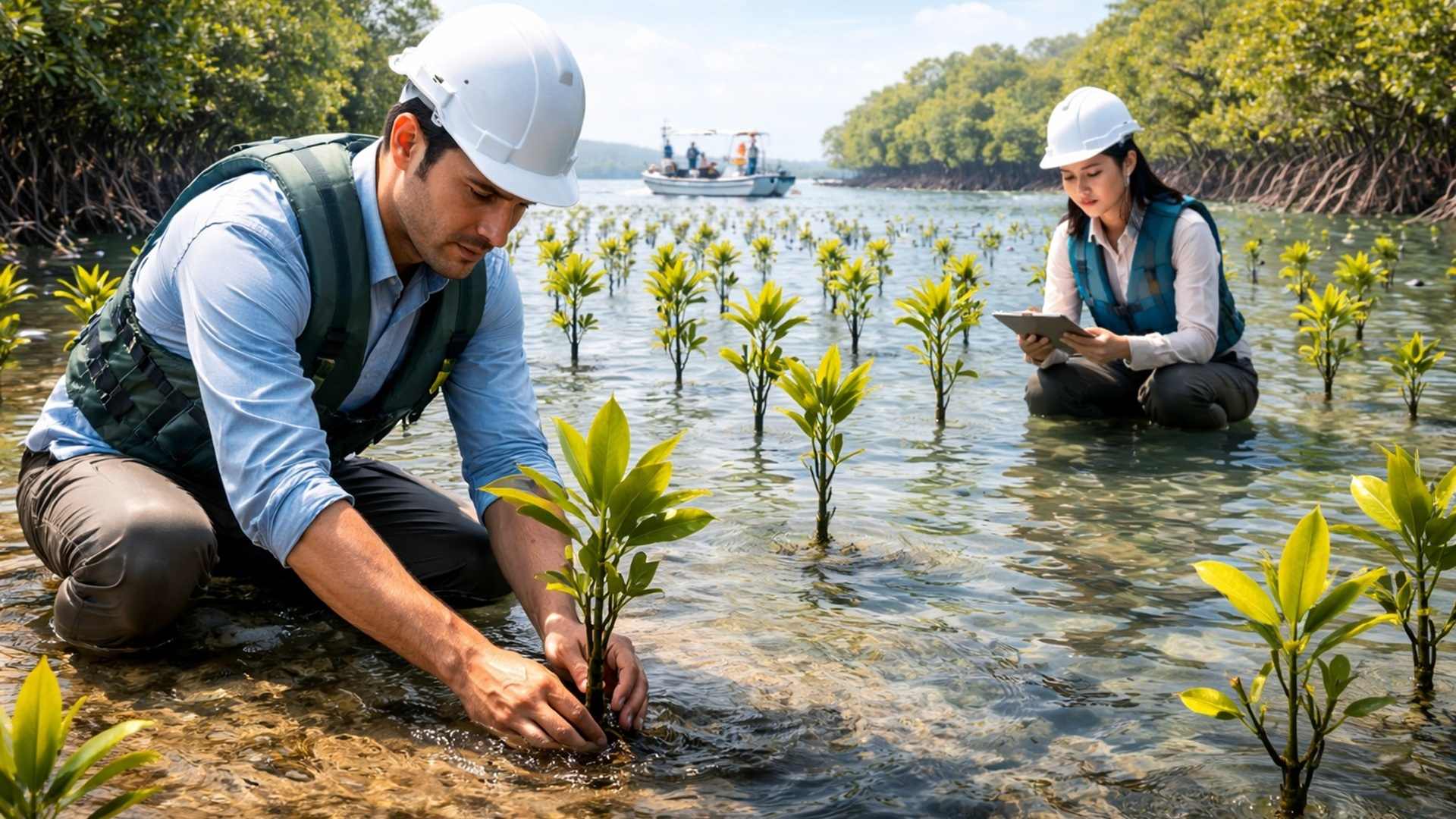
Study Published in PNAS on January 20 Points Out That Restoring Mangroves in Front of Coastal Dikes Can Protect Over 140 Thousand People from Flooding Each Year and Avoid Up to US$ 800 Million in Global Losses Caused by Floods and Storms
Planting trees in the sea through mangrove restoration in front of coastal defenses like dikes could protect over 140 thousand people from flooding and avoid up to US$ 800 million in annual losses worldwide, according to a study published on January 20.
The proposal to plant trees in the sea emerges as a strategy to reduce the impacts of coastal storms and intense waves. The research assessed how restored mangroves in front of existing infrastructure could decrease damage caused by floods.
The results indicate that this combination of coastal vegetation and man-made structures can function as an effective form of protection. At the same time, the measure can also help remove carbon dioxide from the atmosphere.
-
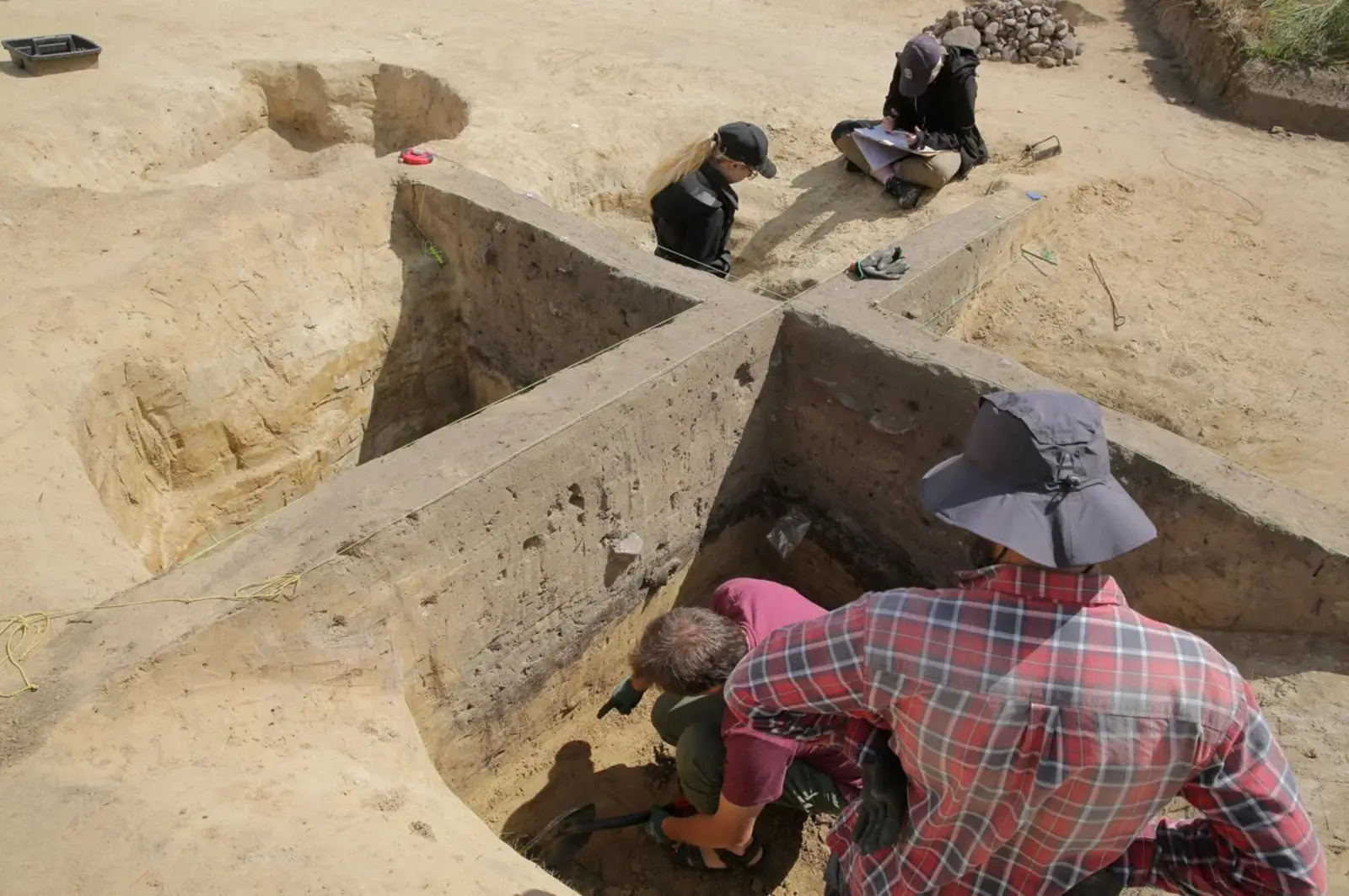
Archaeologists find lost medieval city in Poland with a central square, cemetery, forge, and more than 500 buried artifacts.
-
A massive warm air mass stretched from Brazil to near Antarctica and caused something that almost never happens: lightning and thunderstorms in Ushuaia, in the Falkland Islands, and in the South Georgia Islands.

-
Larger than a football field, with a wingspan of 117 meters, six Boeing 747 engines, and a capacity of 250 tons, the Stratolaunch Roc turns the sky into a gigantic hypersonic launch ramp and accelerates the way the U.S. tests weapons from Mach 5 to Mach 10.

-
Neuralink, the company specialized in brain chips founded by Elon Musk, announced that it intends to implant thousands of brain chips thanks to large-scale production.


In addition to the climate potential, the analysis points out significant economic gains when restored mangroves are integrated into coastal protection systems. The benefits vary by region but can represent significant savings in avoided damages.
Mangroves Show Ability to Reduce Storm Damage
The interest in planting trees in the sea is linked to the behavior of mangroves in the face of extreme weather events. These ecosystems are located in the intertidal zone, in the area between the ocean and the mainland, and their trees can survive in saltwater.
Mangroves are common in tropical and subtropical regions and have a dense system of aerial roots. This tangle acts as a natural barrier capable of absorbing wave energy during storms.
An example cited involves Hurricane Ian, which hit southwestern Florida in 2022. The waves generated by the storm reached 5.5 meters and devastated coastal communities and infrastructure.
The hurricane killed 158 people and caused estimated damages of US$ 110 billion in the state. Authorities stated that the storm surge, a phenomenon that pushes large volumes of water onto the shore, was the main cause of the deaths.
In areas of Florida where mangroves existed, damages were about 30% lower. This difference represented approximately US$ 13 billion in avoided losses during the disaster.
According to Daniel Friess, an environmental scientist at Tulane University, mangroves function as a sponge for wave energy. He explains that the dense system of aerial roots is especially efficient at dissipating wave energy.
Research Assessed Global Impact of Mangrove Restoration
The study that analyzes the possibility of planting trees in the sea was published on January 20 in the scientific journal PNAS. The research sought to understand where mangrove restoration could generate the greatest impact in flood protection.
To do this, the scientists modeled scenarios where restored mangroves would be combined with existing flood defenses. These defenses include structures such as dikes or retaining walls built along the ocean or rivers.
Dikes are structures designed to prevent water from exceeding certain areas and encroaching on the mainland. The analysis considered how these systems would function when associated with mangroves.
The researchers used a tool that identifies areas where mangroves have been lost based on satellite data. The method also assesses whether current hydrological conditions allow for the restoration of these ecosystems.
According to Timothy Tiggeloven, a climate adaptation specialist at the Vrije Universiteit Amsterdam and the lead author of the study, the data were combined with other variables. These included flood risk, future climate scenarios, changes in GDP, population growth, and sea-level rise.
Based on these simulations, the researchers estimated the potential impacts of mangrove restoration in various regions around the globe.
Global Economy Could Reach US$ 800 Million per Year
The results indicate that systems combining dikes and mangroves could generate a global savings of up to US$ 800 million per year in avoided flood damages. Additionally, around 140 thousand people could be protected annually from flooding.
In climate scenarios related to rising carbon emissions, these benefits could grow even more. This is because storms and extreme events tend to intensify with climate change.
The cost-benefit analysis showed that every dollar invested in these systems could generate or save about US$ 6. In a high-emissions scenario, this could represent up to US$ 125 billion accumulated by 2100.
However, the gains are not equally distributed among all regions of the world. Some countries and coastal areas have greater potential benefits from mangrove restoration.
The Southeast Asian countries appear to be the most benefited by the strategy of planting trees in the sea. The estimate is a saving of about US$ 270 million per year and direct protection for approximately 70 thousand people.
West Africa ranks second in the regional ranking. The analysis indicates that the region could save about US$ 221 million annually and protect approximately 38 thousand people from flooding.
At the national level, Nigeria, India, and Indonesia appear as countries with the highest potential benefits. Mangrove restoration in front of coastal defenses in these territories could generate significant impacts.
Mangroves Can Also Help Reduce Carbon in the Atmosphere
In addition to coastal protection, planting trees in the sea through mangrove recovery can also have a significant climate impact. These ecosystems can store large amounts of carbon.
A study published in 2025 estimated that restoring 1.1 million hectares of mangroves worldwide could remove about 0.93 gigatons of carbon dioxide from the atmosphere. This volume corresponds to nearly three times the emissions from cars in the United States.
The estimated cost to restore this area of mangroves would be approximately US$ 10.73 billion. The estimate indicates that the restoration could generate significant environmental benefits at a global scale.
Despite these advantages, mangroves face significant threats. An assessment in 2024 by the International Union for Conservation of Nature indicates that more than half of the world’s mangrove ecosystems could collapse by 2050.
Key causes include the replacement of these areas with agriculture and aquaculture. The expansion of these activities has reduced the extent of mangroves in various regions worldwide.
Hybrid Strategies Combine Nature and Infrastructure
The strategy of planting trees in the sea alongside dikes is part of a set of approaches called gray-green infrastructure. These solutions combine natural elements with engineering works.
Jonah Busch, an environmental economist and former senior researcher at the Center for Global Development, praised the study for integrating different areas of analysis. According to him, the research combines biophysical assessment, engineering, and economics.
Busch noted, however, that he would have liked to see a detailed analysis of the financial benefits of mangroves in isolation. He observes that the study assumes the prior existence of dikes in the areas analyzed.
The authors themselves recognized this limitation. The research relies on a database of flood protection that lists existing infrastructure but does not verify whether the dikes are still in good condition or even remain standing.
According to Thomas Westhoff, who is responsible for nature-based solutions at Wetlands International, hybrid approaches can be effective in coastal management. This is particularly relevant in densely urbanized coastlines.
He states, however, that there is no one-size-fits-all solution. In some regions, dikes simply do not exist or are not viable.
Even so, Westhoff emphasizes that healthy mangroves can provide sufficient protection for coastal communities as the climate continues to change.
Mangrove Restoration Faces Global Challenges
Despite the potential of the strategy of planting trees in the sea, mangrove restoration faces significant difficulties. Many projects around the world fail to achieve expected results.
According to the study, up to 80% of mangrove restoration initiatives end up failing. Reasons include errors in selecting planting areas or the species used.
Timothy Tiggeloven states that restoring mangroves is a positive idea but difficult to implement. Success depends on suitable environmental conditions and careful planning.
Another essential factor is the involvement of local communities. Thomas Westhoff emphasizes that projects tend to have better results when populations directly benefit from the restored ecosystem.
These benefits can include sustainable harvesting of resources or ecotourism activities. When communities perceive concrete gains, they tend to protect mangroves in the long term.
There is also an economic competition for the use of these coastal areas. According to Jonah Busch, mangroves must compete with activities that can generate quicker financial returns, such as agriculture or aquaculture.
In this context, the new study gains relevance by demonstrating the economic value of the natural protection offered by mangroves. The analysis indicates that planting trees in the sea can represent a way to reduce damages caused by storms and floods.






-

-

3 pessoas reagiram a isso.