





 Portuguese
  English
  Spanish
  5 min of reading
  0 comments


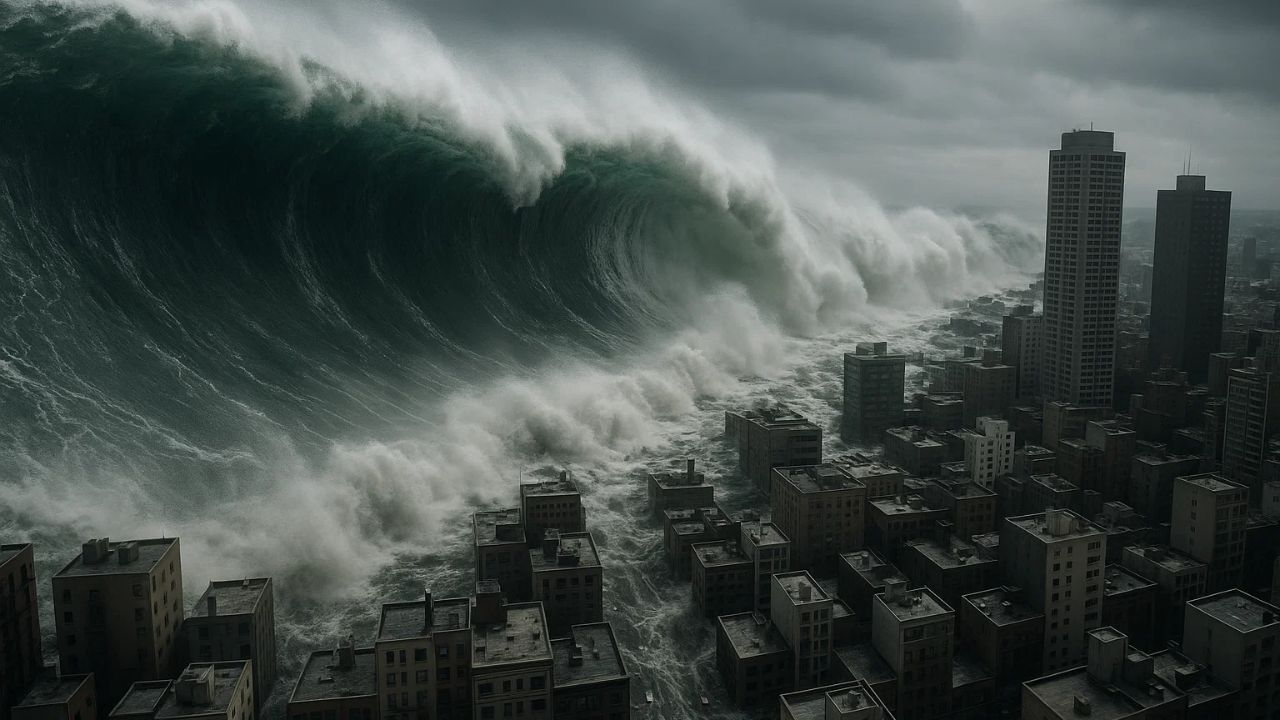
Scientists Drill More Than 800 Meters in the Japan Trench to Investigate Faults Responsible for Mega-Earthquakes and Tsunamis, in Search of More Accurate Prevention Models.
A scientific expedition investigates the Japan Trench, drilling more than 800 meters below the ocean floor to analyze faults responsible for mega-earthquakes and tsunamis, aiming to improve prevention models.
Despite technological advances, the ocean floor remains one of the most mysterious territories on Earth.
In addition to housing unknown species and entire ecosystems, these regions hold records of powerful natural phenomena, such as mega-earthquakes and tsunamis.
-
Motorola launched the Signature with a gold seal from DxOMark, tying with the iPhone 17 Pro in camera performance, Snapdragon 8 Gen 5 that surpassed 3 million in benchmarks, and a zoom that impresses even at night.

-
Satellites reveal beneath the Sahara a giant river buried for thousands of kilometers: study shows that the largest hot desert on the planet was once traversed by a river system comparable to the largest on Earth.

-
Scientists have captured something never seen in space: newly born stars are creating gigantic rings of light a thousand times larger than the distance between the Earth and the Sun, and this changes everything we knew about stellar birth.

-
Geologists find traces of a continent that disappeared 155 million years ago after separating from Australia and reveal that it did not sink, but broke into fragments scattered across Southeast Asia.

In order to uncover these secrets, scientists from the International Ocean Discovery Program (IODP) embarked on Expedition 405, a four-month mission off the coast of Japan aboard the Chikyu, the largest scientific drilling ship in the world.
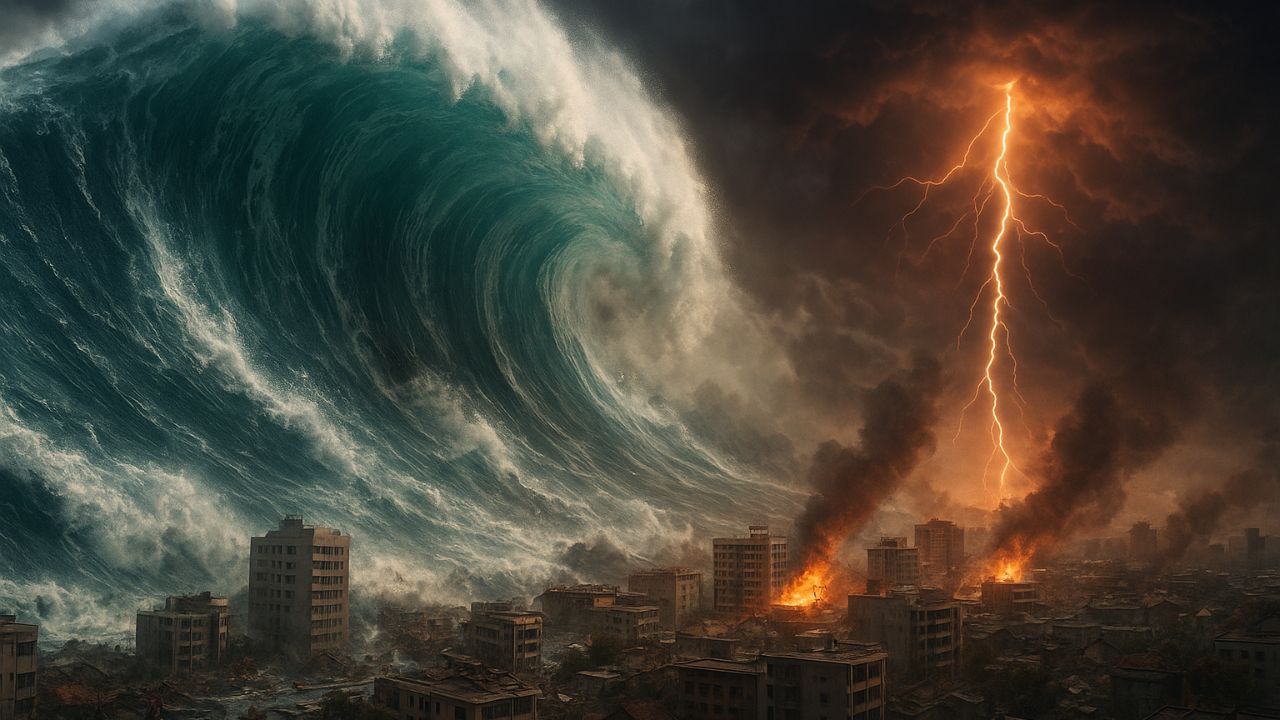
During the expedition, specialists collected samples from the basal slip of the fault responsible for the Tōhoku mega-earthquake that occurred in 2011, which triggered a devastating tsunami and left more than 18,000 victims, as well as causing severe damage to the Fukushima nuclear plant.
Investigating the Remnants of a Historical Disaster
According to Morgane Brunet, a researcher at the University of Quebec in Rimouski, the mission focused on the depths of the Japan Trench, located seven kilometers below sea level.
“During the IODP 405 expedition, we aimed to understand the conditions that make these tsunamis possible. The Japan Trench is a natural laboratory for investigating the fundamental processes of earthquakes that trigger large-scale tsunamis,” the scientist explains.
The magnitude 9.1 tremor that struck the northeast coast of Japan on March 11, 2011, shifted more than 50 meters on a fault that ruptured the seabed.
This abrupt movement generated a tsunami of enormous proportions, affecting entire communities and transforming the global perception of geological risks in densely populated coastal areas.
The sample collection involved deep drilling, reaching more than 800 meters below the sea floor, directly in the zone that ruptured during the disaster.
Rocks and sediments were recovered that hold unique records of the geological processes occurring at the time of the earthquake.
How Drilling Helps Understand Mega-Earthquakes?
The main objective of the expedition goes beyond simple sample collection. With the cores of sediments and rocks, scientists can now simulate earthquake conditions in the laboratory, using numerical models and high-pressure experiments.
The intention is to observe how these rocks behave under extreme stress and better understand the evolution of geological faults.
“If the shallow slip that occurred in the Japan Trench could also happen in other subduction zones around the world, such as Chile, Alaska, or Indonesia, we need to update our prediction models and tsunami preparation strategies,” warns Morgane Brunet.
The data obtained promises to contribute to the construction of more accurate models capable of anticipating the impact of future mega-earthquakes.
This is crucial, considering that many of these subduction zones are located near densely populated areas where a tsunami can cause widespread destruction.
The Japan Trench as a Natural Laboratory
The expedition highlighted that this is not an isolated case. The Japan Trench has unique characteristics but shares similarities with other global subduction regions.
In these areas, the Pacific plate dives beneath the Okhotsk plate, creating conditions that can accumulate energy for decades until released in a catastrophic event.
During the 2011 earthquake, the previous perception that the shallow section of this zone was slowly and silently slipping was completely altered.
The event showed that even in regions considered stable, large ruptures can occur rapidly, displacing enormous volumes of water and triggering devastating tsunamis.
By drilling deep into the fault, researchers were able to access sediment layers that record histories of previous earthquakes, allowing for the reconstruction of past events and better predictions for the future.
Preparing for the Future
With the samples in hand, scientists will test the physical properties of the rocks, including strength and behavior under extreme pressures.
The results will help refine earthquake and tsunami models, as well as provide essential information for prevention policies in high-risk coastal areas.
“Our goal was not only to understand why the Tōhoku earthquake occurred in 2011, but also to help prepare for the next one. By improving tsunami risk assessments and deepening our understanding of mega-earthquake fault behavior, we contribute to building global resilience,” concludes Brunet.
This approach combines cutting-edge science with practical disaster mitigation strategies, highlighting the fundamental role of ocean research in protecting vulnerable populations.
Technology and Expertise in an Unprecedented Mission
Expedition 405 brought together highly specialized scientists and drillers, utilizing the Chikyu, which has advanced equipment capable of reaching great depths.
The mission required rigorous coordination and precision, as drilling more than 800 meters below the sea floor involves significant risks and complex technical challenges.
In addition to collecting samples, the team monitored geological and oceanographic conditions, ensuring that each extracted core was representative of the studied layers.
These efforts reflect the potential of ocean science to unravel geological mysteries that, until recently, were inaccessible.
Global Risks and the Importance of Research
The study of the Japan Trench reinforces that events like the 2011 mega-earthquake can occur in various regions of the planet.
Understanding subduction zones is essential not only for science but also for urban planning, evacuation strategies, and disaster mitigation policies.
The data collected by the expedition can be applied in global models, providing insights into how similar faults can generate tsunamis in other parts of the world.
With the increase in population density in coastal areas, this research becomes even more crucial.
The exploration of the ocean floor, therefore, is not just a quest for knowledge, but a vital tool for saving lives and reducing the impacts of large-scale natural disasters.
With information from Olhar Digital and The Conversation






-

Uma pessoa reagiu a isso.