





 Portuguese
  English
  Spanish
  4 min of reading
  1 comment




Underwater Ice Structures Recently Discovered on the Arctic Seafloor Are Leaving Scientists Perplexed
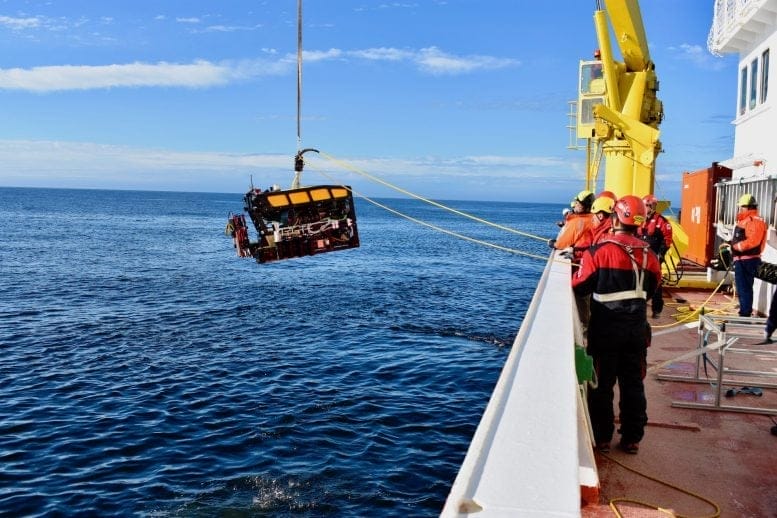
On a expedition to the Beaufort Sea in the Canadian Arctic, researchers made a surprising discovery: vast underwater ice formations in a previously unexplored area.
Using advanced technology from the Monterey Bay Aquarium Research Institute (MBARI), the team found these formations while investigating the impact of melting submarine permafrost, a phenomenon resulting from ancient climatic and geological processes.
This discovery attracted attention because it revealed an unknown process of ice formation on the seafloor, caused by the migration and refreezing of brackish groundwater.
-
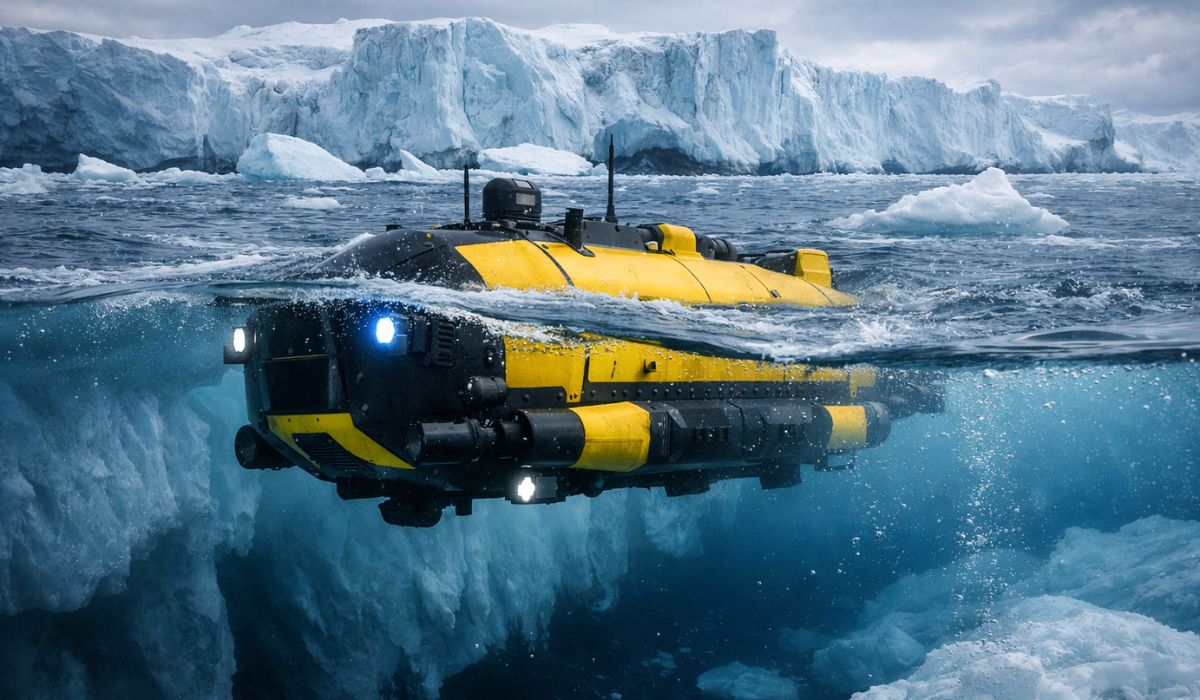
After a submarine disappeared beneath the “Doomsday Glacier,” scientists announce a new monstrous machine capable of operating at 3,000 meters depth to return to the heart of the ice and investigate a threat that could raise sea levels worldwide.
-
NASA has set a date for the beginning of the end of Earth, and it won’t be an asteroid or an explosion: the planet will slowly lose its oxygen over the course of 1 billion years because the Sun is getting hotter every day.
-
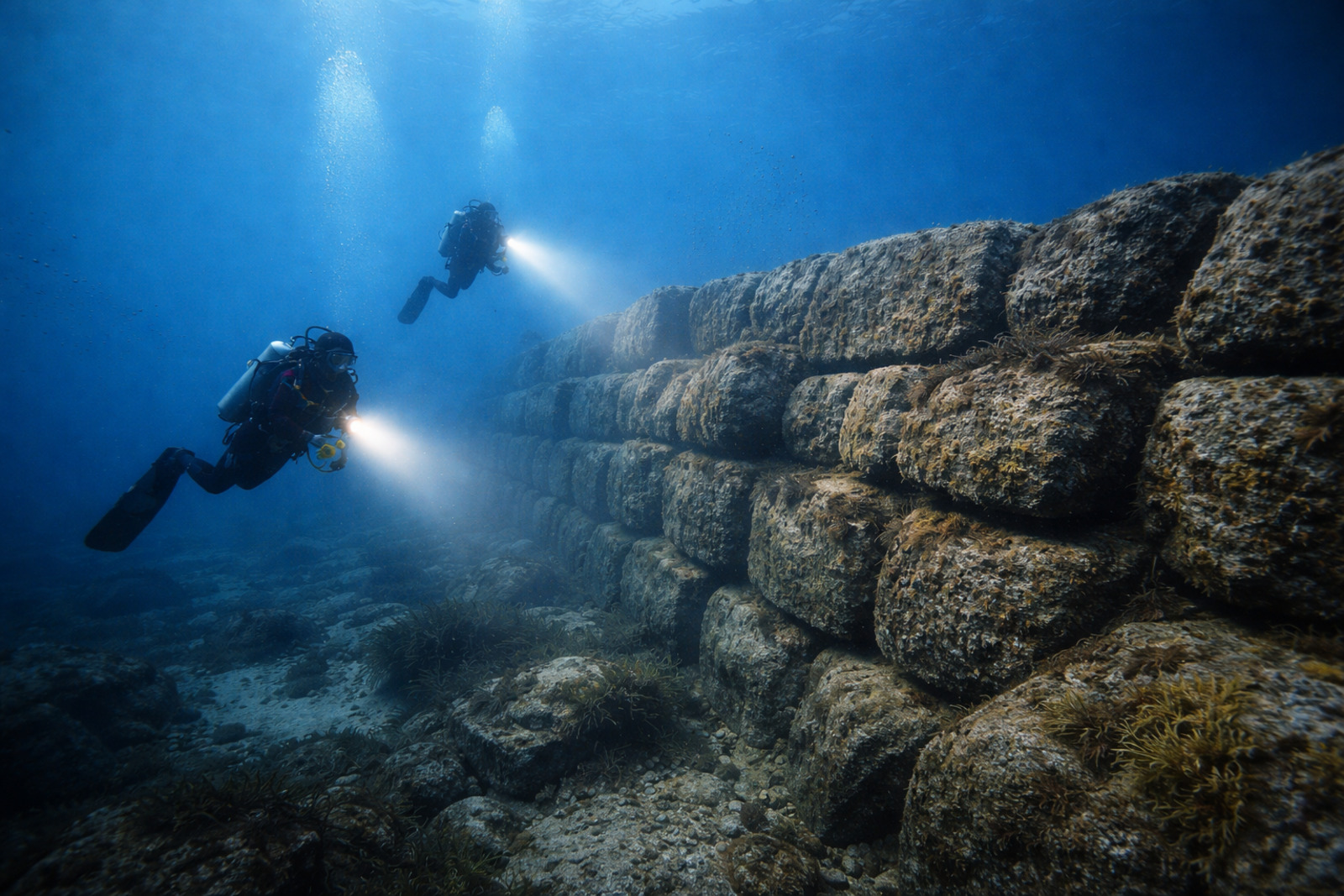
Archaeologists have discovered a colossal submerged wall in the Atlantic, dating back 7,000 years and weighing 3,300 tons, regarded as the largest prehistoric submerged structure ever found in France.
-
Scientists have discovered a gigantic magnetic anomaly hidden beneath the soil of Australia that mirrors the shape of the entire continent and holds geological records of two and a half billion years that could change what we know about the Earth.

This water is generated by the melting of ancient submerged permafrost, which, when it rises to the surface, freezes upon contact with the cold waters at the ocean floor.
The Origin of Modern Ice from Submarine Permafrost in the Arctic Sea
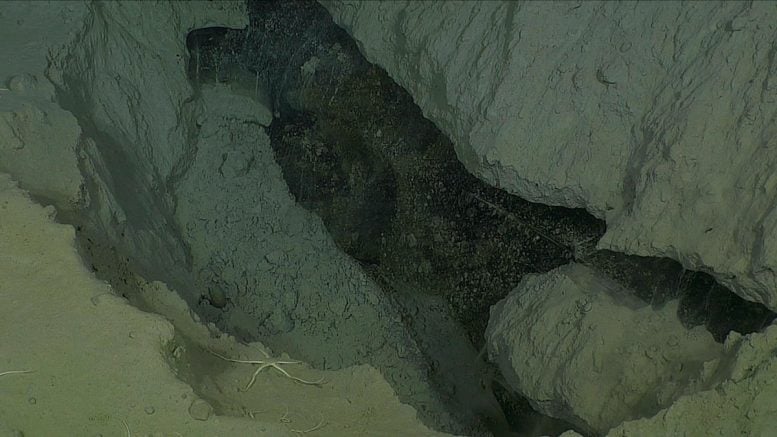
The ice layers observed are not the same as those formed during the last ice age, but are of more recent origin.
They result from the melting of deeper layers of submarine permafrost, which releases brackish water. This water, when it rises to cooler layers near the seafloor surface, refreezes.
The average temperature in this region is about -1.4 degrees Celsius, which facilitates the formation of these new layers of ice.
This dynamic shapes the seafloor through a continuous cycle of melting and refreezing, creating a complex and ever-changing landscape.
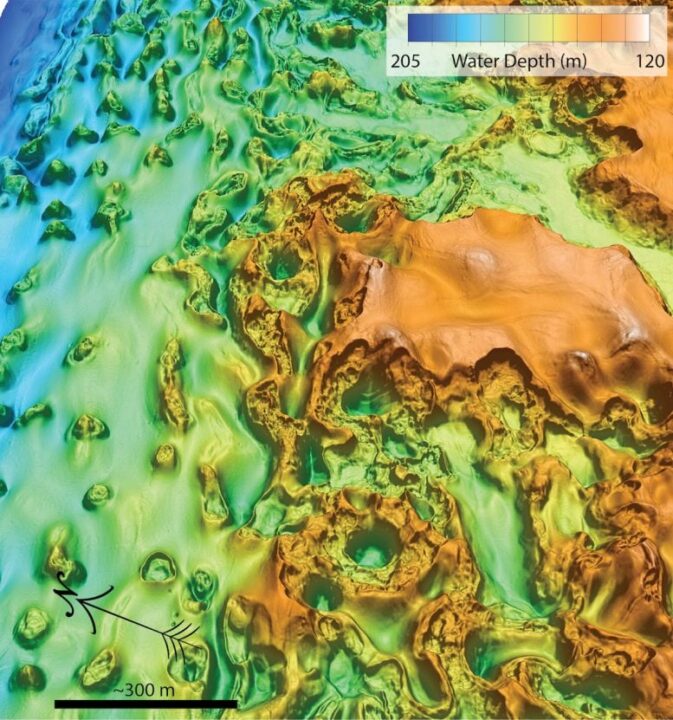
Crater lakes, hills, and depressions are visible evidence of this activity, where the interaction between variations in water salinity and temperature changes plays a crucial role.
The Impact of Ancient Climate Changes
It is important to highlight that the melting of permafrost on the Arctic seafloor is not directly related to human-caused climate change, but rather to natural processes that have occurred over millennia.
After the last ice age, sea levels rose and covered large portions of the ancient permafrost that is now slowly thawing due to heat from deep within the Earth.
These events have direct implications for the underwater geography of the Arctic. When the water from melted permafrost rises and refreezes upon contact with the cold seafloor waters, it creates mounds and ice ridges, while bubbles of water melt through the ice layers, resulting in the formation of large craters.
Long-Term Research in the Arctic
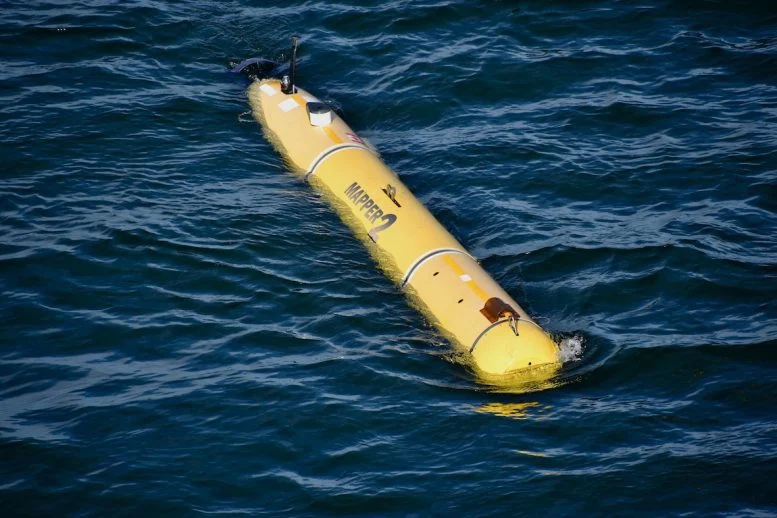
MBARI, along with research institutions from various countries, has been conducting studies in the Arctic since 2003, taking advantage of the retreating sea ice that has made this area more accessible. In 2010, Canadian researchers mapped the rugged seafloor terrain for the first time, and in 2013, MBARI used autonomous underwater vehicles (AUVs) to conduct high-resolution surveys.
Over 12 years, five subsequent surveys revealed the formation of 65 craters, including a massive crater the size of a city block of six-story buildings. This submarine volcanic activity is indicative of the dynamic nature of the Arctic seafloor.
In 2022, a new expedition aboard the research icebreaker Araon used MBARI AUVs to identify newly formed craters and then visually explored these areas with the MiniROV, a remotely operated vehicle. The captured images revealed the mysterious ice formations within these craters.
Implications for the Arctic
The researchers’ findings open a new perspective on submarine permafrost, which was previously viewed as a remnant of the last ice age. It is now known that ice formation continues to actively occur under current conditions, challenging previous understanding and requiring adaptation of research tools to accurately map submarine permafrost.
This revelation also poses challenges for public policy and infrastructure development in the Arctic, as explained by geologist Charlie Paull from MBARI. “These drastic changes on the seafloor have implications for underwater infrastructure in the Arctic,” Paull states. With increased exploration and development in the region, it will be necessary to account for the ongoing transformation of the underwater terrain.
Ice Formation from Brackish Groundwater
The study of ice layers revealed that they form from brackish groundwater that, upon approaching the surface, refreezes. This phenomenon is responsible for creating ice bubbles on the seafloor, which eventually form mounds with ice cores covered by sediments.
Isotopic analyses conducted by scientists confirmed that the ice originated from this groundwater, which rises due to the thawing of ancient permafrost. Small variations in temperature and salinity can influence the process, alternating between melting and freezing different layers of ice.
These processes not only modify the underwater landscape but also raise questions about the location of permafrost throughout the Arctic shelf. What was once seen as a fixed and stable formation is now revealed to be a dynamic system, subject to constant change.




Gostei é um aprendizado de assuntos que algo que nós não conhecemos excelente continue divulgando descobertas interessante o planeta Terra é nossa casa e nos interessa isso . Obrigado .