





 Portuguese
  English
  Spanish
  3 min of reading
  0 comments



Scientists Indicate That 100 Km/H Winds And Geological Factors May Have Created A Temporary Dry Path, Scientifically Explaining The Biblical Event. Models Show That The Crossing May Have Occurred In The Nile Delta, Where The Water Would Have Naturally Receded.
The Crossing of the Red Sea is one of the most iconic moments in the Bible and a fundamental pillar of Judeo-Christian religions. However, scientists believe they have found a natural explanation for the event, suggesting that Moses may not have needed divine intervention to accomplish it.
According to scientists, factors such as strong winds and specific geological conditions may have created a temporary dry path, allowing the passage of the Israelites and surprising the Egyptian troops. This new theory questions the need for a miracle but maintains the idea that the event was extraordinary.
The Biblical Account of The Crossing of The Red Sea
In the Bible, Moses leads the Israelites out of Egypt and brings them to the shores of the Red Sea. Pursued by Pharaoh’s army, they find themselves cornered. Then, Moses stretches out his hand, and the sea parts, forming a dry corridor for the people to pass. When the Egyptian soldiers try to cross, the waters return, drowning them.
-
Volcanic lava transforms into threads as fine as human hair that travel over 30 kilometers by wind and fall like cutting rain on roofs and backyards in Hawaii and Iceland.

-
NASA issues a warning for the feared Godzilla El Niño that could change the planet’s climate in 2026 with extreme warming of the Pacific capable of causing devastating droughts in some regions and historic floods in others simultaneously.

-
Archaeologists discover a 100-meter ship graveyard in a submerged Greek city, and what has appeared on the seabed of Libya could change what was known about this ancient port.

-
You buy the refrigerator and still have to see ads: Samsung starts displaying advertising on appliances and generates negative reactions among consumers.


This account has become one of the most famous passages in the Old Testament, being represented in various cinematic adaptations, such as The Ten Commandments and The Prince of Egypt. But is there a scientific explanation for this phenomenon?
Where Moses May Have Crossed The Red Sea?
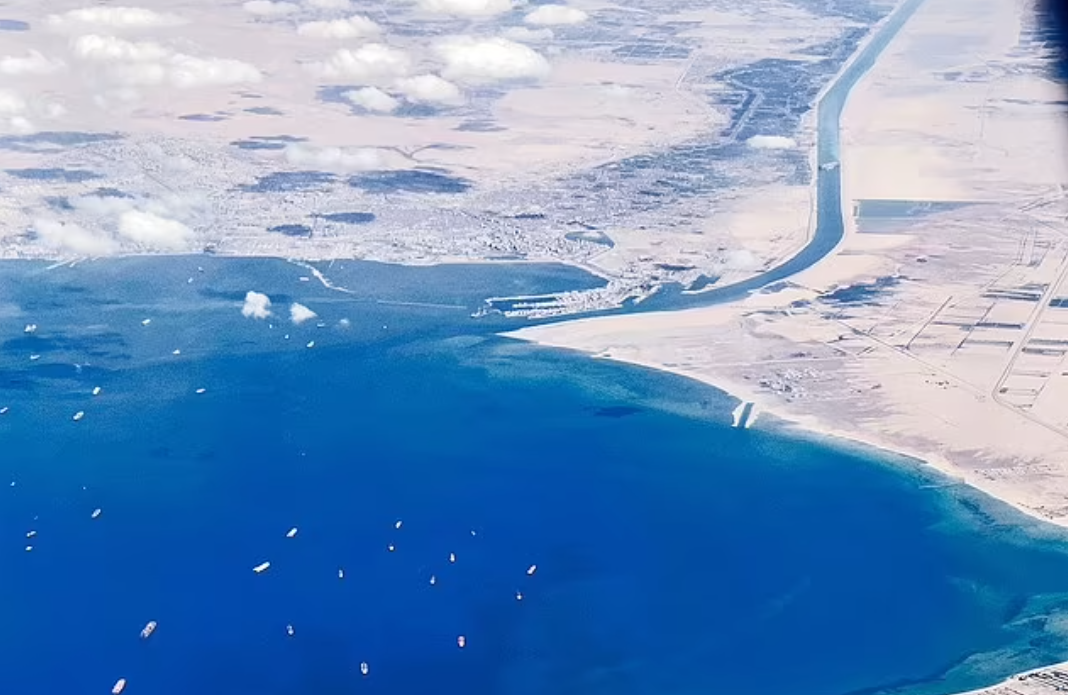
Many believe that the crossing occurred in the Gulf of Aqaba, a deep and wide region of the Red Sea. However, scientists suggest that a more likely location would be the Gulf of Suez or even Lake Tannis, in the Nile Delta.
The Gulf of Suez has shallower waters, making the temporary opening of a dry path due to strong winds more plausible. Historical records indicate that Napoleon Bonaparte and his soldiers crossed this region on foot during low tide in 1789 – an event similar to what is described in the Bible.
The Role of The Winds And The Scientists’ “Wind Reduction” Theory
Scientists at the University of Colorado used computer simulations to test the possibility that strong winds could have separated the waters. The models suggest that a windstorm of 100 km/h blowing for eight hours could push the waters back and create a temporary passage up to 5 km wide.
When the winds ceased, the water would quickly return to its original level, which could explain the drowning of the Egyptian troops. This “wind reduction” theory is supported by historical records and similar natural phenomena observed in other parts of the world.
Other Possible Explanations for The Crossing
Some theories suggest that a tsunami could have caused the water to recede, creating a temporary pathway for the Israelites. However, this hypothesis does not fit perfectly with the biblical account, as a tsunami recedes and returns quickly, while the Bible describes a long period for the passage.
Another possibility is that Moses was well aware of the patterns of the tides and knew exactly when to cross. As the Egyptians were not used to sudden changes in tide, they may have been caught off guard when the waters began to rise again suddenly.







-

Uma pessoa reagiu a isso.