





 Portuguese
  English
  Spanish
  4 min of reading
  0 comments


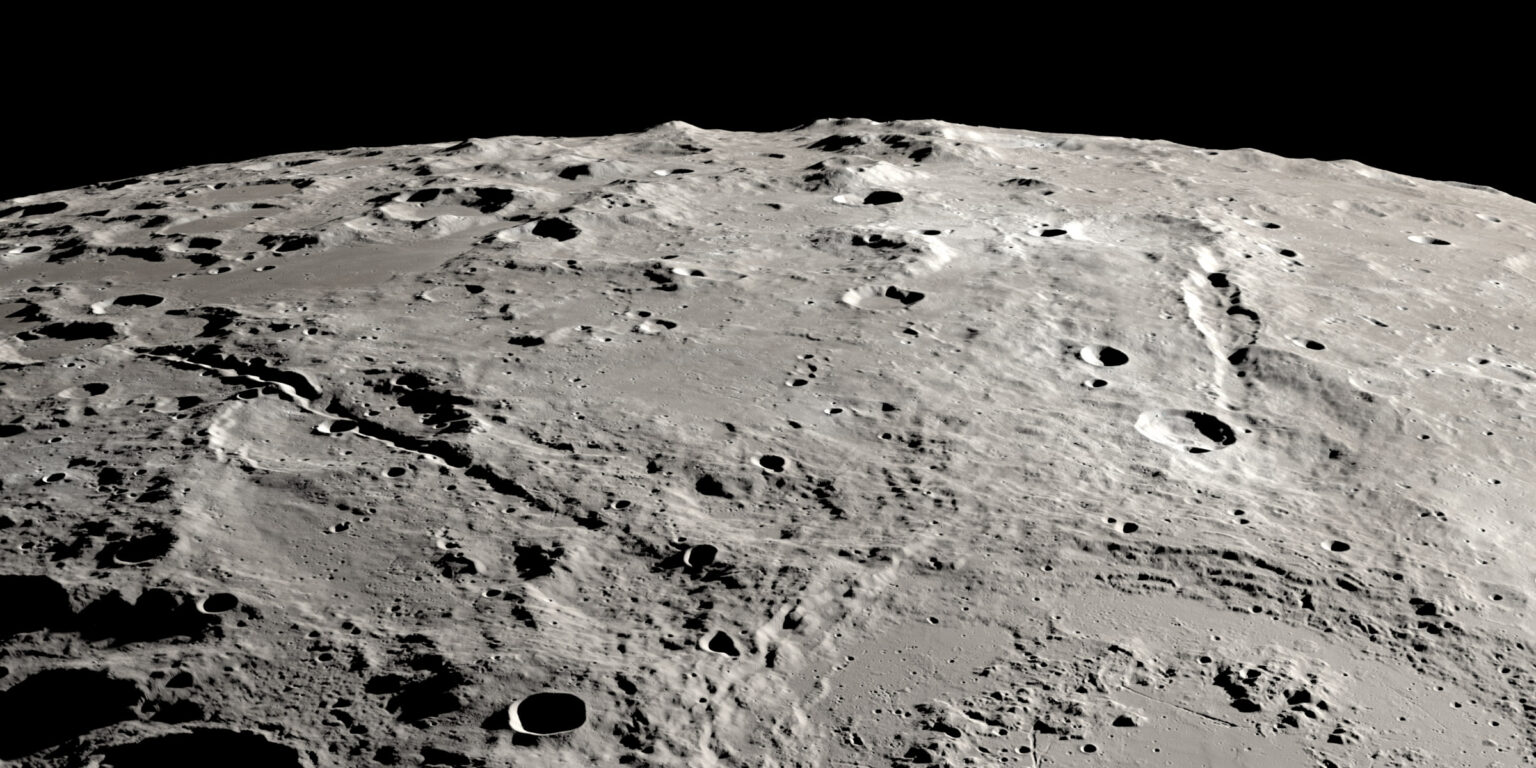
The Moon Hides a Grand Canyon Formed in Just 10 Minutes, Resulting from a Colossal Impact That Marked Its Landscape and Intrigues Astronomers
A canyon, in its terrestrial definition, is a deep and narrow valley with steep walls, often sculpted over ages by the erosive force of rivers or the slow movement of tectonic plates.
But on the Moon, our atmosphere-free natural satellite with no rivers, the formation of canyons follows a dramatically different path—a path forged in minutes by the violence of cosmic impacts.
Two of these gigantic lunar canyons, Vallis Schrödinger and Vallis Planck, rival in scale with the famous Grand Canyon in Arizona.
-
A British startup creates tires that generate electricity in electric vehicles when passing over potholes, speed bumps, and cracks.

-
Scientists have created robots made with living cells that have their own nervous system, swim on their own, explore the environment, and self-organize without any genetic engineering, and now they want to do the same with human cells.

-
Students create a solar-powered ambulance that operates without a plug, without fuel, and still keeps medical equipment running in remote areas.

-
French “ghost” submarine lost in World War II reappears after more than 80 years on the seabed near the coast of Spain.


Vallis Schrödinger extends over 270 kilometers, with a depth of up to 2.7 kilometers. Vallis Planck, even more imposing, reaches similar lengths but plunges 3.5 kilometers below the lunar surface.
Now, a team of researchers has unraveled the cataclysmic events that gave rise to these impressive formations.
The Impact That Created Schrödinger
The story begins with the Schrödinger crater, a vast impact scar located near the lunar south pole. About 312 kilometers in diameter and 4.5 kilometers deep, Schrödinger is one of the largest and best-preserved ringed basins in the solar system.
Approximately four billion years ago, an object of considerable size—whose exact dimensions are still debated—collided violently with the Moon.
The energy released in this impact was unimaginable. The collision instantly vaporized the impactor and a vast portion of the lunar crust. The melted and fragmented rock was ejected in all directions, creating a shockwave of expelled material.
At the center of the crater, the rock, under immense pressure, recoiled and rose, forming a central peak that later collapsed, creating the characteristic inner ring of mountains.
Blink and a Crater Is Formed
However, the formation of the ring peak was not the only result of this colossal impact. The immense energy of the collision launched gigantic flows of rocks and debris at mind-boggling speeds.
These projectiles, following ballistic trajectories, like gigantic cannon fire, slammed back into the lunar surface, but not randomly.
David Kring of the Lunar and Planetary Institute, Danielle Kallenborn, formerly of the same institute and now at the University of St. Andrews, and Gareth Collins of Imperial College London combined their expertise to unravel the mystery of canyon formation. The key was in the meticulous analysis of these ejecta flows.
Using a combination of high-resolution images and elevation data obtained by NASA’s Lunar Reconnaissance Orbiter (LRO), the team meticulously mapped the canyons.
Instruments like the Lunar Orbiter Laser Altimeter (LOLA) provided precise measurements of the depth, width, and extent of these structures.
Secondary Craters
Researchers identified 15 notable secondary craters along Vallis Schrödinger, each with diameters between 10 and 16 kilometers.
The presence of these secondary craters, aligned with the paths of the canyons, provided crucial evidence: Vallis Schrödinger and Vallis Planck were not formed by slow and gradual processes, but rather by chains of high-energy, nearly simultaneous impacts.
By analyzing the distribution and size of these secondary craters, the team was able to apply ballistic trajectory equations and crater scaling laws.
These calculations revealed that the debris flows struck the lunar surface at impressive speeds, ranging from 0.95 to 1.28 kilometers per second. At that speed, a projectile could cross Brazil, from north to south, in less than an hour.
The most surprising, however, was the scale of time. The team estimated that the excavation of the deep trenches forming Vallis Schrödinger and Vallis Planck took place in less than ten minutes. In a geological blink of an eye, these lunar canyons were sculpted, an impressive demonstration of the brute force of cosmic impacts.
An Angular Impact
The study also revealed that the impactor that created Schrödinger struck the Moon at a shallow angle. This finding has important implications for NASA’s Artemis program, which plans to send astronauts back to the Moon, specifically to the lunar south pole.
If the Schrödinger impact had ejected debris uniformly in all directions, large areas of the south pole—including the Artemis exploration zone—would be covered by thick layers of ejecta.
This would hinder access to the Moon’s oldest crust and deposits of impact-melted rock, materials of great scientific interest.
Fortunately, the oblique angle of the impact directed most of the debris away from the south pole. This means Artemis astronauts will have easier access to these geologically valuable materials, allowing them to collect samples that may reveal crucial information about the history of the Moon and the early solar system.
The study was published in Nature Communications: https://doi.org/10.1038/s41467-024-55675-z. With information from ZM.







Seja o primeiro a reagir!