





 Portuguese
  English
  Spanish
  5 min of reading
  2 comments


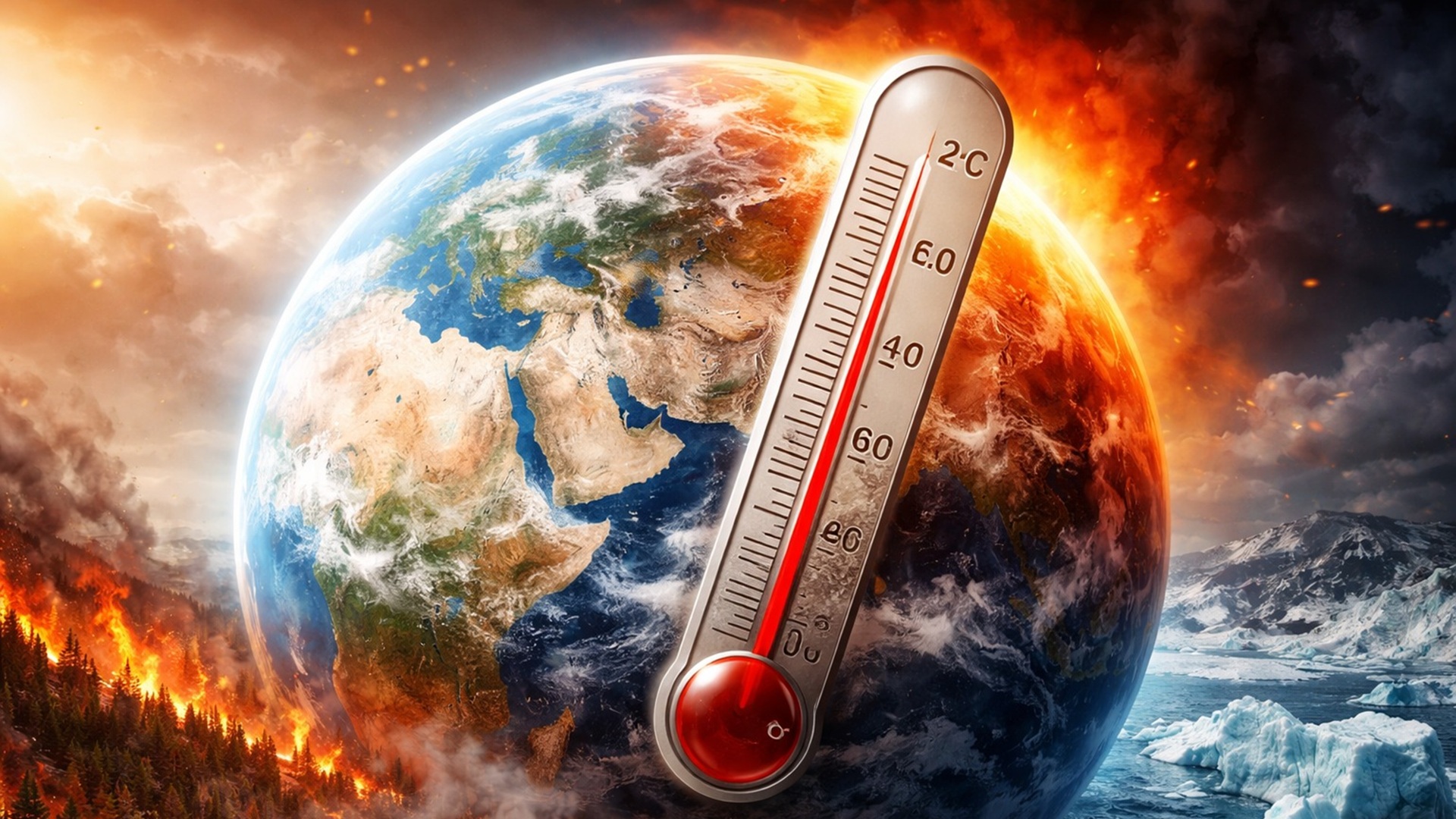


Study Conducted By Researchers From The Potsdam Institute Analyzed Five Large Global Climate Datasets And Identified That The Global Warming Rate Rose From Less Than 0.2°C Per Decade Between 1970 And 2015 To About 0.35°C In The Last Decade, With Statistical Evidence Exceeding 98%
A recent scientific study points out that global warming has significantly accelerated since 2015, according to an analysis of five large global climate datasets. Researchers warn that the current pace could lead to surpassing the 1.5°C limit of the Paris Agreement before 2030.
The research was conducted by scientists from the Potsdam Institute for Climate Impact Research and analyzed global temperature data to understand how global warming has evolved over the past decades. The study shows that the rate of temperature increase has significantly risen in the last ten years.
Between 1970 and 2015, the global average temperature rose at a rate of just under 0.2°C per decade. However, since 2015, the pace has nearly doubled, reaching approximately 0.35°C per decade, a value higher than recorded at any time since measurements began in 1880.
-
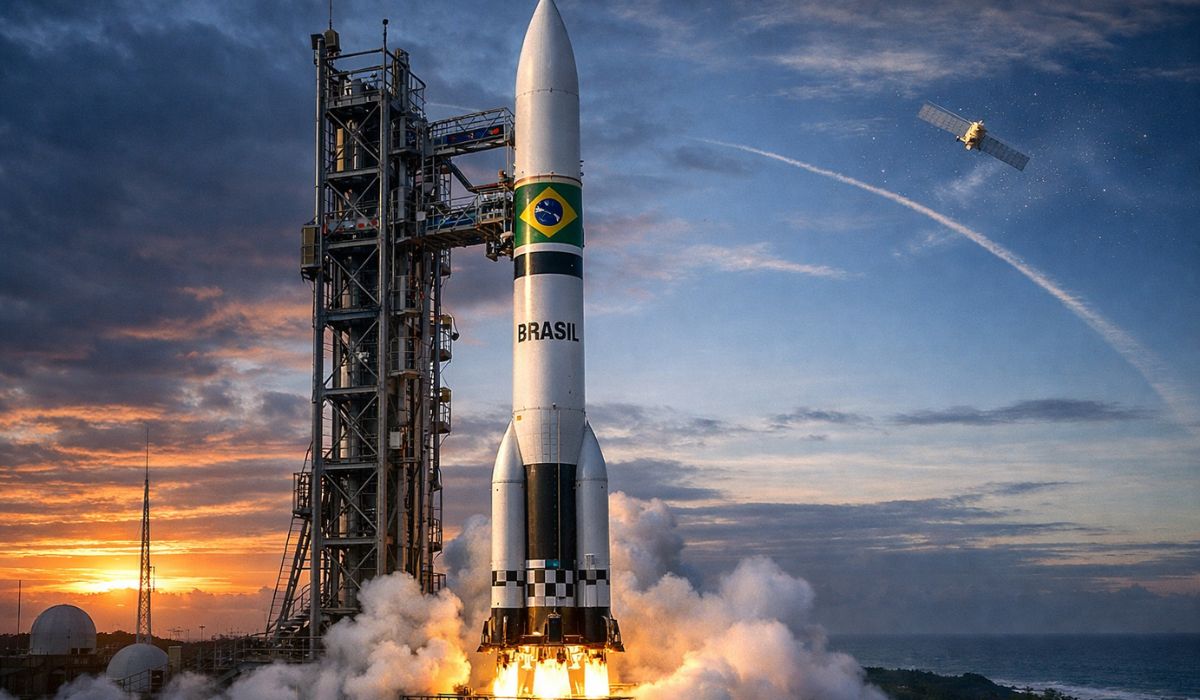
After decades of failed attempts, Brazil is once again looking to space with an orbital rocket measuring 12 meters, weighing 12 tons, costing R$ 189 million, and scheduled for launch in 2026, in a new race to finally achieve autonomous access to orbit.
-
The Earth will plunge into a few minutes of darkness in broad daylight in August 2026, when a total solar eclipse transforms the sky into one of the most impressive astronomical phenomena in recent years.

-
How the terraforming of Mars can transform the planet: artificial aerosols can increase the temperature by up to 35°C in 15 years, creating conditions for liquid water.

-
Scientists drilled nearly 8,000 meters into the ocean floor above the fault that caused the 2011 tsunami in Japan and discovered that a layer of clay 130 million years old was responsible for making the wave much worse than any model had predicted.


Acceleration Of Global Warming Appears Consistently In Different Datasets
To reach their conclusions, researchers analyzed five major global temperature datasets: NASA, NOAA, HadCRUT, Berkeley Earth, and ERA5. These records are widely used by the scientific community to monitor changes in the planet’s climate.
The scientists applied a method that removes known natural influences on the climate system to more accurately identify the signal of global warming. This process allowed them to reduce the so-called “noise” caused by natural phenomena and observe the long-term trend more clearly.
Among the natural variables considered are events such as El Niño, volcanic eruptions, and solar cycles. These factors can cause temporary fluctuations in global temperature, but they do not represent the main trend observed over decades.
Grant Foster, a co-author of the study, explained that filtering these natural influences was essential to revealing the actual behavior of global warming. According to him, this procedure makes the evolution of warming caused by persistent factors over time more visible.
Data Shows Increase In Global Warming Rate In The Last Decade
The data analysis revealed that the acceleration of global warming began to become noticeable around 2013 or 2014. From that point on, all datasets started to indicate a faster increase in the planet’s average temperature.
In the last ten years, the average warming rate was estimated at about 0.35°C per decade. This value represents a considerable acceleration compared to the period between 1970 and 2015, when the rate remained below 0.2°C per decade.
According to the researchers, the years 2023 and 2024 recorded the highest levels of warming since the beginning of global measurements. These two years appear as the hottest ever recorded in the analyzed historical series.
Professor Stefan Rahmstorf, the lead author of the study, stated that the adjusted data indicates an acceleration of global warming since 2015 with a level of statistical certainty exceeding 98%. The result was consistent across all datasets evaluated.
Scientists Warn Of Need To Reduce CO2 Emissions
According to the authors of the research, the only way to slow down global warming is to rapidly reduce carbon dioxide emissions resulting from the burning of fossil fuels. The study highlights that the future trajectory of the climate directly depends on the speed of these reductions.
Rahmstorf warned that if the pace observed in the last decade continues, the 1.5°C limit set by the Paris Agreement could be surpassed before 2030. This limit was established as a benchmark to reduce the impacts of climate change.
The researchers state that global warming will only stop increasing when global CO2 emissions reach zero. Even in this scenario, scientists indicate that reversing the warming that has already occurred is unlikely to be possible.
The study published in the journal Geophysical Research Letters emphasizes that stopping the current trend directly depends on human decisions related to carbon emissions. According to the authors, stopping the rise in temperature is linked to the moment humanity reaches net zero emissions.
Paris Agreement Sets Goals To Limit Global Temperature Increase
The Paris Agreement, adopted in 2015, is an international treaty aimed at addressing climate change. The treaty sets goals to reduce carbon emissions and limit the increase in the global average temperature.
Among the key objectives is to keep the increase in global temperature well below 2°C above pre-industrial levels. The agreement also makes an additional effort to limit this increase to 1.5°C.
According to the treaty, countries must ensure that global emissions peak as soon as possible. After this point, governments should promote rapid reductions based on the best available scientific evidence.
The agreement also recognizes that developing countries may take longer to reach peak emissions. Nonetheless, the international commitment provides for progressive reductions to limit the impacts of climate change.
Previous research cited in the study indicates that limiting global warming to 1.5°C may become increasingly important. Estimates suggest that around 25% of the global population could face significant increases in drought conditions if warming continues to advance.
Study Does Not Identify Specific Cause Of Recent Acceleration
Although identifying the acceleration of global warming, the study did not investigate the specific causes of this more rapid temperature increase.
The authors focused their analysis on measuring trends and the statistical evaluation of climate data.
Even without pointing to a single cause for the acceleration, researchers indicate that the current pace could continue or even intensify under the current political scenario. This scenario depends on decisions related to carbon emission reductions.
Scientists emphasize that the future evolution of global warming is directly linked to the speed at which CO2 emissions from fossil fuels are reduced. According to the study, this factor will determine the pace of warming in the coming decades.









O navegador Amyr Klink, em seu livro MAR SEM FIM, 360° ao redor da Antártica, escrito no ano 2000, já alertava sobre as questões climáticas e apontava que se nada fosse feito seria irreversível.
Temos que começar a pensar no que podemos fazer com o que está por vir.
Perfeito, o navegador Amyr Klink, em seu livro MAR SEM FIM, 360° ao redor da Antártica, escrito no ano 2000, já alertava sobre as questões climáticas e apontava que se nada fosse feito seria irreversível.