





 Portuguese
  English
  Spanish
  3 min of reading
  0 comments


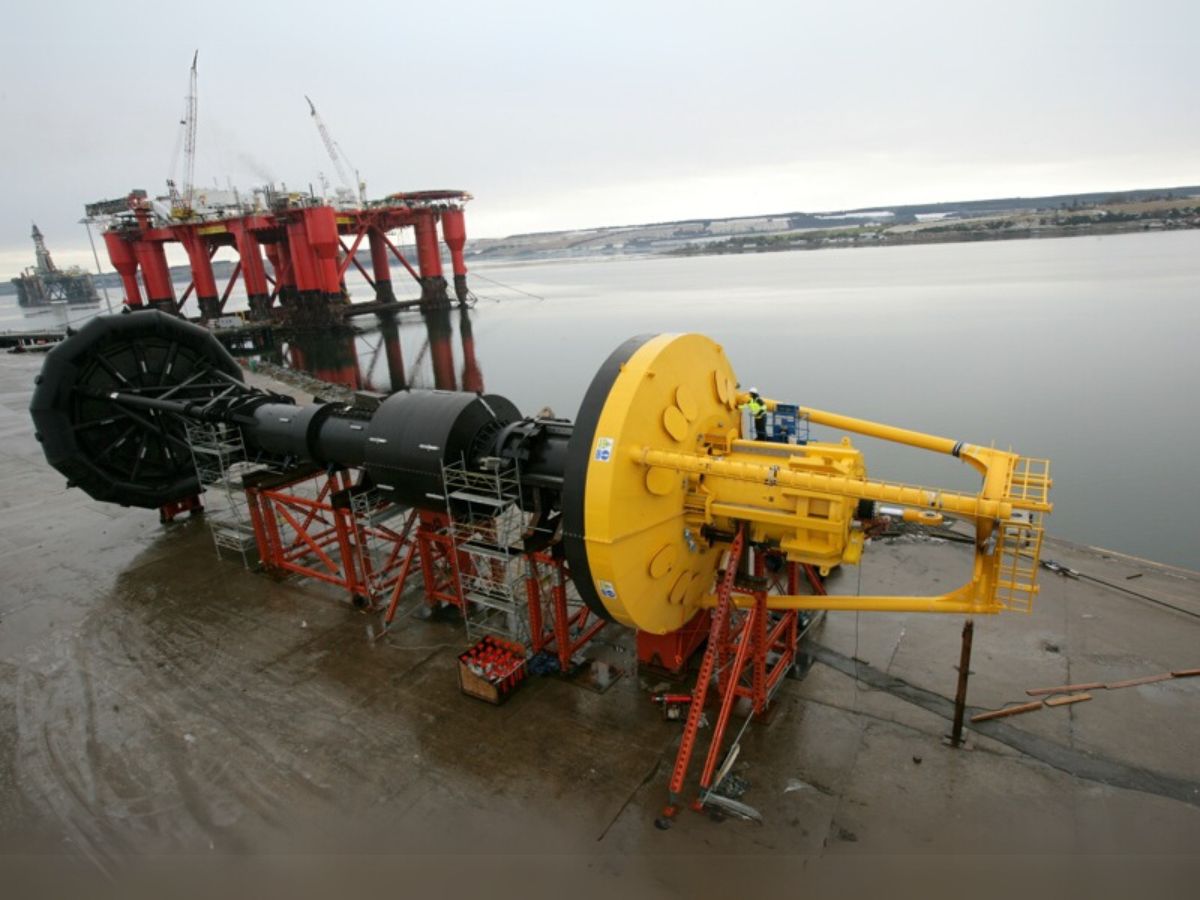
A Discreet But Extremely Powerful Device Has Just Reached 15 MWh of Clean Energy Generated Offshore. What’s the Secret Behind This Advancement?
The American company Ocean Power Technologies announced that the green electricity production from its PB3 Powerbuoy devices, which utilize wave energy, has reached 15 MWh. Although not well-known, wave energy is much less intermittent than wind or solar energy and allows for the production of a large amount of electricity.
In France, the implementation of several wave energy plants could produce up to 40 TWh per year, according to estimates published on TotalEnergies’ website. This is equivalent to the production capacity of 4 to 5 nuclear reactors. Among the most important companies developing solutions to explore this high-potential energy source is Ocean Power Technologies. This American public company recently announced that its PB3 Powerbuoy has reached an important milestone in terms of green electricity production.
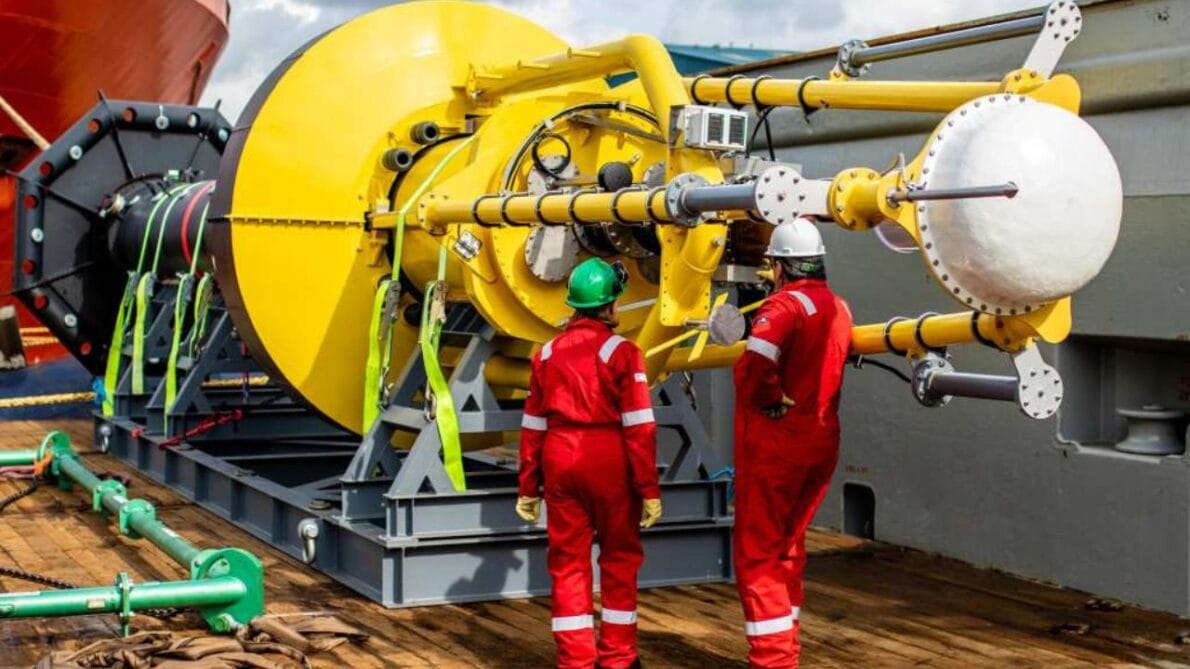
An Estimated Production of Approximately 15 MWh of Energy
In a press release, Ocean Power Technologies stated that the electricity production from its PB3 Powerbuoy is estimated at approximately 15 MWh. The numbers disclosed by the American public company demonstrate the growing adoption of its devices that utilize wave energy. According to the company, this production comes from leases, sales, and investments in clean energy, made under government programs. For information, if OPT has managed to reach this significant milestone, it is thanks to its installations distributed across the Atlantic Ocean, Pacific Ocean, as well as the North Sea and the Mediterranean Sea. Exxon Mobil, Shell, Chevron, and the Office of Naval Research are among its main clients.
-
Global warming will expose a treasure hidden under the ice of Antarctica and may spark an international dispute over gold and valuable minerals.

-
A street vendor from Praia Grande built a robot made of scrap from scooters and washing machines that pulls his popcorn cart on the beach, emits sounds, and interacts with customers, becoming an attraction on the coast of São Paulo.

-
The specifications of the Xiaomi 18 Pro Max have been leaked, and the highlight is a dual 200 MP camera with a new 22-nanometer technology that promises to consume less energy and capture details in shadows and bright areas using LOFIC HDR.
-
If the trip to the Moon were a hoax, it would be necessary to keep the secret among 400,000 people for more than 50 years and to deceive even the Soviet Union, which was tracking the radio signals coming from the exact direction of the satellite during each Apollo mission.


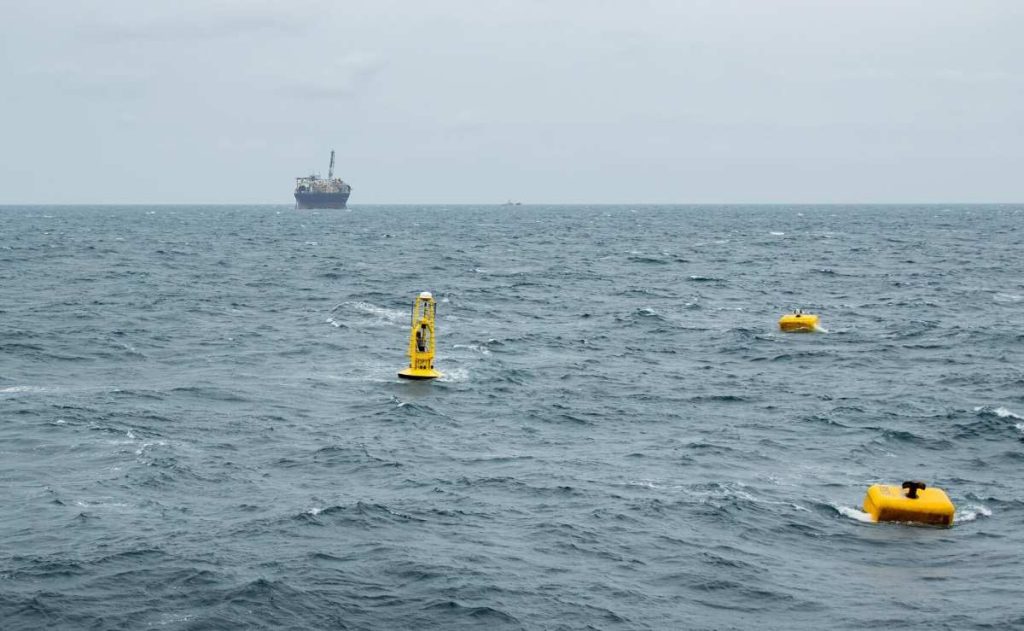
Energy Devices That Can Be Used in Different Areas
The CEO of OPT stated that these numbers prove that off-grid devices utilizing marine energy are not just intended for the R&D community and constitute viable commercial solutions. According to him, Powerbuoys can be used, among other things, to recharge USVs (uncrewed surface vehicles) that monitor the marine environment and to support the security industry. He also added that his company is already working with players from different fields such as defense, offshore wind energy, marine sciences, oil and gas, and is eager to announce further developments.

A Device That Can Provide Electricity Continuously
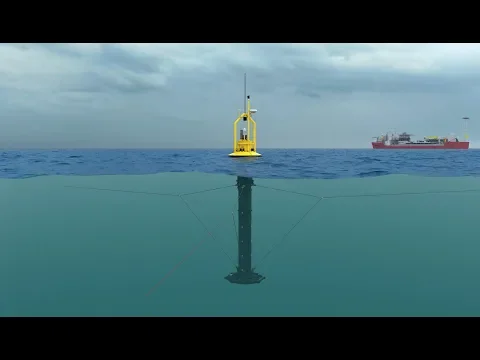
To convert wave energy into electricity, the Ocean Power Technologies’ PB3 Powerbuoy uses a direct-drive generator that continuously powers a battery. The latter serves to provide electricity to nearby or coastal installations, but also to store enough energy to meet their needs during long periods of calm at sea. This allows the device to power equipment or buildings continuously.
It is worth noting that, unlike wind turbines, devices designed by OPT can operate during weather events such as storms or cyclones. In 2011, during the passage of the category 3 hurricane Irene, the Powerbuoys were tested off the coast of New Jersey. Despite the high winds and tumultuous sea, they successfully fulfilled their mission, powering coastal security networks as part of a project with the U.S. Navy.
For more information, visit: oceanpowertechnologies.com






Seja o primeiro a reagir!