





 Portuguese
  English
  Spanish
  5 min of reading
  1 comment


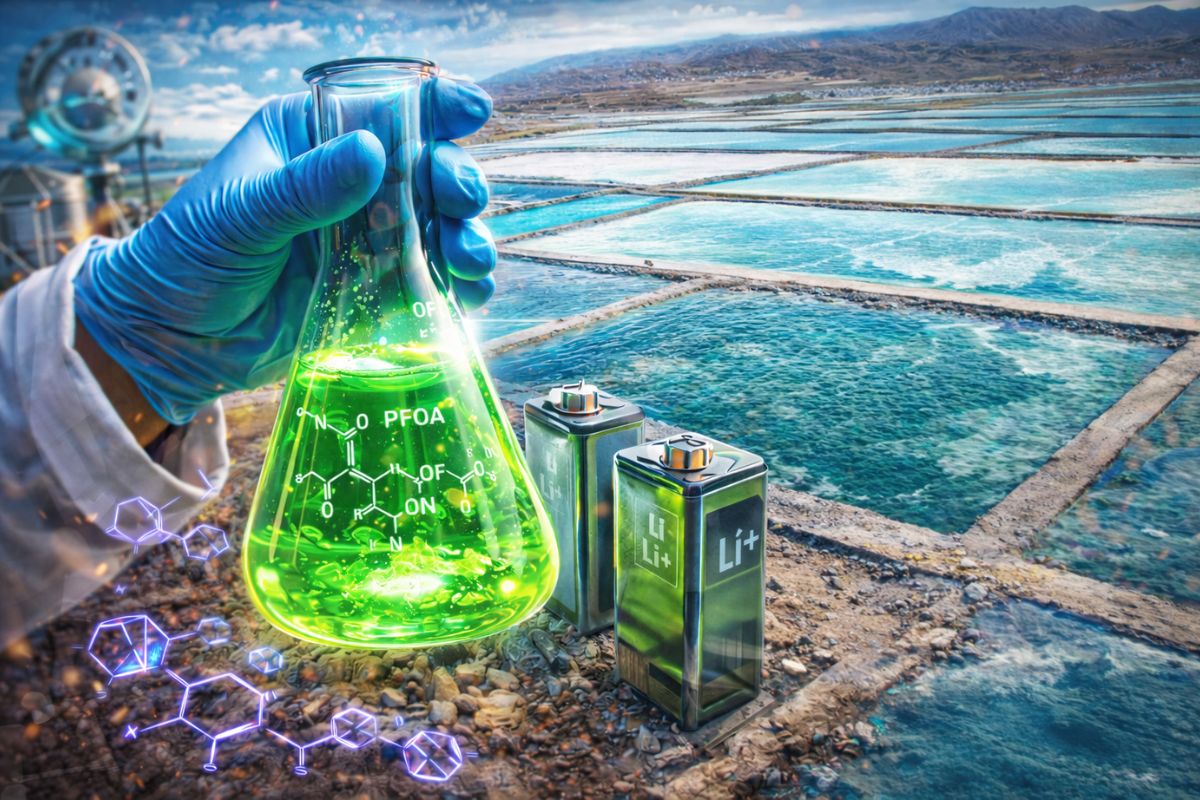


Study Uses PFAS in Brine to Extract Lithium, Reduce Environmental Impact, and Improve Batteries with Less Water.
The quest to reduce environmental impact in raw material production for batteries has taken a new turn with a study that uses residual PFAS, the so-called forever chemicals, to extract lithium from high salinity brines with 99% purity in just a few seconds.
The proposal is striking because it reverses the traditional logic. Instead of treating these substances merely as environmental liabilities, researchers have begun to use them as functional raw materials in a process that also consumes less water than conventional methods. The result combines waste repurposing, lithium recovery, and technological advancement for batteries.
How The Forever Chemicals Became a Useful Tool
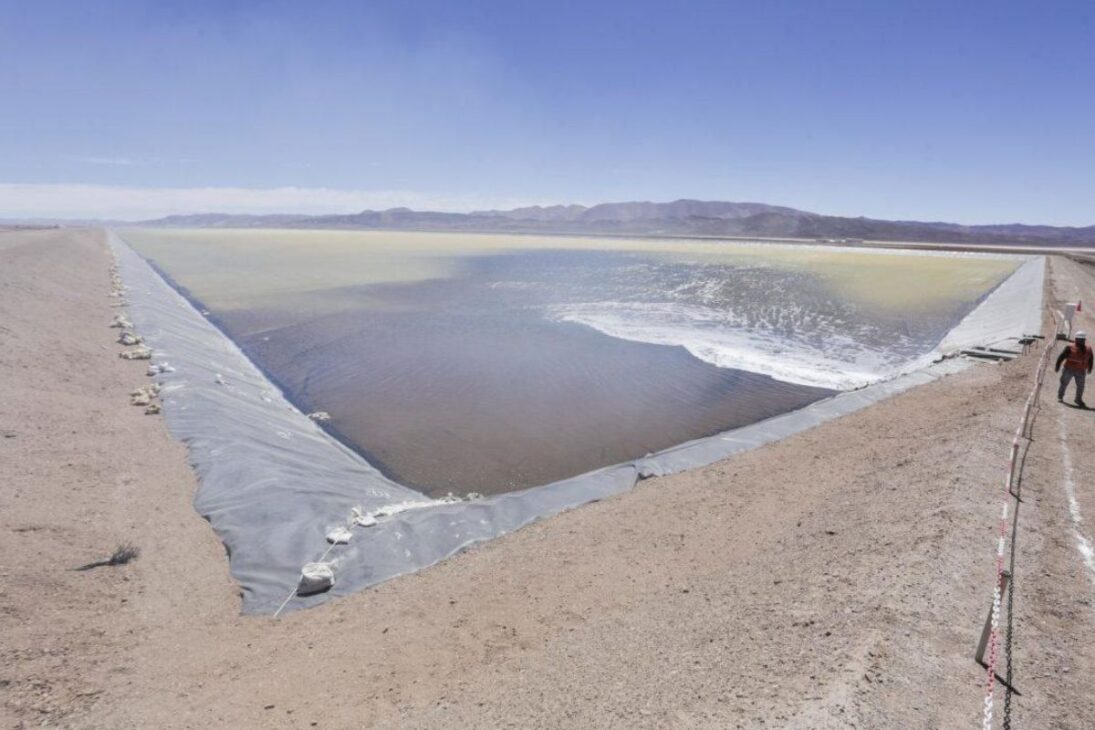
Perfluoroalkyl and polyfluoroalkyl substances, known as PFAS, have been marked by their persistence in the environment.
-
A “silent skill” is allowing Brazilians to earn up to R$ 22,000 per month without a degree and become indispensable for companies that rely on millions of data to survive.

-
Researchers at the Toyota Research Institute found that if a human uses robotic arms to flip a pancake 300 times in an afternoon, the robot learns to do it on its own the next morning, and this is currently the most promising method to solve the biggest bottleneck in modern robotics.

-
Goodbye iron: a common item in households is starting to lose space to technology that smooths clothes in minutes without an ironing board and with less energy consumption.

-
Antarctica reveals an unusual clue high in the Hudson Mountains, and what appeared to be just an isolated rock began to expose a secret hidden under the ice for ages.


They contaminate soil and water and resist decomposition, which is why they earned the nickname forever chemicals.
In this study, however, the team at Rice University decided to use these molecules differently. The idea was to leverage the fluorine locked in PFAS to reduce environmental impact while also recovering a valuable material for the battery supply chain. It’s a strategy that transforms a problematic waste into an industrial input.
Process Starts with Saturated Activated Carbon
The route developed by researchers begins with activated carbon already used in the filtration of PFAS in water and firefighting foam. Normally, this saturated material is treated as hazardous waste.
In the new process, it is viewed as a source of fluorine. When mixed with high salinity brine, the material creates a reaction environment where the trapped fluoride anions can be released and then bind to lithium cations.
The proposal to reduce environmental impact precisely appears in the repurposing of a liability that previously required disposal.
Extreme Heat Pulse Releases Fluorine and Forms Lithium Fluoride
To release the fluorine trapped in the PFAS molecules, the team used instantaneous Joule heating.
The mixture was subjected to a high-energy pulse that raised the temperature above 1,000 °C in milliseconds.
This heat breaks the strong bonds between carbon and fluorine. Once released, the fluorine finds the lithium present in the brine and forms lithium fluoride.
The method is intended to reduce environmental impact by shortening extraction time and decreasing reliance on lengthy, resource-intensive steps.
Rapid Separation Increases Lithium Purity
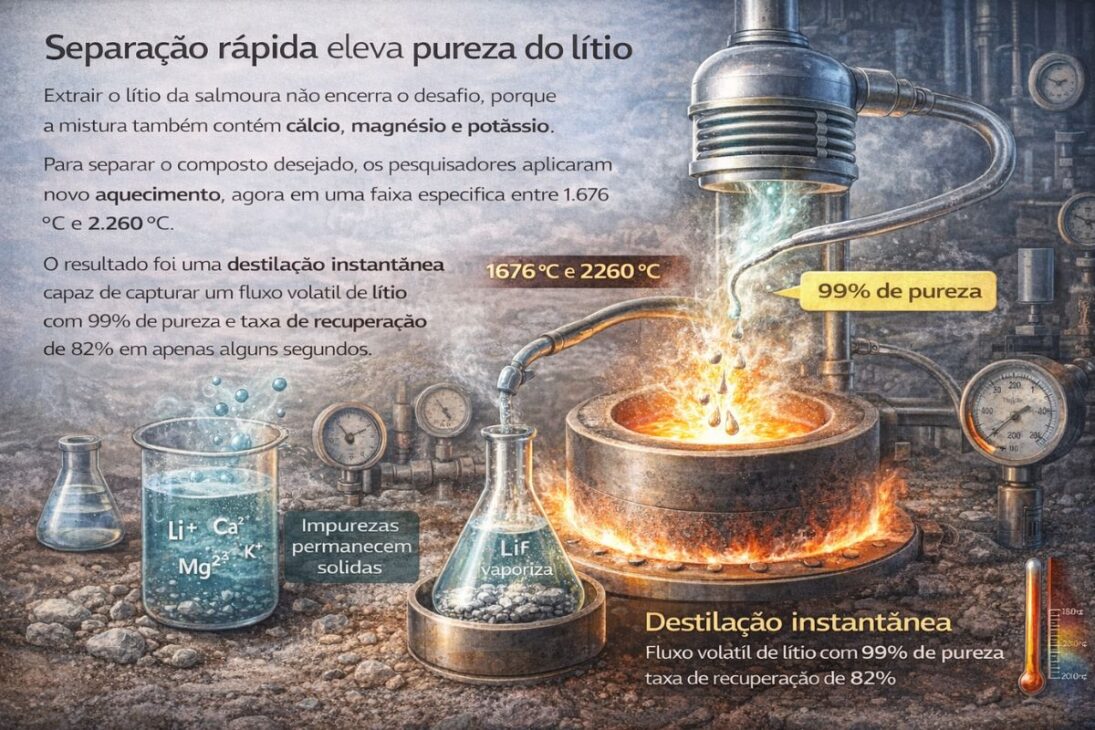
Extracting lithium from brine does not end the challenge because the mixture also contains calcium, magnesium, and potassium.
To separate the desired compound, researchers applied new heating, now in a specific range between 1,676 °C and 2,260 °C.
In this stage, lithium fluoride vaporizes, while heavier impurities, such as magnesium and calcium fluorides, remain solid.
The result was an instantaneous distillation capable of capturing a volatile flow of lithium with 99% purity and an 82% recovery rate in just a few seconds.
Method Uses Less Water and Takes Minutes, Not Months
One of the most relevant points of the study is the comparison with conventional lithium extraction methods.
According to the data provided, other routes often rely on large evaporation tanks exposed to the sun for months, consuming billions of liters of water in often arid regions.
In this case, the process takes minutes. Furthermore, it has been presented as an alternative to reduce environmental impact because it uses significantly less water and energy than conventional brine extraction. This difference helps explain why the research draws attention beyond the laboratory.
Dual Advantage Combines Waste Treatment and Battery Supply Chain
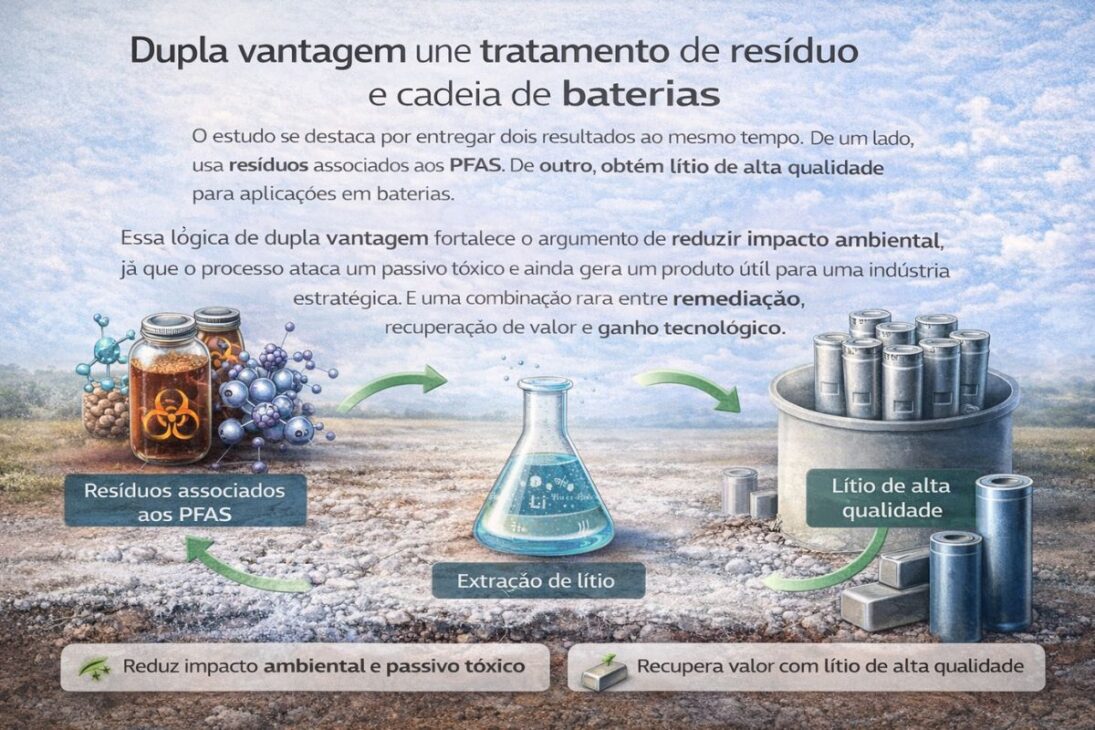
The study stands out for delivering two results at the same time. On one hand, it uses waste associated with PFAS. On the other, it obtains high-quality lithium for battery applications.
This dual advantage logic strengthens the argument of reducing environmental impact, as the process targets a toxic liability and generates a useful product for a strategic industry. It is a rare combination of remediation, value recovery, and technological gain.
Recovered Lithium Also Improved Performance in Batteries
Researchers did not stop at the extraction stage. The recovered lithium fluoride was incorporated into standard lithium-ion battery electrolytes to check whether the material would perform adequately for real use.
Tests showed that this recycled source improved the stability and performance of batteries compared to conventional materials.
This amplifies the significance of the discovery, as it is not just about reducing environmental impact, but also generating an input with sufficient quality for demanding technological applications.
Research Points to a New Path for Difficult Waste
The main strength of the study lies in showing that an extremely problematic waste can gain a productive function instead of being viewed solely as an environmental threat.
By using PFAS as part of the extraction route, scientists suggest a new way of thinking about persistent and high-risk materials.
Even though the path to large-scale application depends on new advances, the result already shows a promising direction.
When chemistry manages to transform a contaminant into an industrial tool, the debate on sustainability reaches a new level.
What This Discovery Could Change
If the technique advances beyond its current phase, it could influence both the discussion on PFAS treatment and the search for more efficient routes to obtain lithium.
In a scenario of high battery demand, finding ways to reduce environmental impact without compromising purity and performance is likely to gain increasing relevance.
The research published in the journal Nature Water showcases just that: it is possible to tackle two problems simultaneously, repurposing forever chemicals and producing lithium suitable for lithium-ion batteries.
It is a solution that unites materials science, waste management, and energy innovation in a single equation.
Do you believe that technologies like this can truly reduce environmental impact in the global race for lithium and batteries?






Sim ,acredito