





 Portuguese
  English
  Spanish
  6 min of reading
  0 comments


Five Families Transform Natural Cavity Into Hidden Paradise in Wulong Mountains, Chongqing
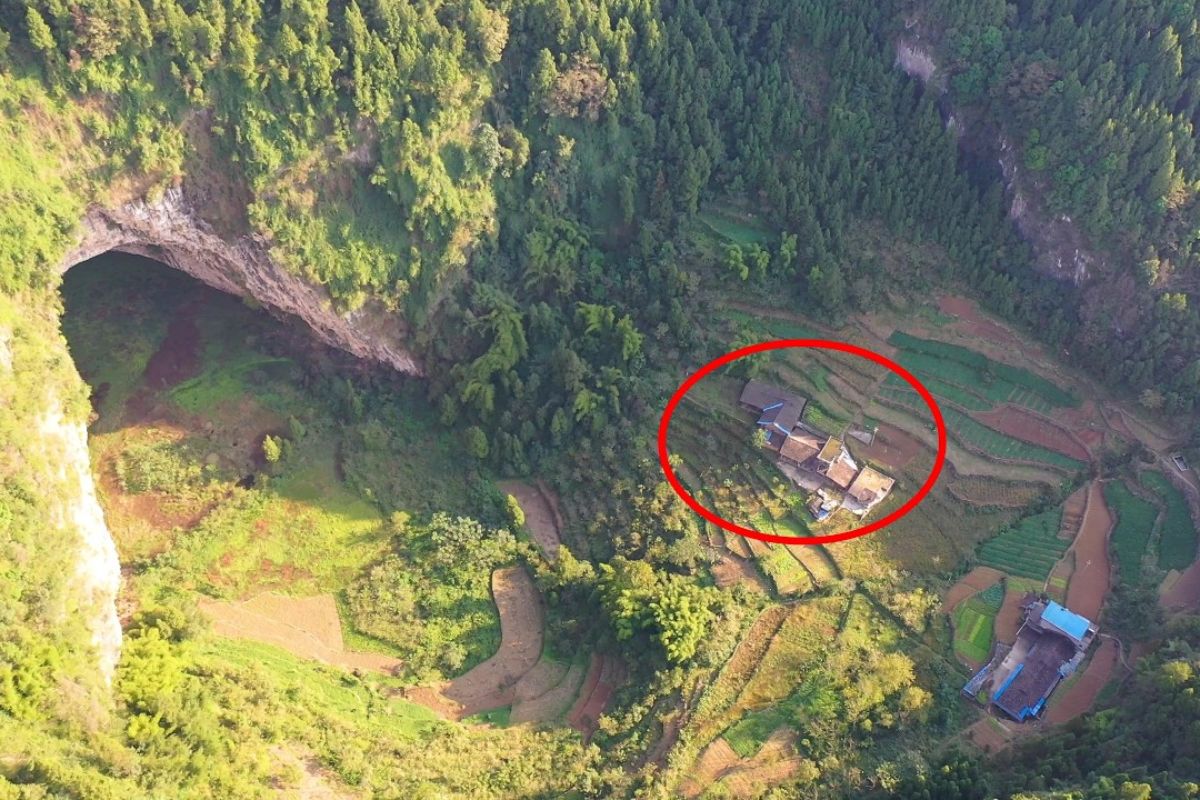
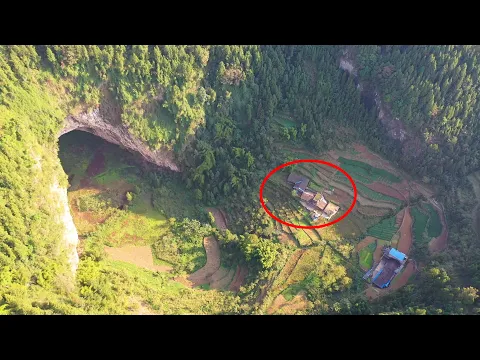
In a secluded valley in the Wulong region of Chongqing, five families have lived for decades inside a natural cavity, surrounded by plantations, spring water, and absolute silence, far from the bustling routine of big cities. The scenery, seen from above, resembles a natural amphitheater of rock and greenery, with simple houses nestled on the slope and layers of cultivated soil forming real planting terraces.
There, what would be an inhospitable place for many has become a way of life. The tiankeng of Wankuntuo, as it is known, functions as a private valley where time seems to move at a different pace. Among gardens, fruit trees, and running water, the families maintain an almost completely self-sufficient lifestyle, supported by agriculture, small livestock, and a direct relationship with the nature that surrounds them.
A Giant Hole That Became Permanent Housing
In the deep mountains of Wulong, what first catches the attention is the giant hole opened in the terrain, surrounded by dense vegetation.
-
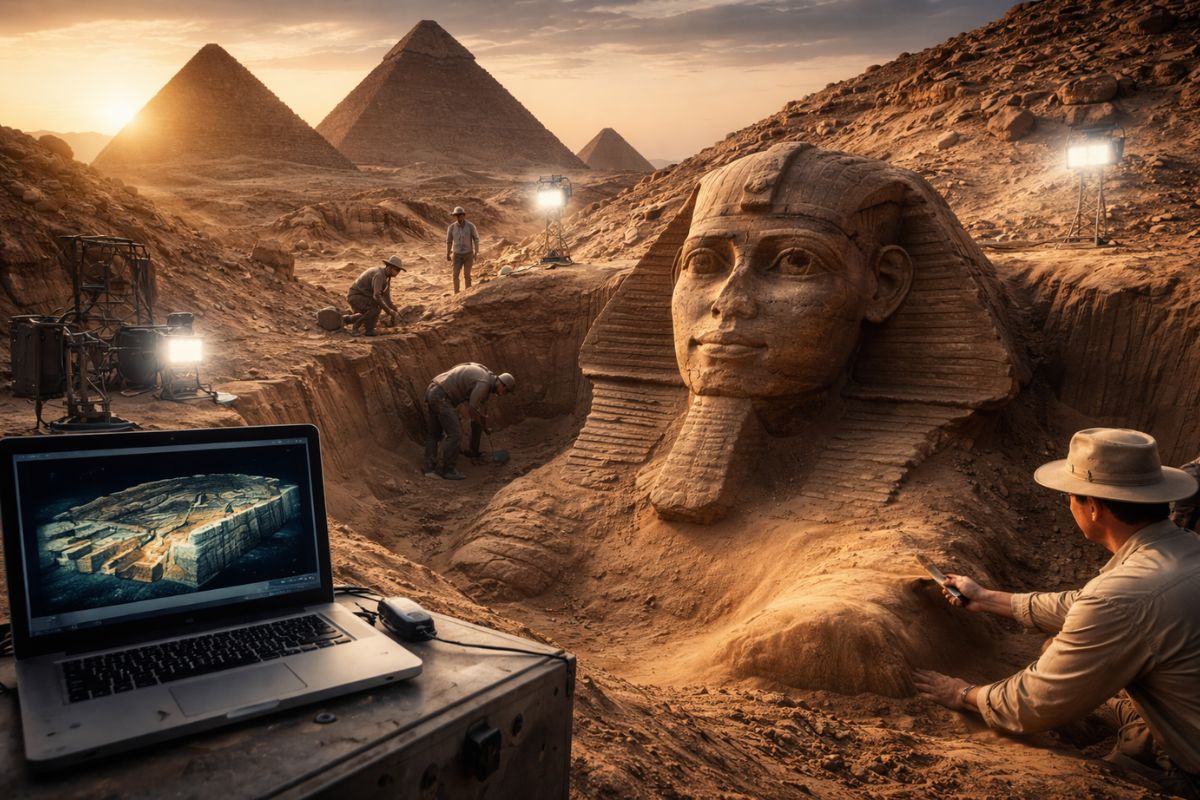
Italian researchers have detected what appears to be a second Sphinx buried under the sands of Egypt, and satellite scans reveal a gigantic underground megastructure hidden beneath the Giza Plateau for over 3,000 years.
-
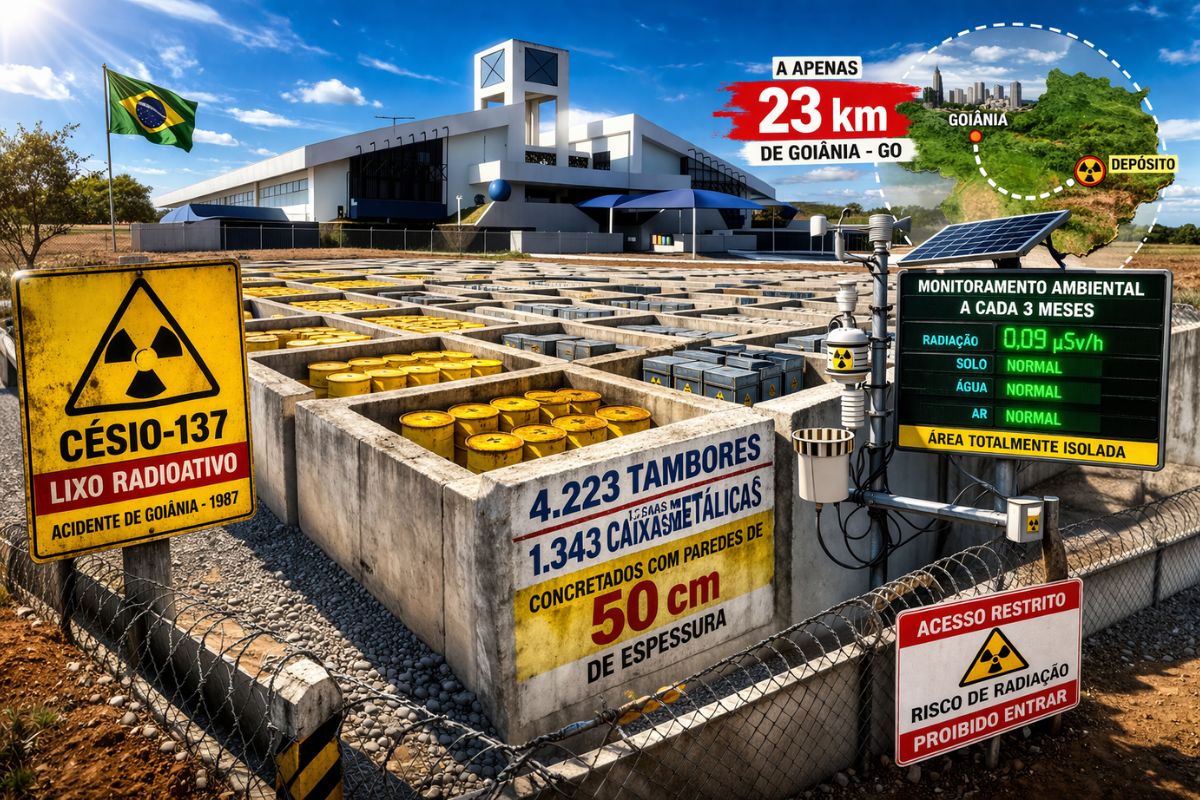
There are 4,223 drums and 1,343 metal boxes concreted with 50-centimeter walls that store the radioactive waste from Cesium-137 in the worst radiological accident in Brazil, just 23 kilometers from Goiânia, with environmental monitoring every three months.
-
Giant Roman treasure found at the bottom of Lake Neuchâtel in Switzerland reveals an advanced trade system, circulation of goods, and armed escort in the Roman Empire about two thousand years ago.

-
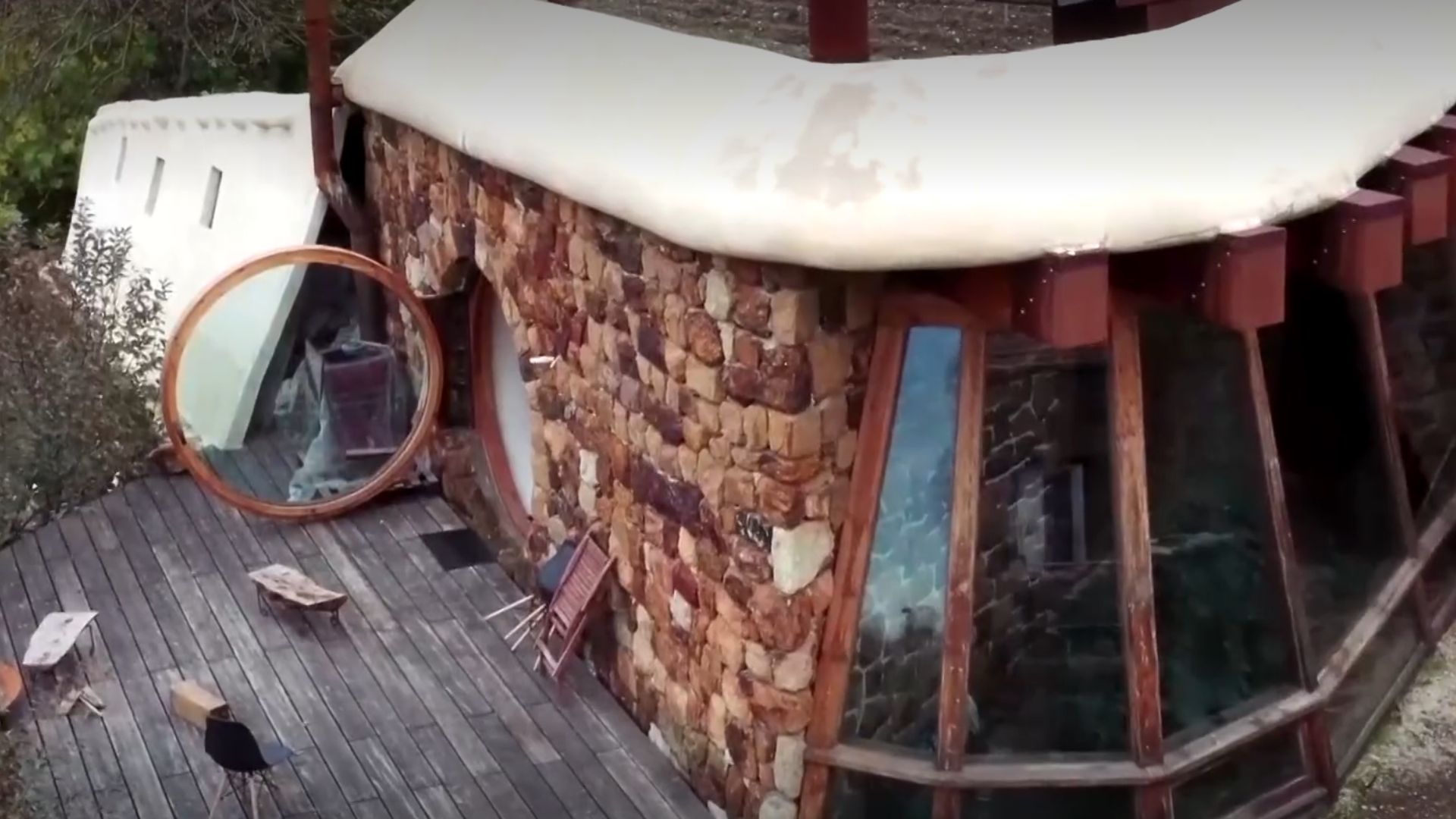
He buried 1,200 old tires in the walls to build his own self-sufficient house in the mountains with glass bottles, rainwater, and an integrated greenhouse.

On the edge of this drop, a narrow road was built, allowing access for residents and visitors.
From the top, it is possible to see the houses, the terraced gardens, and, in the background, the large natural cave that marks the valley.
The place is located in the city of Baima, in the Wulong district, and the tiankeng is known as Wankuntuo tiankeng.
Unlike other similar formations in Yunnan, Guizhou, or Sichuan, where sinkholes are merely geological attractions, here the interior of the hole is occupied by real people.
Five families still live inside the valley, in simple constructions, surrounded by cultivated land and makeshift structures built over decades.
Five Families Among Gardens, Fruits, and Harvests

What sustains these five families is, mainly, the land.
Inside the tiankeng, practically all usable space has become farmland, with green patches of sweet potatoes, cabbage, peas, onions, and other crops distributed in strips.
There are also orange and grapefruit trees loaded with fruit, as well as gardens with cabbage and other greens.
This agricultural mosaic shows why life there can be self-sufficient.
The families plant what they consume, harvest at the right time, and make use of every available piece of soil.
The idea of a supermarket gives way to an expanded backyard, where almost everything that is eaten is harvested just a few meters from the front door, reinforcing the logic of a valley that functions as its own supply system.
Spring Water Channeled in Bamboo
If food comes from the land, water comes from the mountain. One of the most striking images of the place is the supply system made with bamboo.
Instead of industrial pipes, the residents use connected bamboo segments as if they were pipes, channeling the water that flows down from the forest high on the slope.
This water is used to irrigate the crops and for the families’ consumption, coming from clean springs higher up.
According to the residents, there is no water bill, no public network, just gravity and the constant flow of natural springs, which feed simple reservoirs and small distribution boxes.
The constant dripping on the rock walls keeps the environment humid, especially in the area of the large cave.
An Enormous Cave That Completes the Scenery
At the bottom of the valley, the natural cave impresses with its size.
Viewed from the inside, the dimensions resemble that of a football field, with a relatively flat floor and a high ceiling marked by points of infiltration and running water.
The very humid ground creates muddy sections that reinforce the feeling of being in an environment untouched by urban intervention.
The cave is not used as the main house, but it complements the scenery, making the place feel like a “world apart.”
In other parts of China, similar caves have housed basketball courts or community structures, which fuels the imagination of possible uses.
There, however, the cave serves more as a symbolic presence and a silent witness to the lives of these five families, who continue to organize their daily lives around natural light and cultivable areas.
Generations That Stayed and Young People Who Left
From conversations with the residents, it is clear that the story of these five families is intertwined with the history of the tiankeng itself.
One of the interviewees recounts that he was born there, grew up there, and that his grandfather’s generation also lived in the valley.
There are reports that, adding the earlier generations, the occupation of the place easily exceeds one hundred years.
In the past, more than a dozen families lived inside the hole. Over time, many moved to the city of Wulong or to Chongqing, buying houses in the urban area.
Today, basically, only the elders have remained in the valley, while the young people study or work outside in wage-earning jobs, returning only for visits.
The contrast is evident: those who stayed maintain a rural and self-sufficient rhythm, while the new generation integrates into the urban job market.
Daily Work, Creations, and Self-Sufficient Routine
The life of these five families is filled with tasks that ensure their own survival.
Cultivating corn, managing gardens, caring for chickens, dogs, fish in small ponds, and even raising bees for honey production are part of their routine.
Practically everything is produced in the immediate surroundings of the houses, in a cycle that involves planting, harvesting, storing, and processing what the land offers.
Even with this rural base, the residents do not live completely disconnected.
There is electricity, appliances like washing machines, and some access to the internet, which shows a coexistence between basic technology and a traditional lifestyle.
What remains central is their autonomy regarding food, water, and space, something increasingly rare in dense urban environments.
Relative Isolation and Access Less Difficult Than It Seems
At first glance, the idea of five families living inside a cavity in the mountains suggests extreme isolation. In practice, the scenario is more balanced.
Access to the top of the mountain is made by road, and the walk to the houses takes only a few minutes, making the journey much less dramatic than the terrain suggests.
Residents report that transportation is considered “well developed” for the local reality and that visits from curious people, tourists, and drone operators have become common after the place appeared in videos and social media.
Still, the predominant feeling for anyone entering the tiankeng is one of refuge, as if life there is a few steps away from the big city clock, even though it is physically connected by road and electricity.
A Hidden Paradise That Challenges the Urban Model
The daily lives of these five families in Wulong raise questions about the meaning of quality of life. There, there are no shopping malls, heavy traffic, or constant noise.
Instead, there are gardens, fruit trees, spring water, silence, and a small community where everyone knows each other by surname.
The valley functions as a real laboratory for a way of life based on self-sufficiency, simplicity, and attachment to the land, in direct contrast with the logic of big cities.
At the same time, the exodus of young people and the purchase of homes in the city show that the model is not simple or idealized.
The future of these five families may depend on how the new generations will perceive this place: as a heritage to preserve or merely as a chapter from the past.
And you, would you be able to swap urban life for a nearly self-sufficient routine like that of these five families in the Wulong mountains?









-

-

-

-

11 pessoas reagiram a isso.