





 Portuguese
  English
  Spanish
 4 min of reading
  0 comments


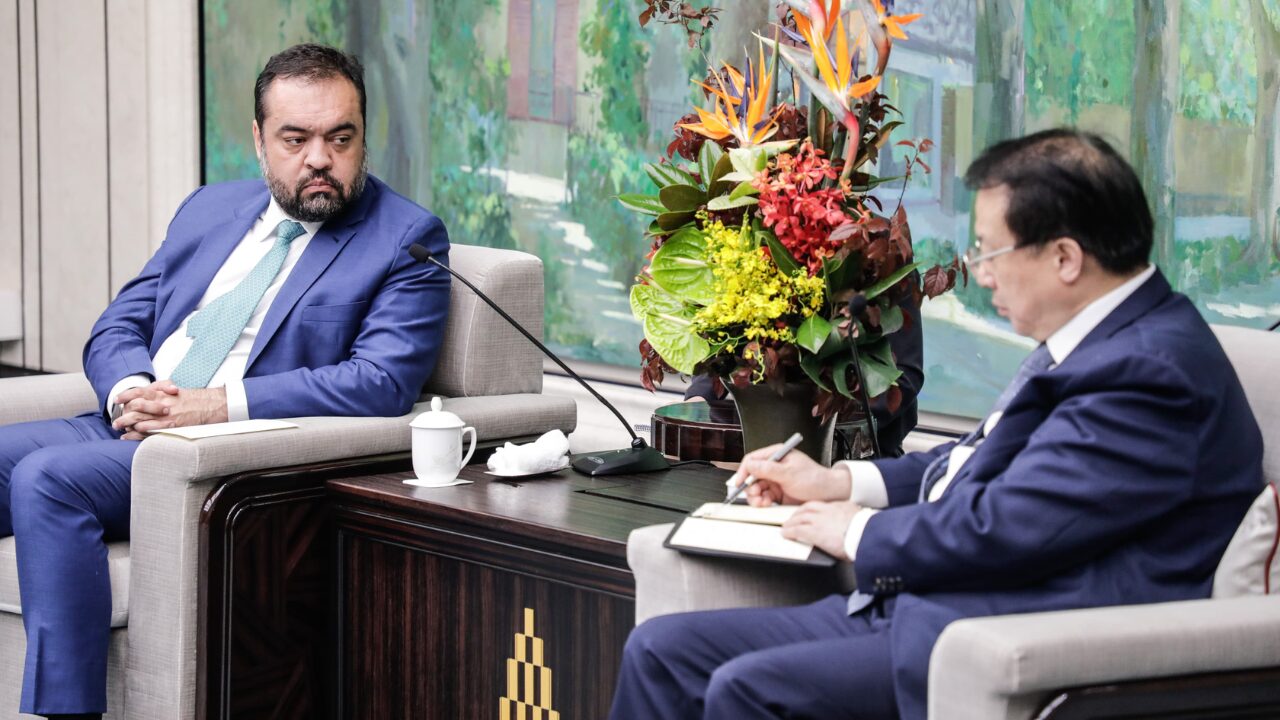
The Governor of Rio de Janeiro, Cláudio Castro, Works to Establish Envision Energy in the State and Plans Energy Transition Hub.
At a strategic meeting held in Shanghai, China, on Tuesday (04/22), Governor Cláudio Castro reinforced Rio de Janeiro’s commitment to attracting sustainable investments by negotiating with Envision Energy executives for the company’s establishment in the state.
The meeting discussed tax benefits and infrastructure support to boost the arrival of the Chinese multinational, which operates in the development of low-carbon solutions for the aviation and shipping sectors. With this initiative, Rio de Janeiro strengthens its position as one of the main innovation centers in clean technologies in Latin America.
Incentive to Innovation and Environmental Commitment in Rio de Janeiro
During the meeting, Cláudio Castro highlighted the importance of partnering with companies that combine technology and environmental responsibility.
-
Renewable energy advances over protected areas in Brazil, and a survey by the Energy Transition Observatory reveals silent impacts that challenge environmental conservation and pressure sensitive traditional territories.

-
Rio Grande do Sul accelerates energy transition: State invests in renewable technologies and consolidates decarbonization strategies and pathways to attract billions in new industrial investments.

-
With 160,000 m² of collectors, an area larger than 20 football fields, Silkeborg, in Denmark, hosts a solar thermal plant that heats 19,500 homes and could become the largest solar heating plant in the world.

-
A study reveals the expansion of renewable energy procurement in Brazil and shows how companies are taking advantage of opportunities to reduce expenses, ensure energy efficiency, and strengthen strategic environmental commitments.


“The Government of Rio recognizes and values companies like Envision that combine technological innovation with environmental commitment. We will closely monitor this project to ensure that it advances safely and swiftly,” said the governor.
According to him, investments of this nature not only generate highly qualified jobs but also consolidate the state as a reference in green infrastructure.
With a robust energy market, Rio de Janeiro currently leads the production of oil (89%) and natural gas (76%) in Brazil, in addition to standing out in the generation of biogas and biomethane.
“We are the largest producer of oil and gas in the country. We also invest in the production of 327 million cubic meters per year of biogas and 80.3 million cubic meters per year of biomethane, ranking second and first in the country, respectively. Now, we want to position Rio as a national energy transition hub,” emphasized Cláudio Castro.
Sustainable Projects Boost Clean Energy in the State
Rio de Janeiro has been expanding its clean energy incentive programs with projects such as Sustainable Corridors, which aim to progressively replace diesel and gasoline with compressed natural gas in road fleets.
Currently, 14 adapted fuel stations are already part of this initiative.
Another highlight is the pilot project RJ Sustainable Mobility, which introduced two buses powered by natural gas and biomethane in intermunicipal lines, resulting in a reduction of up to 20% in CO2 emissions, the main contributor to global warming.
Additionally, the state is advancing in an offshore wind energy project, which promises to be the largest in Brazil.
In partnership with Petrobras, this initiative is expected to create over 510,000 new jobs, further establishing Rio de Janeiro as a leader in the energy transition scenario.
International Partnership: RJ and Shanghai Strengthen Ties
In Shanghai, Cláudio Castro also met with the city’s mayor, Gong Zheng, to deepen the commercial and institutional relations between the two economic powerhouses.
The governor highlighted the strength of Rio de Janeiro in the national economy, pointing out that the state is responsible for 20% of Brazil’s revenue, with an annual turnover of R$ 460 billion, in addition to holding second place in exports (13.56%) and third place in imports (10.56%).
“It is a privilege to be in a city that symbolizes innovation, development, and global prominence. Rio de Janeiro and Shanghai share many similarities, being strategic economic centers for their countries. We are interested in deepening partnerships not only in the energy sector but also in infrastructure, technology, and innovation,” declared Castro.
Gong Zheng, in turn, proposed expanding commercial, industrial, tourist, and cultural cooperation between the two regions.
“Rio de Janeiro and Shanghai are far apart geographically but similar in their commercial objectives. Rio is one of the most developed states in Latin America, so it is important to strengthen these economic ties. Exploring the clean energy market is one of our goals, but we also want to explore projects in security and health,” said the mayor.
Rio de Janeiro as a Model for a Sustainable Future
The rapprochement with Envision Energy and the city of Shanghai is part of Governor Cláudio Castro’s strategy to transform Rio de Janeiro into a model of sustainability, innovation, and economic development.
The expectation is that the establishment of the Chinese multinational will further boost the green economy and help consolidate the state as a true hub of clean technologies, reaffirming its commitment to building a more sustainable future for Brazil.





Seja o primeiro a reagir!