





 Portuguese
  English
  Spanish
  4 min of reading
  2 comments


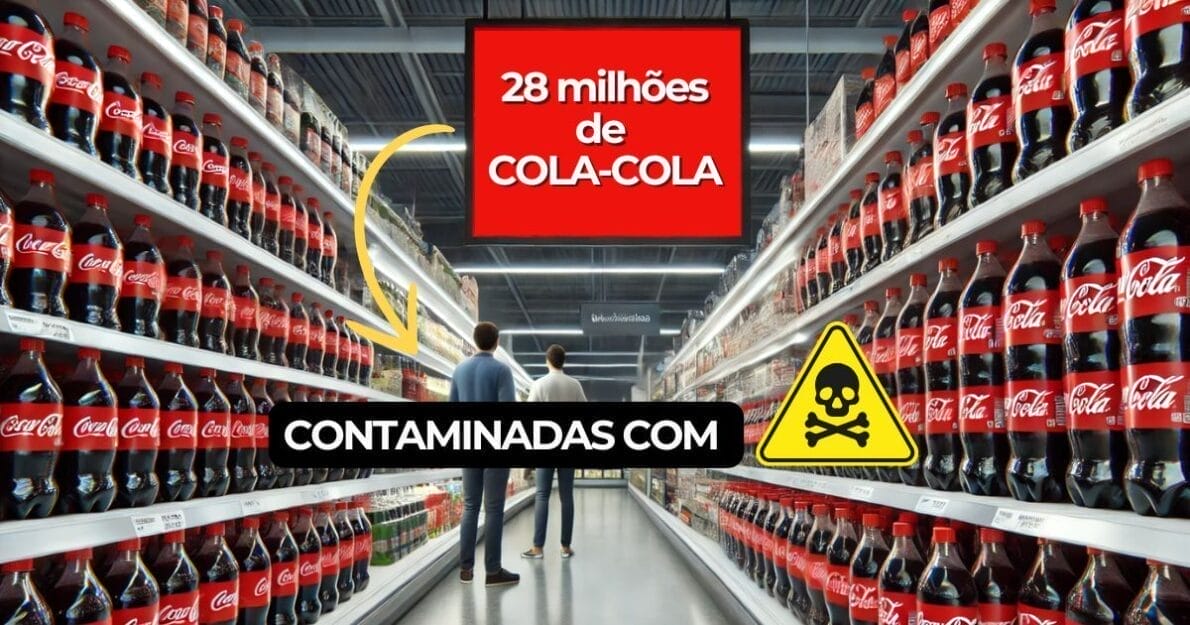

Coca-Cola Recalls Millions of Bottles After Risk of Contamination with Metal Fragments. Is Brazil Safe?
In one of the largest public health crises involving soft drinks, the Coca-Cola found itself in the eye of the storm, facing a recall of historic proportions.
Millions of bottles may be contaminated with metal fragments, raising serious concerns for consumer safety.
The impact was immediate and global, with repercussions that echoed from Austria to Brazil, where incidents involving the brand’s products have already raised alarms in the past. But is Brazil safe as well?
-
Friends have been building a small “town” for 30 years to grow old together, with compact houses, a common area, nature surrounding it, and a collective life project designed for friendship, coexistence, and simplicity.

-
This small town in Germany created its own currency 24 years ago, today it circulates millions per year, is accepted in over 300 stores, and the German government allowed all of this to happen under one condition.

-
Curitiba is shrinking and is expected to lose 97,000 residents by 2050, while inland cities in Paraná such as Sarandi, Araucária, and Toledo are experiencing accelerated growth that is changing the entire state’s map.

-
Tourists were poisoned on Everest in a million-dollar fraud scheme involving helicopters that diverted over $19 million and shocked international authorities.


On Thursday, October 24, 2024, Coca-Cola made the largest recall in 25 years in Austria, a preventive measure following the discovery of possible small metal parts inside the bottles.
According to the company, the recall affects half-liter bottles of Coca-Cola, Fanta, Sprite, and MezzoMix with expiration dates between February 4, 2025 and April 12, 2025.
The fear grew after a technical error during production, which may have allowed metal particles to end up in the bottles.
Even though the company stated that the issue affected “a very limited number of bottles,” the recall encompasses over 28 million units, prompting Austrian authorities to take swift action to protect the public.
The health risk cannot be ignored. Ingesting metal fragments can cause serious internal injuries and, in extreme cases, irreversible damage.
Coca-Cola, in response, acted in partnership with Austrian authorities, but the damage to the brand’s reputation has been done. Are Brazilians free from a similar crisis?
Refunds and Impact on Shelves
To ensure that consumers are not affected, Coca-Cola announced that all Austrians who purchased the affected products will be refunded immediately, without the need to provide proof of purchase.
According to the company’s official statement, many of the problematic products may still be on supermarket shelves, which is why authorities have intensified inspections.
The Vienna Market Department and over 80 inspectors have already started monitoring the recall, and the removal of the bottles should be completed in a few weeks.
However, this is not an isolated incident.
Coca-Cola has faced similar challenges in various parts of the world.
In Brazil, the history of recalls is also marked by episodes that raised doubts about the safety of consuming the brand’s products.
Coca-Cola Recalls in Brazil
Brazil has already been the stage for recalls that drew media and consumer attention.
One of the most remembered cases occurred in 2006 when batches of Coca-Cola Zero were removed from shelves due to inadequate sodium levels, which could affect the health of individuals with hypertension or kidney problems.
In 2013, the company also had to act quickly after reports of contamination of its soft drinks with foreign objects, such as small pieces of plastic.
These events demonstrate that, despite being a global giant, Coca-Cola is not immune to errors in its production chain, and the impact of a recall can be devastating for consumer trust.
Although the cases in Brazil have not been as severe as the recent incident in Austria, the Austrian episode raises alarm bells for the need for even stricter oversight in Brazilian factories and in quality control of the products that reach the shelves.
According to Coca-Cola Brazil, all necessary measures to prevent similar problems are being implemented, but the question remains: could a technical error like the one that occurred in Europe go unnoticed in the national territory?
Coca-Cola’s Response
Coca-Cola has been emphatic in stating that the recall is a preventive measure and that, so far, there are no reports of injuries or health complications from consumers.
The company continues to closely monitor the situation, ensuring that no other products beyond the indicated expiration date or different packages have been affected.
Quality control is being reviewed, both in Austria and in other regions, to ensure that the products are safe for consumption.
However, the impact of a recall of this magnitude directly affects the brand’s image, especially in times when consumers are increasingly discerning and cautious about what they consume.
The public demands transparency and, more than ever, large corporations must be prepared to handle crises of trust.
The Future of Recalls in Brazil and the World
As food and product safety regulations evolve, recalls are expected to become more frequent in companies that operate on a large scale.
In Brazil, the National Health Surveillance Agency (Anvisa) has already intensified monitoring of food and beverage companies.
Coca-Cola, with its massive presence, will need to continue innovating its production processes to ensure that incidents like the one in 2024 do not occur again.
Is Brazil safe from crises like this? The Austrian episode shows that the global oversight system needs to remain vigilant, as technical errors can happen anywhere in the world.
And you, would you be willing to continue consuming Coca-Cola knowing that in another country the brand had to recall millions of bottles due to contamination?









Excelente matéria!
Na esperança que a reportagem sirva de alerta, aos consumidores, na eliminação do consumo de refrigerantes.
Graças a Deus não bebo mais refrigerante! Espero quem bebe pare,