





 English
  Francês
  Alemão
  Italiano
  Japonês
  Norueguês
  Portuguese
  Spanish
  4 min of reading
  2 comments




A Scientific File Was Created on the Antarctic Continent to Store Ice Samples That Record the Evolution of the Atmosphere and the Climate of the Planet Over Thousands of Years
An international scientific initiative aimed at preserving Earth’s climatic history has begun to take shape on the coldest continent on the planet.
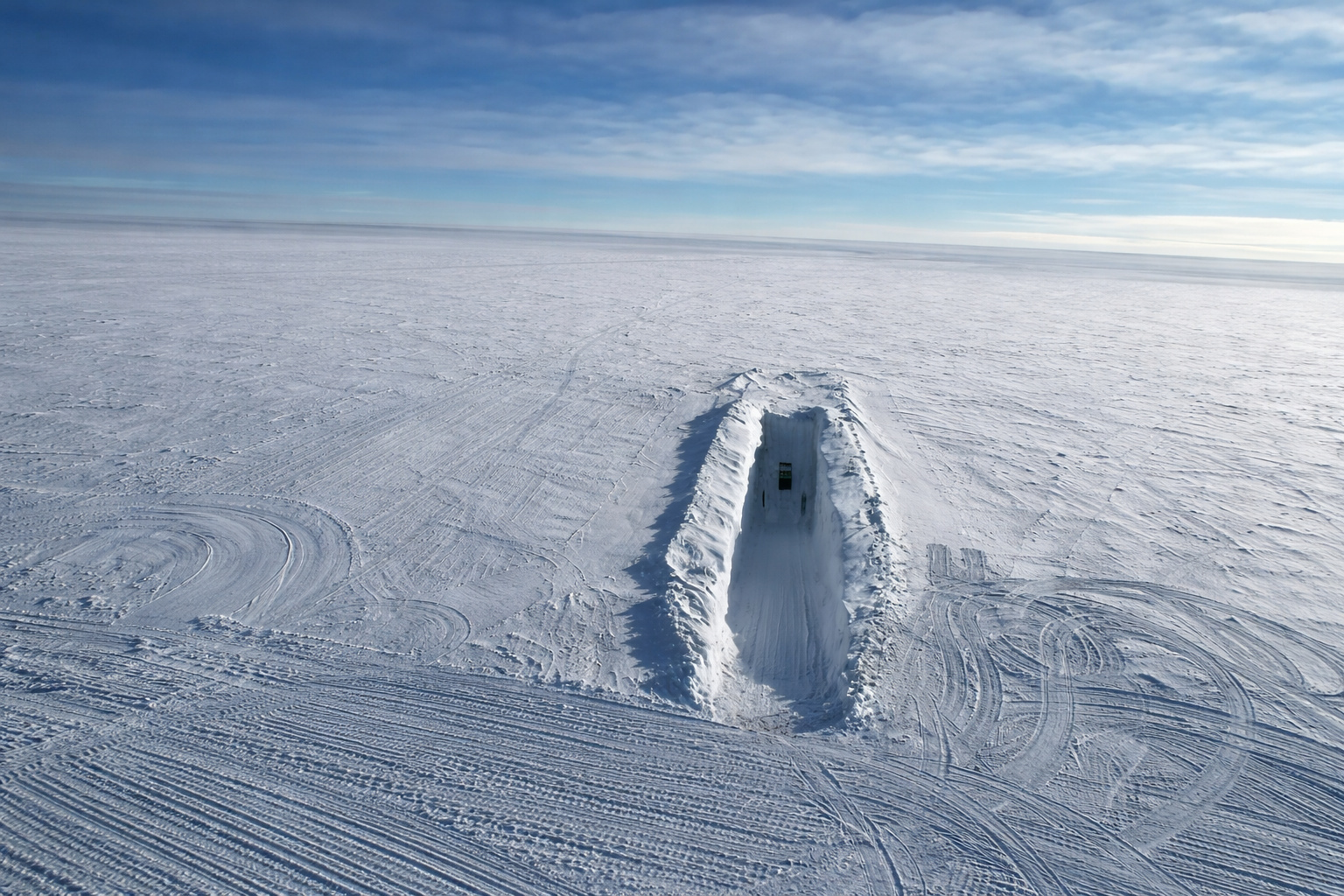
Researchers installed the first global ice core archive in the Antarctica, created to preserve natural records that reveal how the atmosphere has evolved over time.
The site was built near the Concordia Station, located on the East Antarctic Plateau.
There, scientists established a permanent repository for samples collected from glaciers around the world.
The initiative is coordinated by the Ice Memory Foundation, a scientific organization that leads an international effort to protect these natural records.
The project aims to preserve climate data before the advance of global warming causes the disappearance of various glaciers.
-
350-year mystery may have been solved: remains of a soldier who inspired the hero of The Three Musketeers found beneath a church in the Netherlands.

-
NASA photographed a nearly perfect square with 3 km sides on Mars, 13 times larger than the Great Pyramid of Giza, but the official explanation is natural erosion; still, no one has explained why the four sides have almost identical lengths.

-
Starlink breaks the barrier of 10,000 satellites in orbit and takes its expansion to an unprecedented level, with a direct impact on global internet, technological competition, and the race for space.

-
Japan finds an alternative to oil amid rising prices by transforming ocean balance into electricity with a new technology that maintains efficiency even when the sea changes.

The stored cylinders, known as glacial cores, contain small air bubbles trapped over hundreds or even thousands of years.
These bubbles hold information about the composition of the atmosphere at different moments in the planet’s history.
Natural Vault Installed in the Ice of Antarctica
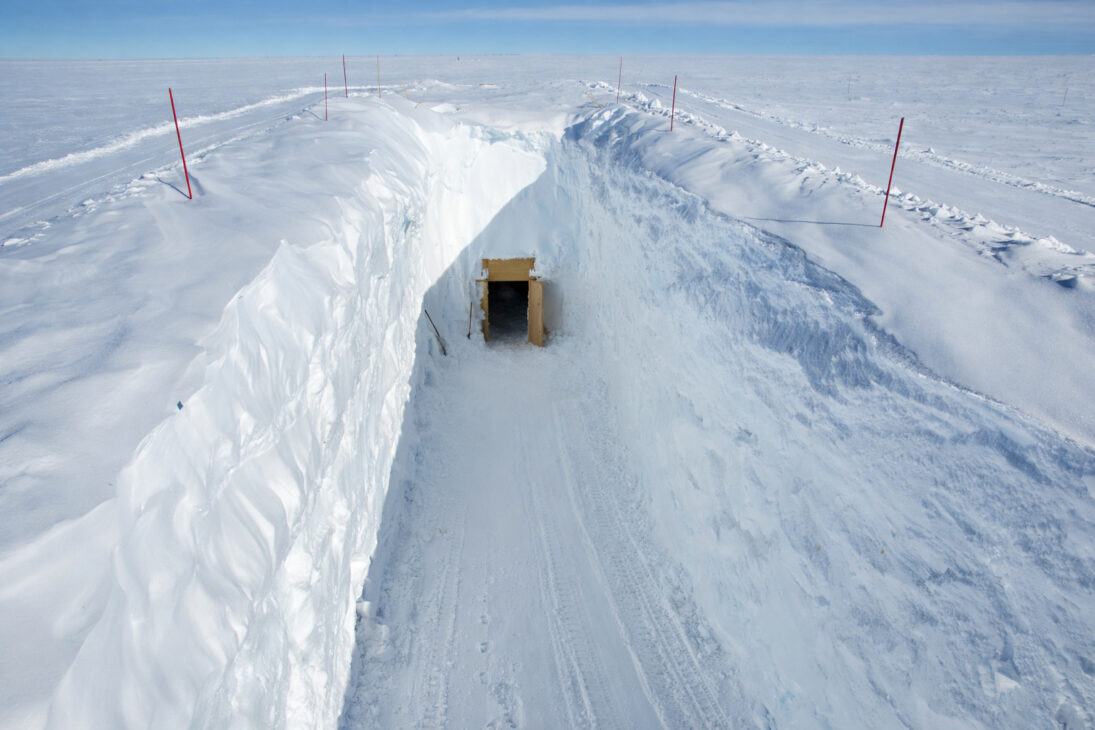
The structure was excavated about five meters below the snow surface, where the cold remains constant throughout the year.
In this environment, the natural temperature reaches approximately –52 °C, allowing samples to be preserved without the need for artificial refrigeration equipment.
This extremely cold environment effectively functions as a permanent natural freezer.
Thus, samples can be preserved for long periods with a lower risk of degradation.
According to the researchers involved in the project, the choice of Antarctica reduces risks associated with technical failures or power interruptions.
Additionally, the location also minimizes potential impacts from political or structural instabilities that could compromise conventional scientific facilities.
In this way, the icy continent becomes one of the safest environments on the planet for storing climate records.
Ice Cores Record the History of the Atmosphere
Glacial cores serve as extremely detailed natural archives of Earth’s climate.
Each layer of ice accumulated over time records small particles and gases present in the atmosphere.
These layers preserve evidence that helps scientists understand environmental changes that occurred over centuries or millennia.
Among the records identified in the ice cores are:
- Greenhouse gases present in the atmosphere at different times
- Particles released by volcanic eruptions
- Industrial pollutants associated with human activity
- Traces of extreme climatic events
This information allows for the reconstruction of past climate and understanding of environmental transformations that shaped the planet.
At the same time, the data helps scientists improve models that project future climate changes.
Threatened Glaciers Accelerate Scientific Race
Despite the importance of this information, many glaciers are retreating rapidly.
The advance of global warming has caused accelerated ice loss in various mountainous regions.
Some of these glaciers may disappear this century.
If this occurs, unique records of Earth’s climatic history could be lost.
This scenario has led researchers to intensify efforts to collect and preserve ice samples while these glaciers still exist.
Thus, storage in a natural vault in Antarctica has been considered an essential strategy to protect this data.
First Samples Arrive at the New Ice Archive
The new Antarctic repository recently received its first scientific samples.
Among them are ice cores collected from Mont Blanc in 2016.
Additionally, the archive also began housing samples taken from Grand Combin in 2025.
The samples were transported to the Antarctic continent aboard the research icebreaker Laura Bassi.
Throughout the crossing, the cylinders remained stored at –20 °C, ensuring the integrity of the information.
The expedition lasted more than fifty days.
During the journey, the ship crossed the Mediterranean Sea, the Atlantic Ocean, the Pacific Ocean, and the Southern Ocean.
The journey ended in the Ross Sea, one of the main access points to the interior of Antarctica.
Climatic Archive Was Created With Future Generations in Mind
The project aims to gather, over the coming years, samples from glaciers located in different regions of the planet.
With this, scientists intend to form a global collection capable of preserving climate records from various parts of the Earth.
The proposal is to ensure that this data remains available for future generations of researchers.
Even if some glaciers disappear, the atmospheric records will remain preserved in the Antarctic vault.
Additionally, scientists believe that more advanced technologies may reveal new information hidden in these ice cores.
These natural capsules may enhance scientific knowledge about the evolution of the Earth’s climate.
To what extent can preserving past climate records help humanity understand and confront future climate change?






LEIA…
PORQUE HEIM?🤔❓🤔❓🤔
“POR quê” JUNTO OU SEPARADO com OU seM acento Para quem não é professor de português ACONTECERA O ENTENDIMENTO final, – POIS Então, sou leigo, sou até ignorante, mas vamos por parte, já temos muito mais de 80 anos terrestres que estamos tendo esta conversa sobre clima e aquecimento global, as narrativas é que o degelo iria acontecer e cidades litorâneas iriam inundar e a causa seria o aquecimento global, — porém o degelo já aconteceu o verão no Brasil está dentro do cronograma, o inverno do norte da América também dentro do cronograma só um pouco mais frio do que se imaginava por causa do aquecimento global, A PERGUNTA É…?
✅ PORQUE A MARÉ NÃO SUBIU❓🤔
✅ PORQUE AS ESTAÇÕES ESTÃO DE ACORDO COM O CALENDÁRIO.
✅ PORQUE OCORREU A SECA FAZENDO APARECER DESENHOS RUPESTRES E CULPARAM O BOLSONARO❓
✅ PORQUE TODOS OS ANOS AS QUEIMADAS OCORREM CONSTANTEMENTE EM CERTAS REGIÕES DO BRASIL E NO GOVERNO DA DIREITA O CULPADO FOI O BOLSONARO, E NO GOVERNO DA ESQUERDA SAO OS OUTROS OS CULPADOS❓🤔❓🤔?
PORQUE HEIM?❓🤔❓🤔❓🤔❓🤔❓
Desocupado pra ****