





 Portuguese
  English
  Spanish
  3 min of reading
  0 comments


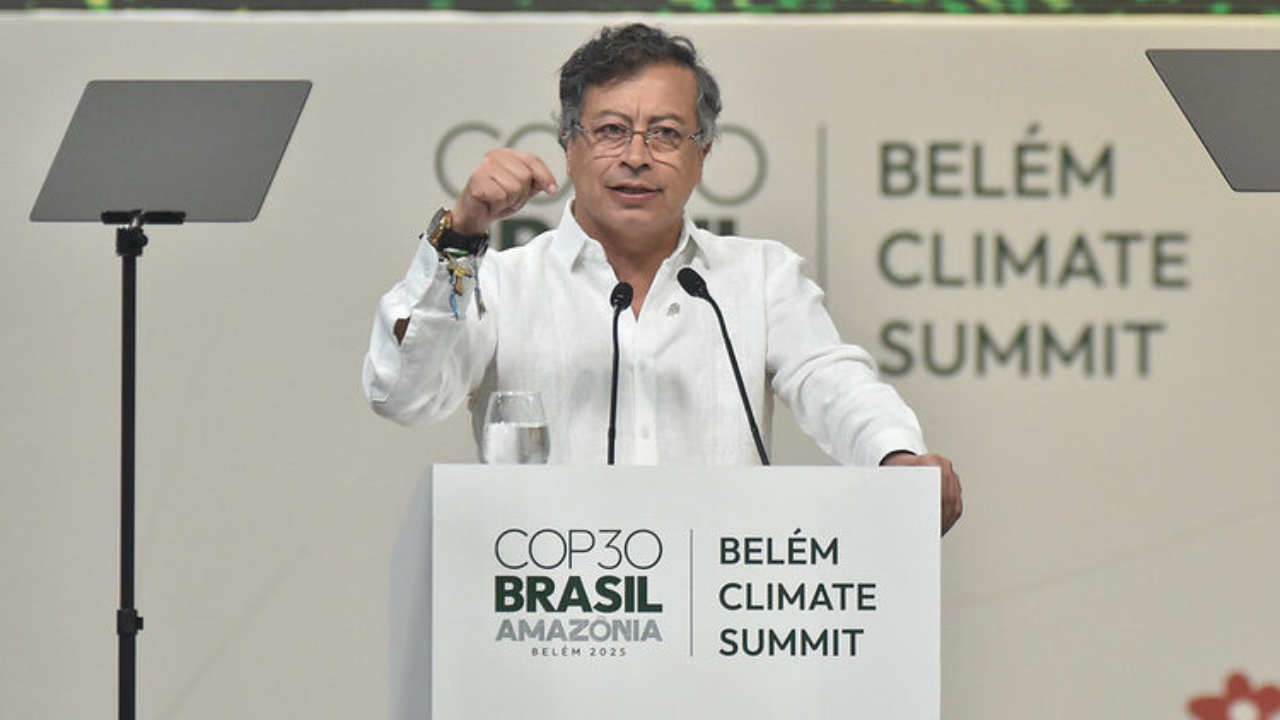
Colombia Announces Comprehensive Protection of Its Amazon, Bans New Oil Wells, and Strengthens Debates on Climate Justice, Biodiversity, and Environmental Financing at COP30.
The discussion about oil gained new weight at COP30 after Colombia’s announcement, declaring its entire Amazon region as a fully protected area. The measure, presented on Thursday (13) in Belém, blocks future projects for oil, gas, and mining exploration in over 483,000 km² of Colombian territory. Thus, the country positions itself at the forefront of conservation policies and pressures the region to adopt similar commitments.
Upon revealing the decision, Minister Irene Vélez Torres detailed that the initiative is not limited to the environmental field. It affects regional geopolitics, sparks debates on climate security, and signals a new level for the energy transition in South America.
Environmental Protection Strengthens Climate Justice and Dialogue with Neighboring Countries
During the event, Vice President Francia Márquez highlighted the social impact of the policy. At a table dedicated to addressing environmental racism, she recalled that traditional communities are always the most vulnerable to disasters exacerbated by oil exploration and pressure on the forest.
-
A major turn in the Justice system suspends tax increases and directly impacts oil and gas companies in Brazil by affecting costs, contracts, and financial planning, leaving uncertain what could happen to the sector if these costs had increased.

-
Brava Energia begins drilling in Papa-Terra and Atlanta and could change the game by reducing costs in oil while increasing production and strengthening competitiveness in the offshore market.

-
Petrobras surprises the world again by announcing a new discovery in the pre-salt with excellent quality oil.

-
Offshore industrial demand in Macaé skyrockets with the recovery of oil and gas and could grow by up to 396% by 2026 in the Campos Basin.

“Every time a disaster occurs, it is our Afro-descendant and Indigenous brothers and sisters, who protect the forest daily, who are the first to suffer the consequences, so it is very important to have protective measures like this, for biodiversity as a whole,” she reiterated.
From this positioning, Colombia also proposed the creation of an Amazon Alliance for Life, aimed at tightening commitments among the countries that share the forest. The initiative strengthens the debate on climate governance and expands expectations for a more ambitious collective agenda.
Debates on Oil Drive Construction of the “Pathway Map” for Transition
In parallel to the Colombian announcement, Brazilian diplomats and members of the COP presidency reported progress in formulating the so-called “Pathway Map” to accelerate the transition from fossil fuels. Although few countries have declared explicit support, sources from the Ministry of the Environment reported that different political leaders were discreetly negotiating an agreement to be revealed during the conference.
This movement is strategic. Brazil sees the technological development of Petrobras — especially in the production of fossil fuels with lower CO₂ emissions — as a convincing factor for countries that are reluctant to abandon oil in the short term. Additionally, the government bets on President Lula’s political weight to unlock negotiations, as the energy transition has become one of the most sensitive topics at COP30.
COP30 Themes Gain Strength with Climate Financing and New International Memberships
The energy transition is part of the set of topics classified as “axes of convergence,” alongside climate justice, forest preservation, and biodiversity protection. In recent hours, the Brazilian government reported important advances, especially in the area of climate financing.
One of the milestones of the day was the announcement of an additional 20 million euros allocated to the Amazon Fund, reinforcing the volume of investments planned for the coming years. Germany, Norway, the United Kingdom, Denmark, the United States, Japan, Ireland, and Switzerland make up the group of participating countries, which now increases support for forest preservation.
But efforts go beyond that. Brazil relies on complementary instruments, such as the Tropical Forest Financing Fund (TFFF) and the Climate Plan, which directs resources for reforestation, restoration of native vegetation, and urban adaptation.
During discussions in the Blue Zone of the conference, Minister Marina Silva emphasized the urgent nature of the environmental agenda. “This is an urgent necessity, given the climate crisis. We are promoting integrated policies and programs like AdaptaCidades and Resilient Green Cities, which seek solutions such as the preservation of green areas, control of soil sealing, and strengthening of the bioeconomy,” she stated.







-

-

2 pessoas reagiram a isso.