





 Portuguese
  English
  Spanish
  7 min of reading
  43 comments


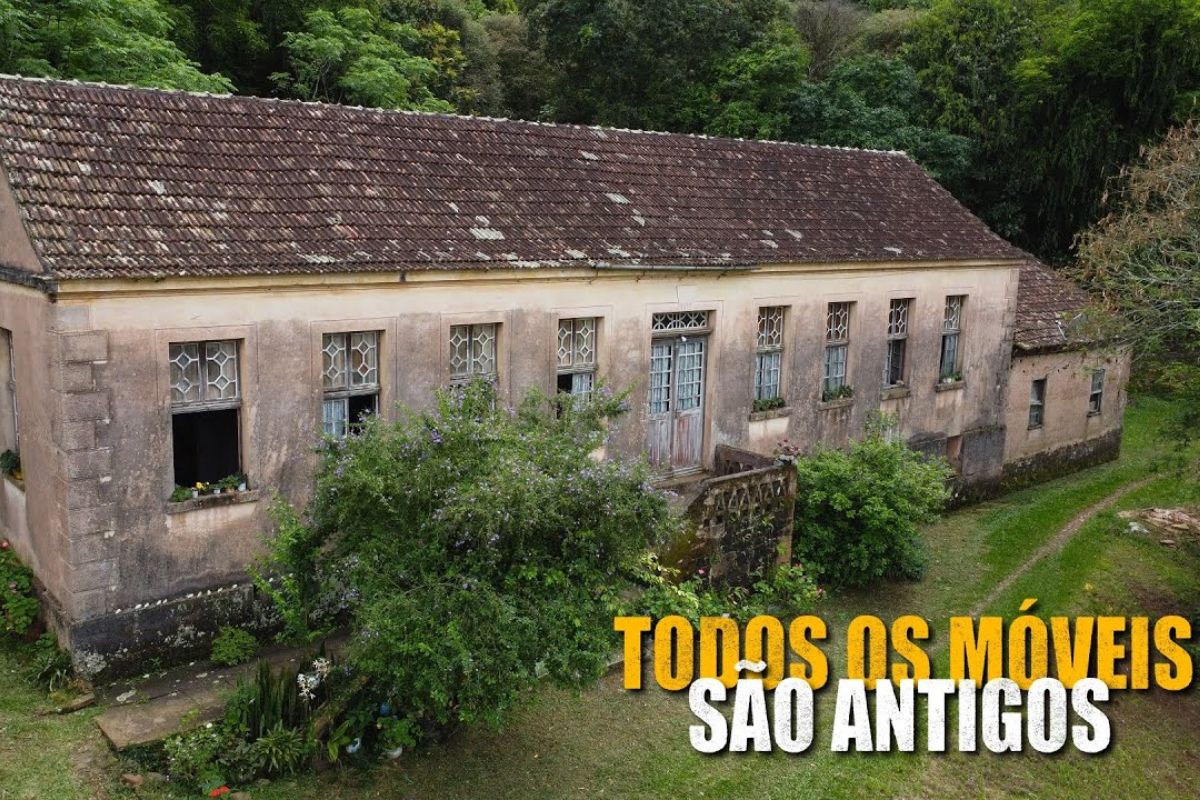


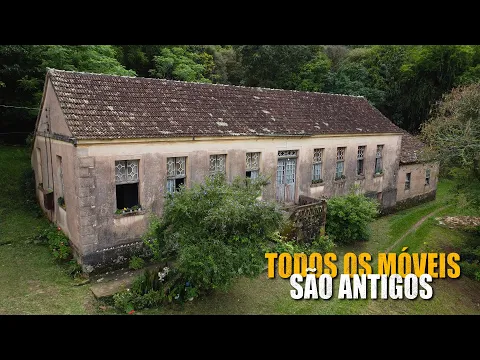
With Original Facade, Flowered Patio, Stone Basement, Medieval Gutters, and Interiors Full of Memories, This Centenarian Mansion in the Gaucho Interior Reveals Why It Is Among the Rarest Mansions in Brazil, Preserving Furniture, China, Photos, Paintings, Toys, and Secrets of a Family Since 1922, Almost Untouched by Time.
At the foot of a silent patio located on Linha Cecília in the interior of Venâncio Aires in Rio Grande do Sul, a house from 1922 holds a secret that places it among the rarest mansions in Brazil. It has 101 years of history, a basement with a medieval atmosphere, original furniture scattered throughout the rooms, and an interior that seems to have stopped in time.
Inside, there is no museum set up for tourists to see. What exists is real life frozen in wood, stone, and porcelain, with current routines mixed with the memories of a family that filled the mansion with laughter, children, parties, and memories since the beginning of the last century. Those who enter feel as though they are crossing a time portal.
The Origin of the House of Ten Women

The nickname started discreetly, like neighborhood gossip. First, people called it the House of Eight Women, because of the eight daughters of the builder. Each window in the main facade represented a girl, lined up side by side in front of the mansion.
-
Italian researchers have detected what appears to be a second Sphinx buried under the sands of Egypt, and satellite scans reveal a gigantic underground megastructure hidden beneath the Giza Plateau for over 3,000 years.

-
There are 4,223 drums and 1,343 metal boxes concreted with 50-centimeter walls that store the radioactive waste from Cesium-137 in the worst radiological accident in Brazil, just 23 kilometers from Goiânia, with environmental monitoring every three months.

-
Giant Roman treasure found at the bottom of Lake Neuchâtel in Switzerland reveals an advanced trade system, circulation of goods, and armed escort in the Roman Empire about two thousand years ago.

-
He buried 1,200 old tires in the walls to build his own self-sufficient house in the mountains with glass bottles, rainwater, and an integrated greenhouse.

Then came the ninth daughter. And with the mother in the house, there were ten women under the same roof. The former resident, who lived there until two months before the recording, proudly claimed that this was one of the rarest mansions in Brazil, precisely because it bore the mark of a large family, with ten women and two men sharing the same home.
In total, 12 people occupied the space at a time when rural life was intense, and every square meter of the house had a well-defined function.
The builder was Henrique Ulmann, son of Josef Ulmann. First came the smaller part, which became the famous dirty kitchen, where animals were butchered and the first stage of food was prepared.
Then he erected the main body of the mansion, with four windows on each side of the door and all the details that transformed the property into a capsule from the early 20th century.
Inside One of the Rarest Mansions in Brazil

On the outside, the current owner jokes that the house is a bit relaxed. But just crossing the century-old wooden door helps one understand that here is one of the rarest mansions in Brazil in its original state.
The wall painting is made of scaiola, drawings made directly on the plaster, preserved for over a century, in soft tones and fine lines.
The stained glass above the door, the frames, the double windows that open independently, and the old doorknobs remain in place, just as time left them.
In the main room, visitors are greeted by a traditional sofa, loveseat, turned wooden chairs, and picture frames with wedding photos.
Nothing has been overly modernized. The TV does exist, but shares space with an antique clock, trinkets, saints, confirmation mementos, and devotional objects that reflect the family’s faith.
The toys help build the domestic narrative: the cow that faints when the base is pressed, Snow White with the seven dwarfs, antique cups, and ashtrays.
Each shelf holds a fragment of the history of those who lived there. It is not a staged setting; it is a living home carrying memories in every corner.
Rooms, Sewing, and Family Memories

The rooms reveal even more the strength of that past. There is a space that seems to have been sealed in time, with old-fashioned clothes hanging, old perfumes lined up, a classic bed, and a sewing machine ready to be used by the grandmother who never sat there again.
The wardrobe is one of those gigantic ones, made of heavy wood, full of personality. The entire floor of the house is made of wide, original boards, showing no apparent signs of termites, a rare thing in such an old construction, further reinforcing its place among the rarest mansions in Brazil.
In the kitchen, the atmosphere remains the same. The large dining table, the china cabinets with porcelain, fine cups, decorated plates, and cabinets full of glasses that seem to have come from another era show that the routine has changed, but the heart of the house remains old.
Kitchen with Arch, Wood-Fired Stove, and Always Hot Water
The kitchen is a chapter apart. An arch of masonry frames the area of the wood-fired stove, which bears a plaque from a manufacturer in Porto Alegre that no longer exists. It’s the kind of piece that today would be displayed in an exhibition, but there it continues fulfilling its daily role of heating the house and food.
Next to it, the old hot water system is still installed: a small faucet connected to a reservoir above the stove, where water would heat with the fire going all day long. Clay filter, neatly arranged dishes, cabinets full of old utensils complete the scene of a kitchen that mixes past and present on the same counter.
From the window, the view is of flowers, a backyard, guinea fowls crossing the patio, and a calm interior that contrasts with the rush of large cities.
Anyone looking from the inside out understands why so many consider this one of the rarest mansions in Brazil in authenticity and atmosphere.
Patio, Annexes, and the Path to the Medieval Basement
At the back, the house extends into equally old annexes: bread oven, barbecue grill, stone laundry tub, and carved stone gutters for guiding rainwater, all resembling a lost European village in the Gaucho interior.
Running water flows through the building. A spring within the property passes through the house, feeds tanks, quenches the animals’ thirst, and continues on its way. The continuous sound of running water mingles with the songs of birds and the rustling of the wind in the trees.
It is there that visitors begin to descend to the most surprising part of the property: the basement. The stairs lead to a lower level where stone dominates the landscape and the sensation is of entering a medieval scene hidden in the heart of Brazil.
Stone Basement, Wine, Carpentry, and Relics
The basement is entirely made of stone, damp, silent, and full of history. It once served as a space for wine production, with wooden barrels still in place, ready to tell the stories of past harvests.
In one part, there is the old workbench of carpenter Henrique, with tools scattered: chisels, planes, drills, files, partly finished wooden pieces, all as if someone had just stopped working to take a coffee break.
The rest of the space is filled with old cans, thick glass bottles, paint cans from brands that no longer exist, carbide lamps, cast iron pots, and metal supports. Nothing has been organized for display; it is a living repository of relics that help explain daily life a century ago.
Even the smaller, more hidden secondary basement holds antique carboys, often repurposed for vinegar, wine, or other liquids.
The entire structure made of stone, with a low ceiling, reinforces the feeling that this is one of the rarest mansions in Brazil because of the combination of medieval basement, rural house, and spontaneous preservation.
A Rare Mansion, a Common Family, and a Portrait of Deep Brazil
Despite all the grandeur, the history of the house is not of a millionaire farm or barony. It was a small rural property, managed by the family itself, without slaves and without large stretches of land.
The house brought together parents, daughters, sons, routines of farming, food preparation, wine production, carpentry, and celebrations that even used a rare architectural trick: an entire internal wall that lifted to transform two rooms into a large party hall, a simple and brilliant solution for weddings and family gatherings.
Today, those who live there are descendants capable of keeping the structure standing, even without great luxuries. The roof needs attention, some details call for restoration, but the foundation is solid.
The mansion transcends time as a three-dimensional document of immigration, rural life, and architecture of southern Brazil, providing the country with a living example of preservation without display.
And you, would you dare to spend a night in this place that is one of the rarest mansions in Brazil, or do you prefer to just visit during the day and run back to the city?










Sou apaixonada pela natureza! Passaria não só uma noite mas moraria moraria pra sempre. Sou da roça de minas Gerais.
Eu passaria um final de semana
Amei visitar o casarão tanto externamente quanto o interior. O rapaz que fez a gravação está com nota maior que 10! Pois foi detalhista e com calma permitindo que mesmo de longe se pudesse observar e apreciar os detalhes das peças assim como do mobiliário em si . AMEI!