





 Portuguese
  English
  Spanish
  5 min of reading
  0 comments


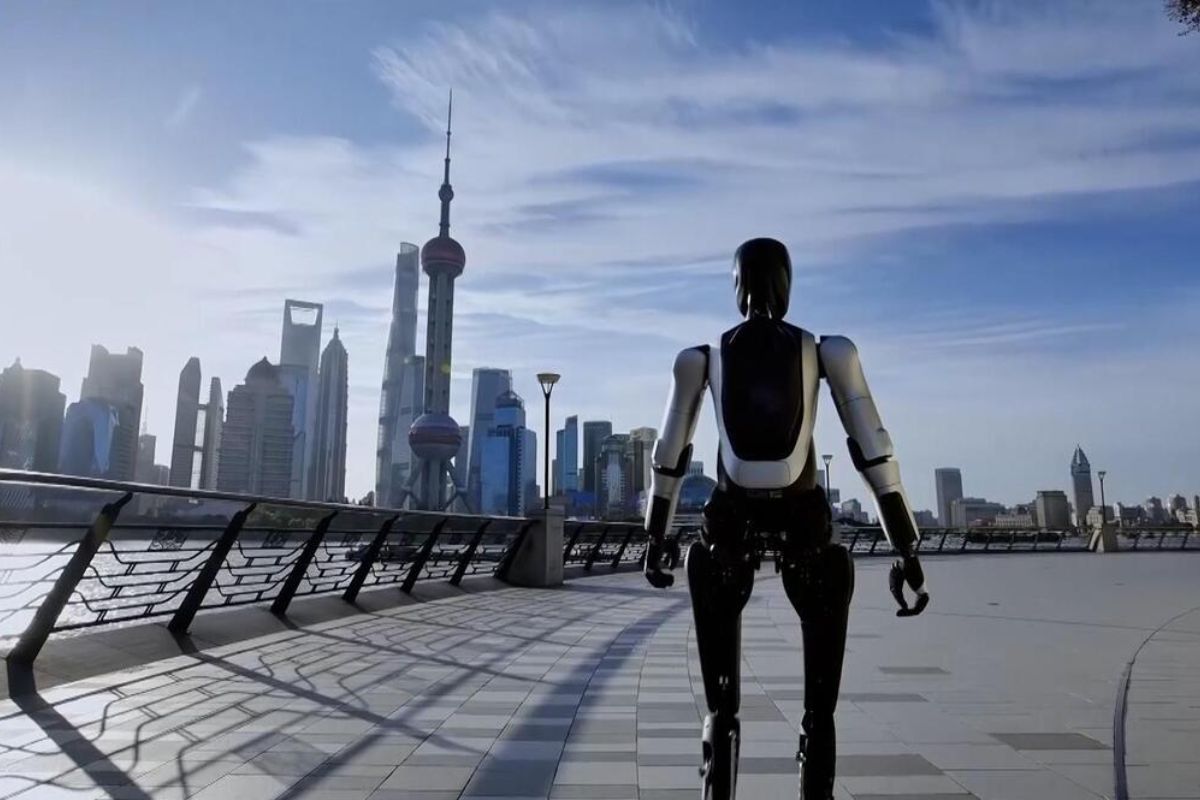
With 106.3 kilometers traveled without turning off, the Chinese humanoid robot A2 from AgiBot enters the Guinness, demonstrating real autonomy on the streets, overcoming various obstacles and reinforcing China’s bet on commercial robots to compete for technological leadership with the United States in complex urban applications and in long continuous journeys.
Chinese robotics has just gained a concrete symbol of its global ambition. In a three-day journey, the Chinese humanoid robot A2, developed by AgiBot, walked 106.3 kilometers between Jinji Lake in Jiangsu and the Bund district in Shanghai, without needing to be turned off at any moment, securing a place in the Guinness World Records.
More than a marketing stunt, the continuous trek served as a public engineering test: AgiBot proved the combination of hot-swappable batteries, advanced sensors, and navigation software, in a real urban scenario, with variations in terrain, climate, and interaction with people around.
A Record of 106 Kilometers in Three Days

The challenge began on November 10, alongside Jinji Lake in Jiangsu province, and concluded on November 13 at the Bund, Shanghai’s postcard location.
-
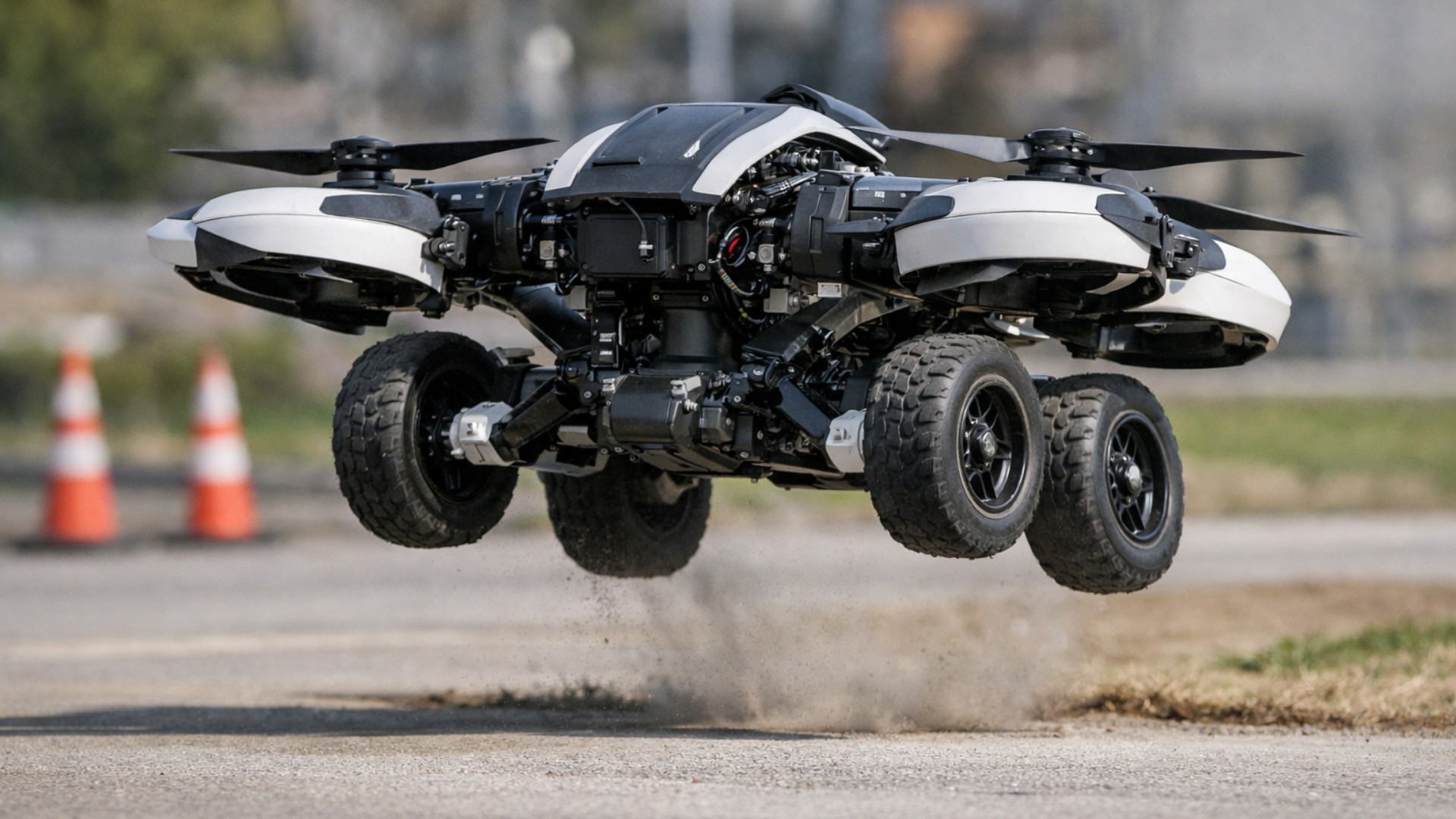
Researchers in the U.S. have created a flying robot that transforms into a land vehicle while still in the air. The technology, based on aerodynamic transition, converts landing into a scene worthy of Transformers and redefines mobility between sky and ground.
-
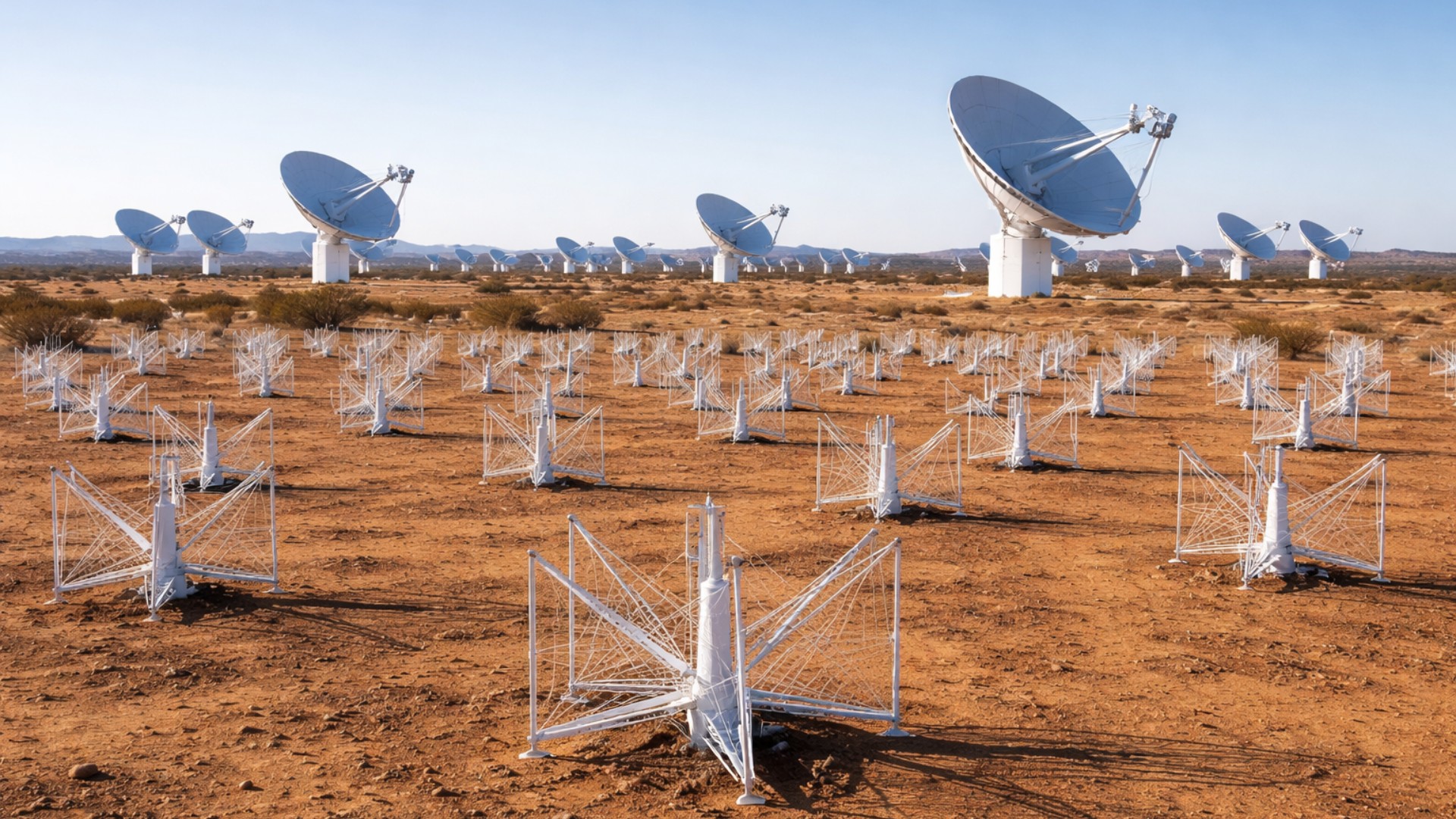
Spread across two continents, with 197 parabolic antennas in South Africa, 131,000 2-meter antennas in Australia, and a range of up to 150 km, the SKA begins to “listen” to the Universe on an unprecedented scale and accelerates the search for black holes, primitive galaxies, and nearly invisible radio signals.
-
Goodbye batteries: a new sensor created by Japanese scientists uses sweat as an energy source and points to a promising path for more sustainable devices, with greater autonomy and less need for frequent recharging.

-
The Brazilian Army inaugurated the assembly line for the Guaicurus armored vehicle with a contract for 420 units by 2033, and the same vehicle has already been tested in combat in Afghanistan and Lebanon by European armies.


Over these three days, the Chinese humanoid robot A2 traveled 106.3 kilometers continuously, stopping only for battery changes, which were made without turning off the system.
AgiBot did not disclose how many replacements were made but highlighted that the “hot swap” battery system allows all electronic modules to continue functioning while the power packs are swapped.
In practice, the record shows that the limitation of autonomy for humanoid robots is shifting from the battery itself to the logistics of recharging and replacement, a crucial point for commercial applications.
The route also had a symbolic function: connecting a more controlled environment, like the lake area, to a dense and busy region like the Bund.
By making this continuous journey, the project aimed to demonstrate that the walk was not just in a laboratory but a trial of prolonged operation in a real urban context.
Batteries Swapped in Motion and Sensors to “See” the City
To keep the Chinese humanoid robot operating for three days, AgiBot combined hardware and software in a fault-tolerant architecture.
The A2 used hot-swappable batteries, which allow the energy module to be swapped without restarting the system, a critical requirement for an officially recorded test.
In terms of perception, the A2 is equipped with dual GPS modules, infrared depth cameras, and LiDAR sensors, responsible for mapping the environment, identifying obstacles, adjusting trajectories, and maintaining stability even on uneven surfaces.
During the journey, the robot walked over asphalt, tiles, bridges, and sloped areas, varying friction, texture, and incline.
According to AgiBot, the model used in the trek is a standard commercial unit, identical to those provided to customers and produced in series.
The company emphasized that this is not a unique or experimental prototype but a Chinese humanoid robot designed for scale, underscoring the message of technological and industrial maturity.
Real Autonomy or Supervised Test?
Although the company and the Guinness Book state that navigation was autonomous, the official video shows a small team accompanying the A2 along the way.
This human presence raises questions about the exact level of supervision: were technicians there just to record and act in case of an emergency, or was there any manual adjustment in specific situations?
Despite this discussion, the official dataset and the format of the test itself indicate that most of the route was driven by navigation algorithms, without direct remote control, supported by sensors and location modules.
In terms of technology, what is at stake is less the total absence of humans and more the robot’s ability to make routing decisions, avoid obstacles, and maintain stability for extended periods.
For the industry, the relevant point is that the Chinese humanoid robot A2 managed to sustain a repetitive and physically demanding routine for several days, something essential in usage scenarios like surveillance, inspection of industrial areas, light logistics, and service in large public spaces.
From the Laboratory to the Street: What the A2 Can Already Do
Beyond the distance record, AgiBot reminds us that the A2 is not just a “long-distance walker.”
The robot was developed to perform tasks of interaction with people, guidance in public spaces, and small internal deliveries, combining bipedal locomotion with facial recognition, facial memory, and multilingual interaction.
These features allow the Chinese humanoid robot to be configured for reception in companies, support for visitors in shopping malls or tech parks, and assistance in exhibition spaces.
In logistics scenarios, the A2 can traverse predefined routes carrying small volumes, integrating with inventory management systems.
The record of 106.3 kilometers, therefore, is not an end in itself: it serves as an “engineering showcase” to prove that the mechanical body, the actuators, and the balance system can sustain prolonged journeys, a basic requirement for any relevant commercial task.
Growing Pressure on the U.S. Robot Industry
The achievement of the A2 occurs in a context of acceleration in the race for commercial humanoid robots.
While companies in the United States are testing prototypes in factories, warehouses, and distribution centers, China is beginning to show results in open urban environments, with official records and strong public repercussion.
By placing a Chinese humanoid robot in the Guinness with a long-duration test on the streets, AgiBot adds a component of symbolic and technological pressure on American companies.
The message is clear: China does not just want to catch up with the advancements of the United States in physical AI, but also to build its own public milestones, focusing on industrial scale.
In a sector where every demonstration of autonomy, resilience, and reliability weighs heavily on investment decisions, records like A2’s help attract capital, talent, and corporate contracts.
They also serve as a showcase for governments interested in robots for security, infrastructure, urban services, and large-scale assistance.
The Next Step for the Chinese Humanoid Robot A2
After logging 106.3 kilometers without turning off, the challenge becomes more than just hitting numbers.
The next step is to transform this performance into real contracts, permanent applications, and integration with increasingly sophisticated AI systems.
A Chinese humanoid robot capable of walking for days opens up opportunities for testing in area patrolling, infrastructure monitoring, and support for public services.
At the same time, the A2’s journey exposes current limits: the need for support teams, battery logistics, and the complexity of operating in completely unpredictable environments.
Each new test in a real scenario becomes an outdoor lab for refining algorithms, mechanics, and safety systems.
In a scenario where China, the United States, and other countries compete for leadership in robotics and AI, records like A2’s indicate that competition is moving from laboratory videos to the streets, with milestones measured in kilometers, hours, and tasks completed in real environments.
In the end, considering this advancement and the global race for humanoid robots, would you feel comfortable sharing a sidewalk or a workplace with a Chinese humanoid robot walking beside you every day?








Seja o primeiro a reagir!