





 Portuguese
  English
  Spanish
  6 min of reading
  0 comments


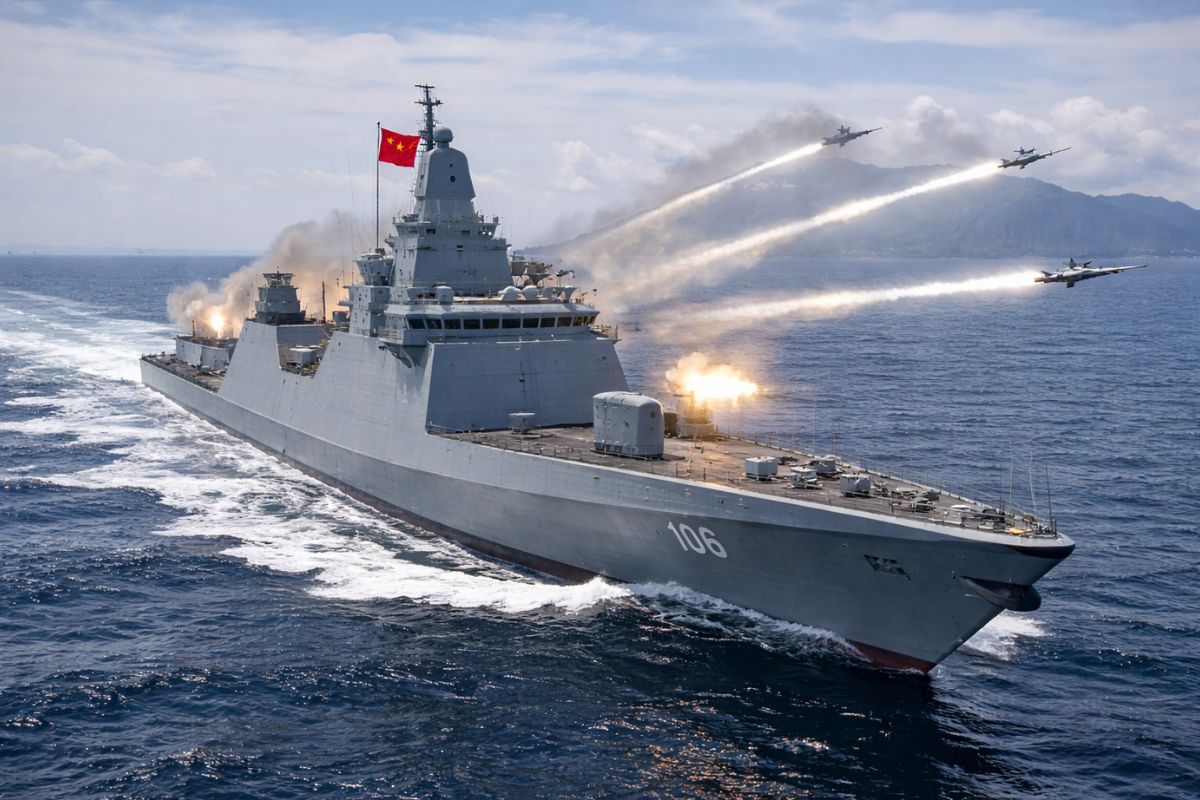
Rare Footage From State TV Shows How Chinese Electronic Warfare Uses Guided Missile Destroyer Type 055 Yanan To Launch Four Electronic Interference Missiles And Drive Away Foreign Aircraft In The Taiwan Region.
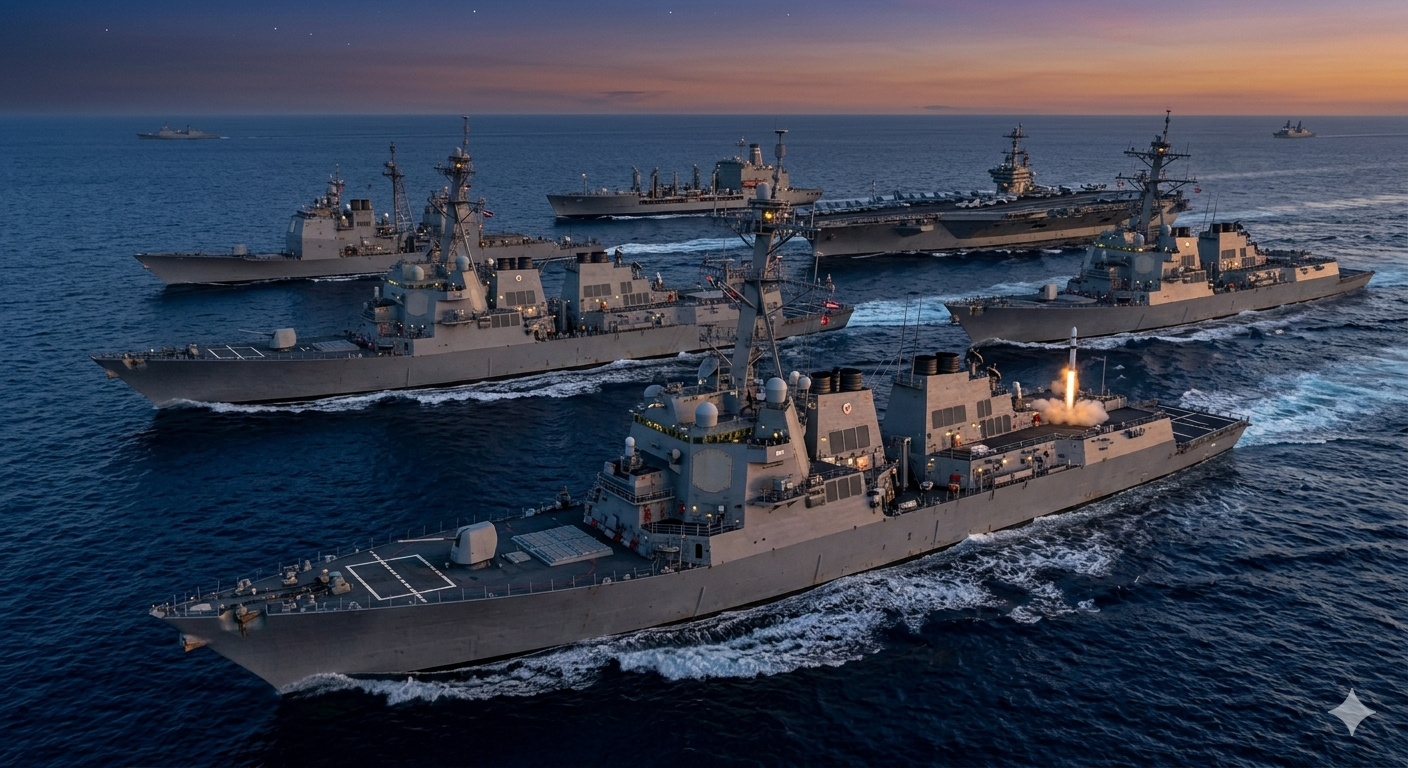
Chinese state television aired exceptionally detailed footage of a tense encounter at sea: the 11,000-ton Yanan, a Type 055 from the People’s Liberation Army Navy, employing Chinese electronic warfare to respond to approaching foreign military aircraft near Taiwan. For the first time, the public can see the ship switching its radar to high power, coordinating with an aircraft carrier, and firing electronic interference missiles in a real deterrence scenario.
In the sequence shown, the Yanan detects multiple groups of aircraft changing course and altitude near the vessel. The crew quickly shifts from monitoring to an active countermeasures posture, preparing missiles capable of active and passive interference, requesting air support from the aircraft carrier Shandong, and only after confirming contacts, fires four electronic interference missiles. The result is a rare portrait of how modern naval warfare, for China, increasingly relies on Chinese electronic warfare as much as on conventional guns and missiles.
A Rare Look At Chinese Electronic Warfare At Sea
The footage is part of a CCTV series on the growing Chinese naval strength and was presented as the first public record of the Yanan executing “electronic countermeasures” in waters near Taiwan. This goes far beyond simple propaganda.
-
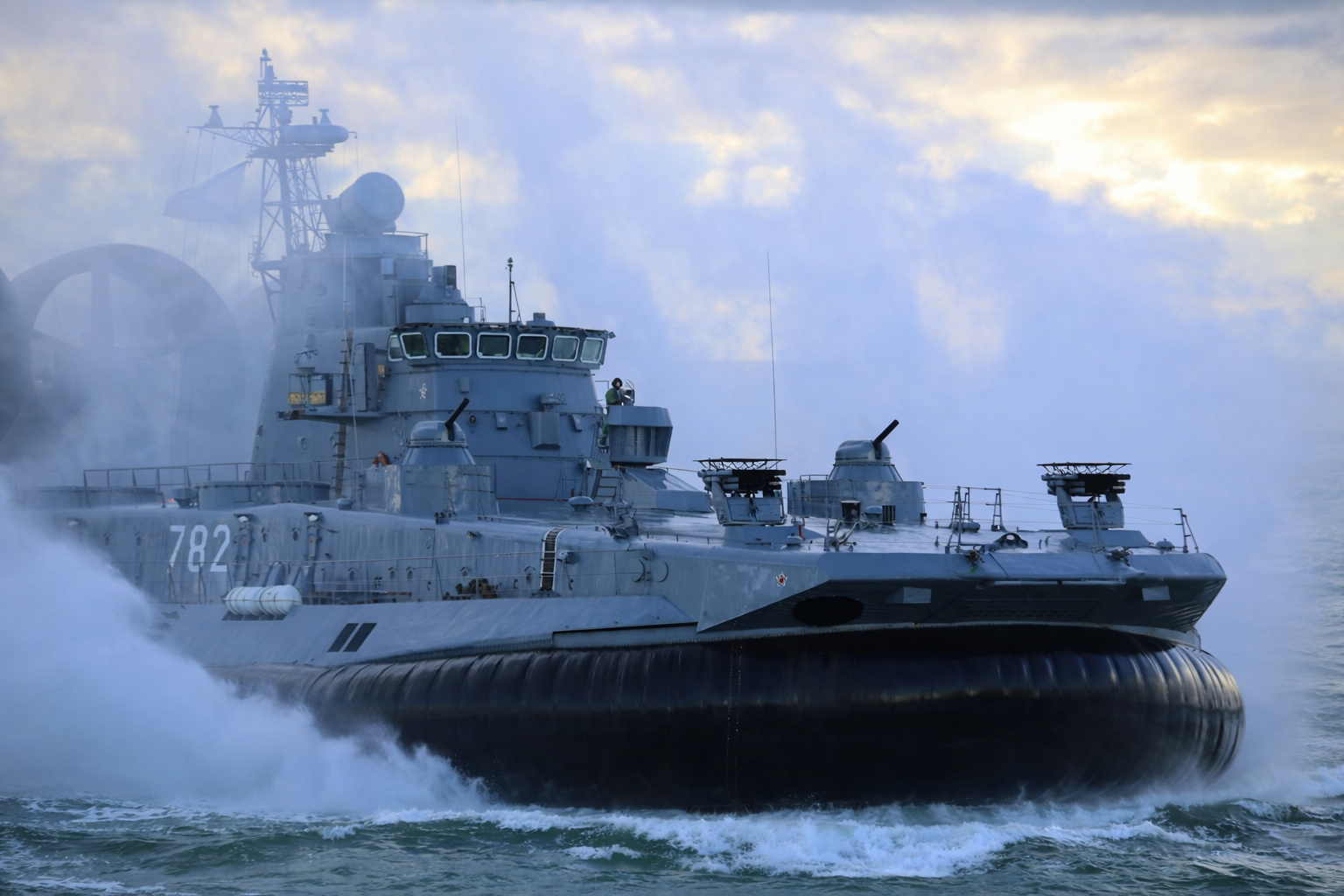
Classified as a “amphibious monster” weighing 555 tons, 57 meters long, and featuring three propellers with a diameter of 5.5 meters, the Zubr is the largest military hovercraft ever built, capable of transporting 3 tanks or 500 soldiers at speeds exceeding 100 km/h over water, ice, and sand, and China has resumed production of it to project power in the South China Sea.
-
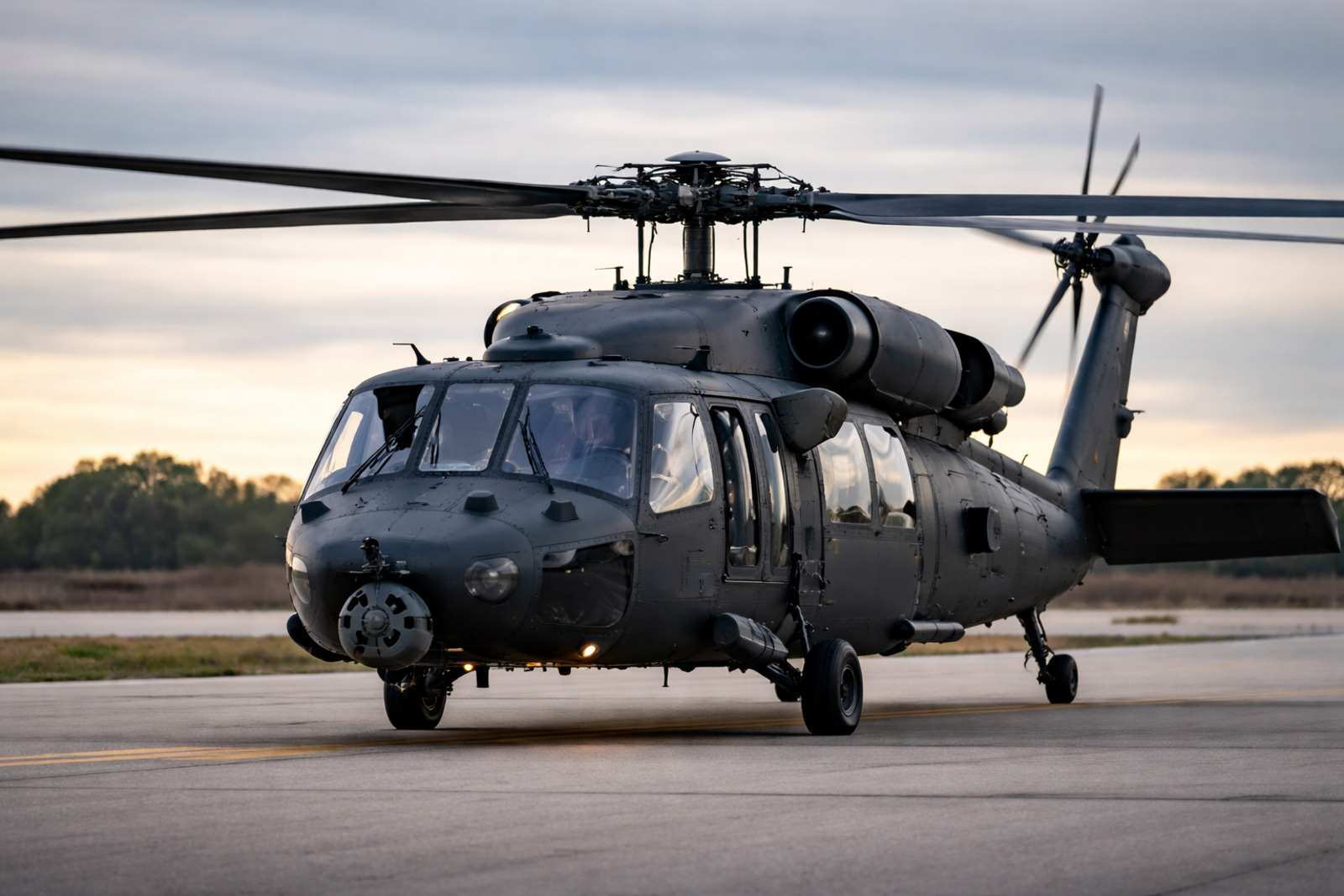
The U.S. Army receives the first Black Hawk helicopter that can fly without pilots, be controlled by a tablet, and even land on its own during high-risk missions.
-
With 11,000 tons and sensors capable of hunting submarines at long distances, the Type 055 has become one of the most feared floating arsenals of the Chinese navy.

-
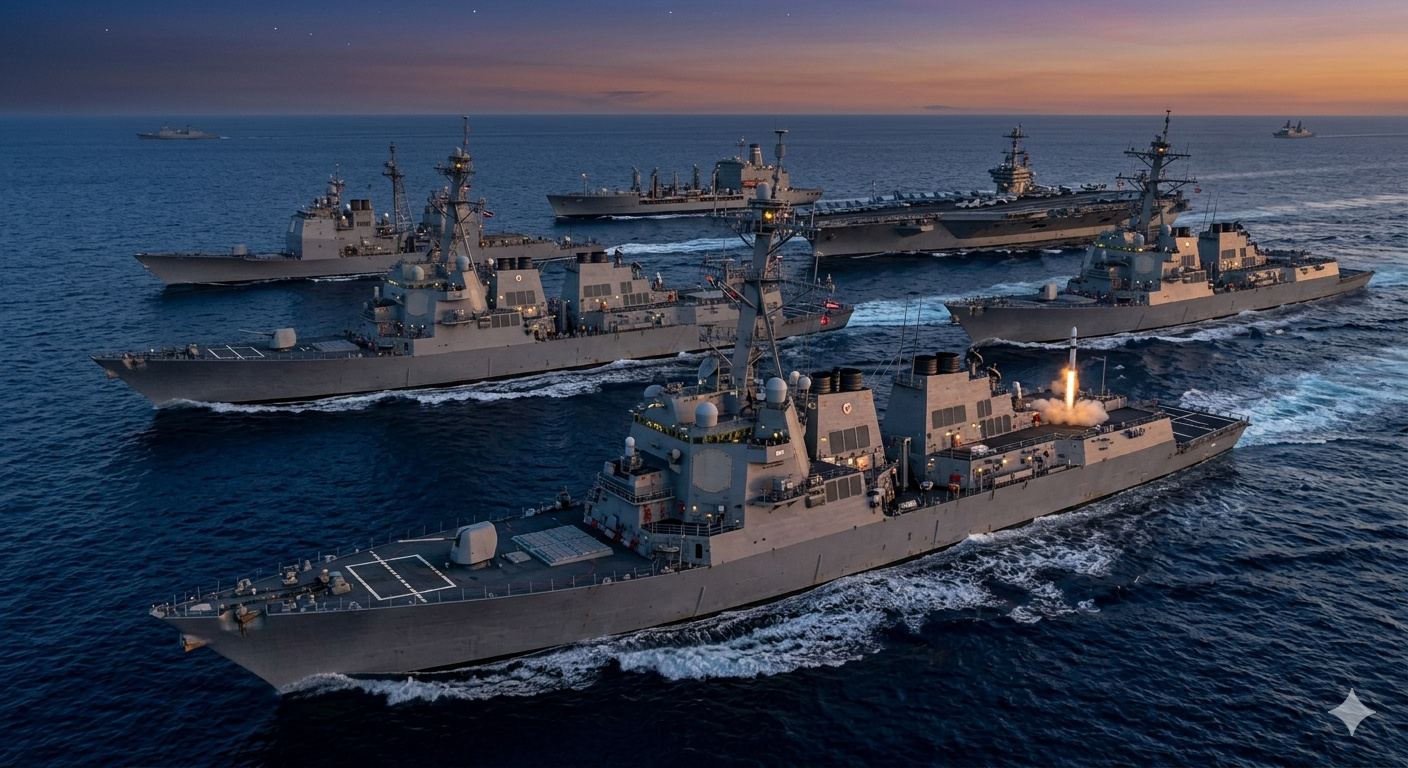
With over 15,000 tons, radars capable of tracking hundreds of targets simultaneously, and more than 120 missiles ready for launch in seconds, modern destroyers cease to be escorts and begin to dominate the naval battlefield.

The sequence shows the alert routine on board: a sailor observes the horizon with binoculars, identifies possible approaching aircraft, and alerts the starboard side of the ship.
Next, the combat center intensifies the use of sensors, and Chinese electronic warfare comes into play not as an abstract concept, but as an operational procedure: switching radar mode, extending range, preparing interference systems.
Instead of just showcasing raw firepower, state TV chooses to emphasize how the Navy integrates sensors, missiles, and Chinese electronic warfare into a coordinated response.
It’s a technical and political message about how Beijing wants to be perceived at this moment.
Yanan Takes Action Near Taiwan

The Yanan destroyer is presented as one of the most advanced surface combat ships in the Chinese fleet.
In the footage, it appears to be on what looks like a routine patrol in waters near Taiwan when aerial contacts begin to emerge.
The aircraft are not named in the broadcast, but the context is clear: they are foreign military planes operating in a sensitive zone, at a time of rising tensions surrounding Taiwan.
The broadcaster describes repeated movements by these aircraft, altering flight paths, forcing the ship to raise its readiness level.
At this point, the Yanan suspends any passive posture and begins to operate as a node of a larger system: it identifies, classifies, informs, requests support, and only then utilizes Chinese electronic warfare through interference missiles.
From High-Power Radar To Electronic Interference Missiles
One of the most important moments in the video is the instant the Yanan switches its radar to high-power mode.
According to the broadcaster, this change is made to extend detection range and improve tracking quality of aerial targets.
Simultaneously, the ship’s Chinese electronic warfare system prepares missiles capable of active and passive interference.
This indicates that the projectiles are not just physical ammunition, but platforms designed to saturate, deceive, or disrupt the communication and navigation systems of nearby aircraft.
After contacts are reported, the Yanan requests support from the aircraft carrier Shandong, which sends three aircraft to confirm the presence of unidentified planes.
Only after this cross-check does the destroyer fire four electronic interference missiles, marking a clear transition from monitoring to a full response in Chinese electronic warfare.
The implicit message is direct: the ship does not act in isolation or fire impulsively. It is part of a larger tactical framework, in which sensors at sea and in the air operate together before any countermeasures are employed.
Chinese Fleet And Multidomain Warfare Doctrine
During the broadcast, crew member Wang Liang explains the logic behind this posture. For him, the People’s Liberation Army Navy today operates at the forefront of two levels of conflict: the conventional, involving missiles, air defense, anti-submarine operations; and the digital, with Chinese electronic warfare, signal interference, and spectrum dominance.
Wang emphasizes that modern naval warfare is not just about the power of a single ship, no matter how advanced, but about how all maritime and aerial operational systems work together.
In other words, the real strength lies not only in the 11,000-ton hull but in the network of sensors, radars, missiles, and interconnected Chinese electronic warfare systems.
This discourse places the Yanan within a multidomain warfare doctrine, where sea, air, and electromagnetism are treated as a single maneuvering field.
Taiwan At The Center Of Tensions And Strategic Messaging

The footage airs in a broader context of tension surrounding Taiwan. In December, the U.S. State Department approved the sale of about $11.1 billion in new weapons to the island, a measure that has been repeatedly criticized by Beijing.
At the same time, statements from Japanese officials about a possible military response should China attack Taiwan have heightened the sense that more regional powers are being drawn into the debate over the future of the strait.
Displaying Chinese electronic warfare in action, with the Yanan driving away foreign aircraft near Taiwan, also serves as a filmed diplomatic message.
Without directly naming which foreign forces were involved in the encounter, the video suggests that Beijing wants to convey two points at once: that it closely monitors the aerial presence in the region and that it is willing to use electronic countermeasures, not just escorts or official notes, to signal limits.
Nanchang, Liaoning And The Message From The Chinese Navy
In the same segment, CCTV also shows the Type 055 destroyer Nanchang operating with the aircraft carrier Liaoning at sea.
The footage records the ship repeatedly changing course to prevent two foreign vessels from crossing the carrier group.
This parallel is not coincidental. By showcasing both the Yanan and Nanchang in coordinated actions with aircraft carriers, China reinforces the idea that its Chinese electronic warfare, heavy destroyers, and carrier groups are part of a unified deterrence architecture.
The message is that areas surrounding Taiwan and the corridors through which foreign ships and aircraft transit are under constant observation.
And that the instruments used to respond to this presence are no longer limited to visible interceptions but include electronic interference, route blocking, and the construction of an increasingly saturated environment of Chinese sensors.
In the end, the Yanan video presents a scenario where the line between demonstrating strength and operational testing becomes increasingly thin. For the audience, it is a rare opportunity to see how China envisions the next phase of warfare at sea.
For foreign forces operating near Taiwan, it is a warning that Chinese electronic warfare is already being practiced in real-time, not just simulated in exercises.
Does this type of public demonstration of Chinese electronic warfare near Taiwan help to avert a larger conflict or only increases the risk of an incident in the strait?








-

-

-

5 pessoas reagiram a isso.