





 Portuguese
  English
  Spanish
  5 min of reading
  0 comments


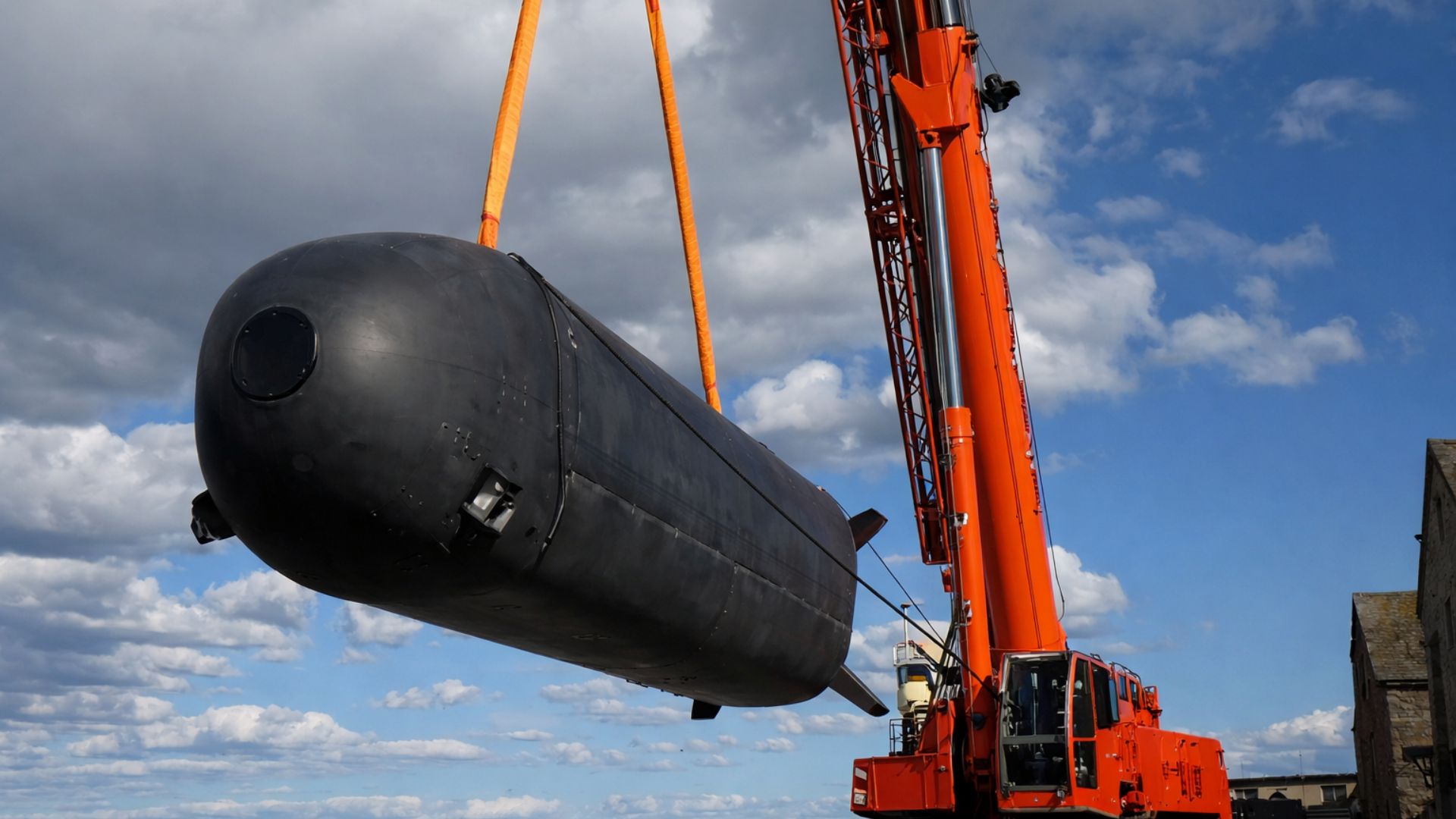
Uncrewed Submarine The Size of a Short Bus Has Been Operated Thousands of Kilometers Away in Official Tests That Unite the United Kingdom and Australia. Named XV Excalibur, The Vehicle Paves the Way for Persistent and Discreet Missions at The Bottom of The Sea.
An uncrewed submarine, large enough to resemble a mini-submarine and connected to operators more than 16,000 kilometers away, has come to symbolize a new stage in naval autonomy.
This is the Experimental Vessel (XV) Excalibur, an uncrewed underwater vehicle classified by the Royal Navy as an Extra-Large Uncrewed Underwater Vehicle (XLUUV), measuring 12 meters in length and displacing 19 tons.
In officially released tests, the system was controlled in UK waters from an operations center in Australia, demonstrating large-scale interoperability between allies.
-
Spain surprises the world by erecting 62 artificial dunes, mixing sand with natural remains of posidonia, and causing the structure to lose only 1.4% of its volume in 1 year.

-
With 16 Bulava missiles, improvements in acoustic stealth, and a design focused on silent patrols, Russia’s nuclear submarine was born to ensure Moscow’s invisible retaliation and has become one of the pillars of its maritime strength.

-
‘Populous’ city in Rio among the worst in Brazil in national ranking and exposes silent development crisis.

-
Couple buys house in the South Zone of São Paulo, opens a hidden door in the garage, and finds a secret wine cellar with dozens of old wines forgotten since the 1970s.

Royal Navy and The XLUUV Operated More Than 16,000 Km
The Excalibur was introduced as the first uncrewed submarine of the Royal Navy and, by its dimensions, also as the largest uncrewed underwater vehicle ever tested by the force.
The British Navy itself described the model as an “experimental vessel” with two meters in width, built to accelerate learning on how to operate large autonomous platforms below the surface.
The proposal is clear: to place a system capable of navigating, executing tasks, and collecting data at sea without the presence of crew members, maintaining the typical discretion of the underwater environment.
What stands out, however, is not just the size.
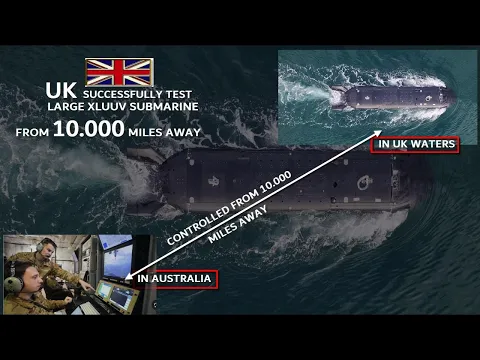

The most unusual milestone came in a series of experiments related to technological cooperation between the United Kingdom, Australia, and the United States.
According to a statement from the Royal Navy about the exercise, the control of a British XLUUV in British waters was executed from a remote center in Australia, more than 10,000 miles away from the home port of Plymouth.
This distance exceeds 16,000 kilometers and was treated as a first demonstration, within the AUKUS Pillar 2, of “interchangeability” and interoperability of the “one force” type for this level of uncrewed underwater vehicle.
Subaquatic Communication and Interoperability AUKUS Pillar 2
The long-distance operation occurs in a scenario where the seabed imposes natural limitations on communication.
Radio waves have a severely reduced range in seawater, and data transmission often relies on acoustic methods and specific communication routines.
Within this context, the Excalibur was cited as a central piece of an initiative that seeks to make the use of robotic and autonomous systems more natural in the maritime domain, without requiring the constant presence of support vessels or onboard crews.
Project Cetus, Submarine Delivery Agency and The Excalibur Experimental
The origin of the Excalibur is in the Project Cetus, a British program that resulted in an experimental vehicle designed to test technologies, procedures, and specific payloads.
According to the government of the United Kingdom, the project was developed by the Submarine Delivery Agency (SDA), in partnership with the company MSubs Ltd, with sponsorship from the Royal Navy.

The stated intention is to build confidence in autonomy and use the platform as a testing ground to evaluate missions and military “payloads,” without framing it as an immediately operational submarine.
The naming ceremony and public presentation took place at the naval base of Devonport, and the Excalibur was described as the result of a three-year development cycle.
The official announcement from the Royal Navy highlighted that, in the two years following the presentation, the vehicle would undergo extensive sea trials to map specific challenges in operating a system of this size without crew members.
Among the objectives cited by British Navy authorities is the construction of practical knowledge that will allow, in the future, the coexistence of crewmanned and uncrewed platforms within the same set of capabilities.
The explanation for such interest arises from the type of environment that these systems seek to address.
The Royal Navy associated the initiative with demands for infrastructure protection and information gathering in the underwater domain, in addition to advancing technologies that enhance persistent presence at sea.
The institutional discourse emphasizes that an experimental vehicle like the Excalibur can help understand the limits and opportunities of sensors, navigation, control, and integration with other means, creating a basis for more advanced concepts.
Quantum Clock Tiqker, Infleqtion and Navigation Without GPS
In addition to the long-distance interoperability tests, the British government reported an experiment with a component that often appears in cutting-edge projects: a quantum clock.
The Excalibur went to sea with a device described as “quantum optical atomic” and nicknamed Tiqker, developed by the British company Infleqtion.
The stated goal was to improve time accuracy and navigation in a type of vessel that cannot rely entirely on GPS while submerged.
In practice, the promise of greater temporal stability reduces the need for external signals and can support missions where staying submerged for longer periods is an important part of performance.
The model was also reported by the government as having undergone a set of acceptance tests since its launch and, at the end of the process, was officially delivered to the Royal Navy for an evaluation and learning program.
At this stage, the SDA would continue to support the British Navy to extract lessons on the introduction of autonomy in future uses, focusing on understanding how systems of this type can be integrated with existing capabilities in the underwater domain.
The Excalibur, therefore, appears as a “large-scale laboratory”: large enough to represent operational challenges similar to those of larger platforms, but explicitly designed to test technologies, protocols, and integration among allied countries.
By confirming that control and communication with the vehicle occurred while it was submerged and in a remote operational scenario more than 10,000 miles away, the Royal Navy set a benchmark for what it considers possible to achieve with large autonomous vehicles at the bottom of the sea.
If a robotic submarine of 12 meters can already be controlled over 16,000 km and serve as a platform for quantum navigation tests, what will be the next practical limit of underwater autonomy?






-

-

-

-

-

-

54 pessoas reagiram a isso.