





 Portuguese
  English
  Spanish
  4 min of reading
  0 comments


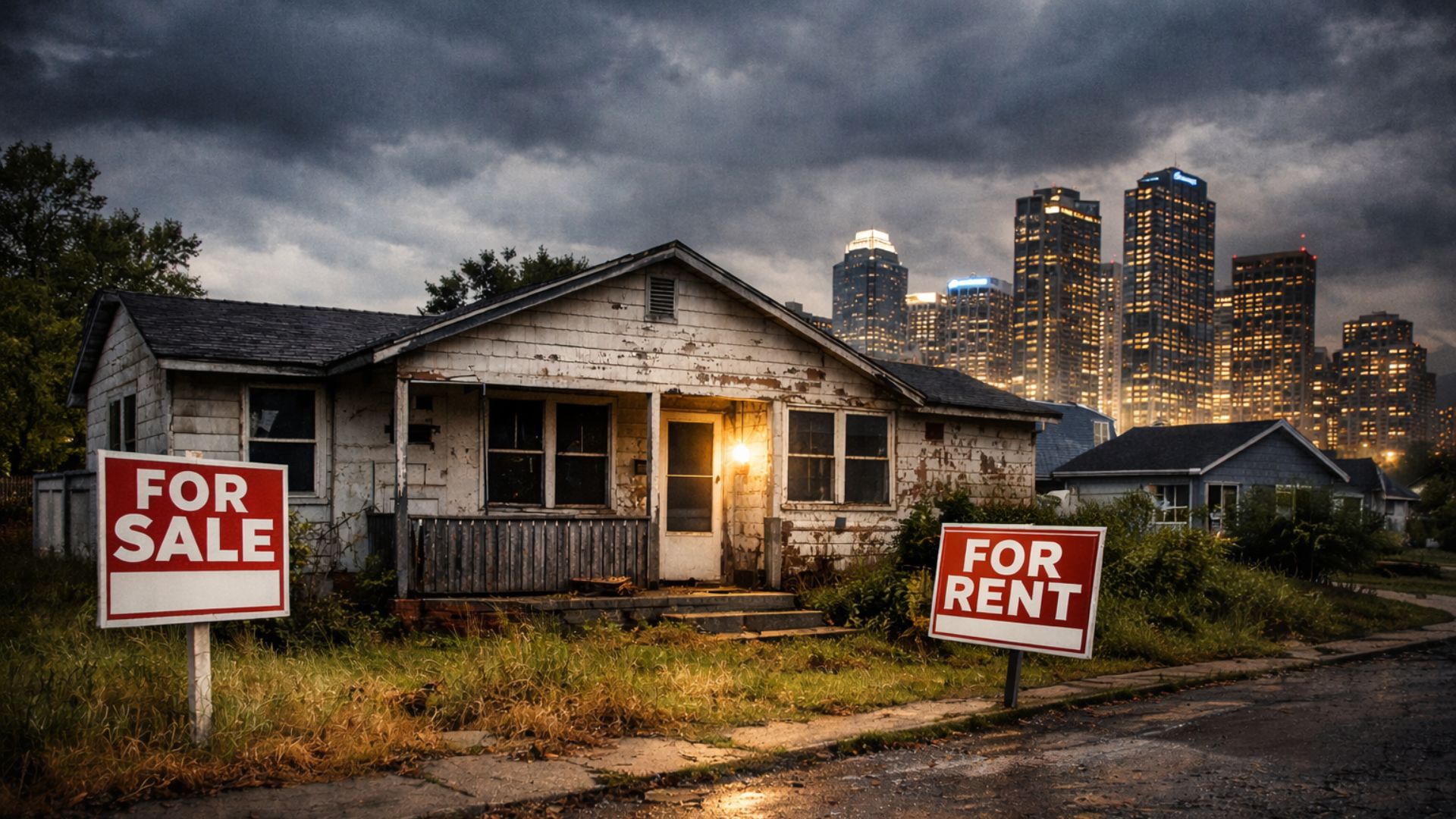
High Number Of Vacant Homes Draws Attention Amid Housing Pressure In Major American Cities
More than 15 million residences appear as vacant in the United States, according to official data, while millions of people face difficulty renting or buying a home in high-value urban areas.
The discrepancy reveals how location, seasonal use, market turnover, and property conditions explain why vacant houses do not always mean available housing.
The Size Of Residential Vacancy In The United States
More than 15 million homes are classified as vacant in the United States, equivalent to about 10% of the total residential stock in the country, according to data from the U.S. Census Bureau compiled by the portal USAFacts.
The number draws attention because it arises in a context of strong pressure on rental and home prices in various cities, raising questions about how such a high volume of vacant residences can coexist with access difficulties to housing.
-
Tourists were poisoned on Everest in a million-dollar fraud scheme involving helicopters that diverted over $19 million and shocked international authorities.

-
Hidden beneath the dense forest of the Sierra Nevada, Betoma emerges in a neighbor of Brazil as the greatest archaeological discovery of the century, revealing a colossal ancestral city covering over 18 km², with 8,334 stone structures and the potential to rewrite the history of South American civilizations.

-
Goodbye iron: new technology from Xiaomi promises to revolutionize the way we iron clothes with 500 kPa steam, continuous flow of 120 g/min, heating in 65 seconds, and six smart modes for different fabrics.

-
Rio Pardo, the most mysterious city in Rio Grande do Sul: untouched Pampas castle, the missing treasure of the Devil Boy, bride’s saint, invisible tunnels, and a 200-year curse today.

How The Government Defines A Vacant Home
The explanation lies in how vacancy is measured in official statistics.
For the Census Bureau, a vacant residence is any unit that is not occupied at the time of data collection, regardless of the reason.
This definition includes very distinct situations, ranging from properties that are effectively abandoned to homes for temporary use or units that are simply in transition between one occupant and another.
In the agency’s surveys, vacant properties are classified into specific categories.
These include units available for sale, for rent, already sold or rented but not yet occupied, as well as homes used seasonally, recreationally, or occasionally.

According to the Census, this last group represents the largest share of vacant homes in the country, encompassing vacation homes, properties in tourist areas, and homes used only at certain times of the year.
Why Vacancy Does Not Mean Immediate Housing Availability
This breakdown helps to understand why the absolute number of vacant homes does not automatically convert to a supply of permanent housing.
A significant portion of these units has not been designed for continuous occupancy or is located in regions where demand for housing is limited.
Others appear vacant only temporarily, during normal real estate market processes, such as renovations, changes of ownership, or intervals between rental contracts.
Location Matters More Than Total Property Quantity
When the focus shifts from national data to territorial distribution, the contrast becomes more evident.
The scarcity of housing and rising property prices are concentrated mainly in areas with abundant job offers, infrastructure, and services.
In these regions, the cost of living reflects the competition for location, while some of the vacant homes are found in rural areas, declining population cities, or tourist destinations, far from the centers where demand is stronger.
Property Conditions Also Limit Reuse
In addition to location, the physical condition of residences directly influences their reuse.
According to analyses based on public data and specialized reports, a portion of vacant properties is in a state of deterioration or does not meet current safety and habitability standards.
This scenario requires significant investments to bring the units back to regular residential use, especially in areas that have experienced economic downturns over decades.
Investment Strategies And Occasional Use
Another relevant factor is the profile of the real estate market.
Even in high-value regions, there are properties that remain vacant due to investment strategies, occasional use, or specific characteristics of the high-end segment.
These units are counted in the vacancy statistics but do not practically increase the accessible supply for middle- and low-income families.
Government Responses To The Problem
In light of this scenario, public policies tend to differentiate types of vacant properties.
In various American cities, local administrations adopt programs focused on rehabilitating abandoned properties, managing publicly owned unused properties, and reselling these units for residential purposes.
These initiatives, however, face financial, legal, and economic limitations, in addition to relying on the attractiveness of the regions where the properties are located.
What Official Data Helps To Explain
The U.S. Census Bureau itself emphasizes that the visual perception of seemingly vacant homes does not necessarily correspond to actual availability in the market.
As the largest category of vacant units is for seasonal or occasional use, much of this stock does not circulate in the traditional rental or permanent sale market.
Specific vacancy indicators in the rental sector show that the number of units effectively available is much lower than the total number of residences classified as vacant.
A Broad And Unequal Portrait Of The Real Estate Market
The figure of 15.1 million vacant homes serves as a broad and heterogeneous portrait of the real estate market in the United States.
It encompasses situations of leisure, transition, investment, and abandonment, while the housing crisis manifests itself locally, associated with the relationship between income, supply, and cost of living in specific urban centers.
If most vacant homes are not located where demand is highest or do not meet immediate occupancy conditions, what mechanisms could bring these properties closer to the real housing needs in the most pressured cities?








-

Uma pessoa reagiu a isso.