





 English
  Francês
  Alemão
  Italiano
  Japonês
  Norueguês
  Portuguese
  Spanish
 3 min of reading
  0 comments


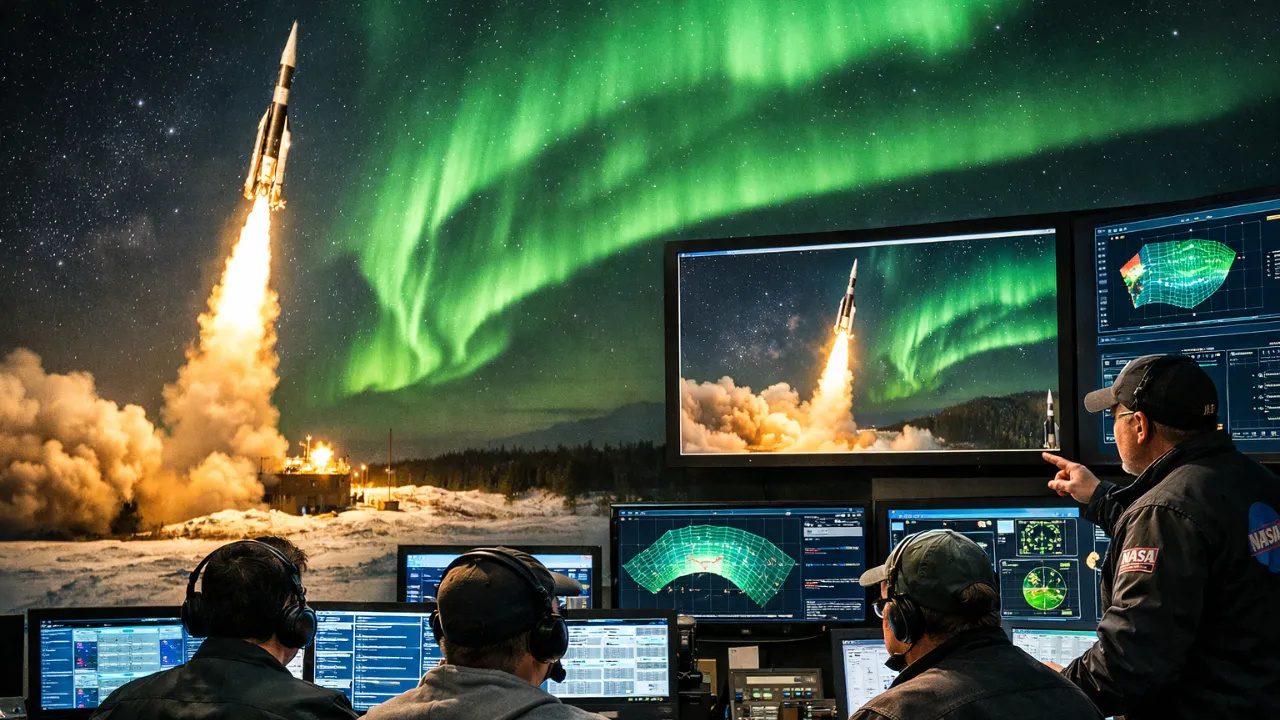
The Black Aurora has returned to the scientific spotlight after NASA launched two sounding rockets in succession from the Poker Flat Research Range in Alaska. The mission combines altitude measurements with a strategic network of ground sensors to reconstruct in three dimensions the electromagnetic environment associated with the phenomenon.
Unlike orbiting satellites, suborbital rockets pass directly through the region where the aurora forms — between 100 km and 400 km in altitude — allowing for in situ measurements of electric field, magnetic field, and particle flux. This approach increases precision in analyzing the Black Aurora, regarded as a rare phenomenon within auroral dynamics.
What Differentiates The Black Aurora From The Traditional Aurora
The classic Northern Lights occur when energetic electrons descend from the magnetosphere and collide with atoms in the upper atmosphere, producing green and red light emissions.
-
350-year mystery may have been solved: remains of a soldier who inspired the hero of The Three Musketeers found beneath a church in the Netherlands.

-
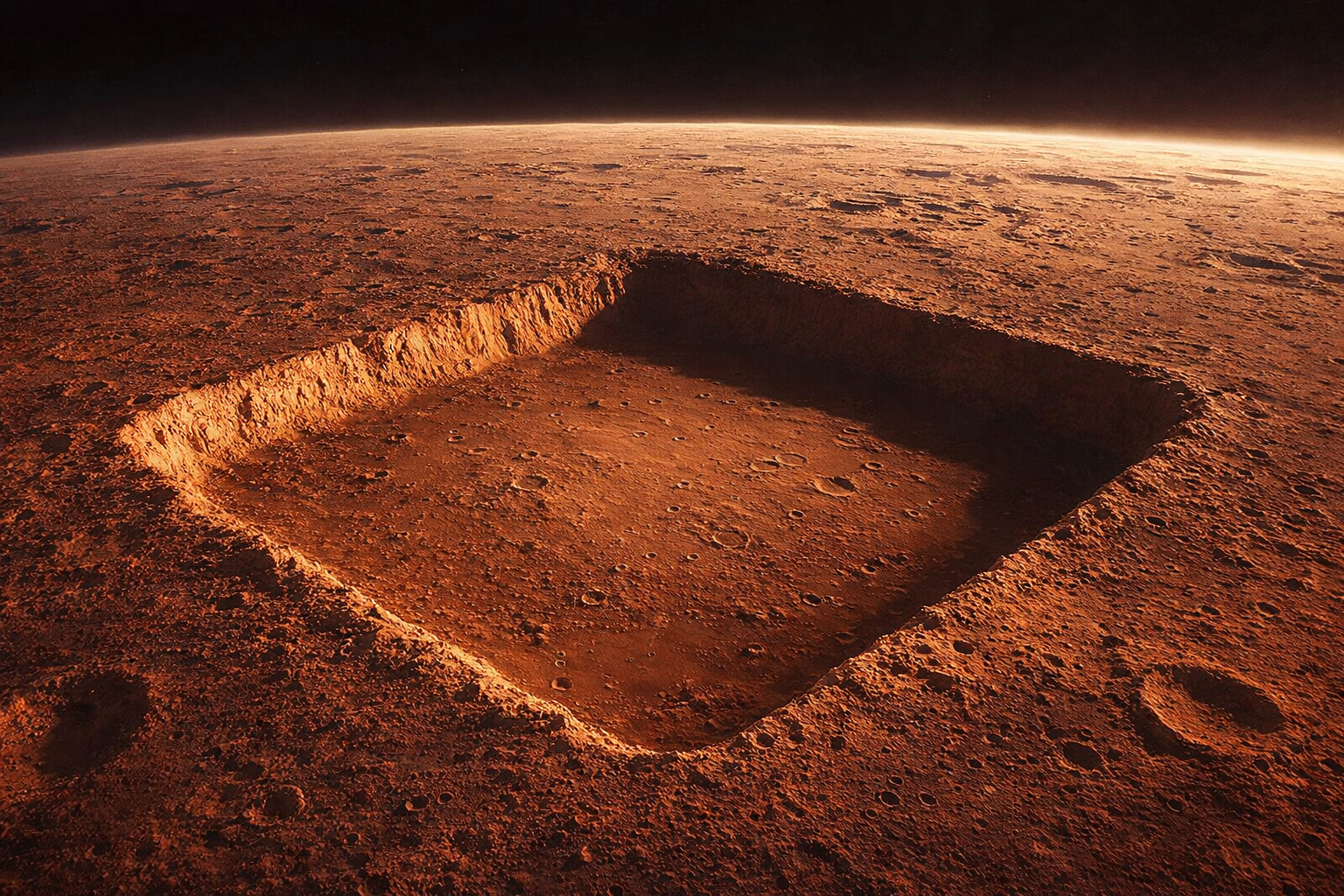
NASA photographed a nearly perfect square with 3 km sides on Mars, 13 times larger than the Great Pyramid of Giza, but the official explanation is natural erosion; still, no one has explained why the four sides have almost identical lengths.
-
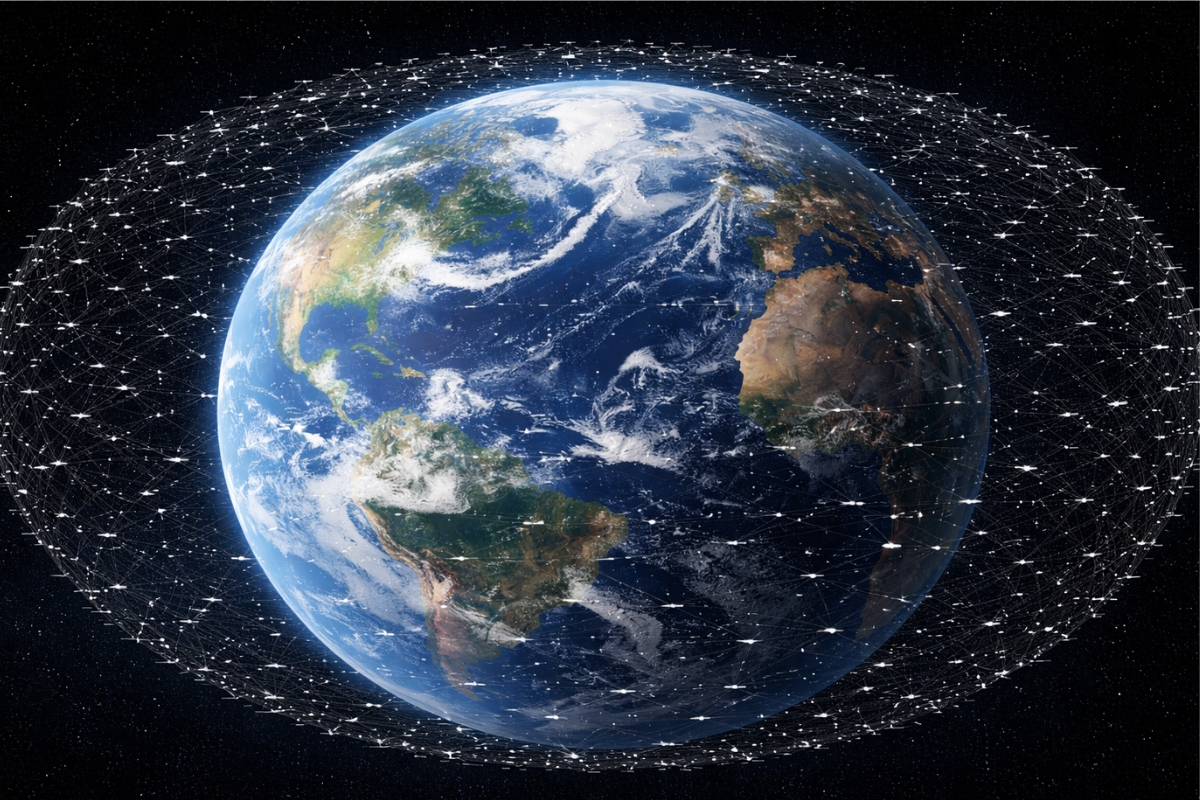
Starlink breaks the barrier of 10,000 satellites in orbit and takes its expansion to an unprecedented level, with a direct impact on global internet, technological competition, and the race for space.
-
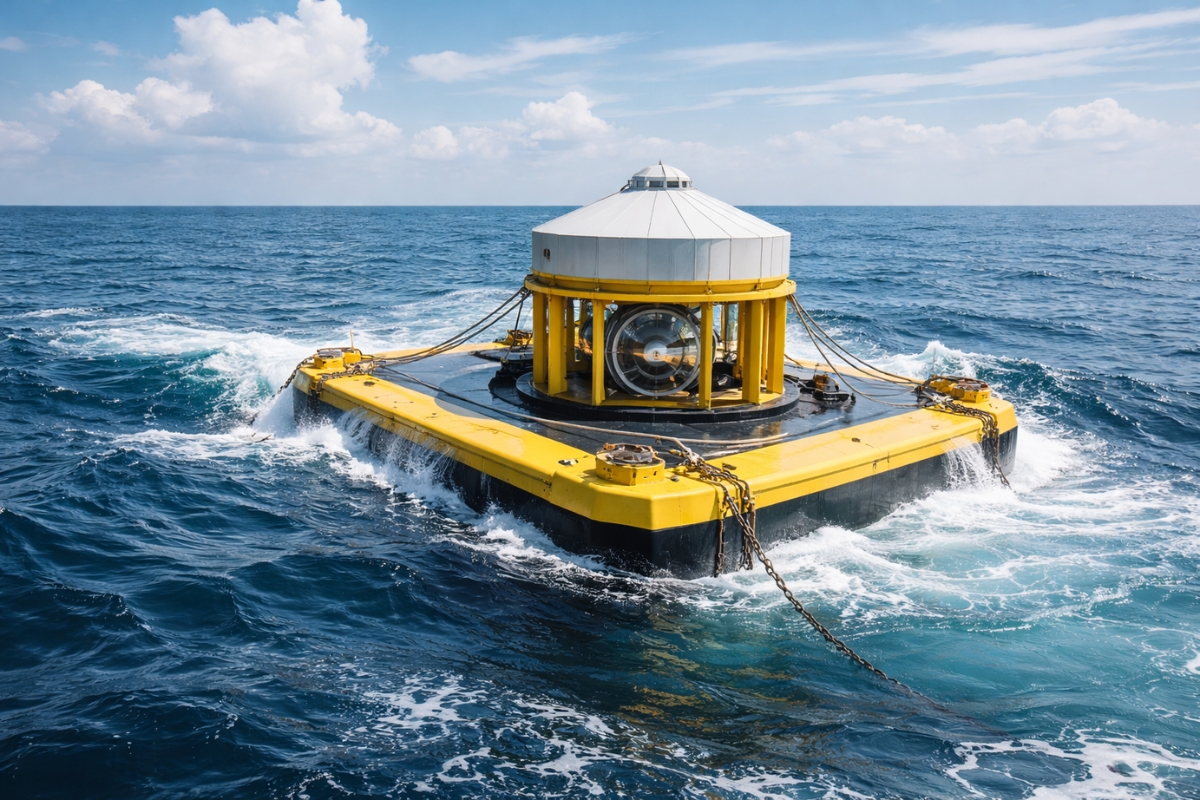
Japan finds an alternative to oil amid rising prices by transforming ocean balance into electricity with a new technology that maintains efficiency even when the sea changes.

On the other hand, the Black Aurora manifests as regions of reduced brightness embedded within an active aurora. It is not merely the absence of light, but an organized structure associated with upward flows of electrons.
Instead of particles precipitating into the atmosphere, evidence suggests that in the Black Aurora, electrons can be accelerated upward by local electric fields. This movement alters the light emission and reveals a more complex electromagnetic behavior than that observed in conventional auroras.
Why Launch 2 Rockets Almost Simultaneously
The decision to launch two rockets in succession allows for simultaneous measurements at different altitudes. This strategy helps to:
– Map vertical variations of the electric field
– Measure density and energy of electrons
– Identify currents aligned with the Earth’s magnetic field
– Differentiate temporal effects from structural effects
During auroral events, changes occur in a matter of seconds. By using two vehicles almost simultaneously, NASA reduces temporal uncertainties and improves the three-dimensional reconstruction of the electromagnetic environment related to the Black Aurora.
The Role Of The Ground Sensor Network
In addition to the rockets, the mission utilizes a network of receivers distributed across the auroral region in Alaska. These instruments include:
– High-sensitivity optical cameras
– Ground magnetometers
– Radio wave receivers
– Ionospheric monitoring stations
The integration of this data allows for correlating what is visually observed in the sky with what is being measured in the ionosphere. The result is a 3D model capable of revealing how electric fields and currents organize during the formation of the Black Aurora.
The Connection With Space Weather
The ionosphere is a layer of the atmosphere ionized by solar radiation. During geomagnetic storms, solar wind interacts with the Earth’s magnetic field, generating auroras.
The Black Aurora arises in this context of intense electromagnetic activity. Understanding its structure helps explain how solar energy is transferred to the Earth’s atmosphere and redistributed through electric currents.
These studies have practical implications. Space weather events can affect satellites, radio communications, navigation systems, and even electrical grids at high latitudes. A better understanding of the dynamics associated with the Black Aurora helps refine geomagnetic forecasting models.
Why The Phenomenon Still Intrigues Researchers
Despite decades of studying auroras, the Black Aurora remains less understood because:
- It is less frequent than traditional luminous auroras
- It requires simultaneous measurements of multiple parameters
- It involves particle flows with a direction opposite to what is expected
The three-dimensional reconstruction of the electromagnetic environment over Alaska may confirm hypotheses about particle acceleration and the organization of auroral currents.
What The Mission May Reveal
If the data confirms the consistent presence of upward electric fields associated with the Black Aurora, this could:
– Refine magnetosphere-ionosphere coupling models
– Improve predictions of space weather-related events
– Broaden the understanding of plasma physics in planetary environments
More than just documenting a rare phenomenon, the mission aims to understand how solar energy interacts with the Earth’s magnetic field — a fundamental process for modern space physics.







-

-

4 pessoas reagiram a isso.