





 English
  Francês
  Alemão
  Italiano
  Japonês
  Norueguês
  Portuguese
  Spanish
  5 min of reading
  6 comments


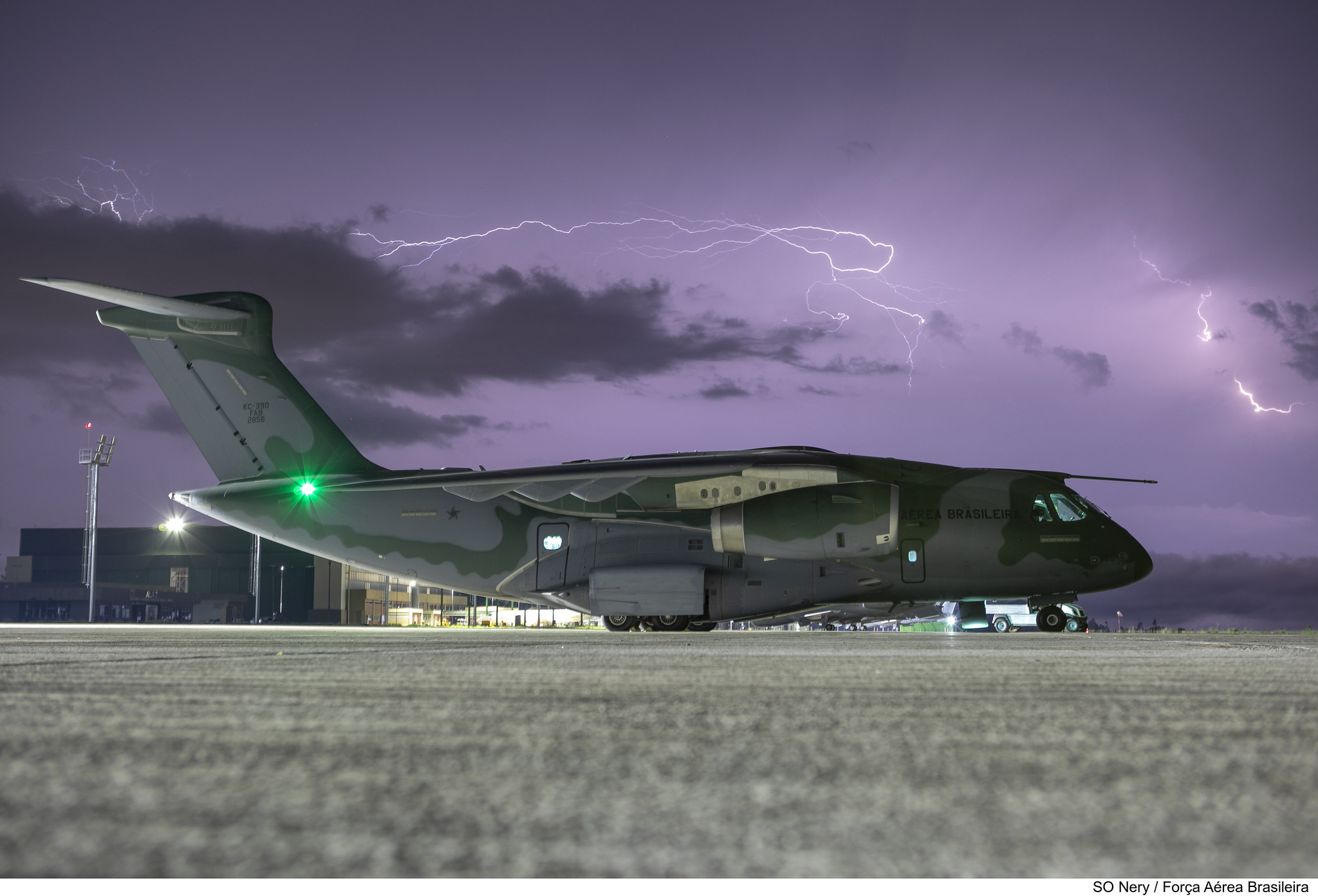


Developed To Go Beyond Hercules, The KC-390 Was Born From A Strategic Change In Brazil, Joining Technological Independence, Operational Performance And Global Ambition In A Single Project
When the KC-390 took to the skies for the first time, the moment went almost unnoticed outside specialized circles. At first glance, it looked like just another military aircraft entering service. However, in practice, that inaugural flight symbolized a quiet yet profound turn in Brazil’s strategic posture. A country historically dependent on foreign technology was showing the world that it was ready to create, from scratch, a platform capable of competing— and in several aspects surpassing— the largest tactical freighters in history.
The information was released through technical analyses by Embraer itself and confirmed by operational evaluations from the Brazilian Air Force, in addition to reports and joint exercises with countries of the North Atlantic military alliance. From the outset, it was clear that the KC-390 was not conceived to replace the traditional C-130 Hercules. Its goal was more ambitious: to deliver higher speed, greater payload capacity, reduced operational costs, and versatility that met both military and humanitarian missions anywhere in the world.
In this context, the question that arose was inevitable: how did Brazil, in just a few decades, manage to develop a tactical freighter capable of convincing European air forces to abandon established models? To answer, one must return to the breaking point that gave rise to the project.
-
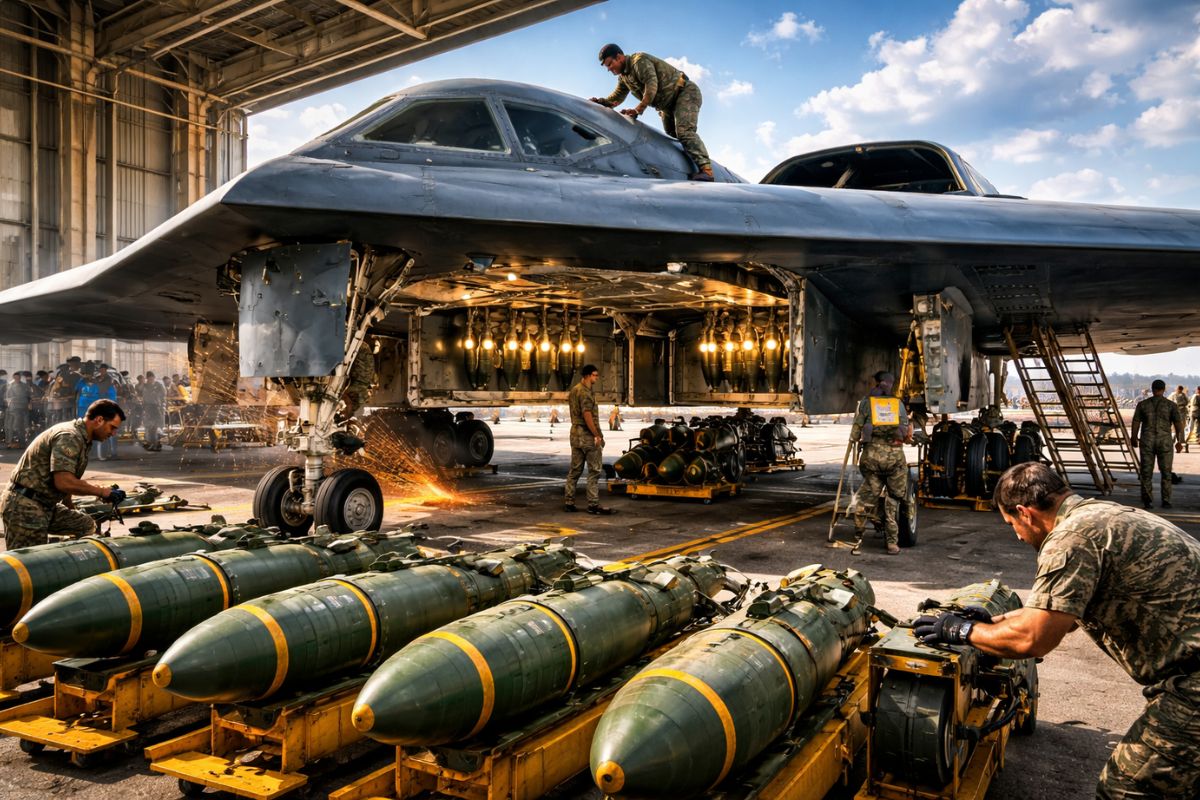
Valued at over $2 billion, the B-2 Spirit bomber requires meticulous inspection, bombs calibrated in a controlled environment, and extreme preparation to disappear from radar and launch attacks with lethal precision.
-
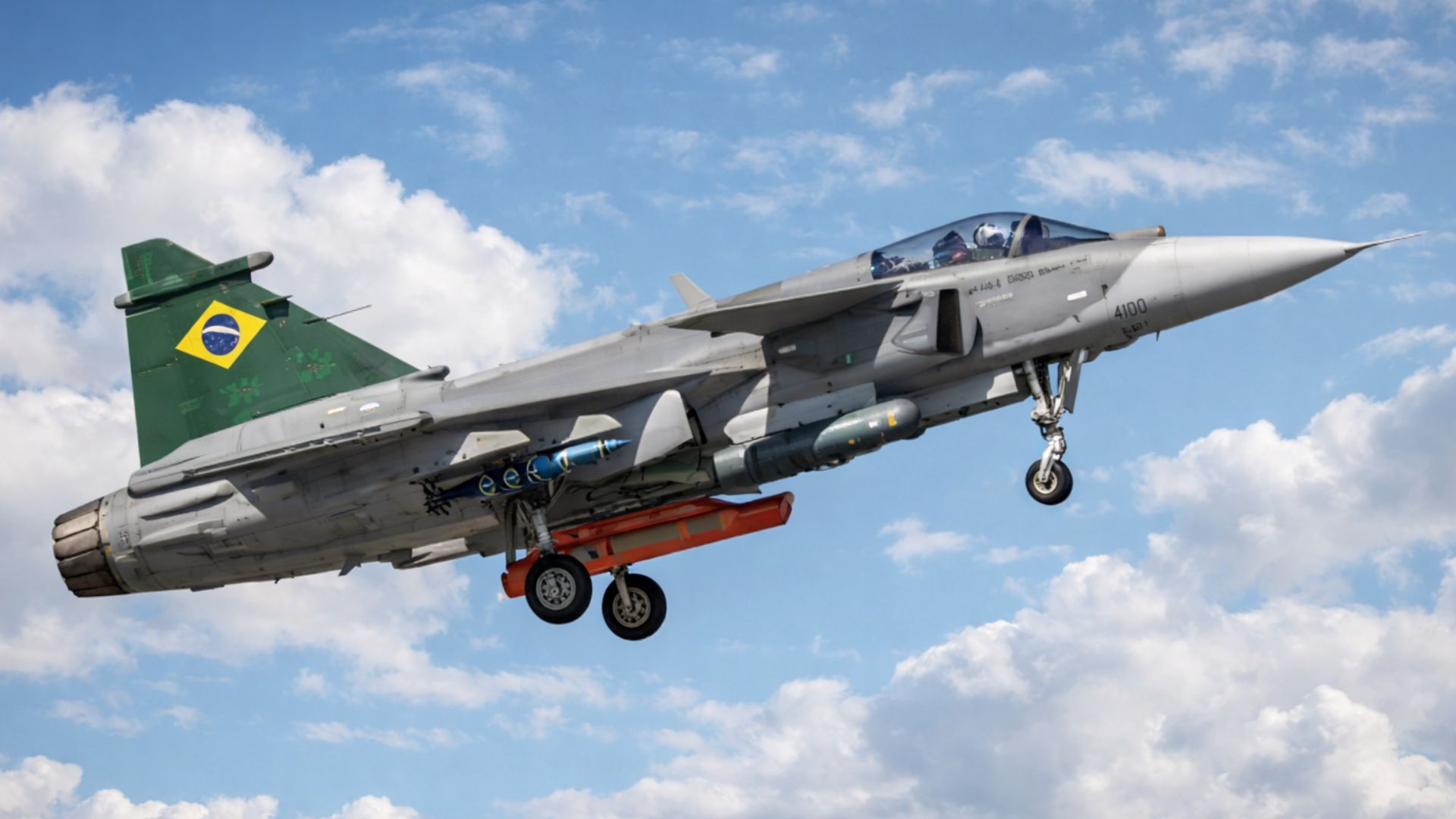
Brazil presents the first national F-39 Gripen fighter and redefines air defense with technological advancement, job creation, and strengthening of the defense industry on the global stage.
-
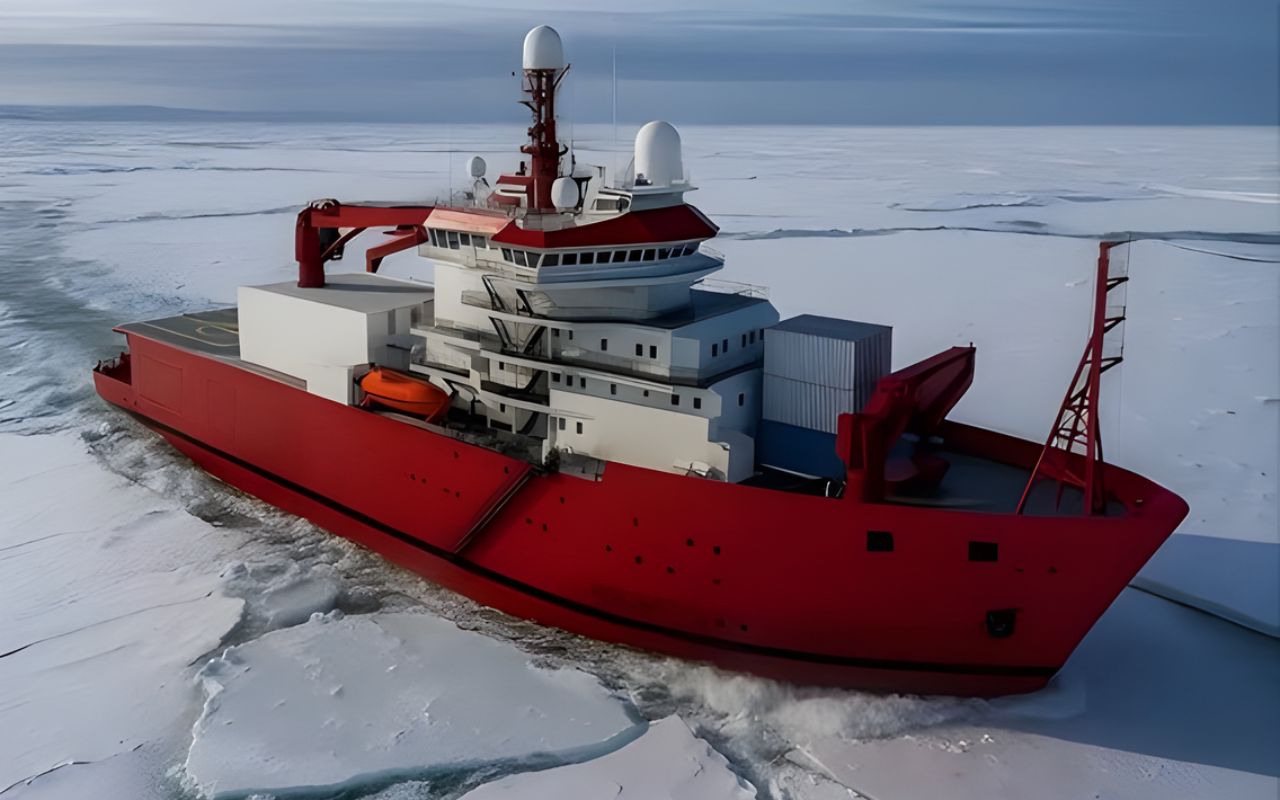
The construction of the Polar Ship Almirante Saldanha is progressing ahead of schedule and strengthens Brazil’s presence in Antarctica; the vessel will be 93 meters long, have a two-month autonomy, and technology to face ice.
-
The United States Army has an armored vehicle that reaches speeds of up to 100 km/h, capable of operating normally on different types of terrain and also on asphalt without causing damage; equipped with a 350 hp engine, it can transport up to 9 soldiers — meet the Stryker.

From External Dependency to The Decision To Create A High-Performance Tactical Freighter
For years, the Brazilian Air Force operated the Hercules as the backbone of its logistics missions. However, with the advancement of modern demands—more complex conflict zones, urgent humanitarian missions, and operations on improvised runways— it became evident that the model could no longer keep pace with new demands. The doubt shifted from technical to strategic: how long would Brazil depend on foreign solutions for critical missions?
It was at this moment that Embraer entered the scene with a bold proposal. In 2007, the KC-390 project began as an ambitious idea but quickly transformed into a challenge of considerable proportions. Each developed system represented not only an engineering choice but also a clear statement of technological sovereignty. Creating a high-performance tactical freighter with predominantly national technology was something that few countries in the world had managed to achieve.
When the first prototype was ready in 2014, expectations had already surpassed Brazilian borders. And by early 2015, when the KC-390 finally made its first flight, it was evident that Brazil was not just trying to meet international standards— it was setting new parameters. Foreign experts immediately highlighted the structural robustness, advanced controls, and system integration that put the aircraft on par with traditional manufacturers.
From this milestone, the project ceased to be just a domestic solution and began to be viewed as a global alternative. Countries seeking independence from traditional suppliers started to look at the Brazilian freighter with increasing interest.
Technical Capabilities That Explain Why The World Started Paying Attention
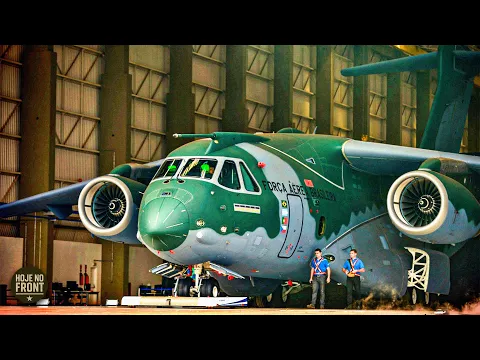

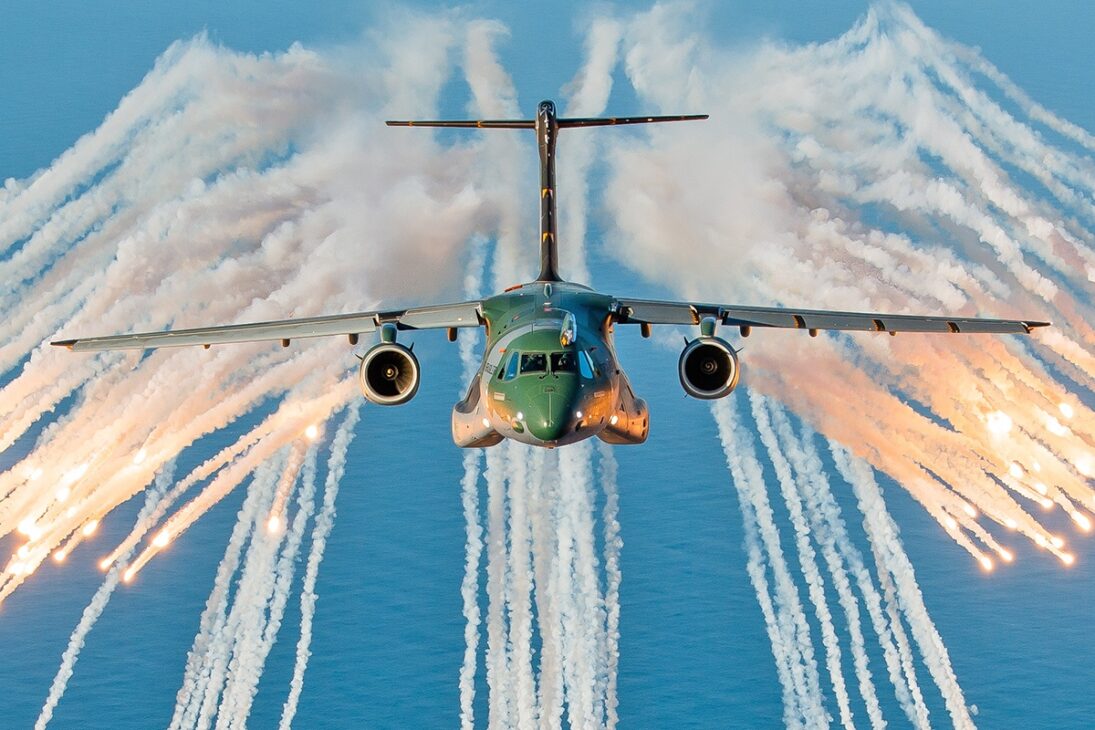
The true differentiator of the KC-390 reveals itself in real missions. Its payload capacity reaches 26 tons, allowing it to transport everything from light armored vehicles and heavy containers to medical supplies and munitions. In troop transport, it accommodates up to 80 equipped soldiers or 66 paratroopers ready for jump. In medical evacuation missions, it can carry up to 74 stretchers with full life support, functioning as a large-scale aerial rescue platform.
Additionally, its maximum speed of 870 km/h places it at the top of its category, dramatically reducing response time in critical operations. The operational range is also impressive: around 2,500 km with maximum load and over 6,000 km with reduced load, allowing it to cover all of Brazilian territory without stops or connect international bases with few stopovers.
Another key point is its ability to operate as a tanker aircraft. Equipped with refueling pods on the wings, the KC-390 can transfer fuel in flight to fighters and other aircraft while it can also be refueled, extending its operational range in prolonged missions. This operational flexibility is a differentiator that few tactical freighters can offer.
Internally, the aircraft incorporates cutting-edge technology. The fly-by-wire system replaces mechanical controls with electronic commands, ensuring greater precision, fuel economy, and stability even in adverse conditions. The digital cockpit gathers information on multifunction displays, facilitating crew decision-making in hostile environments or long-duration operations.
The structure was designed to operate in extreme conditions, capable of landing and taking off from short, dirt, or gravel runways. The V2500-E5 engines, widely recognized in the aerospace sector, provide high thrust with fuel efficiency, ensuring consistent performance even in heavy operations.
International Consolidation, Geopolitical Impact And The Future Of The Program
In 2019, the official entry of the KC-390 into the Brazilian Air Force’s fleet marked the beginning of an intense sequence of missions. During the pandemic, the aircraft transported oxygen, vaccines, and supplies to isolated regions, practically demonstrating its rapid response capability. At the same time, joint exercises with NATO forces reinforced its operational credibility.
Portugal was the first foreign country to close a contract, acquiring five units. Soon after, Hungary and the Netherlands progressed with acquisitions and plans to replace their C-130 fleets. Other European countries, such as Austria and the Czech Republic, initiated negotiations after observing the aircraft’s performance at international fairs like the Paris Air Show and Farnborough.
These agreements go beyond commercial sales. They involve industrial cooperation, technology transfer, and logistical support, strengthening Brazil’s position as a producer of high-level defense technology. At the same time, the program drives the national economy, generates thousands of direct and indirect jobs, and strengthens high-tech production chains spread throughout the country.
In the geopolitical field, the KC-390 has become a strategic asset. Each aircraft delivered expands Brazil’s diplomatic presence and reinforces international alliances. In a global scenario where logistics and air mobility are decisive, offering a reliable solution places Brazil in an unprecedented position.
The future of the program points to new versions and special configurations, including civil applications and specific missions, further expanding the aircraft’s commercial reach. The KC-390 represents not just an industrial success. It symbolizes the moment when Brazil ceased to be just a consumer of military technology and began to compete with the major powers in the sector.
In light of this scenario, the inevitable question remains: is the KC-390 just the first step of a new era for Brazilian defense or a historic opportunity that needs to be expanded before other countries advance even faster?







Continuamos dependente pois o KC 390 utiliza motores feitos nos EUA a Embraer ja era para estar desenvolvendo seus próprios motores
26 toneladas, não 35.
Muito bom! Conseguiram mapear os pontos fracos do concorrente e projetaram um vencedor.
Tomara que consigam dominar o mercado.
Mas não bobeiem. Os caras não vão deixar os brasileiros explorarem esse mercado sozinhos.
Afinal, os custos de desenvolvimento do Hércules já foram pagos há muito tempo.