





 Portuguese
  English
  Spanish
  7 min of reading
  4 comments


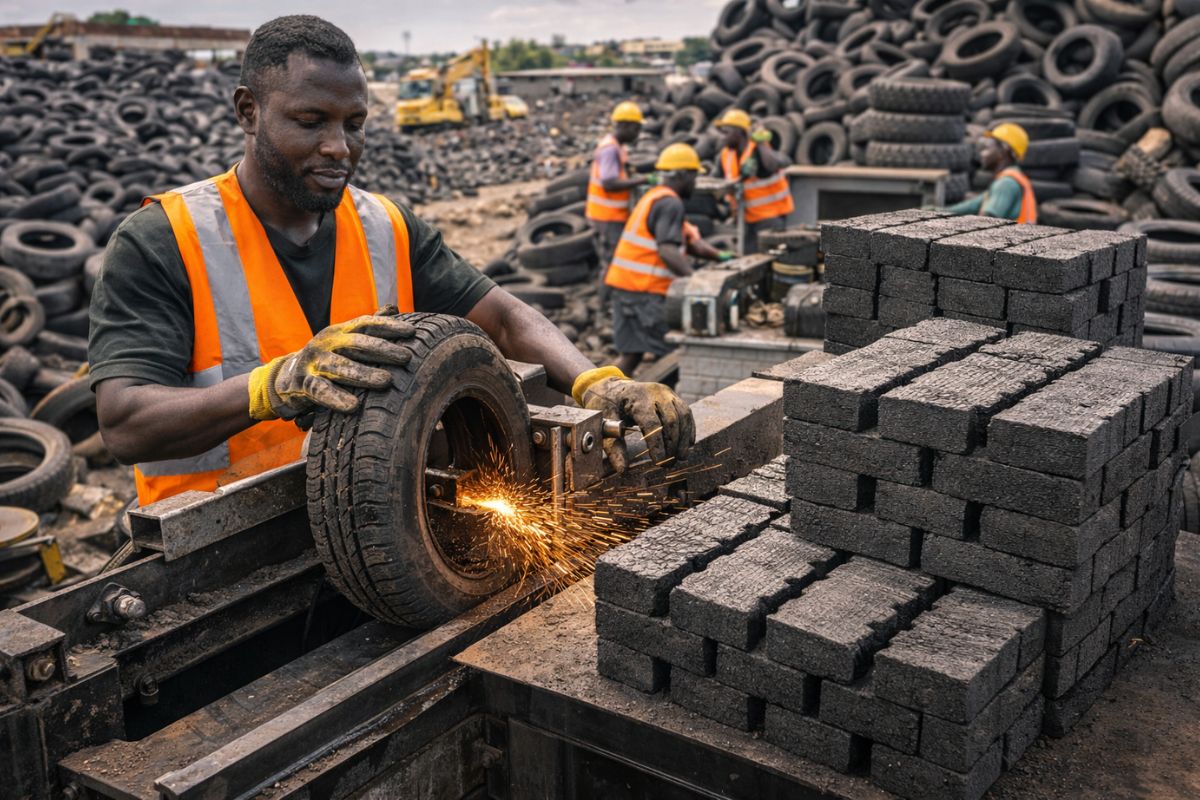


In Nigeria, Focusing on Lagos, Old Tires Become Breeding Grounds for Mosquitoes and Fire Hazards, and a Nigerian Entrepreneur Bets on Tire Recycling to Extract Rubber from Landfills and Transform Waste into Elastic Floors, with Steel Removal, Shredding, and Curing in Oven for Eight Hours Every Day
Nigerian entrepreneur Ifedolapo Runsewe, founder of Freee Recycle, entered a sector where waste is as common as it is invisible: discarded old tires abandoned in workshops, parking lots, and open areas. In a country where stagnant water can become a breeding ground for mosquitoes and malaria, tire recycling is also a public health measure.
The backdrop is global, but the bottleneck is local. The industry manufactures nearly 2 billion tires each year, while humanity discards about 1 billion tires annually, and most still accumulate when logistics and costs hinder collection. On the outskirts of Lagos, rubber becomes a product and also a test of scale.
Why Old Tires Pose Environmental and Health Risks
Old tires are not just volume. When exposed, they collect water and can become breeding grounds for mosquitoes, a direct problem in places where malaria continues to strain the health system.
-
While the world looks at oil, the war with Iran is already disrupting helium supply from Qatar, affecting car and iPhone chips, threatening AI expansion, and putting pressure on aluminum packaging at the highest value in four years.

-
Global warming will expose a treasure hidden under the ice of Antarctica and may spark an international dispute over gold and valuable minerals.

-
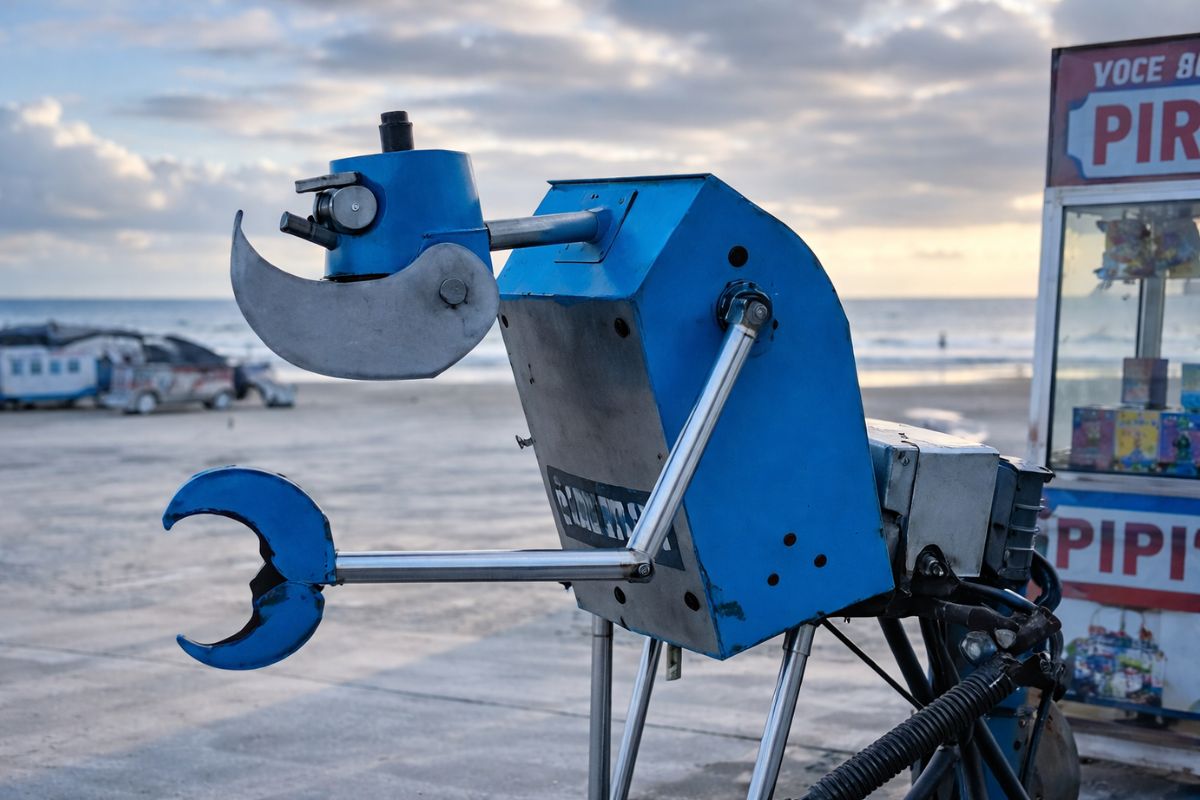
A street vendor from Praia Grande built a robot made of scrap from scooters and washing machines that pulls his popcorn cart on the beach, emits sounds, and interacts with customers, becoming an attraction on the coast of São Paulo.
-
The specifications of the Xiaomi 18 Pro Max have been leaked, and the highlight is a dual 200 MP camera with a new 22-nanometer technology that promises to consume less energy and capture details in shadows and bright areas using LOFIC HDR.


In parallel, outdoor deposits and piles create an additional risk: rubber fires are difficult to extinguish and can last for days.
The international history helps scale the danger. By the end of the 20th century, the United States had accumulated well over a billion old tires, and the combination of landfilling, trapped gases, and flammable materials generated critical episodes.
In 1987, about 30 acres of tires caught fire in Colorado, and the firefighting effort took nearly a week, a milestone that pushed the topic to the center of the debate and accelerated rules and funding for tire recycling.
The Route Lagos Workshop Patio and the Economy of Used Tires
More than half of the country’s cars are in Lagos and surrounding areas, which concentrates the source of waste and also the opportunity for capture.
In roadside workshops, mechanics keep what cannot be repaired and sell it to tire recycling companies. This is where collectors like Samuel and retailers like Adams come in, who reportedly receive about 30 cents per tire.
Freee Recycle operates with a yard of about 2.5 acres and keeps over 400,000 tires stored on site, a number that shows how tire recycling is, at the same time, an industry and a race against accumulation.
The company claims to recycle hundreds of tires per day and has over 100 full-time employees, while the business model generates about 16 cents for each recycled tire. In Lagos, the numbers matter in detail, not in slogans.
From Vulcanization to Embedded Steel: What Makes Tire Recycling Complex
The technical difficulty begins with the very reason for the product’s existence. Since the 19th century, with vulcanization, rubber gained resistance to temperature and deformation, exactly what a tire needs to withstand load, braking, and hot asphalt.
The problem is that the same durability package becomes an obstacle when the tire reaches the end of its useful life.
Modern tires combine natural and synthetic rubber and still carry reinforcements of metal and plastic fibers. Therefore, tire recycling requires separating materials, reducing size with dust control, and removing metal with precision.
Without this cleaning, the rubber granulate loses consistency and increases wear on machines and molds.
Industrial Line of Freee Recycle: From Bead Remover to 5-Millimeter Granulate
The first physical bottleneck is steel. To circumvent this, one of the central investments was a bead remover, used to extract the steel wires in about 20 seconds per tire, releasing the rubber for the subsequent stages.
Then, the tires pass through a cutting machine that divides each unit into four or five pieces, reducing mechanical effort in the shredding process.
The plant processes about 150 car tires per hour and moves on to the shredding and grinding stage. The shredder tears the material apart, drums further reduce the size, and vibrating screens combined with large vacuum cleaners prevent rubber dust from spreading and compromising the operation. Particles of 5 millimeters or less proceed; larger ones return for another cycle, in a closed-loop typical of tire recycling at scale.
Next, magnets remove remaining metal fragments, leaving the rubber granulate, still mixed with reinforcing fibers, often made of plastic or nylon.
The final separation organizes the product by granulation: powder for softer applications, such as gymnasiums and playgrounds, and pieces from 3 to 5 millimeters for more durable use in sidewalks. This is where old tires stop being passive and become a specified input.
How Rubber Becomes Bricks and Floors and Why the Formula Changes in the Nigerian Climate
To transform granulate into pieces, the factory heats the mixture in mixers and uses a polyurethane binder to hold everything together.
The critical point is proportion. The founder says it took time to find the right ratio that works in Nigeria’s tropical savanna climate, a detail that changes curing, elasticity, and floor stability. In practice, tire recycling depends more on the environment than it seems.
Dyes are added to adjust the color, and the cost strategy appears in the mold. A thin layer of the colored mixture goes first, and the rest of the brick is filled with untinted rubber, reducing pigment costs without sacrificing finish.
Afterward, the pieces are manually pressed, placed in trays, and moved to the oven, where they dry for up to eight hours.
The energy infrastructure also affects the pace. The unreliable power grid forces the plant to maximize the available energy, and the operation claims to generate about 80% of its electricity internally, with diesel generator sets.
On a typical day, production can be enough to cover approximately one tennis court, with each tire yielding about 25 rubber blocks in the shape known as dog bone, used in sidewalks and recreational areas.
Global Market and the Limits of Tire Recycling Between Energy and Emissions
The global market for used tires amounts to $12 billion, and in economies with more mature regulation, disposal has diversified. In the United States, one-third of used tires are burned to fuel cement kilns and paper mills, another third becomes rubber surfaces, and less than 20% goes to landfills.
In 2021, the country reduced its stockpile to about 50 million, showing that public policy and the industrial chain can change the scenario.
But there is an environmental cost involved. Tire-derived fuel often costs less than natural gas and burns cleaner than coal, yet it still produces emissions comparable to other fossil fuels.
Methods such as pyrolysis, where tires are heated to extreme temperatures without oxygen, appear as an alternative but require a lot of energy and leave small profit margins, a recurring dilemma when discussing tire recycling.
There is also the layer of consumer trust. Given concerns about ground rubber releasing toxins, a federal agency in the U.S. stated it could not prove the absence of health risks but recommended the obvious: children should not eat rubber. In other words, rubber as flooring requires evidence, control, and clear communication.
Where the Solution Meets the City and What Still Hinders Scale in Nigeria
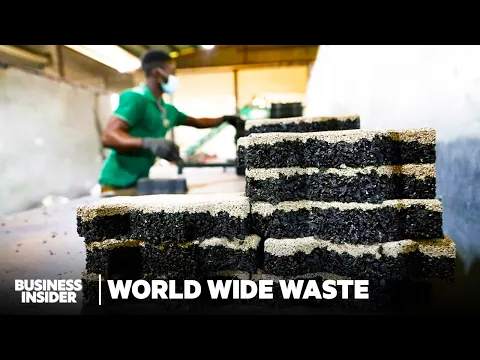

The best-selling items from Freee Recycle are paving stones installed in playgrounds, such as in an international school mentioned in the report. The operational advantage is practical: modular floors allow for repairs and expansions with the removal and reinstallation of pieces, without breaking concrete or redoing the entire area, a differential when usage is intense.
Still, the country’s snapshot remains challenging. Tire disposal continues to grow, and Nigeria ranks among the 10% worst in the world for recycling and sustainability, which helps explain why a yard with 400,000 old tires is still just a fraction of the total. The founder claims the company is close to becoming profitable and plans to expand throughout the country and into Rwanda, Ivory Coast, Ghana, and Kenya, as well as target other wastes such as paper, electronic waste, and PET bottles.
Tire recycling, in the end, is a competition between two clocks. One measures the speed of waste that comes in every day in Lagos. The other measures the capacity to cut, separate, and cure rubber with high energy costs, embedded steel, and dust that needs to be controlled.
If the proposal to transform old tires into flooring seems simple, execution shows that the bottleneck is in three areas at once: regular collection, processing with technical standards, and a buying market for the final rubber. That’s why the story of the Nigerian entrepreneur draws attention, not for improvisation but for the attempt to standardize a supply chain that usually operates at the limit.
In your routine, what have you seen become a problem due to accumulated old tires: mosquitoes, fires, debris in vacant lots, or landfill disposal? And if the city installed recycled rubber flooring in parks and schools, would you trust the solution more or demand testing and oversight first?








Se eu tivesse dinheiro investiria uma fábrica dessa no Brasil e colocaria funcionários em situação de rua para trabalhar resgatando a sua dignidade. Mas para montar uma indústria desse requer muito dinheiro.
O nosso governo não tem interesse em resolver problemas simples de resolver, preferem investir no que já está pronto.O que deve ter de funcionário público só marcando ponto é brincadeira e que poderiam ser usados em projetos pra melhorar várias áreas deficitárias no país, no mínimo, fiscalizando outros funcionários.
Por isso ja não daria certo , você tiraria da rua quem não quer sair e quem ai foi colocado pra dar votos…. Pensar em fazer uma fábrica assim na hr veio na ideia , mas contrataria que. de fato viesse procurar oportunidade.
Os pneus já estão sendo testados nas vias e estradas de rodagem desde que estão sendo usados e ninguém nem nenhum estudo disse que eles fazem mal para nossa saúde!