





 Portuguese
  English
  Spanish
  5 min of reading
  0 comments


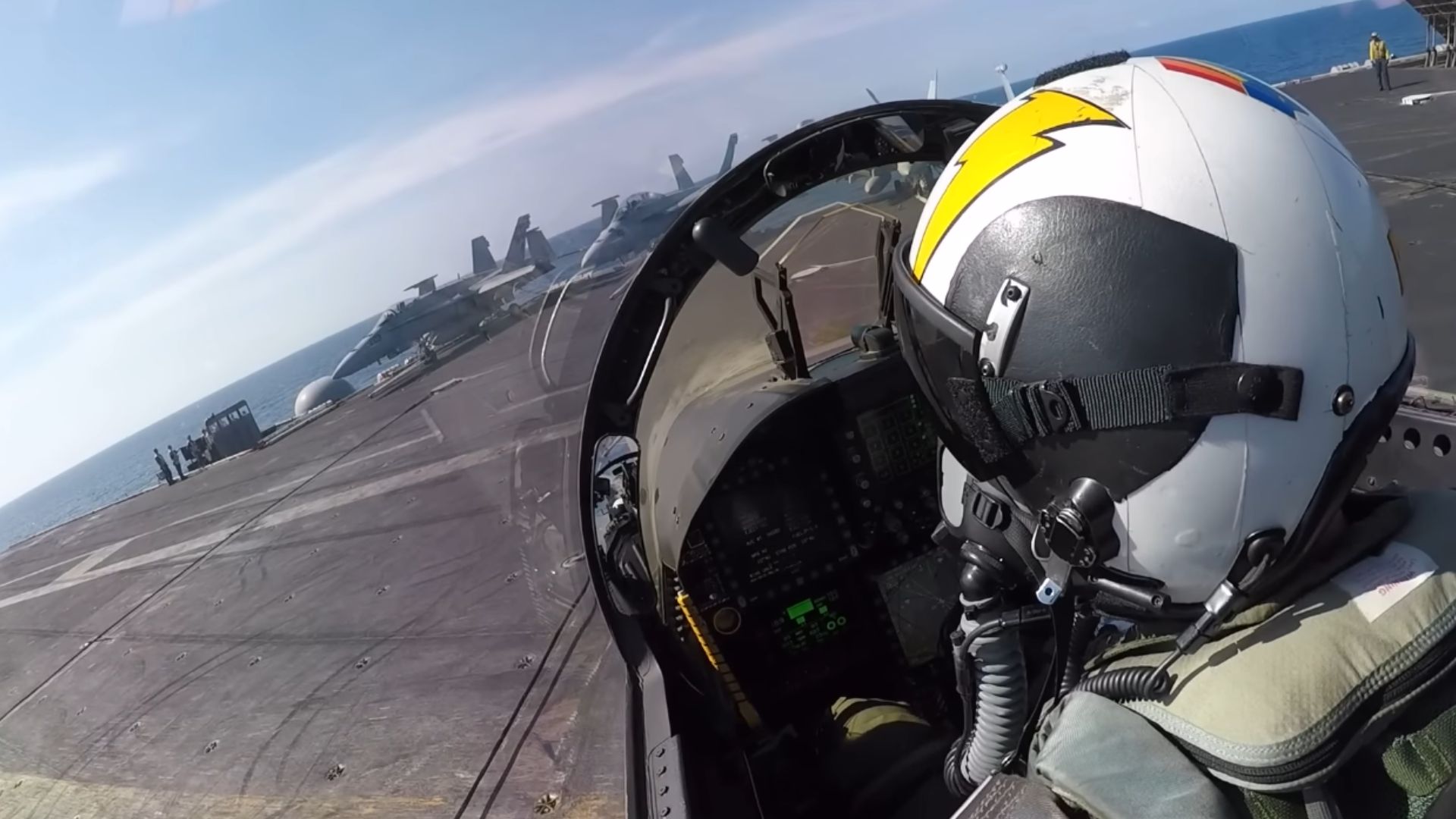
On An United States Navy Aircraft Carrier, Few Seconds Of Extreme Acceleration In A Catapult Are Sufficient To Launch Combat Aircraft Weighing Tons Into The Air, Turning The Deck Into One Of The Most Intense Operations In Modern Military Aviation
Few experiences in military aviation are as intense as participating in a launch by catapult on a United States Navy aircraft carrier. In just 3 seconds, a combat jet weighing several tons is accelerated from zero to over 250 km/h, propelled by a system that combines advanced naval engineering, human coordination, and extreme power. On the deck of the USS Theodore Roosevelt, one of the giants of the American fleet, each takeoff becomes an impressive technical spectacle.
Upon arriving at the flight deck, the pilot follows the instructions of deck directors — professionals responsible for guiding every movement of the aircraft amid the intense traffic of jets, helicopters, and military equipment. Initially, the jet positions itself near the so-called “island”, the command tower of the aircraft carrier, and begins to move slowly toward the catapult.
Meanwhile, the deck remains in constant activity. Aircraft are moved with millimeter precision, and any mistake can mean considerable risks. Thus, pilots carefully follow the gestures and signals from the directors, who indicate when to advance, turn, or stop. This process occurs amid the intense noise of engines and the strong wind generated by the movement of the ship and aircraft.
-
The Argentine government celebrates the lowest poverty rate in 7 years, but experts warn that the methodology has changed, real wages have fallen, unemployment has risen, and the number of people on the streets of Buenos Aires has increased by 57% since Milei took office.

-
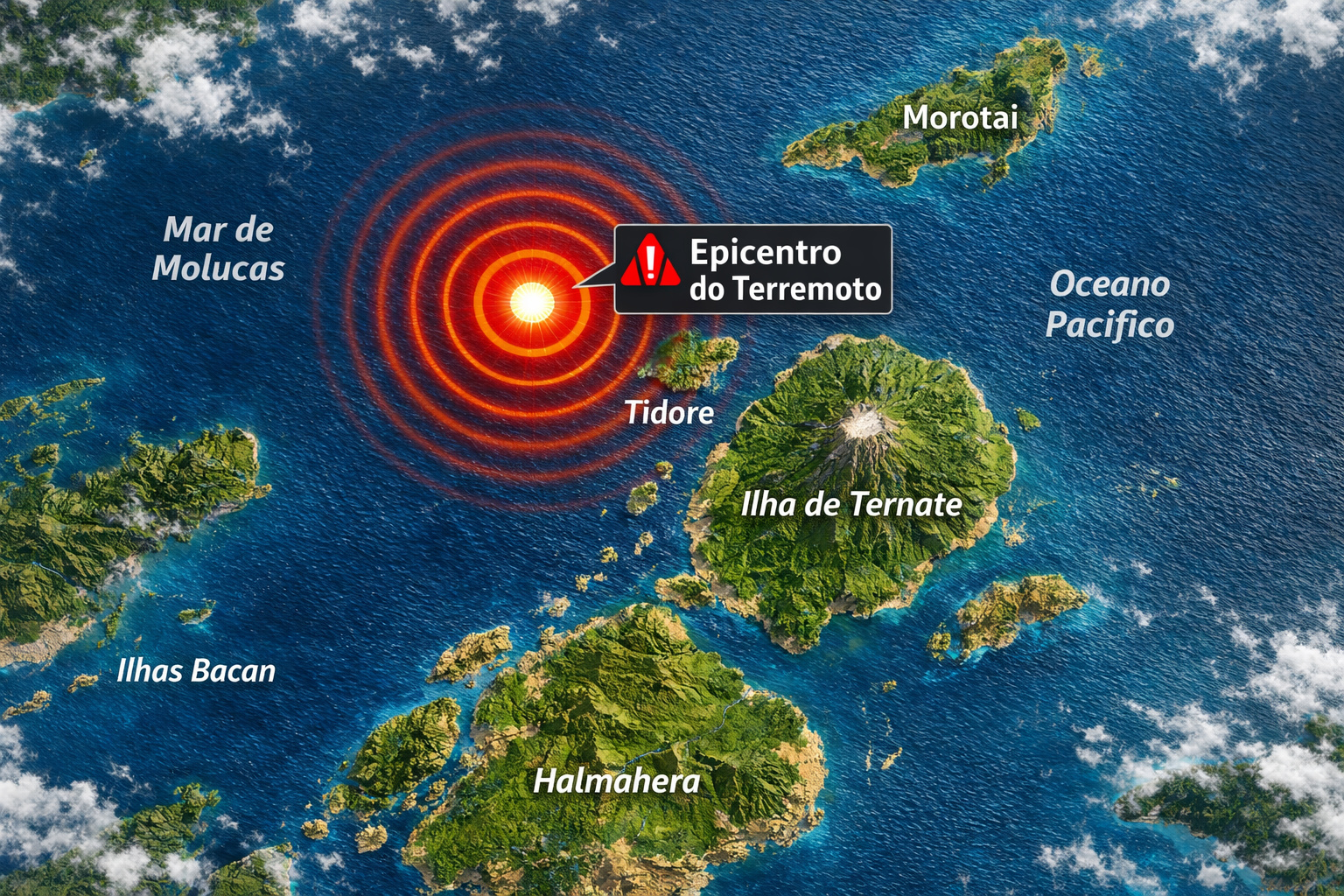
7.8 magnitude earthquake in Indonesia frightens the population, triggers tsunami alert, and hits an island with over 200,000 inhabitants this Thursday.
-
Google will finally let you change that embarrassing Gmail address you created in your teenage years without losing any accounts, logins, or old emails: the feature is already available in the United States.

-
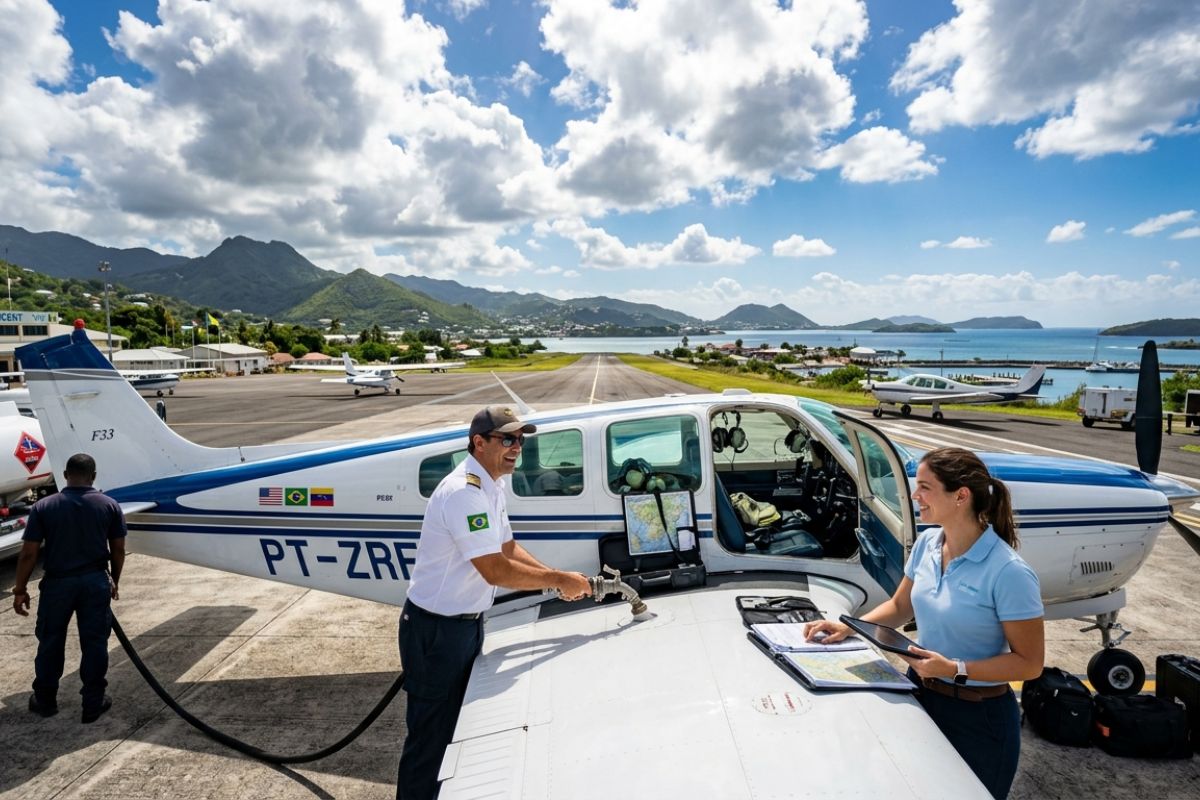
Heading to Brazil in a Bonanza F33 single-engine aircraft: a couple departs from Florida on a visual flight, makes technical stops in the Caribbean to refuel and organize paperwork, and begins the staged crossing until they reach the country.

The information was released by Growler Jams, a channel specialized in naval aviation that details the operational routine of United States Navy aircraft. According to the account presented in the video, the experience of preparing a jet for launch reveals the complexity and precision needed to operate on an aircraft carrier in the open ocean.

Millimeter Maneuvers Among Aircraft On The Deck
As the jet slowly advances across the deck, tension builds. At one point, the aircraft needs to pass through an extremely tight space between other parked jets. In one recorded example, there was less than one foot of distance between the tip of the jet’s wing and the radome of an EA-18G Growler, an aircraft specialized in electronic warfare.
This proximity requires enormous concentration from the pilot, who must maintain full control of the aircraft while constantly observing the surrounding space. Even with the aid of deck directors, any movement must be executed with extreme precision.
On the deck, it is also possible to observe different types of aircraft operating simultaneously. The EA-18G Growler, for example, has ALQ-218 receiving pods installed on the wing tips, equipment used to detect enemy electronic emissions. Meanwhile, the F/A-18 Super Hornet, which may be parked nearby, uses LAU-127 missile launchers on the wing tips.
While the planes are being positioned, another jet may be preparing to take off from an adjacent catapult. At this point, the maximum power of the engines comes into play. The Super Hornet, for example, can generate up to 41,400 pounds of thrust with both engines at maximum afterburner, a force so intense that it can make the cockpit vibrate even from more than 40 yards away.
Soon after, when the jet blast deflector — a type of metal shield that protects the deck from the force of the jet — is lowered, the aircraft in front is launched into the air. As soon as this happens, it’s the next jet’s turn to move toward the catapult.
How The Preparation For Launch In The Catapult Works

Before the launch, the aircraft goes through a series of quick checks performed by sailors known as “final checkers”. These professionals wear white uniforms on the deck and visually inspect the aircraft to ensure that everything is ready for flight.
Next, the pilot lowers the so-called launch bar, a bar located on the front landing gear of the aircraft. This piece will be connected to the shuttle, the catapult mechanism responsible for pulling the aircraft along the track.
At this moment, the so-called “tension” occurs, when the catapult gently pulls the aircraft forward while a retention bar keeps the airplane tied to the deck. This process creates tension in the front landing gear and ensures that the aircraft is perfectly aligned for launch.
Meanwhile, sailors responsible for weight control show the catapult operators the weight of the aircraft using a panel known as the weight board. This information is essential for adjusting the power needed for launch.
Shortly after, the pilot increases the engine power to MIL power and performs quick checks on the flight systems. Then, the engines are brought to maximum afterburner, unleashing all available power.
Three Seconds Of Acceleration That Change Everything

With all systems checked and the aircraft ready, the pilot performs the traditional launch salute, signaling that he is prepared for takeoff. From this moment on, control passes to the catapult operators.
Then, in a fraction of a second, the system comes into action.
The catapult fires and pulls the aircraft with tremendous force along the deck track. In just 3 seconds, the jet reaches enough speed to leave the aircraft carrier and enter flight. The acceleration is so intense that many pilots describe the feeling as if they are being violently pushed against the seat.
This system allows aircraft carriers to operate heavy aircraft on extremely short runways, something essential for combat missions at sea. Thanks to this technology, ships of the class of the USS Theodore Roosevelt can launch jets, electronic warfare aircraft, and airborne warning aircraft at any time.
Thus, each launch becomes an impressive example of military engineering and human coordination, showing how just three seconds can be enough to transform a jet sitting on the deck into an aircraft flying at hundreds of kilometers per hour over the ocean.
Imagine feeling an acceleration capable of launching a jet to over 250 km/h in just a few seconds. Would you have the courage to go through that experience?








-

-

-

-

-

-

18 pessoas reagiram a isso.