





 Portuguese
  English
  Spanish
  6 min of reading
  1 comment


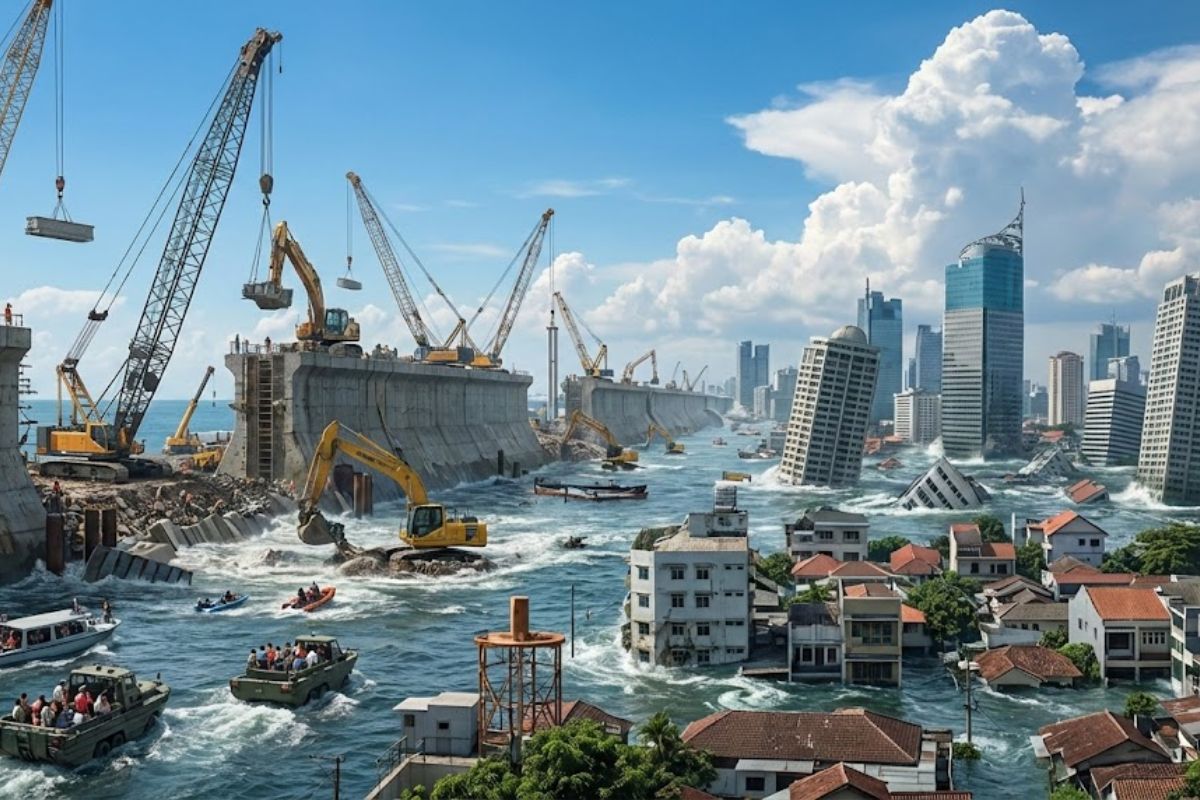


With About 42 Million Inhabitants, Jakarta Becomes The Largest City In The World As Half Of The Area Is Already Below Sea Level, Sinking Up To 25 Centimeters Per Year And Betting On Billion-Dollar Projects And A New Capital To Try To Survive Amid Growing Environmental Risks And Inequality
How far can a city grow without literally losing ground? Jakarta has just been recognized as the largest city in the world, with 41.9 million inhabitants in its metropolitan area, according to a report released by the UN. The capital of Indonesia has surpassed Tokyo and taken the top spot in the global megacity ranking.
The demographic achievement, however, comes with a heavy cost. Built on swampy land, crossed by 13 rivers, and with almost half of its area already below sea level, Jakarta lives the paradox of being the largest city in the world while at the same time a metropolis that is sinking at an accelerated pace, surrounded by the real risk of having entire neighborhoods swallowed by water in the coming decades.
From Expanding Metropolis To Largest City In The World

Jakarta did not reach the status of largest city in the world by chance. Population growth has been constant and aggressive over the past few decades, driven by rapid urbanization, economic concentration, and mass internal migration within Indonesia.
-
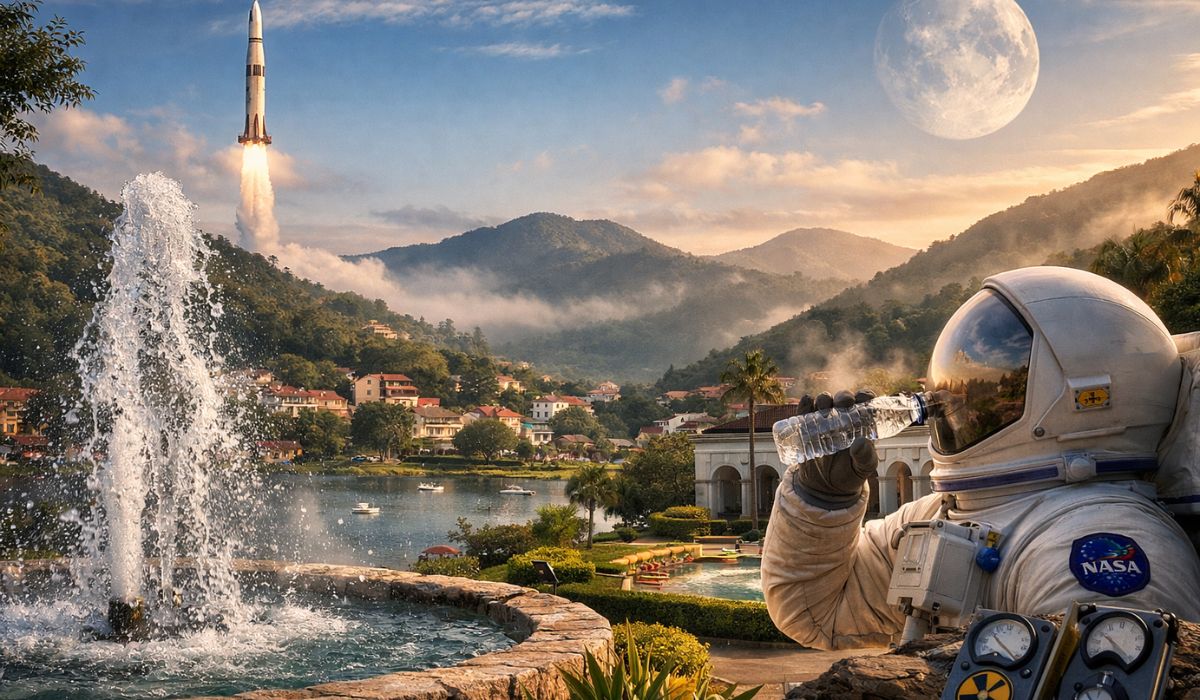
The water that may have gone to the Moon with NASA during the Apollo 11 mission and been consumed by the astronauts springs in a Brazilian city at an altitude of 945 meters, famous for its thermal springs, above-average quality of life, and a natural radioactivity so unusual that it attracted Marie Curie.
-
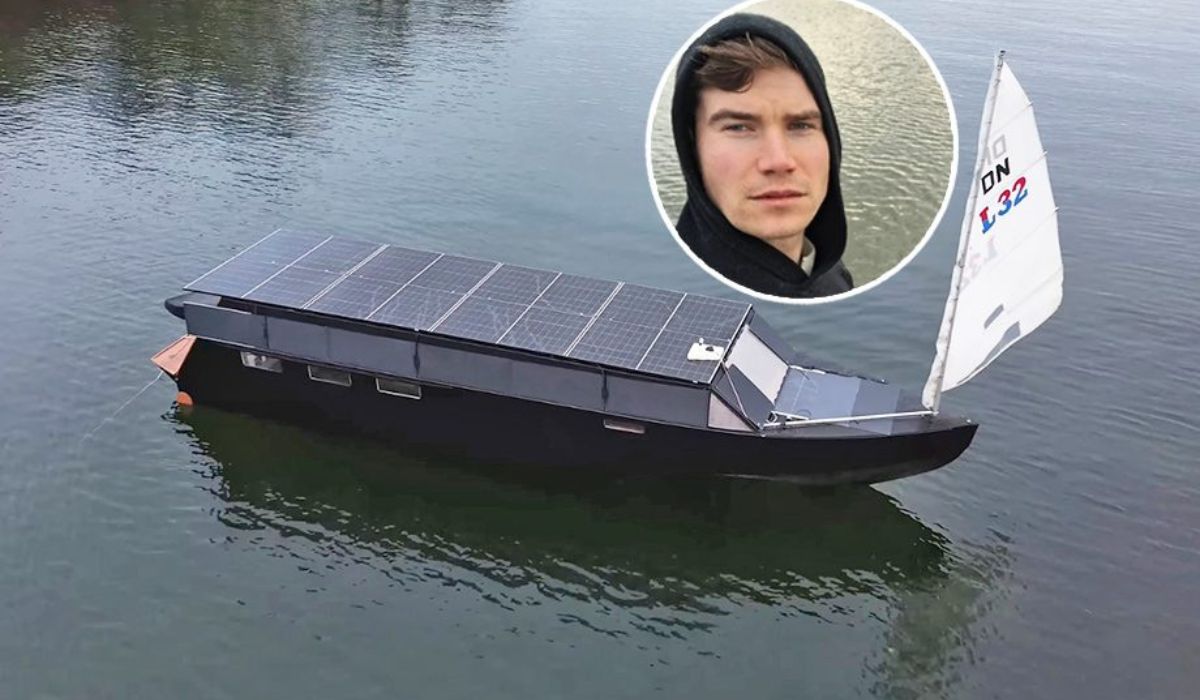
In 200 days, a Finnish man builds with his own hands an 11-meter boat powered by solar energy with “infinite autonomy,” capable of dispensing with refueling and already used as a floating house.
-
Neurologist Richard Restak issues a severe warning to all people over 65: there is a daily habit he recommends completely eliminating from your life because it is destroying your neurons and accelerating memory loss.
-
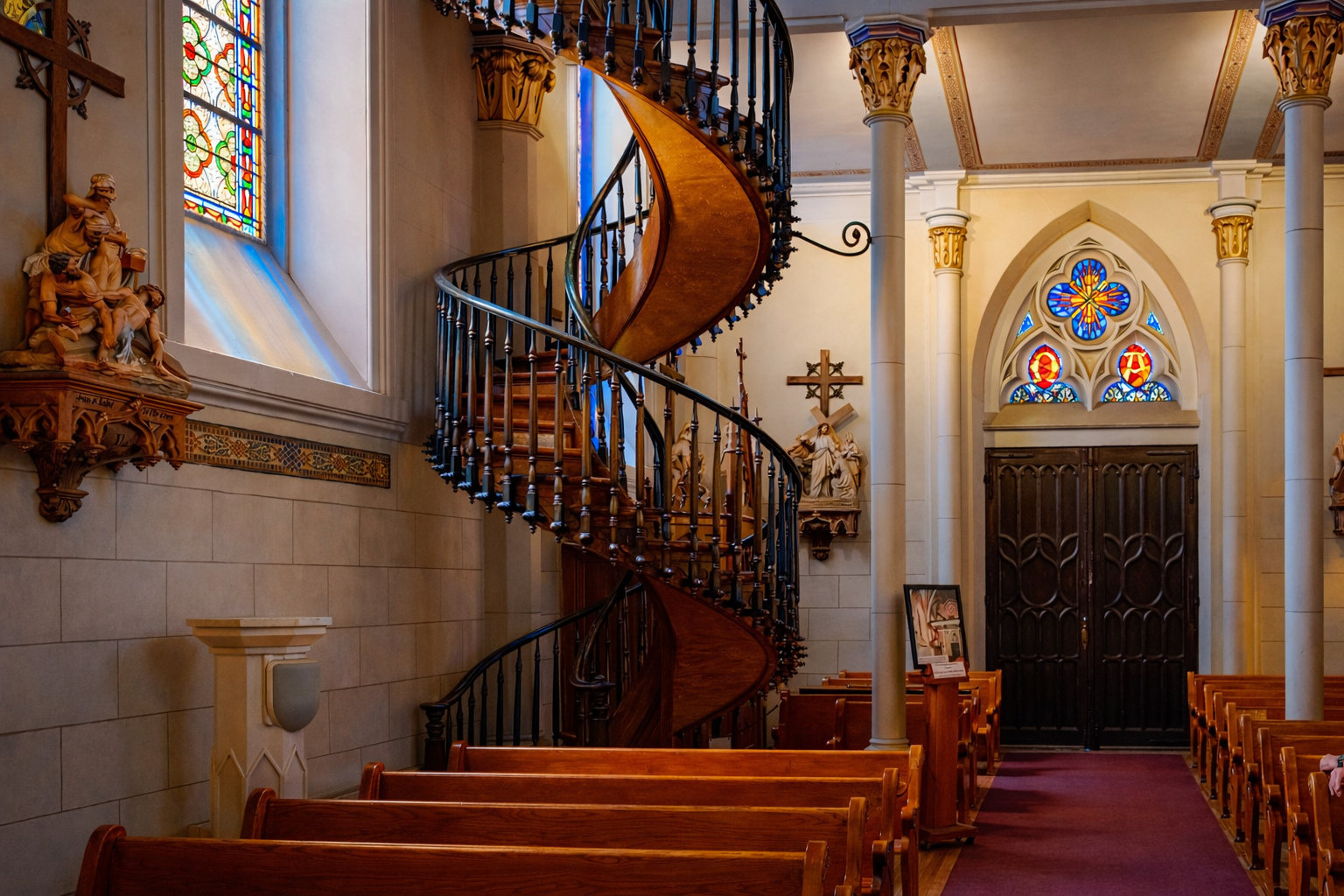
With 6.1 meters and 33 steps, the spiral staircase of the Loretto Chapel in the United States gained fame worldwide for making two complete 360-degree turns without a central support.

The new UN ranking shows the city ahead of other global megacities. Dhaka is in second place, with 36.6 million inhabitants, followed by Tokyo, with 33.4 million, New Delhi, with 30.2 million, and Shanghai, with 29.6 million.
São Paulo, which once ranked among the top positions, is now in 13th place, with 18.9 million inhabitants in its metropolitan area.
At the heart of the metropolis is the province of DKI Jakarta, a highly densely populated central region that concentrates more than 11 million people in a compact area.
It is there that one can see most clearly the clash between verticalization, intense traffic, recurring floods, and infrastructure that does not always keep pace with the speed of urban expansion.
Half Below Sea Level And Soil Sinking Up To 25 Cm Per Year
The title of largest city in the world comes with a not-so-glamorous asterisk: Jakarta is sinking. Built on soft, marshy soil and cut by rivers, the city is undergoing an accelerated subsidence process, combined with rising sea levels and the weight of millions of people and buildings concentrated in the same area of land.
According to data cited by local media, the northern zone of Jakarta has sunk about 2.5 meters in the last decade.
In some areas, the ground sinks up to 25 centimeters per year, more than double the average observed in other coastal megacities. Experts warn that, if nothing is done, entire neighborhoods could be permanently flooded.
Researcher Heri Andreas from the Bandung Institute of Technology issues a stark warning: if the current trajectory continues, about 95% of the northern zone of the city could be under water by 2050.
It is a scenario that transforms the infrastructure problem into a matter of urban survival.
Besides sinking, the intense use of groundwater exacerbates the situation. With the public supply network not always reaching the entire population, many residents and businesses resort to artisan wells, which deplete aquifers and further accelerate soil collapse.
In a city where almost half of the area is already below sea level, every centimeter the ground sinks makes a difference.
Unrestricted Construction In Sinking Area
Even with all the warnings, the real estate market in Jakarta is far from hitting the brakes. New residential buildings and luxury apartments keep rising, especially in the northern zone, which is precisely the part of the city that is sinking fastest.
Eddy Ganefo from the Indonesian Housing Development Association recognizes the dilemma: “As long as there is demand, development will continue.”
At the same time, the sector calls for greater government control, trying to balance business opportunities with the risk of investing heavily in areas that may face chronic flooding in the future.
In practice, this means that the largest city in the world continues to grow on land that sinks year after year.
Between the short-term vision of developments and the long-term projections of scientists, the city walks a very fine line between expansion and collapse.
40 Billion Dollar Seawall And Reservoirs Against Collapse
To try to hold back the seawater and slow the sinking, the Indonesian government has put on the table a solution that is as ambitious as it is controversial: a gigantic seawall in Jakarta, a project estimated at about 40 billion dollars.
The idea is to create a physical barrier between the city and the sea, with a partial completion expected by 2030 and final completion by 2050. The plan also includes the construction of reservoirs, aimed at reducing reliance on groundwater and alleviating pressure on the soil.
Environmentalists, however, raise a series of critiques. There are concerns about the impact on the marine ecosystem, changes in currents, increased risk of pollution in the trapped waters, and effects on the most vulnerable coastal communities.
In other words, the seawall may hold back the water, but it can also concentrate environmental problems in a new format.
Meanwhile, the city tries to reconcile the title of largest city in the world with recurring floods, chaotic traffic, and a population that still relies on improvised solutions to deal with flooding and contaminated waters in various neighborhoods.
Relocation of Capital To Nusantara And Pressure On The Forest
Besides the works in Jakarta, the Indonesian government has made a historic decision: to move the political capital of the country to Nusantara, a planned city in another region of the archipelago.
The project, budgeted at around 35 billion dollars, aims for gradual completion by 2045.
The official narrative is clear: to relieve pressure on Jakarta, now the largest city in the world, and create a new, more sustainable capital, less vulnerable to flooding and with infrastructure planned from the start.
But in practice, the Nusantara plan has come under heavy criticism. Experts and environmental organizations warn of the risk of deforestation, impacts on already endangered species, and direct pressure on Indigenous communities that have lived for generations in the area chosen for the new capital.
Thus, Indonesia tries to solve a giant urban problem with a solution that could open another front of conflict: saving a sinking city without further sacrificing its forest.
Tourism, Vibrant Culture And A City At Risk
Despite all the challenges, Jakarta and Indonesia continue to attract tourists from all over the world. The city offers an intense mix of popular markets, gigantic shopping centers, striking cuisine, and a vibrant urban life, coexisting with temples, traditional neighborhoods, and a complex history of colonization and independence.
For many visitors, Indonesia is synonymous with paradise islands, beaches, and volcanoes, but the capital shows another facet of the country: a crowded, unequal, noisy, and fascinating megacity that now also bears the mark of being the largest city in the world under direct threat of sinking.
In the end, Jakarta has become a symbol of 21st Century Dilemmas: rapid growth, climate crisis, disorderly occupation, billion-dollar solutions, and environmental pressure.
The lingering question is simple and uncomfortable: how to keep the largest city in the world alive on ground that keeps sinking?
And you, if you could choose, would you dare to live in the largest city in the world knowing it is literally sinking year after year?






Eu não moraria em um lugar que está afundando. Eu gosto de terra firme