





 Portuguese
  English
  Spanish
  5 min of reading
  14 comments


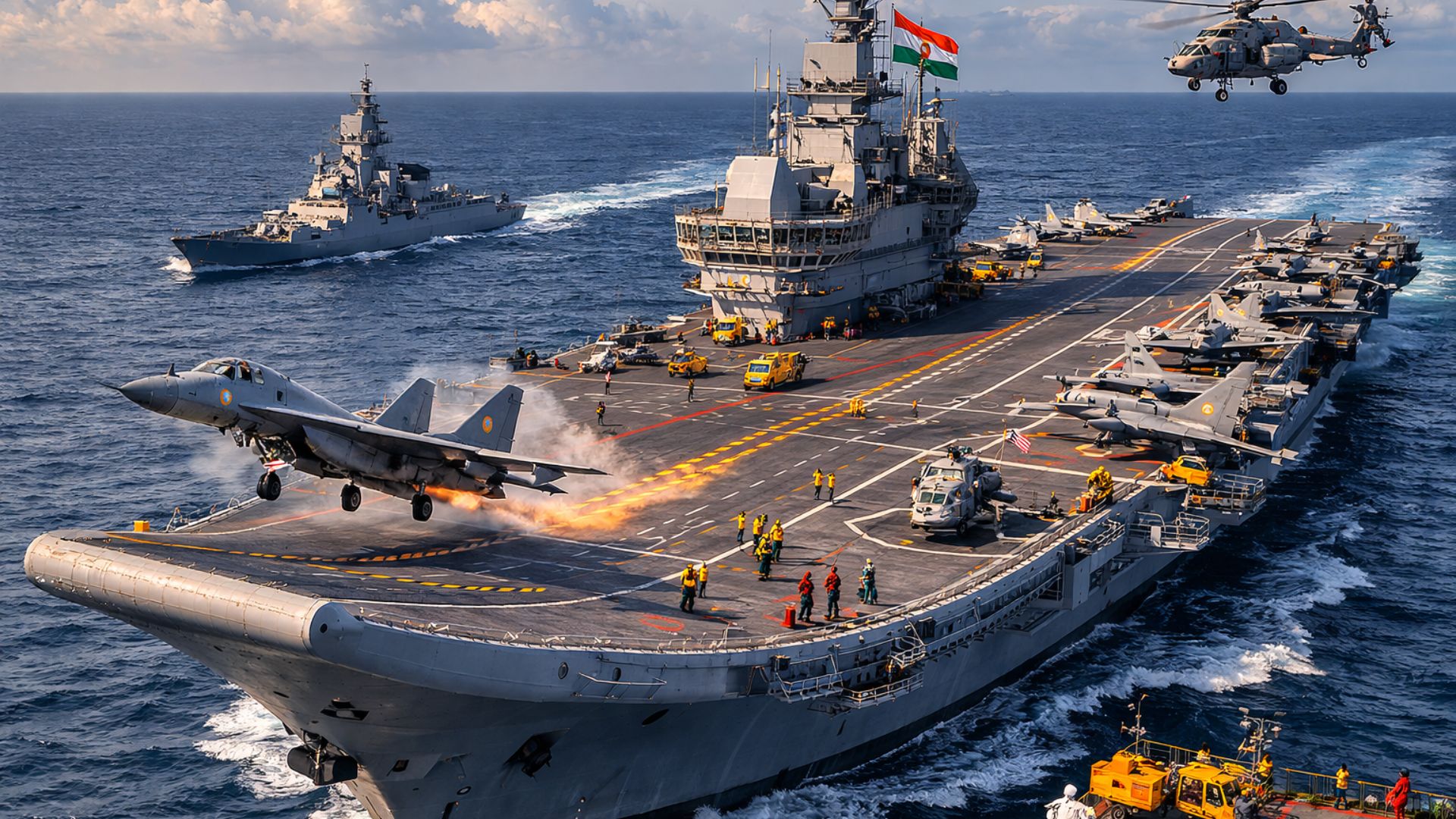


Indian Aircraft Carrier of 44.5 Thousand Tons Was Born as Soviet Ship, Went Through Major Refurbishment in Russia and Became Centerpiece of India’s Naval Strategy, Capable of Operating More Than 30 Aircrafts and Projecting Military Power at Long Distances in the Indian Ocean.
The INS Vikramaditya has established itself as one of the most relevant pieces of the Indian naval structure by combining large size, the ability to launch fighters at sea, and an unusual trajectory among the warships in operation.
According to the Press Information Bureau, the official communication arm of the Indian government, the aircraft carrier displaces 44,5 thousand tons, measures about 284 meters, and can embark more than 30 aircraft, a combination that has transformed it into a floating air platform aimed at projecting power far from the coastline.
Aircraft Carrier That Was Born in the Soviet Union
The incorporation of the ship marked a scale shift for the Indian Navy because the hull was not originally conceived to serve the country.
-
The Arctic is shrinking and in March 2026 recorded only 14.3 million km² of ice at the peak of winter, one of the lowest levels since 1979, reducing the planet’s ability to reflect heat and accelerating global warming.

-
The waste that can double a household’s water bill is not in the faucet or the shower; it happens hidden within the walls and can go unnoticed for months, according to sanitation experts.

-
Darkness can surpass light in an optical phenomenon confirmed by scientists, which expands the understanding of relativity and reveals new behaviors of waves in the universe.

-
A Brazilian scientist created a pen that touches human tissue and identifies cancer cells in seconds using a drop of water and artificial intelligence, and Lívia Eberlin’s invention has already been used in over 400 surgeries in the United States and Brazil.


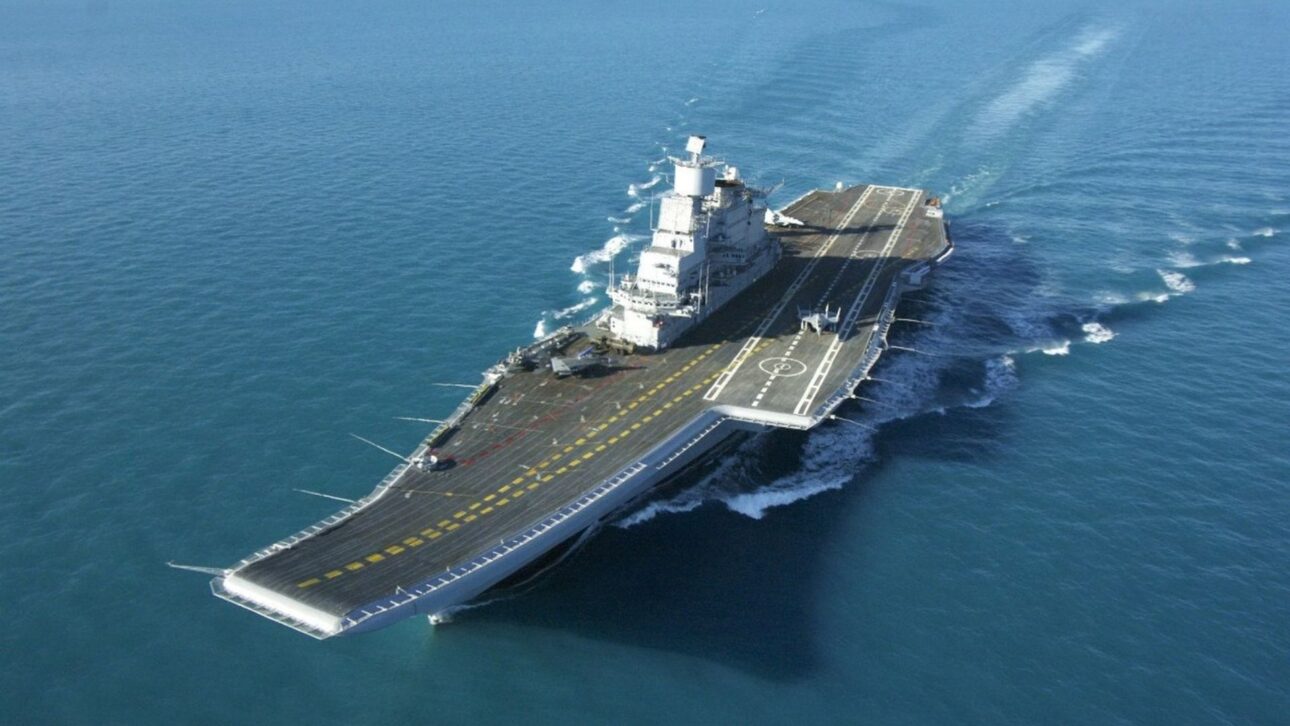
Before sailing under the Indian flag, the vessel was the Admiral Gorshkov, a Soviet unit later refurbished by Russia and converted, after a comprehensive modernization process, into the INS Vikramaditya, officially commissioned on November 16, 2013.
The Indian government presented this transformation as a decisive step to expand the operational reach of its naval force and maintain the tradition of operating aircraft carriers.
Structure That Functions as a Floating Airfield
The ship’s size helps explain why it is often described by Indian authorities as a “floating airfield.”
In the official material released at the commissioning, the government states that the vessel has 22 decks, a height equivalent to that of a building of about 20 floors, and accommodates more than 1,600 people among crew, technicians, and members of the air wing.
According to the same description, the ship can carry more than 8,000 tons of naval fuel and operate for more than 7,000 nautical miles, features that enhance its staying power at sea and its utility in prolonged missions.
Air Wing With MiG-29K Fighters and Combat Helicopters
This scale only makes full sense when viewed together with the embarked aviation, a central element of Vikramaditya’s military function.
Official Indian information indicates that the aircraft carrier was prepared to operate MiG-29K and MiG-29KUB fighters, as well as Kamov-31, Kamov-28, Sea King, ALH Dhruv, and Chetak helicopters, bringing together means aimed at air defense, attack, surveillance, and anti-submarine warfare.
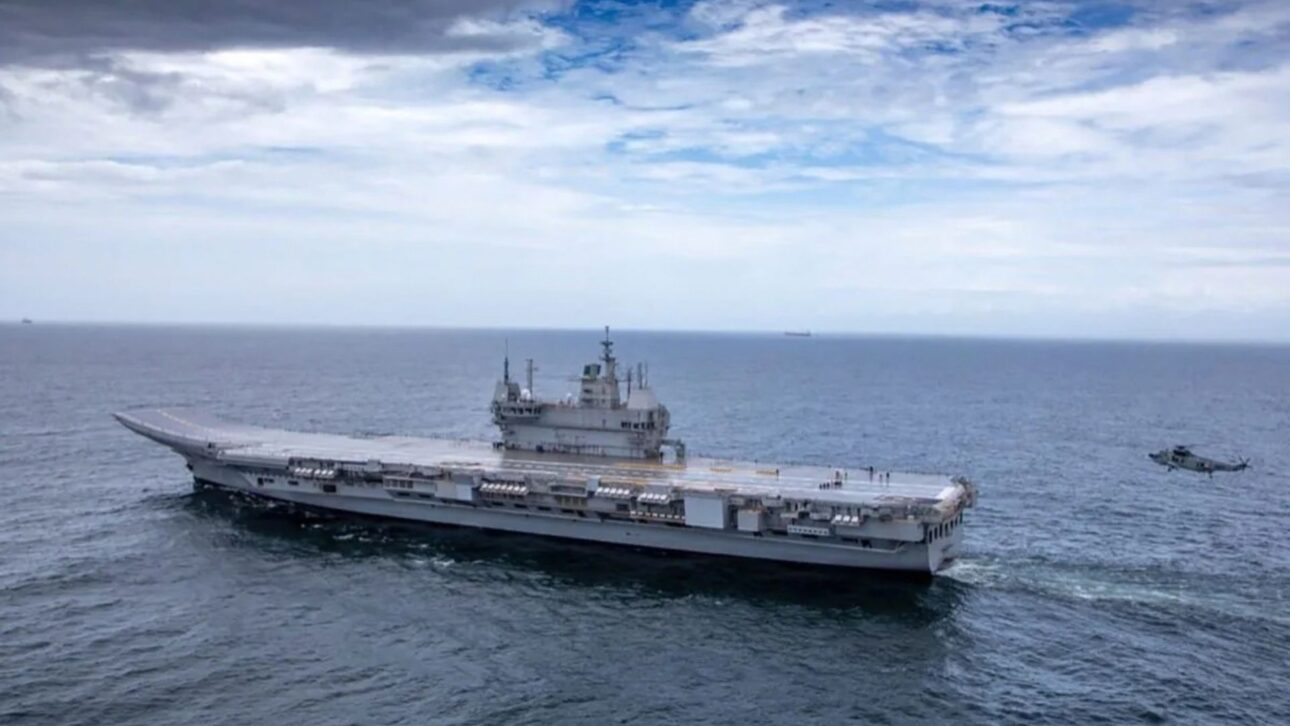
When the first year of operation was still underway, the government was already reporting that Indian pilots were performing takeoffs and landings of MiG-29K on board, signaling that the ship had passed the symbolic stage to assume an effective role in naval operations.
Propulsion System and Ship Energy Capacity
The propulsion structure reinforces the profile of a large combat unit and differentiates the aircraft carrier from conventional ships used in patrol or escort.
According to the Press Information Bureau, the system uses eight new generation steam boilers with a combined power of 180,000 shaft horsepower, transmitted to four propellers, while the onboard electrical generation reaches about 18 megawatts.
This volume of energy supports not only the internal systems of the ship but also aerial operations, sensors, mission equipment, and the routine of a large crew during long deployments.
Sensors, Radars, and Electronic Warfare
Another decisive point is the modernization of sensors and command systems, indispensable for employing an aircraft carrier in a combat environment.
The Indian government reported that the vessel received long-range airborne surveillance radars, advanced electronic warfare suite, and a set of equipment aimed at maintaining a broad monitoring perimeter around the naval group.
Systems to support aerial operations were also incorporated, such as the LUNA Landing System, DAPS, and deck lighting resources, aimed at recovering and controlling embarked aircraft.
Strategic Role in the Indian Navy
In practice, the Vikramaditya has begun to function as the core of a broader maritime combat system, rather than as an isolated unit.

When presenting the ship, the Indian Ministry of Defense stated that its entry into service would expand the reach and operational capacity of the navy, while the then naval chief highlighted that the incorporation would help fill the gap between the aging INS Viraat and the arrival of the indigenous aircraft carrier Vikrant.
The movement also fit into the strategy of consolidating a navy capable of operating in blue waters, with consistent presence in the Indian Ocean and more distant areas.
Recent Maintenance and Future of the Ship
This history explains why the Vikramaditya continues to be treated in New Delhi as a long-term strategic asset, even after more than a decade since its commissioning.
On November 30, 2024, the Ministry of Defense signed a contract with Cochin Shipyard Limited for the short refit and dry docking of the vessel, valued at 1,207.5 crore rupees.
At the time, the government declared that, upon completion of the maintenance cycle, the ship will return to the active fleet with enhanced combat capabilities, in addition to presenting the project as a boost to India’s naval maintenance infrastructure.
The symbolic weight of the aircraft carrier also stems from the image it projects regarding India’s own naval ambitions.
Few vessels combine, so visibly, Soviet heritage, Russian refurbishment, Indian operation, large flight deck, and an air wing capable of sustaining combat missions at sea.
For this reason, the INS Vikramaditya remains at the center of the debate on India’s ability to sustain continued military presence in the maritime space it considers a priority for its security and regional influence.



O más engraçado é que na guerra moderna porta aviões apenas são peças que custam valores absurdos e não são projetados pra lhe dar com drones e mísseis. Um país que desenvolva um sistema eficiente de mísseis, drones e radares, além de uma rede de satélite para georreferenciamento… Consegue facilmente se defender e obliterar esses porta aviões. E por um custo bem menor. Afinal o custo e tempo de se produzir mísseis é infinitamente menor que o de se construir e manter essas embarcações enormes. A guerra do irã, pra quem acompanha pelas mídias não convencionais (já que as convencionais possuem uma tendência a reproduzir apenas o discurso Americano e Israelense). Se percebe o estrago que o Irã está infligindo ao destruir bases e radares americanos de monitoramento de antecipado de mísseis. Além de passar e atingir alvos estratégicos por todo o território de Israel, ao ponto de proibirem a população de postar vídeo dos ataques dentro de Israel. Essa história de navios grandes de guerra é uma retórica antiga onde Estados Unidos com um hábito de ficar indo a outros continentes para atacar países usava as frotas navais para deslocar grande parte de seus ativos. Na guerra moderna tem muito pouca utilidade e não representa uma força que proteja um país quando se trata de defender seu território. Os países ao redor do mundo deveriam aprender com essa guerra do irã e focar em desenvolver e aprimorar programas de mísseis com tecnologias nacionais e radares e satélites. Com distribuição por todo território em locais não divulgados publicamente por interesse de proteção da soberania e estratégia de defesa diante de um possível agressor. Isso sim torna um país com forte poder militar pra defesa.
Es de papel de pildo paldo
Que se habrá tomado el que escribio la nota!!! Solo las 2 anclas juntas pesan 4,5 toneladas!!
Jajaja y que me dices del combustible rinde para 7 millas náuticas y tiene una tripulación de 1.6 personas jajaja