





 Portuguese
  English
  Spanish
  9 min of reading
  2 comments





From Introspective Student to Federal Target, Autistic Young Man Jimmy Came Out of Anonymity of Bitcoin Forums to the Lakefront Mansion, Even Seeing IRS Agents Rummage Through Bathrooms, Closets, and a Simple Popcorn Can Behind Billions Hidden in Cryptocurrencies During a Long, Tense, and Unforgettable Search
The operation began like so many other tax investigations. In November 2021, IRS criminal agents surrounded a nearly $1 million house in small Nashville, Georgia, searching for evidence of money laundering. What they found hiding inside a can of Titos in a bathroom closet would definitively link a discreet autistic young man to one of the largest bitcoin heists in the history of the Dark Web. Inside the can, layers of towels protected a computer board that held access to approximately 50,000 bitcoins, valued at around $3.4 billion at the peak of the currency.
Behind the mansion overlooking Lake Lanier was Jimmy, the son of Chinese immigrants, who had spent his childhood amid his parents’ emotional distance, bullying at school, overweight, and the challenge of living on the autism spectrum. On the internet, however, he found refuge, recognition, and, later, a dangerous shortcut. The same curiosity that led him to teach himself programming, mine his first bitcoins, and explore specialized forums ultimately connected the Georgia university student to Silk Road, the bug that multiplied balances with a quick click, and the theft of 50,000 bitcoins that remained dormant for almost a decade, until the IRS closed in around the lakefront mansion.
From Difficult Childhood to Digital Refuge of an Autistic Young Man

Jimmy grew up in Cobb County, north of Atlanta, in a house marked by constant fights and little display of affection.
-
Italian researchers have detected what appears to be a second Sphinx buried under the sands of Egypt, and satellite scans reveal a gigantic underground megastructure hidden beneath the Giza Plateau for over 3,000 years.

-
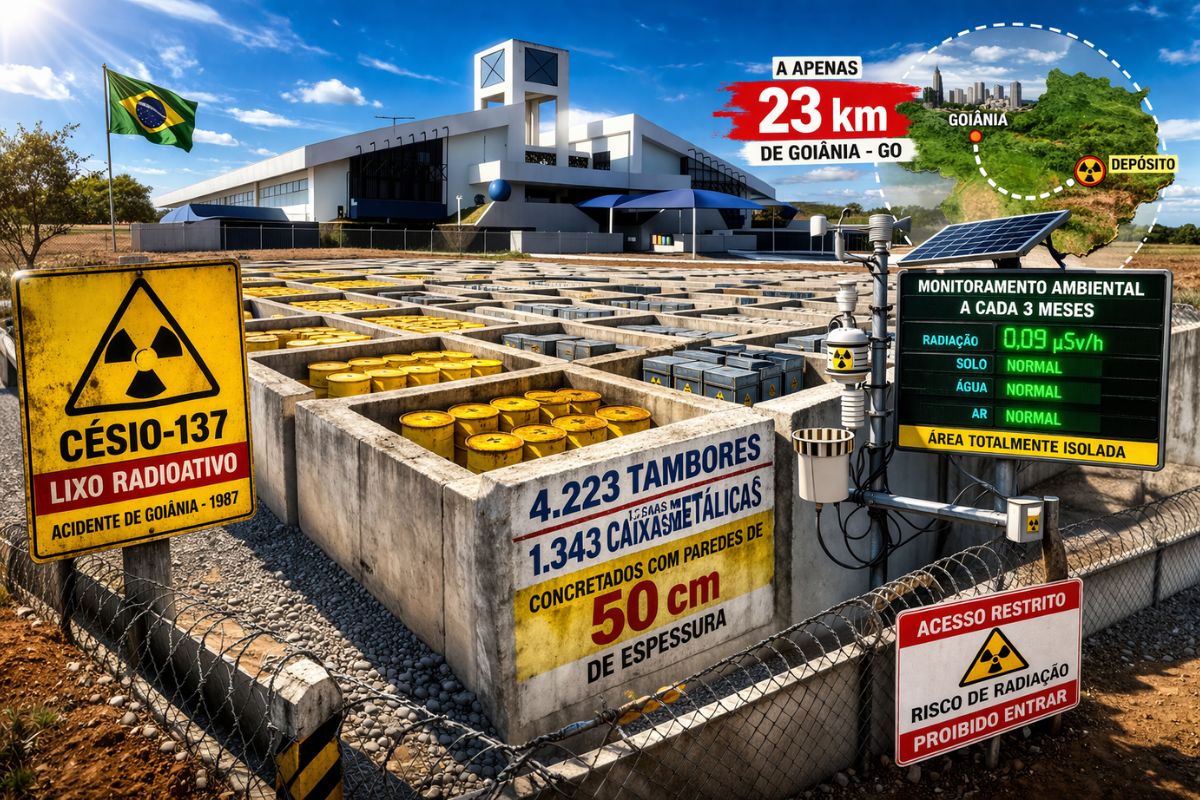
There are 4,223 drums and 1,343 metal boxes concreted with 50-centimeter walls that store the radioactive waste from Cesium-137 in the worst radiological accident in Brazil, just 23 kilometers from Goiânia, with environmental monitoring every three months.
-
Giant Roman treasure found at the bottom of Lake Neuchâtel in Switzerland reveals an advanced trade system, circulation of goods, and armed escort in the Roman Empire about two thousand years ago.

-
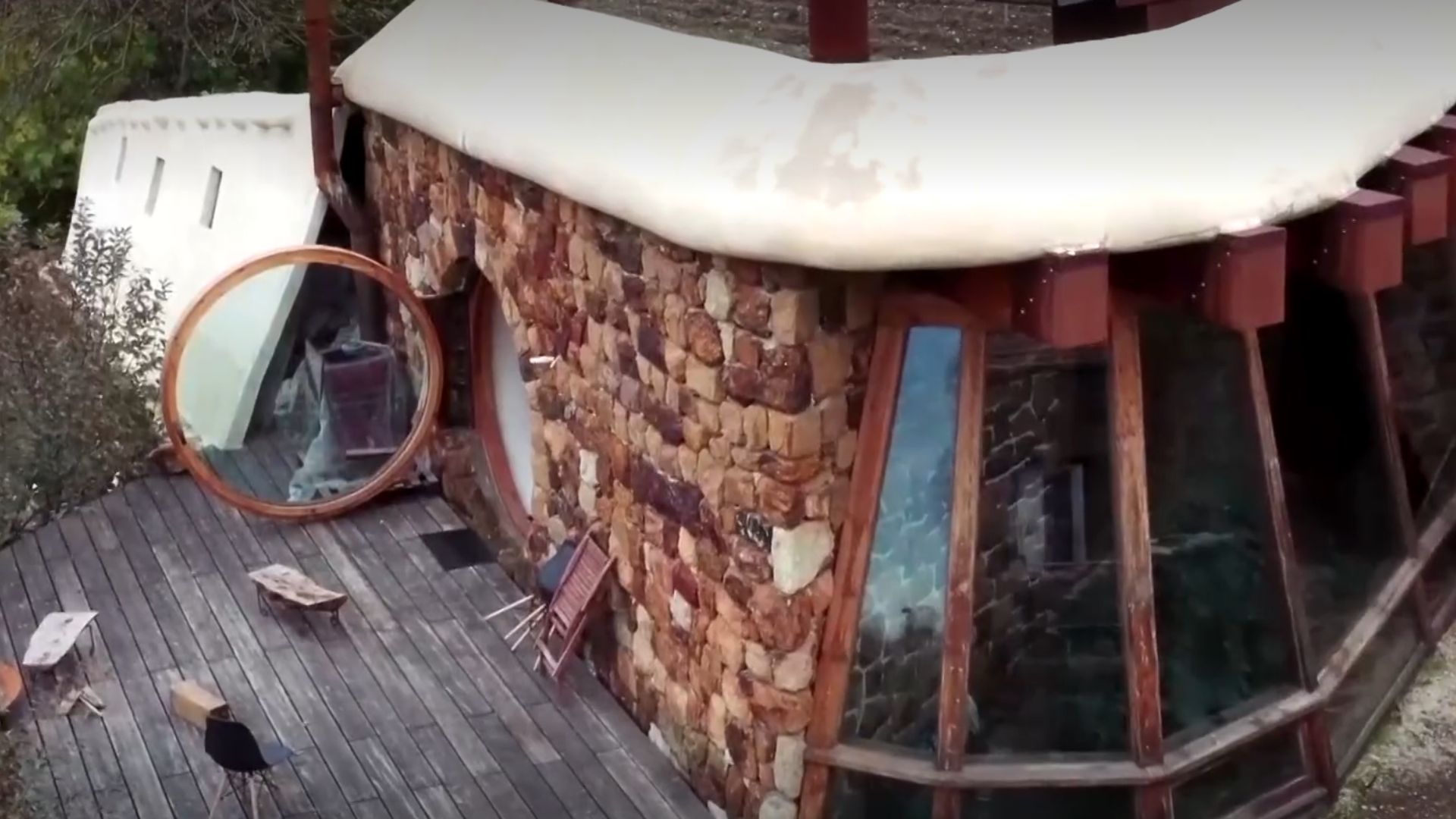
He buried 1,200 old tires in the walls to build his own self-sufficient house in the mountains with glass bottles, rainwater, and an integrated greenhouse.

His parents, Chinese immigrants, worked hard and had little time for family life.
At school, the autistic young man faced obesity, isolation, and jokes from classmates, accumulating years of bullying that reinforced a sense of inadequacy.
It was in front of the computer that he found an environment where appearance didn’t matter.
On the internet, he could communicate through text, without eye contact and the social pressures of being present that usually paralyzed him.
There, the combination of high intellectual ability with a lot of time online accelerated his dive into programming, technology forums, and later, cryptocurrencies.
Even before entering college, Jimmy had already mastered advanced IT concepts learned through self-study.
College, First Bitcoins and a Forgotten Notebook

After high school, Jimmy received a scholarship and enrolled in Computer Engineering at the University of Georgia in Athens.
Far from Atlanta, he experienced a new routine: classmates with similar interests, college life, parties, drinks, and dating.
For the first time, it seemed possible for an autistic young man to experience something close to a “normal” social routine.
In parallel, the Bitcoin ecosystem was just starting. In 2009, when the first block of the network was mined, Jimmy was among the curious exploring the still nascent project.
With mining difficulty nearly zero, he managed to obtain about 5,000 bitcoins just with his home notebook.
At that moment, those coins had marginal value; over time, the computer was forgotten, and the hard drive ended up damaged, destroying most of that initial digital treasure.
Bitponzi, Forums and Entry into Silk Road


The mistake with the notebook didn’t kill his interest.
As Bitcoin gained attention, exchanges, forums, and parallel projects emerged.
In 2011, Jimmy registered on BitcoinTalk using a pseudonym that referenced the Mercedes he dreamed of buying.
The forum was the epicenter of the community, mixing technical debates, speculation, experimental scripts, and also betting schemes.
It was there that he launched bitponzi.net, a sort of mix between a betting game and a Ponzi scheme, practically a clone of another service already existing.
While the price of Bitcoin plunged from peaks to much lower values, bitponzi worked well enough to accumulate a relevant balance of coins.
In parallel, Jimmy discovered another environment where Bitcoin circulated intensively: Silk Road, a hidden market on the Dark Web accessed via Tor that only accepted cryptocurrencies.
Drugs, Bug, and the Click That Multiplied Balance
At Silk Road, Jimmy saw something unprecedented.
Not only illegal products but a payment system entirely backed by Bitcoin.
In his real life as a college student, his first moves were predictable: he bought cocaine to try to get closer to classmates, go to parties, and feel accepted.
It was when, attempting to withdraw the remaining balance from his account, that the crucial event occurred.
When he clicked quickly twice to withdraw bitcoins, Jimmy realized that the transaction had been recorded twice on the blockchain.
The amount not only left Silk Road but had entered his wallet twice.
He tested again, increasing the amount, and repeated the sequence with more quick clicks.
He practically discovered a bug that allowed him to multiply his balance simply by repeatedly executing the withdrawal command at high speed.
From Tests to 50,000 Stolen Bitcoins
What started as a technical curiosity quickly turned into a systematic operation.
Jimmy began creating multiple accounts on Silk Road, all used to exploit the multiple withdrawal flaw.
In no time, he executed about 140 transactions and accumulated approximately 50,000 diverted bitcoins, an amount that at the time was around $600,000.
Subsequent reports indicate that the market’s administrator, Ross Ulbricht, spoke with Jimmy after the bug was identified.
The autistic young man reportedly explained that he had simply clicked too quickly on the withdrawal. In theory, he would have received 5,000 bitcoins as a reward for reporting the flaw, which was fixed afterward.
Regardless of the reward, most of the loot was already outside Silk Road, mixed into different wallets and subsequently passed through mixers to make on-chain tracking more difficult.
Relative Anonymity, Millionaire Pose, and the Beginning of Excess
After the theft, Jimmy took on a new nickname on BitcoinTalk: Loaded, with a prominently displayed wallet showing 40,000 bitcoins and the signature “Bitcoin Multimillionaire Broker and Asset Manager.”
The public display contrasted with the silence regarding the exact origin of the coins.
He only sold part of what he had mined or accumulated through previous schemes, keeping intact the core of the theft linked to Silk Road.
With that “clean” money, he began financing an increasingly ostentatious lifestyle.
He bought a house in Athens, the dream Mercedes, a yacht, jet skis, luxury trips to football games, five-star hotel nights for groups of friends, and expensive gifts, including phones with pre-loaded wallets.
On trips to Los Angeles, he handed out $10,000 for friends to spend in designer stores. The untouched fortune in Bitcoin allowed for any excess.
The Stolen Suitcase and the Move to the Lakefront Mansion
The turning point began with an apparently mundane episode.
One day, Jimmy returned home and discovered that someone had broken in and stolen a suitcase containing about $400,000 in cash, plus $200,000 in Bitcoin.
Frightened, he called emergency services and summoned local police. The cameras showed a thin intruder, hooded, who seemed to know exactly where to look for the money. The case was filed without identifying the thief.
Overcome by paranoia of being targeted again, the autistic young man decided to move to a more isolated and predictable environment.
He bought the mansion on Lake Lanier, on Hidden Harbor Trail, a gated and secluded neighborhood.
The property offered security, comfort, and space to keep equipment, cars, weapons, and, of course, his digital resources.
What Jimmy didn’t know is that reporting the theft had put his name on the radar of those who understand money best in the United States: the IRS.
The Trail on the Blockchain and the IRS Interest
As he settled into his new home, IRS agents began piecing together the puzzle.
The first move was bureaucratic and relentless: request all the IP history associated with Jimmy’s internet connection from his service provider.
This allowed them to map for years which online services he accessed most frequently, including exchanges with KYC policies, which require identity verification.
In November 2020, a mistake made the investigators’ job easier. Jimmy deposited the equivalent of about $800 in Bitcoin into one of those regulated platforms.
Blockchain analysis experts traced the origin of this small amount and managed to link it to addresses associated with the Silk Road heist.
It was the tip of a thread connecting that seemingly harmless deposit to tens of thousands of diverted bitcoins almost a decade earlier.
From that point on, the case gained priority within the IRS cyber crimes unit.
The “Cordial” Visit and the Internal Mapping of the House
In May 2021, the officer who had responded to the suitcase theft received a contact from Washington.
The IRS requested the formal reopening of the local case and collaboration for a new visit to the lake house.
The official justification for knocking on Jimmy’s door remained the old burglary, which reduced the likelihood of a brusque reaction.
Received amicably, the local officer, IRS agent, and blockchain specialist could walk through the mansion, observe rooms, access routes, visible objects, and possible hiding places.
They saw an AR-15 rifle, a mining rig, political flags, the elderly family dog, and, above all, a laptop displaying a wallet with about $60 million in Bitcoin.
The visit served to confirm that the target controlled immense values and that the physical address presented several potential points for hiding devices and keys.
The Final Siege, the Can of Titos, and the Billion-Dollar Seizure
With the scene mapped, the IRS requested an arrest warrant and planned the approach.
On the way back, they repeated the strategy: one of the agents called Jimmy to talk in the yard about the old theft, keeping him occupied and away from the main equipment.
In a matter of minutes, the tranquil environment transformed.
The lakefront mansion was surrounded by armed agents, and the autistic young man realized he was no longer facing a simple burglary investigation.
Inside the house, teams began rummaging through bathrooms, closets, deposits, and cabinets.
In the bathroom, under a blanket in a closet, they found the large can of Titos Popcorn. Inside, several towels wrapped around a computer board.
There were the wallets with access to the 50,000 bitcoins diverted from Silk Road. When Jimmy performed the hack, each coin was worth just over a dozen dollars.
On the day of the operation, with Bitcoin hovering around $65,000, the same set amounted to around $3.3 billion.
Collaboration, Total Loss, and Life After Prison
Although the physical seizure of the board represented a huge breakthrough, there was still one critical detail missing: the private keys.
Faced with the accumulated evidence and the weight of the charges, Jimmy opted to collaborate and delivered access to the wallets.
In the process, he lost not only what came from the theft but also part of what he had legitimately accumulated in earlier phases of his life, before Silk Road.
The cryptocurrencies were incorporated by the government and, as happens with other seized assets, destined for auctions or internal redistributions.
As the criminal process dragged on, the former Bitcoin billionaire saw his structure crumble.
He sold possessions, lost friends attracted only by money, and even drove Uber with the old Mercedes to make ends meet until sentencing.
In April 2023, he was sentenced to one year and one day in prison for electronic fraud.
According to prison system records, he left jail in April 2024, with no fortune, no mansion, and far from the “multimillionaire broker” image he had projected in forums.
For many, the question remains: was that autistic young man a genius of exploiting flaws or just someone who stumbled upon an infinite money machine and couldn’t resist the temptation to turn it on?
The Moral Dilemma and the Blind Spot of the Dark Web
Jimmy’s defense argued that there were no “real” victims, as Silk Road’s money would be linked to illegal activities.
The thesis overlooks part of the chain: behind each transaction were individuals, intermediaries, suppliers, and criminal structures that began to operate with less capital.
At the same time, the case exposes a blind spot of the digital era.
A bug in a poorly audited platform combined with an environment of anonymity and lack of oversight was enough to concentrate billions of dollars in the hands of a single person for almost a decade.
For the IRS, the episode became a blockchain investigation manual, combining technical analysis, local cooperation, network intelligence, and psychological pressure.
For the crypto ecosystem, it became another reminder that blockchain transparency does not eliminate human risk and that the digital trail, sooner or later, is usually reconstructed.
Do you think Jimmy should be remembered primarily as a dangerous cybercriminal or as a brilliant autistic young man who exploited an already criminal system and ended up crushed by it?










Recovering stolen cryptocurrency is challenging, but you are not powerless. By taking the right steps early, gathering strong evidence, and working with legitimate professionals, you can improve your chances of tracing your assets and building a solid case.
Infinite Digital Recovery provides victims with honest guidance, blockchain analysis, and professional support—without false promises or risky tactics. Reach out to Infinite Digital Recovery to start your recovery process.
Email: infinitedigitalrecovery@techie.com
WHATSAPP: + 132*355*43592
Please beware there are many fake bitcoin mining/clouding out there, I have been a victim once but now a certified blockchain consultant and I know better. The whole plan was so smooth I could not doubt it. Bitcoin is actually a great investment option but one thing I discovered over time is that it is not possible to mine bitcoin so don’t be deceived. I invested $250,000 on a particular website called eurekaminingblock, I monitored the profit yielding but was told to open a new blockchain account to receive my payout. A public wallet was imported into the account and I was made to believe that was my profit. The bitcoin was labelled non spendable and it took me 2 few months to be able to access it without the knowledge of the company. The non spendable bitcoin is the scam out there now and a lot of people are falling victim of it. I found Adam Wilson (a recovery expert and trader) on Quora who helped me access a significant part of my investment together with the profit without the knowledge of the company. You can reach him through mail. Adamwilson . Trading @ Consultant . Com / WHATSAPP ; +1 (603) 702 ( 4335 )