





 Portuguese
  English
  Spanish
  3 min of reading
  0 comments


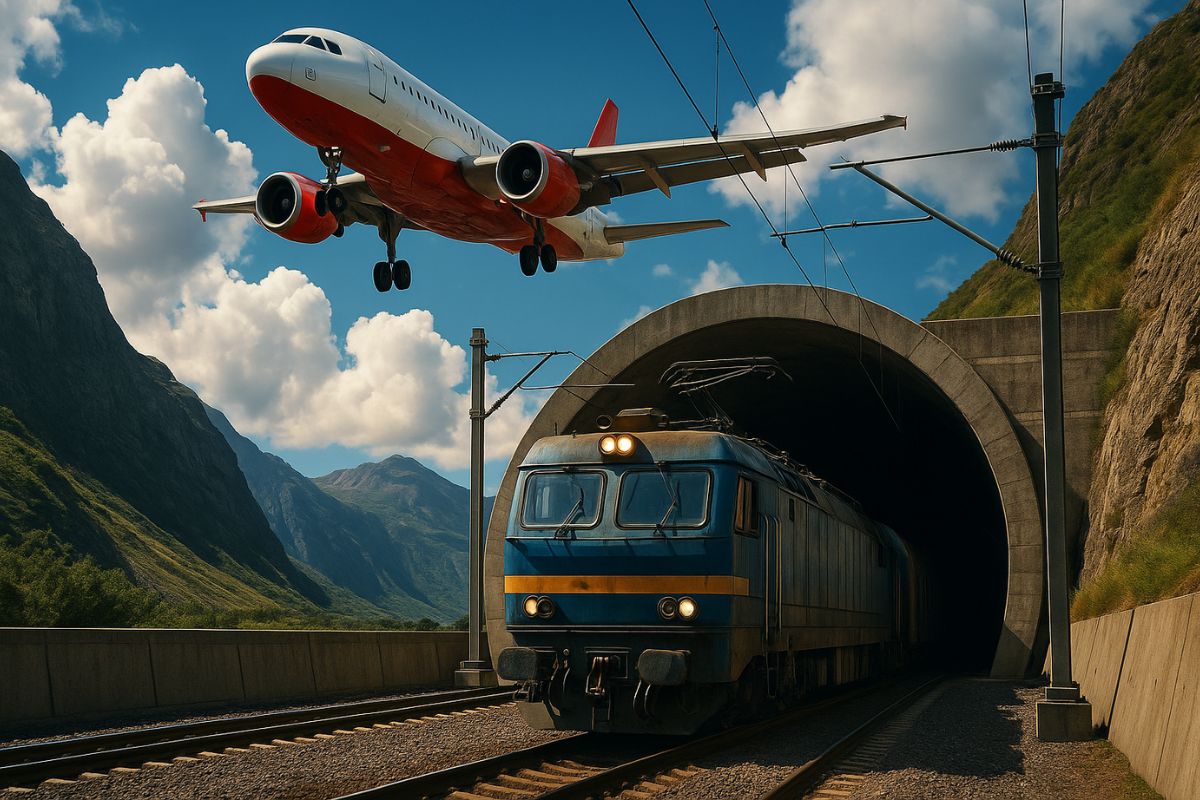
With 53.85 km in length, this railway tunnel took 24 years and US$ 3.6 billion to complete, connecting Honshu and Hokkaido in a monumental engineering work
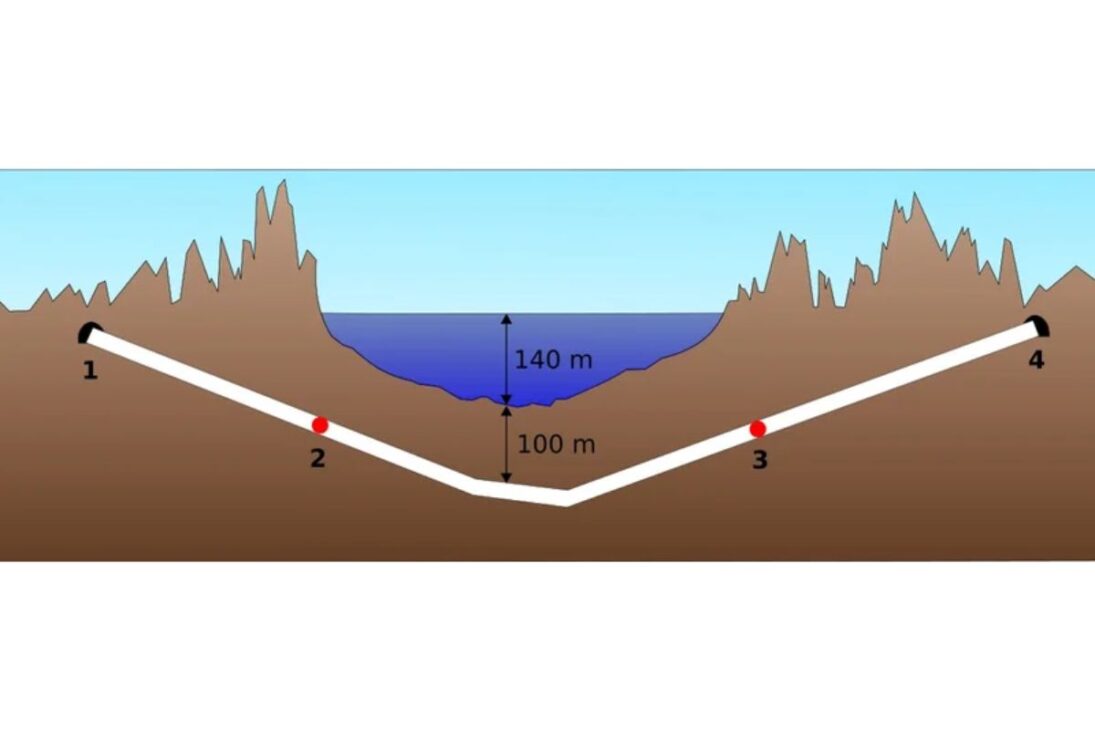
In 1988, Japan inaugurated one of the greatest achievements in its modern history: a 53.85-kilometer railway tunnel that connects the islands of Honshu and Hokkaido, crossing the Tsugaru Strait to 240 meters below sea level. The construction, which began after decades of studies and maritime tragedies, was conceived as a direct response to the vulnerability of the ferries that had been transporting between the islands.
The underground route took 24 years to complete, mobilized 1.5 million workers, and consumed about US$ 3.6 billion. When it opened, it became the longest railway tunnel in the world, a title it held for 28 years until the inauguration of the Gotthard Base Tunnel in Switzerland in 2016.
From Maritime Disaster to the Need for a Safe Solution
The Seikan railway tunnel project was born out of a catastrophe. In 1954, Hurricane Marie caused the sinking of five ferries crossing the Tsugaru Strait, resulting in 1,430 deaths.
-
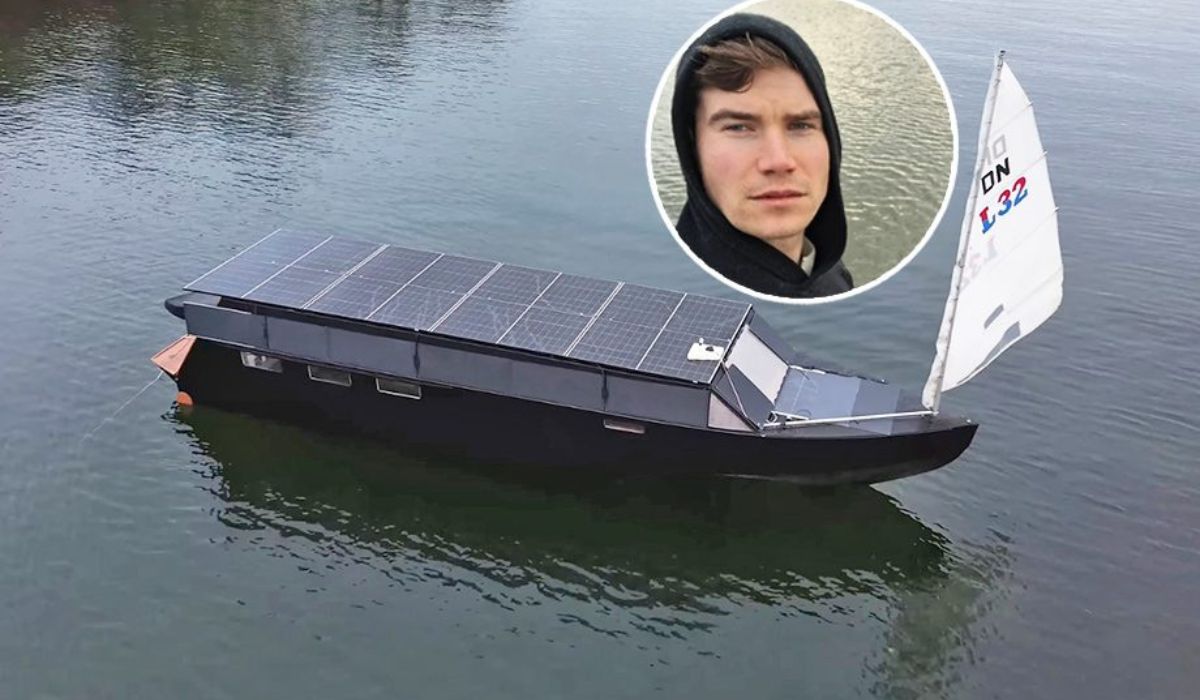
In 200 days, a Finnish man builds with his own hands an 11-meter boat powered by solar energy with “infinite autonomy,” capable of dispensing with refueling and already used as a floating house.
-
Neurologist Richard Restak issues a severe warning to all people over 65: there is a daily habit he recommends completely eliminating from your life because it is destroying your neurons and accelerating memory loss.

-
With 6.1 meters and 33 steps, the spiral staircase of the Loretto Chapel in the United States gained fame worldwide for making two complete 360-degree turns without a central support.

-
With 30 meters in length, a house in England appears to float in the air and surprises engineers and architects around the world due to its visual effect and construction method suspended over sloped terrain.


The episode led the Japanese government and Japanese National Railways to seek a more stable and resilient alternative to extreme weather conditions.
The first technical studies began in 1955, and nearly a decade later, in 1964, the initial excavations marked the start of the megaproject.
The work faced numerous geological challenges, flooding, and landslides, culminating in the deaths of 34 workers, reinforcing the heroic nature of the endeavor.
A Work That Mixed Persistence, Technology, and Economic Risk
The Seikan tunnel is a hybrid engineering structure, consisting of 23.3 km of underwater section and the remainder in excavated rocky areas.
The project was a landmark in Japanese engineering, employing advanced technologies in ventilation, drainage, and seismic monitoring that continue to serve as a reference for underground construction.
Despite its technical success, the railway tunnel had a cost far exceeding the initial projections and was inaugurated at a time when domestic air travel was becoming faster and more accessible.
The infrastructure, designed to revolutionize passenger transport, ended up being more relevant for freight transport, which still heavily depends on this underground link.
The Railway Tunnel as a Lesson on Megaprojects and Time
The Seikan is often cited as a classic example of a megaproject affected by technological change.
When the first studies started, the airplane was an expensive and limited mode of travel.
However, in the following decades, commercial aviation expanded rapidly, offering flights between Honshu and Hokkaido in just over an hour, an advantage that the train could not match.
Nevertheless, the railway tunnel remains vital for goods transport, especially during storms and severe weather periods when air and maritime traffic is interrupted.
This case illustrates how the economic and logistical premises of a decades-long project can transform even before its completion, a risk that remains present in large infrastructure projects around the world.
Legacy, Current Operation, and Future of the Underground Link
More than three decades after its inauguration, the Seikan railway tunnel remains active, accommodating around 50 freight trains and 30 shinkansen trains per day.
The complete crossing takes an average of 55 minutes, connecting regional economies and strengthening domestic Japanese trade.
There are plans to extend the line by 2030, allowing the shinkansen to reach the city of Sapporo, the capital of Hokkaido.
This expansion aims to revitalize the role of the tunnel, integrating it into a high-speed corridor connecting the north and south of Japan, demonstrating that even a work born in another era can remain relevant in a new technological cycle.
The Seikan railway tunnel is more than an engineering feat: it serves as a reminder of how time, technology, and economy shape the fate of great human endeavors.
Do you believe that decades-long megaprojects still make sense in a world that is changing so rapidly? Leave your opinion in the comments — we want to hear from those who closely follow the impact of innovations on global transport.






-

Uma pessoa reagiu a isso.