





 Portuguese
  English
  Spanish
  4 min of reading
  0 comments


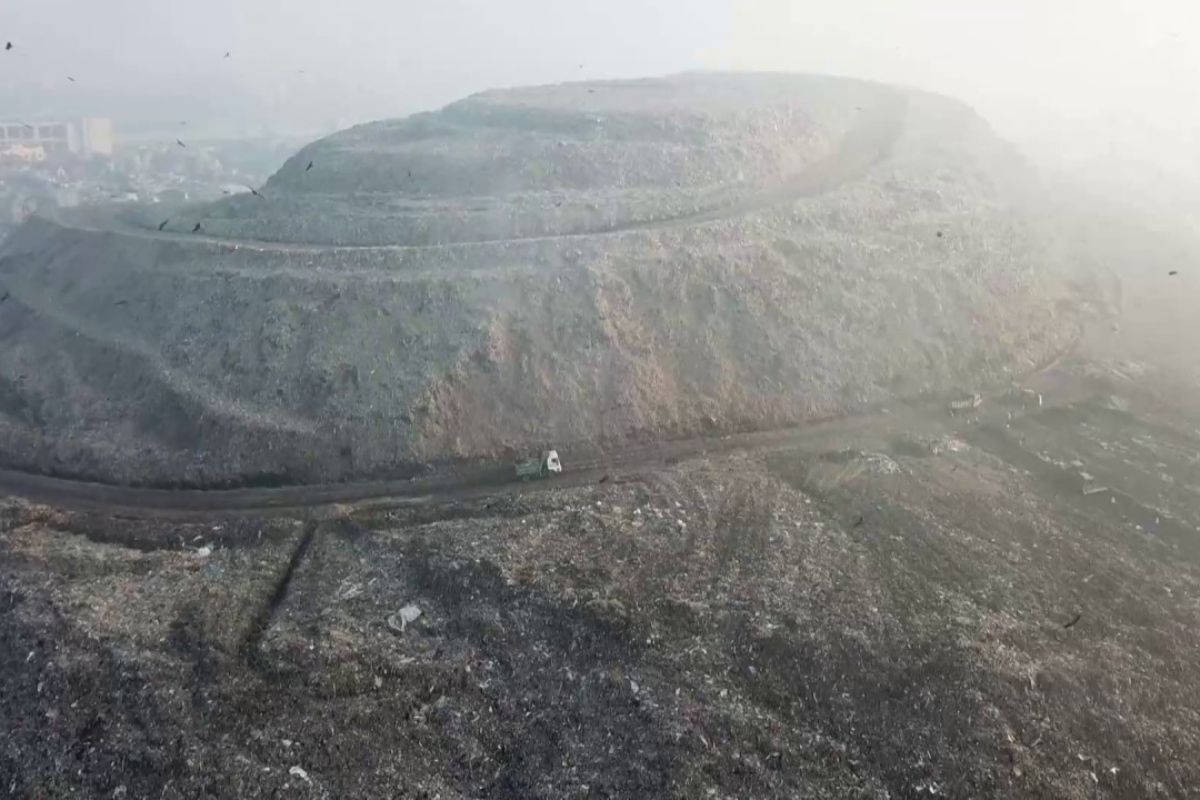
Originally Erected As A Simple Urban Waste Deposit, The Ghazipur Landfill Ended Up Growing Far Beyond Planned And Became One Of The Biggest Symbols Of The Waste Crisis Faced By India’s Capital
The Ghazipur Landfill has become one of the most extreme settings of the global urban waste crisis. Located in Eastern New Delhi, India, the site has been accumulating garbage since 1984 and has transformed into a gigantic mountain of waste visible from kilometers away.
With about 65 meters in height and approximately 140 lakh metric tons of accumulated waste, the Ghazipur Landfill has grown to such an extent that it is often compared to the Taj Mahal in size. Every day, thousands of tons of new waste continue to be dumped at the site.
How The Ghazipur Landfill Transformed Into A Mountain Of Waste
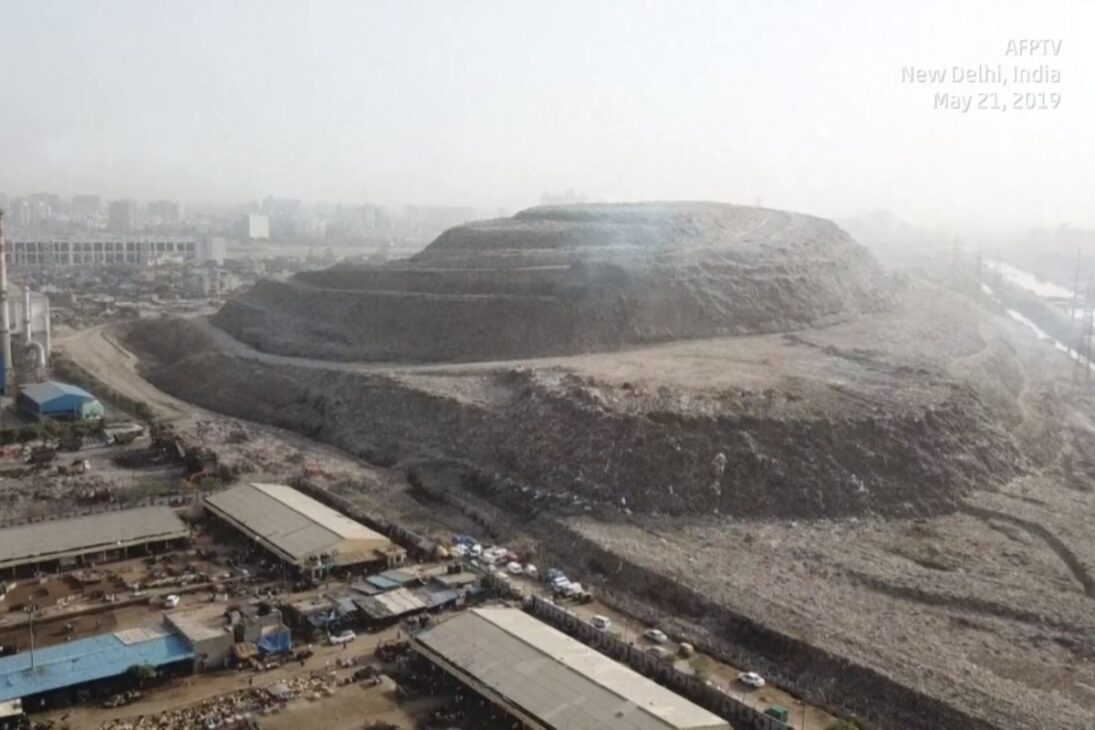
The Ghazipur Landfill started operating in 1984 as a waste deposit for the Indian capital.
-
Italian researchers have detected what appears to be a second Sphinx buried under the sands of Egypt, and satellite scans reveal a gigantic underground megastructure hidden beneath the Giza Plateau for over 3,000 years.

-
There are 4,223 drums and 1,343 metal boxes concreted with 50-centimeter walls that store the radioactive waste from Cesium-137 in the worst radiological accident in Brazil, just 23 kilometers from Goiânia, with environmental monitoring every three months.
-
Giant Roman treasure found at the bottom of Lake Neuchâtel in Switzerland reveals an advanced trade system, circulation of goods, and armed escort in the Roman Empire about two thousand years ago.

-
He buried 1,200 old tires in the walls to build his own self-sufficient house in the mountains with glass bottles, rainwater, and an integrated greenhouse.


At the time, the site was designed to operate for a limited period and receive much smaller volumes of waste.
With the rapid growth of New Delhi, the amount of waste generated by the city increased dramatically.
Even after reaching its maximum capacity in the early 2000s, the Ghazipur Landfill continued to receive trucks of garbage daily.
Today, it is estimated that between 2,500 and 3,000 tons of waste are dumped at the site every day, causing the mountain to continue growing.
The Impressive Dimensions Of The Ghazipur Landfill
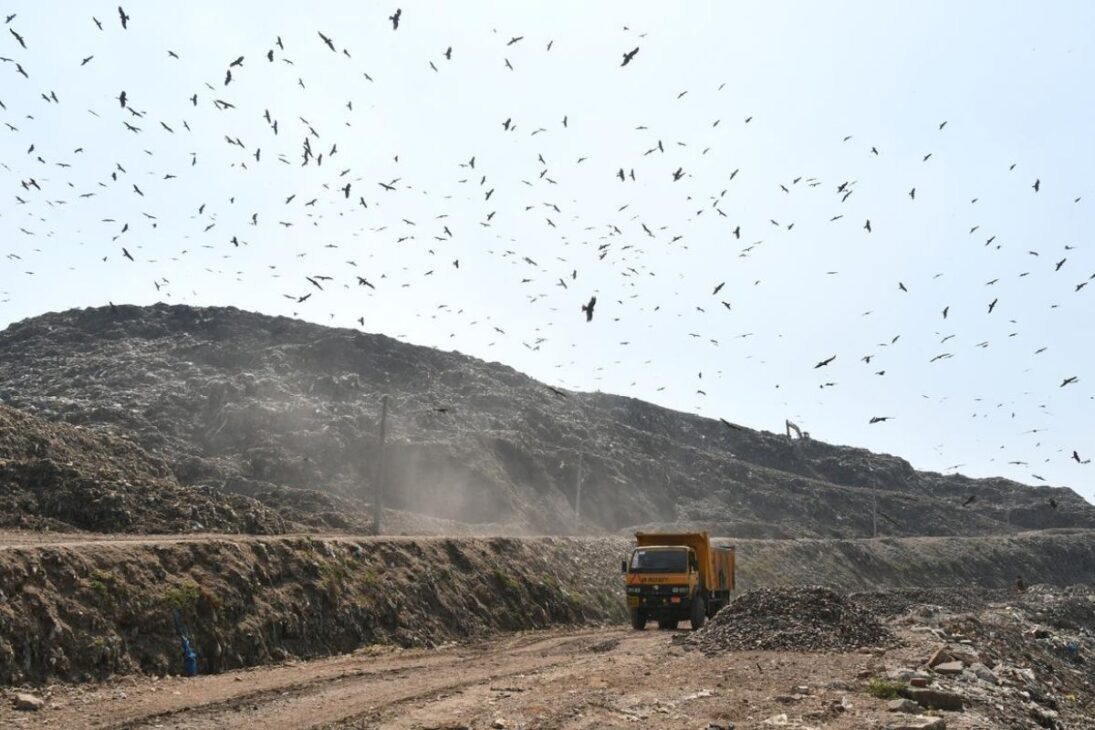
The Ghazipur Landfill impresses not only with the amount of waste but also with the physical dimensions of the structure.
The mountain of waste has already surpassed 65 meters in height, becoming one of the largest artificial waste formations in India.
The accumulated volume reaches around 140 lakh metric tons, a result of decades of continuous disposal.
This gigantic mass of waste generates an extremely strong odor that directly affects neighboring communities.
Residents report that the smell spreads constantly throughout the region, making daily life increasingly difficult.
Communities Living Around The Ghazipur Landfill
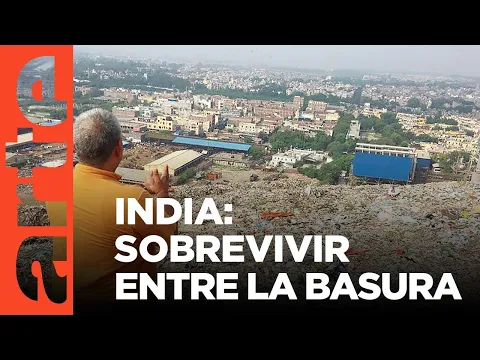

The area around the Ghazipur Landfill has also transformed into a space where thousands of people are trying to survive.
In recent years, more than 1,500 families have migrated to communities near the dump, many of them coming from extremely poor rural areas of India.
A large part of these people work collecting recyclable materials.
Scavengers spend up to ten hours a day sifting through the trash in search of plastic, metal, and other waste that can be sold.
This informal work has become one of the few sources of income available for many families in the region.
Pollution And Environmental Risks At The Ghazipur Landfill
In addition to the social impact, the Ghazipur Landfill also represents a significant environmental problem.
The decomposition of millions of tons of waste generates toxic gases and particles that spread through the atmosphere.
Studies conducted by environmental organizations indicate that the concentration of pollutant particles in the air of the region can exceed several times the levels considered safe.
This type of pollution can cause respiratory, cardiovascular, and other health impacts.
The groundwater in the region is also at risk of contamination due to the leachate generated by the accumulated waste.
Accidents And Tragedies Associated With The Ghazipur Landfill
The size and instability of the mountain of waste also create physical risks.
In 2017, part of the Ghazipur Landfill collapsed, causing a landslide of waste.
The accident resulted in the death of two people, buried under tons of garbage.
This incident reinforced the warnings about the dangers associated with the uncontrolled growth of the landfill.
Even after the accident, the dumping of waste continued.
Local authorities are discussing different solutions to reduce the size of the mountain of waste, including recycling projects and energy generation from waste.
The Ghazipur Landfill has become one of the most visible examples of the global waste management crisis in major cities.
What started as a simple garbage deposit has turned into a gigantic mountain of waste that directly affects the environment and thousands of residents in the area.
The case of the Ghazipur Landfill shows how urban growth without adequate planning can generate environmental problems that are difficult to solve.
Now the question remains.
Do you believe that megacities like New Delhi will be able to find effective solutions for mountains of waste like the Ghazipur Landfill, or does this type of problem tend to grow even more in the coming decades?










Seja o primeiro a reagir!