





 Portuguese
  English
  Spanish
  5 min of reading
  4 comments


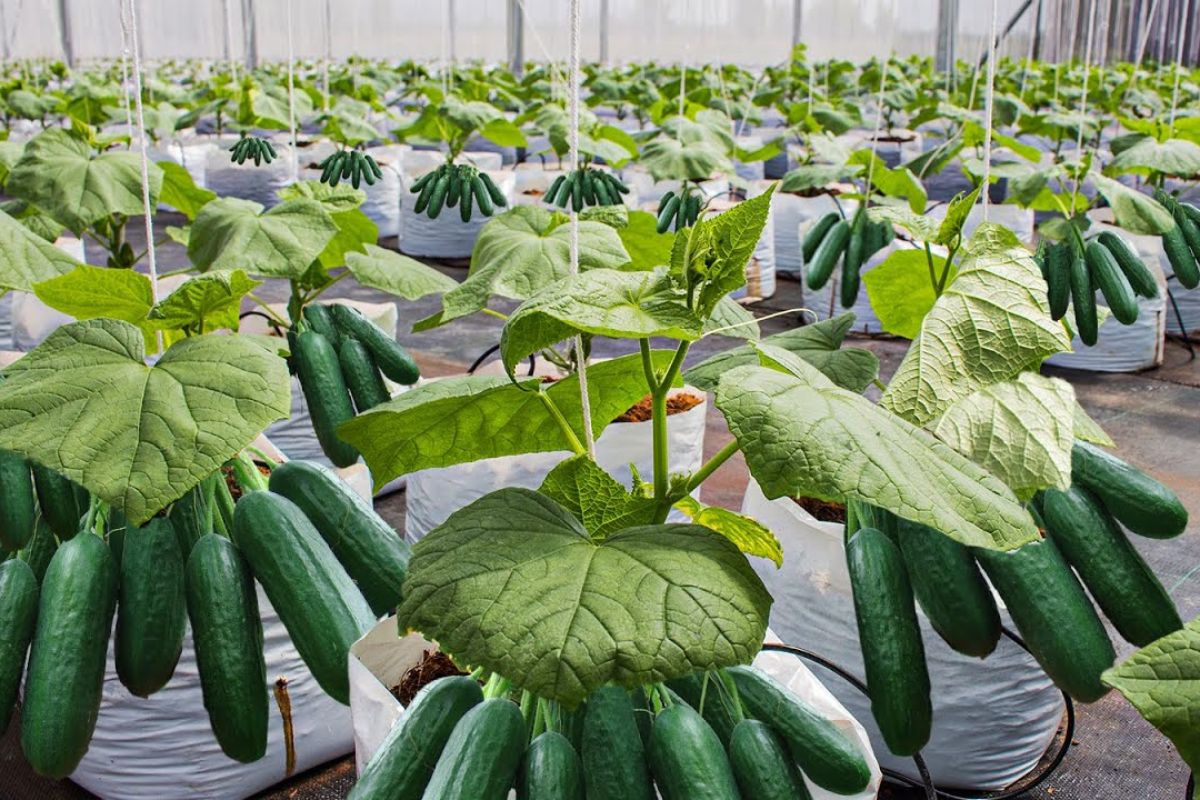


In the Agricultural Power of the Netherlands, High-Tech Greenhouses Produce Millions of Cucumbers Per Harvest with High-Wire Cultivation, Biological Fiber Drip Irrigation, Night LED Lights, and Automated Selection, Maintaining Uniform Quality, Minimal Waste, and Sequential Harvests Almost Year-Round, Even During Long, Intense Cold Winters.
In a country with a cold climate and limited area, the Netherlands has transformed greenhouses into highly controlled systems capable of delivering millions of cucumbers per harvest regularly. Rather than relying on soil and open climate, the producer now controls light, water, nutrients, and temperature to reduce fluctuations and ensure standardization.
Far from the classic image of field farming, this model combines high-wire cultivation, biological fiber substrates, precision irrigation, and targeted LED lights. In Dutch greenhouses, almost nothing is left to chance: from seed germination to the moment the cucumber is sorted on automated conveyor belts, everything follows a planned flow to maintain the rhythm of continuous harvest.
Greenhouses Operating at Scale of Millions of Cucumbers Per Harvest

The system’s foundation lies in large, enclosed greenhouses, installed over more than 600 hectares dedicated to cucumbers.
-
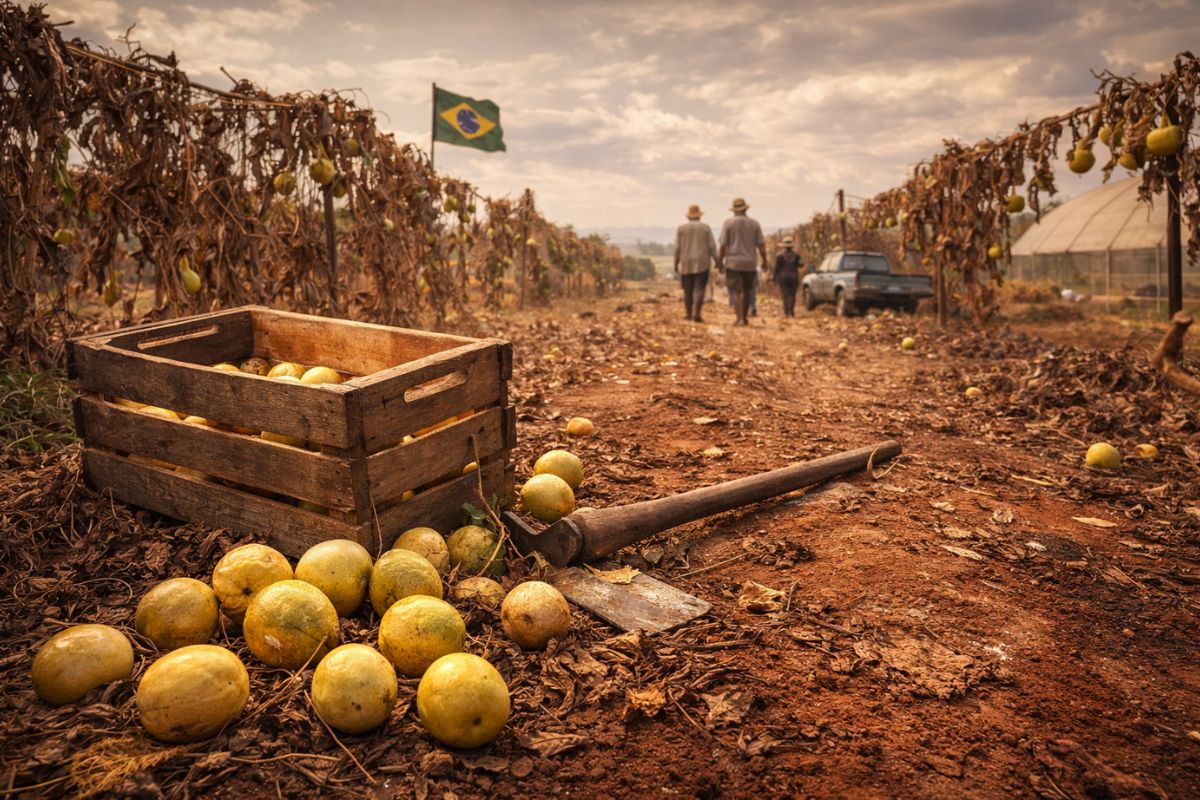
From 130 producers in the year 2000 to just 15 today: the dramatic decline of passion fruit in Araguari shows how the lack of labor in the Brazilian countryside is killing a decades-old agricultural tradition, even with Brazil being the largest producer in the world.
-
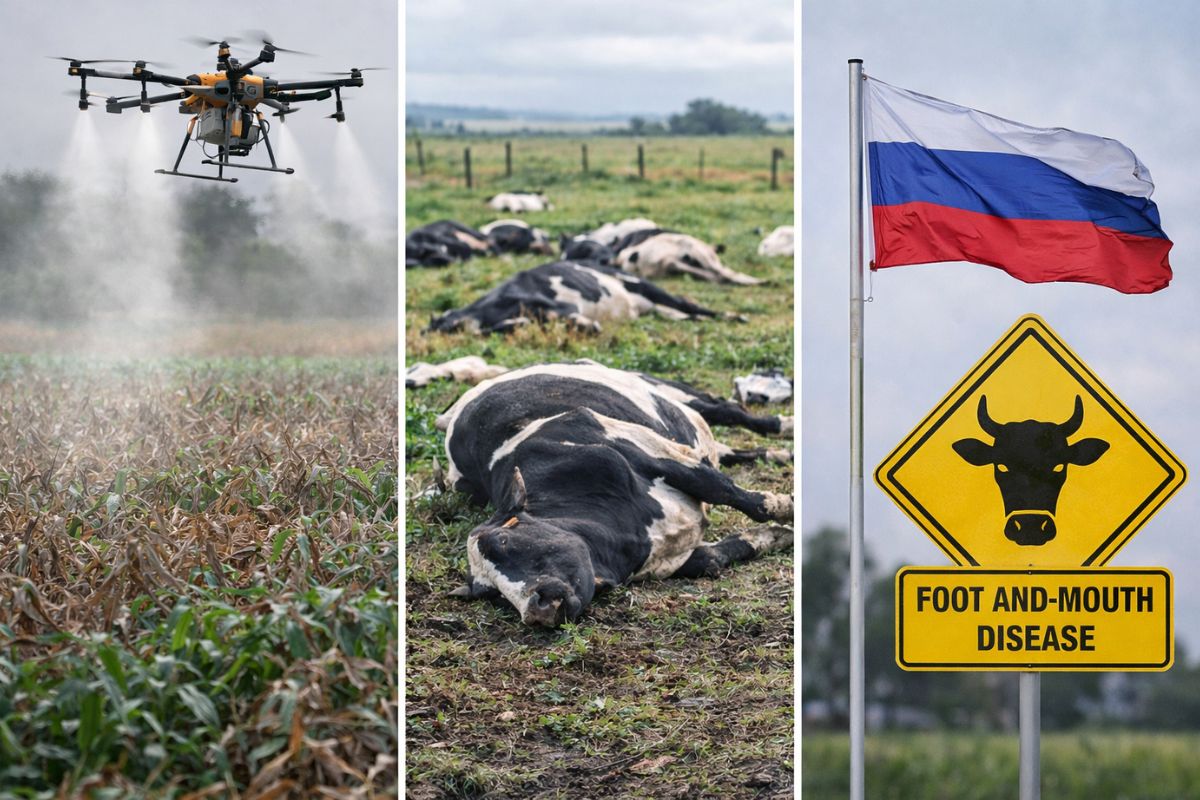
Agricultural drone sprayed poison into the air and destroyed the neighbor’s crops, causing 1 million in damages; 48 cows died from nitrite poisoning in the pasture, and Russia is hiding a possible outbreak of foot-and-mouth disease: the week was brutal for the rural sector.
-
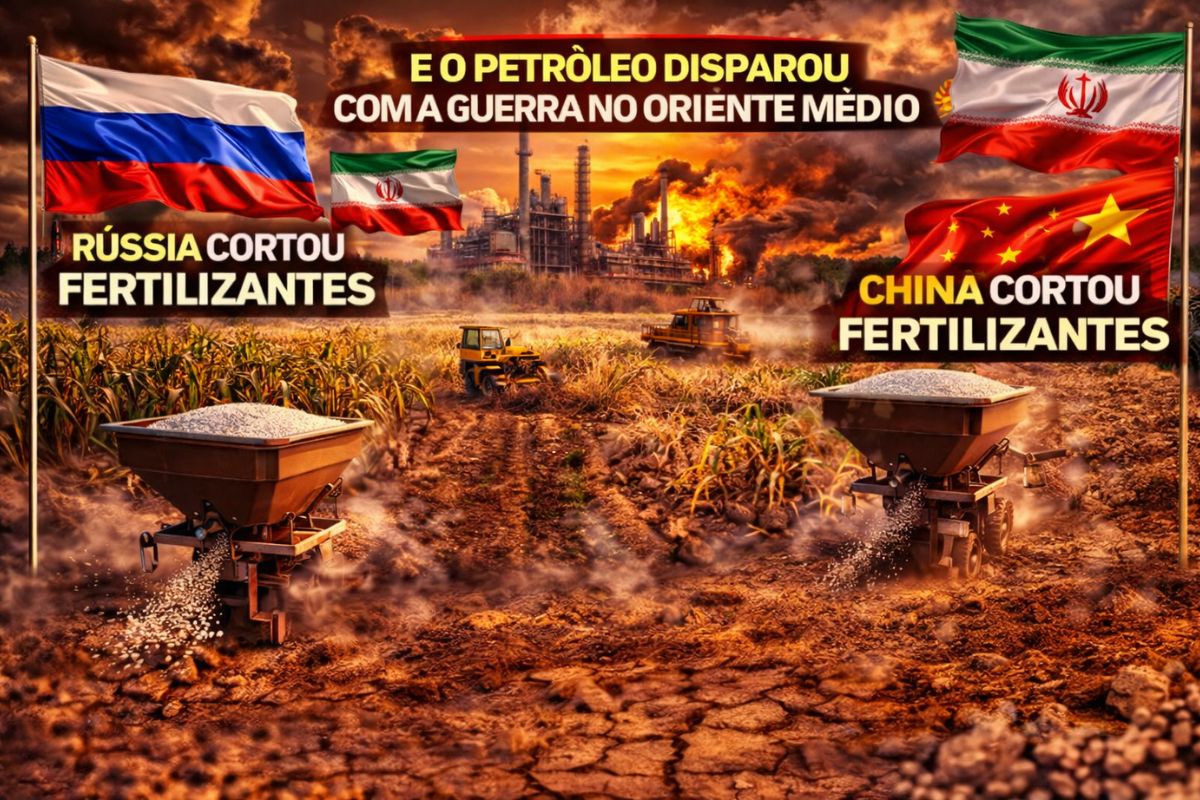
Russia cut fertilizers, China cut fertilizers, and oil prices soared with the war in the Middle East: sugarcane producers in the interior of São Paulo are seeing costs explode from all sides and warn that the effects will take months to be absorbed.
-
It does not come from flowers, is produced only every two years, and more than 90% goes straight to Europe: meet the bracatinga honeydew honey from Santa Catarina, considered one of the rarest in the world and overlooked by Brazil itself.
In these environments, modern machines and equipment assist the producer in nearly every stage, from moving seedling trays to transporting the harvested fruits for sorting and packaging.
By concentrating production under cover, it is possible to organize the harvest with great precision.
Instead of relying on weather windows, greenhouses allow for two major harvests per year using the high-wire method, and, in more intensive operations, up to three or four cycles in succession.
This logic supports the impressive volume of millions of cucumbers per harvest just within a single production complex.
In addition to the physical infrastructure, the Netherlands operates as an agricultural technology hub: monitoring systems, climate control, and internal movement automation make it feasible to maintain productivity even during harsh winter periods when outdoor cultivation virtually stops.
Seedlings Without Soil and Biological Fiber in Place of Earth

The cycle begins with cucumber seedlings, grown without using soil.
The seeds are sown in small blocks, which will then be placed in biological fiber mats, often coconut fiber-based, inside the main greenhouse.
This substrate replaces traditional soil and allows for much more controlled irrigation.
Right from the first days, fertigation systems come into play: water and nutrients are pumped directly to the roots, in defined dosages according to the plant’s growth stage.
The biological fiber serves as both physical support and moisture reserve, maintaining a stable environment around the root system.
After about two weeks, the seedlings reach a size sufficient to be transferred to the permanent cultivation area, a space so large that it often requires a bicycle for internal movement.
In some farms, half a million cucumber plants share the same set of greenhouses, forming the basis for millions of cucumbers per harvest when all come into production.
High-Wire, Daily Management, and Plants That Never Stop Climbing
Once established on the fiber mats, the plants begin to grow guided by strings attached to a high wire installed 4 or 5 meters high.
The so-called high-wire system transforms each plant into a vertical productive column, taking up little floor space while maximizing the greenhouse height.
Immediately after permanent planting, each seedling receives its support string.
Daily management includes two fundamental routines: winding the plant around the string and periodically lowering it as it reaches the upper wire.
When it reaches the top, the string is “lowered,” and the stem continues its way, allowing the cycle to be extended without immediate replanting.
In parallel, many producers adopt selective pruning in elevated structures, removing leaves and branches that do not directly contribute to productivity.
The goal is to direct energy towards flowers and fruits, maintaining adequate ventilation.
About three to four weeks after planting in the main greenhouse, the plants begin to flower and form fruits, each with the potential for dozens of cucumbers throughout the cycle.
LED Lights, Controlled Climate, and Continuous Harvest
To sustain this pace, Dutch greenhouses combine natural light with LED lights distributed over the rows of plants, especially useful during long nights and cloudy days.
This supplemental lighting helps maintain active photosynthesis and steady growth, safeguarding the production schedule against external weather variations.
With the microclimate adjusted, harvesting occurs at regular intervals.
Workers move along the rows with carts and knives, manually cutting cucumbers at the ideal point, when they are uniformly colored and approximately 35 to 40 centimeters long.
The visual and dimensional standard is essential to ensure that each box delivered to the market maintains the same appearance.
Thus, what sustains millions of cucumbers per harvest is not just isolated technology, but the combination of daily management, supplemental light, precise irrigation, and selected genetics, operating like a living assembly line inside the greenhouse.
Selection, Packaging, and Preparation for the Next Harvest
After being harvested, the fruits proceed to sorting and packaging areas.
Modern conveyor belts transport cucumbers through a circuit where robotic arms separate them by size and weight, while human operators ensure final quality control, removing any units outside the standard.
Next, the batches are organized into boxes and specific packaging, ready for distribution.
The same infrastructure that processes millions of cucumbers per harvest also needs to quickly prepare for the next cycle: at the end of the season, all old plants are removed, systems are cleaned, and the greenhouse roof is washed to maximize light entry for the next round of cultivation.
This rapid turnaround between one harvest and another reinforces the logic of continuous production: the interval between the last harvest and the planting of new seedlings is minimized, maintaining the flow of cucumbers to the market and spreading fixed infrastructure costs throughout the year.
Global Pressure and the Netherlands’ Role in Greenhouse Cucumber
On the global stage, cucumber production exceeds tens of millions of tons per year, with countries like China dominating the total volume.
Within Europe, the Netherlands ranks among the top producers, even with its reduced territory, precisely because of adopting intensive greenhouse models.
With 1.2 million tons recorded in a recent single year, the Netherlands has consolidated its image as an agricultural laboratory, where each hectare must deliver maximum productivity, quality, and predictability.
Greenhouses for cucumbers, with millions of cucumbers per harvest, are one of the clearest examples of this intensive use of technology to compensate for natural limitations of climate and space.
This model, however, raises debates about energy consumption, the need for specialized labor, and reliance on complex systems.
At the same time, it shows how modern agriculture can adapt to adverse environments, maintaining a constant supply of fresh food even during severe winters.
Thinking about the future of food, do you view this type of high-tech greenhouse production positively, or do you still prefer more traditional open field systems for the food that reaches your table?







Não seria “Países Baixos”?
Eu como um agricultor vejo a necessidade de um sistema desse, não só para alta produtividade mas para incentivar a mão de obra que está cada vez mais escassa.
Esse é o futuro, independente do clima,ou qualquer variação ambiental, otimizando todas as etapas e o mínimo de perdas e desperdícios, a produção segue a pleno vapor, exemplo a experimentar em outras agriculturas.