





 Portuguese
  English
  Spanish
  4 min of reading
  0 comments



INSS Reveals 763 Thousand Payroll Loans Taken Out in the Name of Children and Exposes a Critical Flaw That May Indicate Mass Fraud in Federal Credit.
In January 2025, the president of INSS, Gilberto Waller Júnior, revealed a piece of information that immediately raised a national alert: there are 763 thousand active payroll loans registered in the name of minors. The information, confirmed by the agency itself and reported by outlets such as Metrópoles, Gazeta do Povo, and UOL, points to a systemic issue that may have lingered for years undetected.
The numbers are impressive both in scale and in legal and social implications. Together, these contracts represent over R$ 12 billion in credit, granted to people who, by law, cannot take out loans—even less so payroll loans, which require fixed income, an assignable margin, and direct authorization from the beneficiary.
The revelation has become one of the most serious episodes related to credit provision linked to INSS since the creation of payroll loan modalities.
-
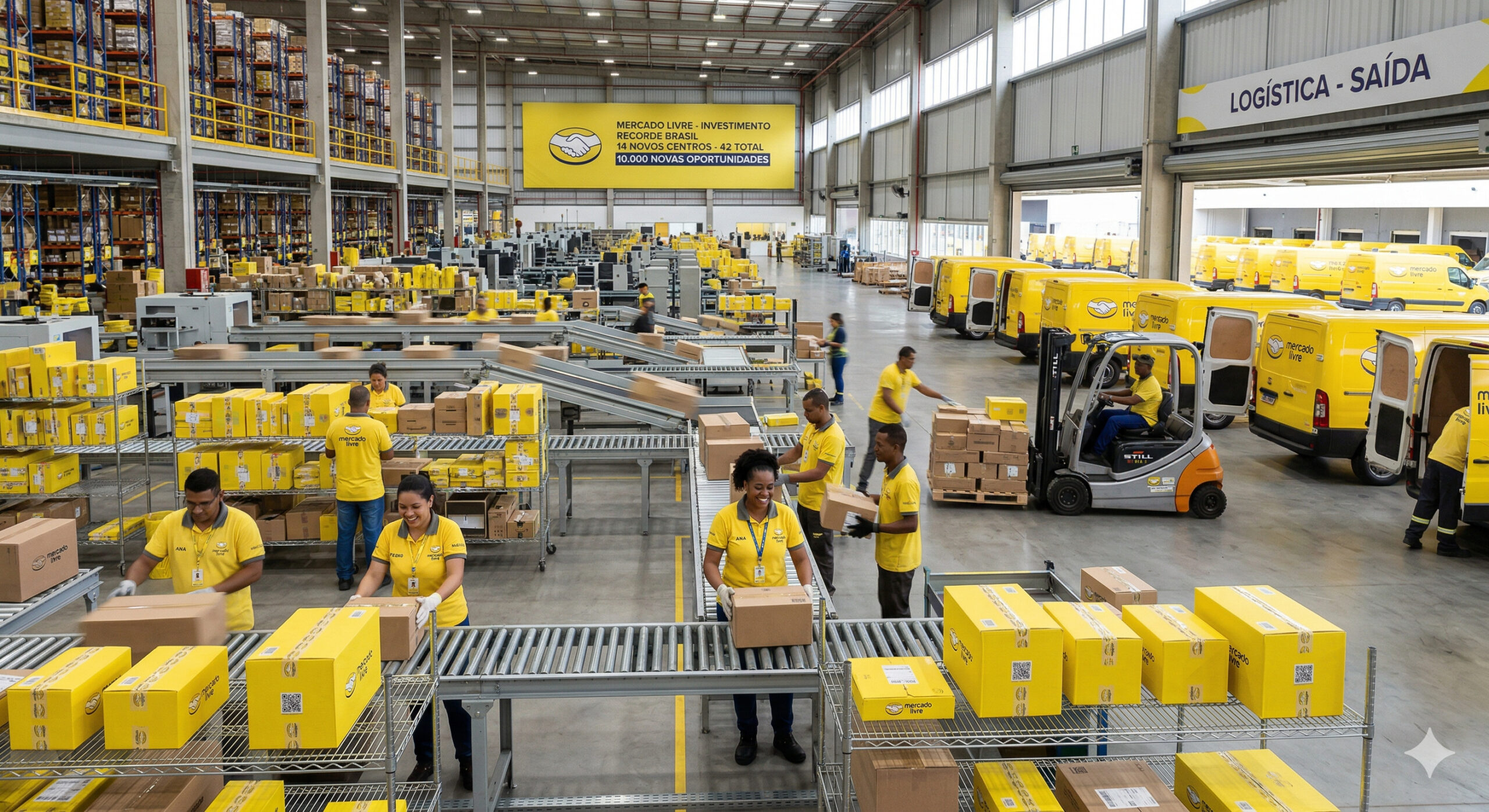
Mercado Livre “opens the vault” and announces a record investment of R$ 57 billion in Brazil in 2026, a value 50% higher than the previous year, with an expansion plan that includes 14 new logistics centers, totaling 42 units in the country and hiring an additional 10,000 employees.
-
How investment in technology can revolutionize the national economy and enhance industrial gains, according to a study that highlights the direct impact on productivity, innovation, and wealth retention within Brazil.

-
The largest food company on the planet, JBS, has just opened a 4,000 square meter laboratory in Florianópolis to develop customized proteins that modulate muscle mass gain, immune response, and metabolic performance.

-
After nearly 30 bids and competition among industry giants, a Spanish company purchases one of the largest airports in Brazil for almost R$ 3 billion and takes over the management of Galeão in a concession that will last until 2039.


How Minors Were Used to Issue Payroll Loans: What the Investigation Already Knows


According to the president of the agency, the data indicate that many contracts were made using the CPF numbers of children receiving welfare benefits, such as:
- BPC (Continuous Cash Benefit)
- widow’s pensions granted to minors
- alimony payments received through INSS
The problem is not the receipt of the benefit itself, which is legal and provided for in legislation, but the use of these CPFs to take out loans, often without the knowledge of legal guardians.
Initial investigations point to three main pathways:
- Fraud committed by third parties, such as intermediaries and banking correspondents.
- Improper use of children’s CPF numbers by family members to obtain credit.
- Failures in the validation systems of financial institutions, which did not automatically block CPFs of minors on their platforms.
Experts consulted by Gazeta do Povo and Metrópoles assert that, under civil legislation, any contract signed by an incompetent is void. Nevertheless, banks have spent years releasing loans to CPFs that should have been automatically blocked for payroll loans.
The Size of the Problem: A Risk That Could Shake the Payroll Credit System
The 763 thousand contracts are equivalent to almost the entire population of a large city. The financial impact is equally significant:
- Average loan amount: approximately R$ 16 thousand
- Total estimated amount: R$ 12 billion to R$ 14 billion in active payroll loans
In addition to the potential harm to families, there is a significant risk for:
- legal security of banks, which may be required to cancel debts;
- credibility of the payroll system, currently one of the main lines of credit in the country;
- civil liability of the state, should a failure in oversight be proven.
What INSS Will Do Now: Mass Review and National Audit
After the public revelation, President Gilberto Waller ordered:
- complete audit of the granting systems;
- cross-checking of data between financial institutions and the National Social Information Register (CNIS);
- immediate blocking of new payroll loans made in the CPFs of minors;
- direct notification to banks to review and explain existing contracts;
- creation of an inter-institutional task force with CGU, the Central Bank, and the Ministry of Social Security.
Banks will have to justify:
- why the systems did not block CPFs of individuals under 18;
- how they verified the authorization of legal representatives;
- whether intermediaries or correspondents were involved in the contracts.
What the Law Says: Minors Are Absolutely Incapable of Taking Out Loans
According to the Brazilian Civil Code:
- individuals under 18 years old are considered incapable for acts of civil life;
- they cannot take out loans;
- they cannot enter into financial contracts without legal representation;
- and payroll loans, because they entail automatic deductions from benefits, require the explicit consent of the holder—which is impossible in the case of children.
Therefore, all contracts signed can be nullified in court, and there is a provision for civil liability on the part of banks and correspondents, as well as possible classification as financial crimes.
The revelation of the 763 thousand payroll loans in the names of minors places Brazil on the brink of an institutional crisis that involves:
- technological failures,
- insufficient oversight,
- possible large-scale fraud,
- and risk to the rights of children and adolescents.
The coming weeks will be decisive as INSS, the Central Bank, and CGU deepen investigations and begin to determine who will be held responsible for a loophole that should never have existed.










-

-

3 pessoas reagiram a isso.