





 Portuguese
  English
  Spanish
  6 min of reading
  1 comment


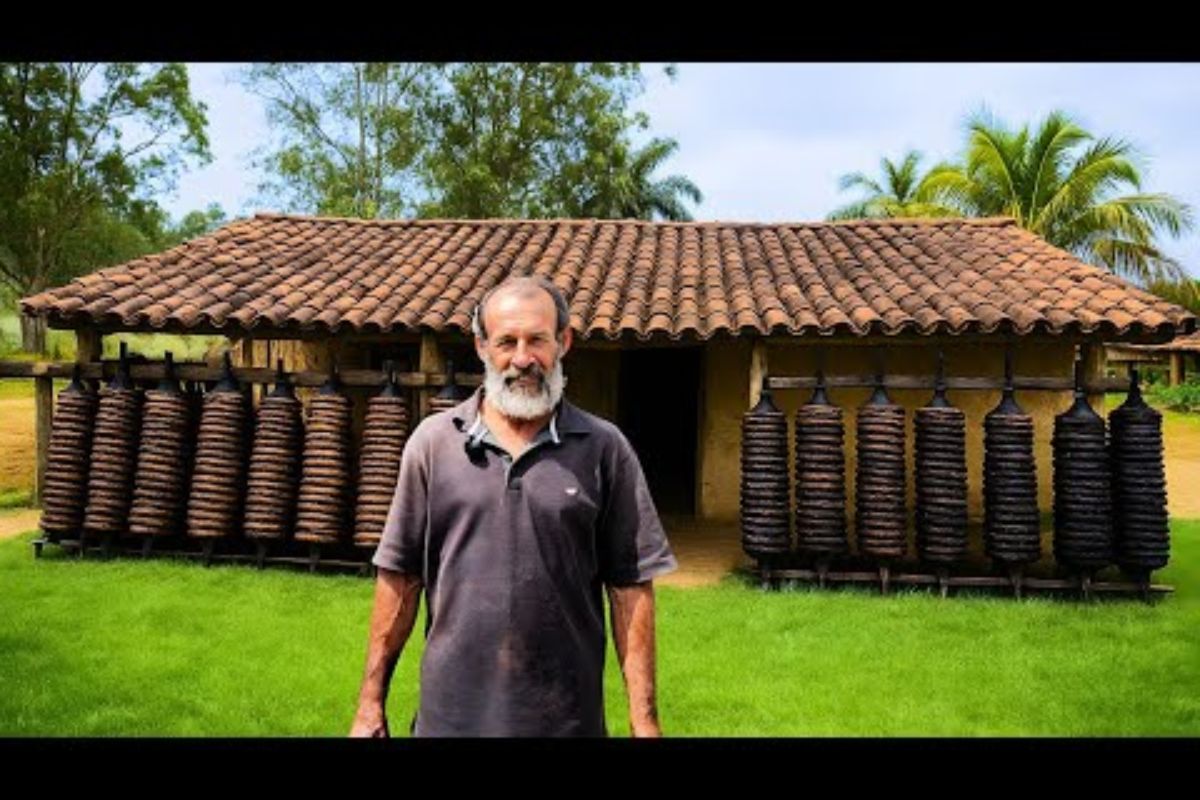


With 8 Years Working in the Fields, the Man Learned to Transform Tobacco into Income, Raised Three Children in the Countryside, Maintained a Garden, Pigs, and Chickens, Diversified with Corn and Silage, and Today Supports, with His Family, an Artisan Tradition Almost Disappeared in the Interior of Minas, Amid Daily Work, Faith, and Resilience
Since childhood, the man who never left the countryside learned that the rural clock has no breaks or weekends. At 8 years old, he was already working for other tobacco producers in the rural area of Rio Pomba, in Minas Gerais, taking care of the fields while many peers still divided their time between school and play. There, he began to understand, in practice, how much effort was involved in each leaf hung on the clothesline.
Decades later, the same man continues to live off what the land offers, now on his own property, surrounded by family. Among tobacco plants, corn crops for silage, a garden, pigs, and chickens, he built a routine in which manual labor, accumulated experience, and the cooperation of his children sustain a small but resilient production chain, typical of a countryside that resists migration to the city.
Childhood in the Countryside and Beginning of Work

Born and raised in the rural area, the man grew up in an environment where tobacco was already the dominant crop.
-
With nearly 500 thousand tons per year, barley production is growing in Brazil, while a decline in beer consumption among Generation Z raises alarms in the sector.

-
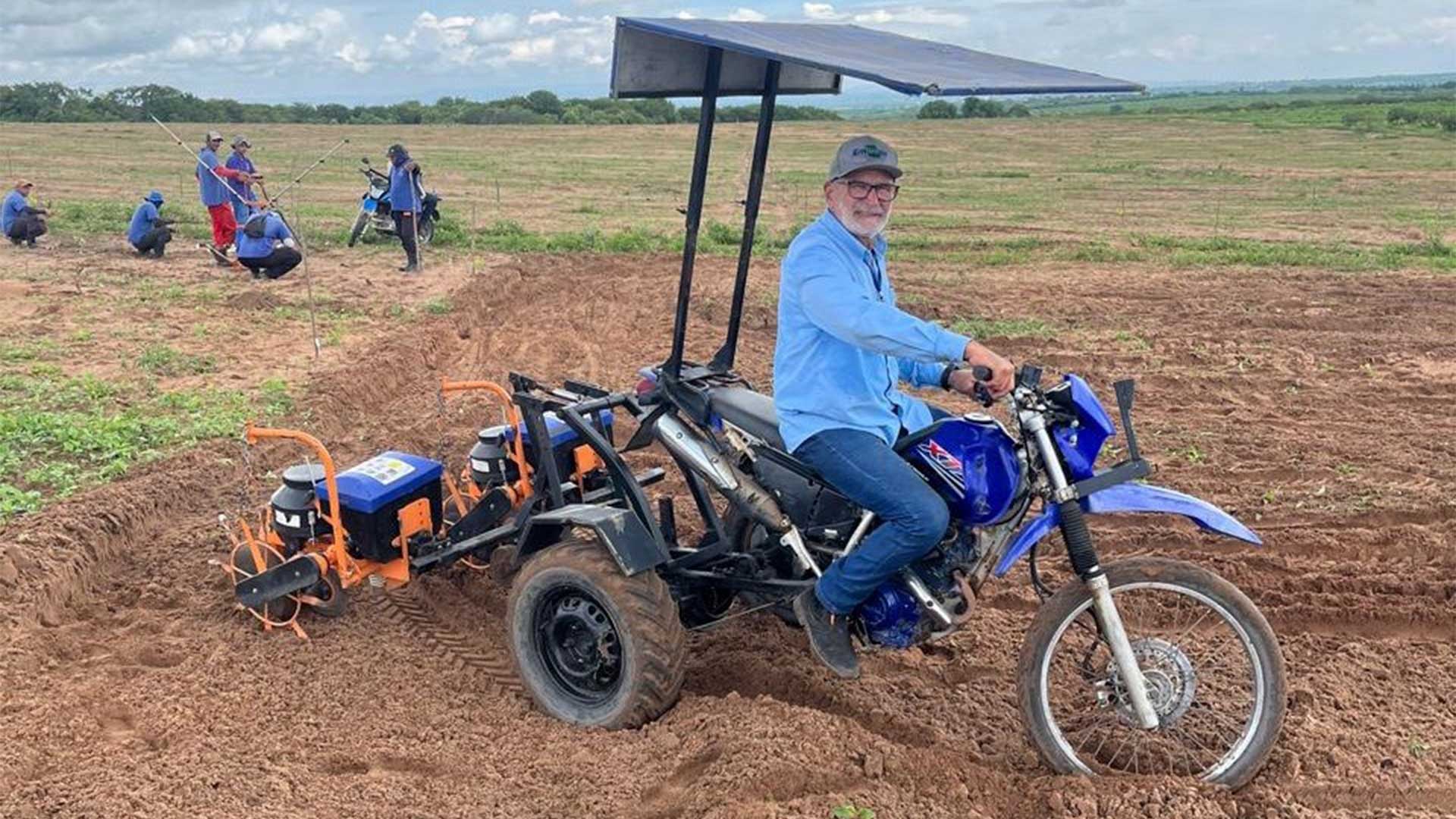
With tractors out of reach for small producers, a tricycle created by Embrapa Algodão becomes a cheap and efficient solution and gains national prominence.
-
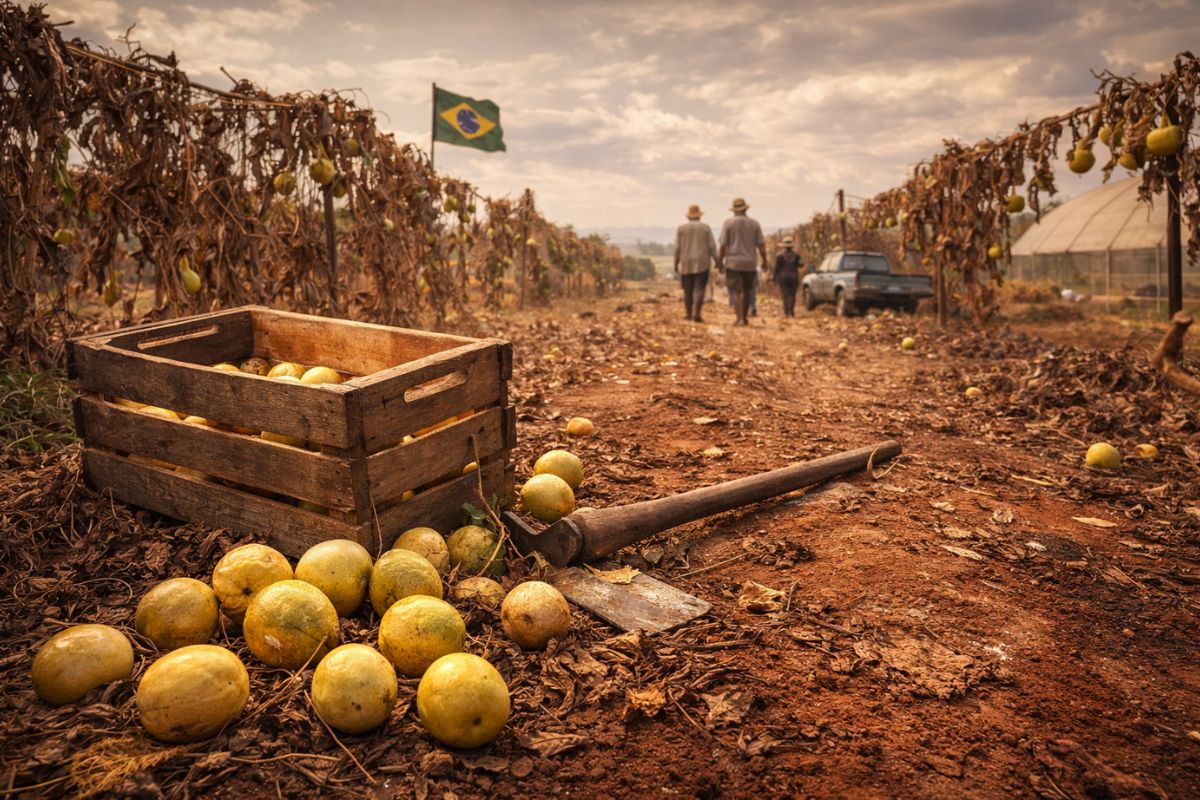
From 130 producers in the year 2000 to just 15 today: the dramatic decline of passion fruit in Araguari shows how the lack of labor in the Brazilian countryside is killing a decades-old agricultural tradition, even with Brazil being the largest producer in the world.
-
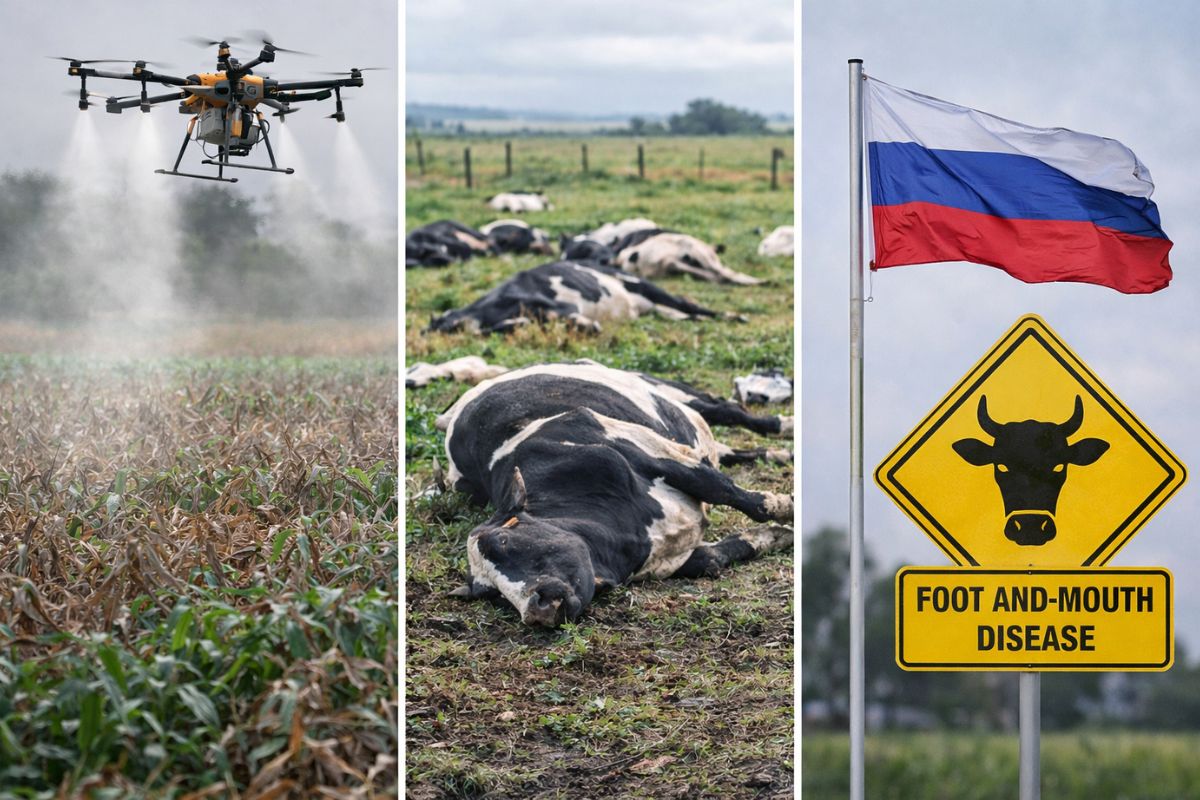
Agricultural drone sprayed poison into the air and destroyed the neighbor’s crops, causing 1 million in damages; 48 cows died from nitrite poisoning in the pasture, and Russia is hiding a possible outbreak of foot-and-mouth disease: the week was brutal for the rural sector.

Work began early, even before adolescence, first helping on other people’s properties, in a traditional system where child labor was absorbed into the farming routine.
He himself admits that he never was enchanted by school. He preferred the countryside, the work, the feeling of producing something tangible at the end of the day.
Hard work became the main language from an early age, long before thinking about having his own plantation.
In this context, learning did not come from books, but from observing the elders and the daily repetition of tasks.
From Working for Others to Producing His Own Tobacco

Over time, the worker stopped acting only as an employee for larger producers and began to plant his own tobacco.
He bought seedlings, learned to manage the crop, and took root permanently in the rural area of the municipality.
In the region, tobacco production is traditional, and many families, like his, depend on this activity as their central source of income.
The operation is entirely manual. From purchasing seedlings, preparing the land, planting and replanting, to harvesting in stages, everything is decided down to the details.
Each tobacco plant means months of daily care, with fertilization, pest control, weeding, and, when necessary, irrigation.
In years of more intense drought, irrigation becomes crucial to avoid significant losses.
Routine of Planting, Harvesting, and Artisan Curing

The farming calendar is well defined. Tobacco is planted at the beginning of the year, usually between February and April, taking advantage of the end of the rains.
After about 90 days, the first harvest of the lower leaves begins. The others are removed in stages as the plant matures.
The leaves are taken to the shed, hung on bamboo poles, and placed to dry in the shade for about two weeks, depending on the weather.
Next comes the daily “turning” phase: every day the tobacco needs to be handled, rearranged, and turned, so that the moisture distributes evenly and the material does not mold or spoil.
Then comes the destalking, done by hand, leaf by leaf, removing the stem and separating what is usable.
The leaves are then rolled up in twine, a process known as spinning tobacco. At this stage, only water is added in a controlled amount, without additives.
The moisture activates the “honey of tobacco,” which darkens the mass until it reaches the characteristic shade. The product cures for about 30 days, with new turns, until it reaches the ideal point for sale.
Family Work and Succession in the Small Property
Today, the man shares the routine with his children, who help in almost every step.
One of them lives on the property, another comes daily to assist in the fields, and a third works on his own land dedicated to corn and milk, but still participates in key moments of the harvest.
This division allows for maintaining the workload, which includes not only tobacco but also parallel fronts of corn for silage, raising pigs, chickens, and growing vegetables.
The main income still comes from tobacco, but diversification serves as a minimal protection against price and climate fluctuations.
At the same time, the father passes on to his children not only the technique but a code of conduct. He emphasizes discipline, honesty in sales, and caution with debts.
The declared satisfaction lies in seeing that his children have followed “a legitimate path,” away from illegal activities and fully integrated into the dynamics of family farming.
Garden, Animals, and Food Security on the Farm
In addition to tobacco, the property hosts an active vegetable garden, with lettuce, cabbage, kale, beetroot, herbs, and other crops planted in short cycles.
Many seedlings came along with the tobacco trays, and from there, the planting of vegetables became a habit.
The man and his family produce more than they can consume at times, distributing the surplus to neighbors.
The garden serves as a nutritional supplement and also as a cost buffer, reducing dependence on the market for basic items.
In the surroundings, free-range chickens provide eggs and meat, while a pair of pigs grow for future fattening or breeding.
The idea is to maintain a continuous flow of animal protein for personal consumption, with any surplus sold.
This combination of activities characterizes a classic model of a small diversified rural unit, where nothing is produced on a large scale, but everything contributes to sustenance.
Risks, Physical Effort, and Health Choices
Working with tobacco is exhausting and requires constant attention to safety. Simple machines, like the “burro” used to twist the tobacco strings, can cause serious accidents in the hands of those who become distracted.
The producer has had clothes and hands caught in the machinery but managed to stop the movement in time.
He also deals daily with the intense smell of the curing product. Even so, he decided not to smoke.
The man who lives off tobacco does not consume what he produces, reinforcing that his relationship with the crop is economic and professional, not habitual.
He mentions that, on some days, the smell is so strong that it causes dizziness and throat irritation, especially when the sun heats the shed and the air becomes saturated.
Market, Customers, and Staying in the Countryside
The commercialization is direct.
Buyers come from the region, from neighboring towns like Ubá, Tocantins, or Piraúba, already knowing the producer and the standard of tobacco he offers.
Sales can be made in pieces, in whole strings, or in balls, always with the weight checked on the scale and with the trust built over the years.
Although the market has shrunk and the number of local producers is much lower than in the past, the work still sustains those who master the process and accept the intense routine.
The man prefers to stay in the countryside than to try a fresh start in the city, where the cost of living is higher and the type of work would be completely different from what he has known since childhood.
Between the need to continue producing and his attachment to the land, he chose to stay.
He raised three children there, witnessed the arrival and departure of better and worse price cycles, faced pests, irregular rains, and uncertainties, but maintained the same focus: to live off farming and livestock, with tobacco as the central activity.
And you, could you give up urban life to live like this man, working every day and drawing your sustenance only from the countryside?









Linda história