





 Português
  Inglês
  Espanhol
  9 min de leitura
  26 comentários


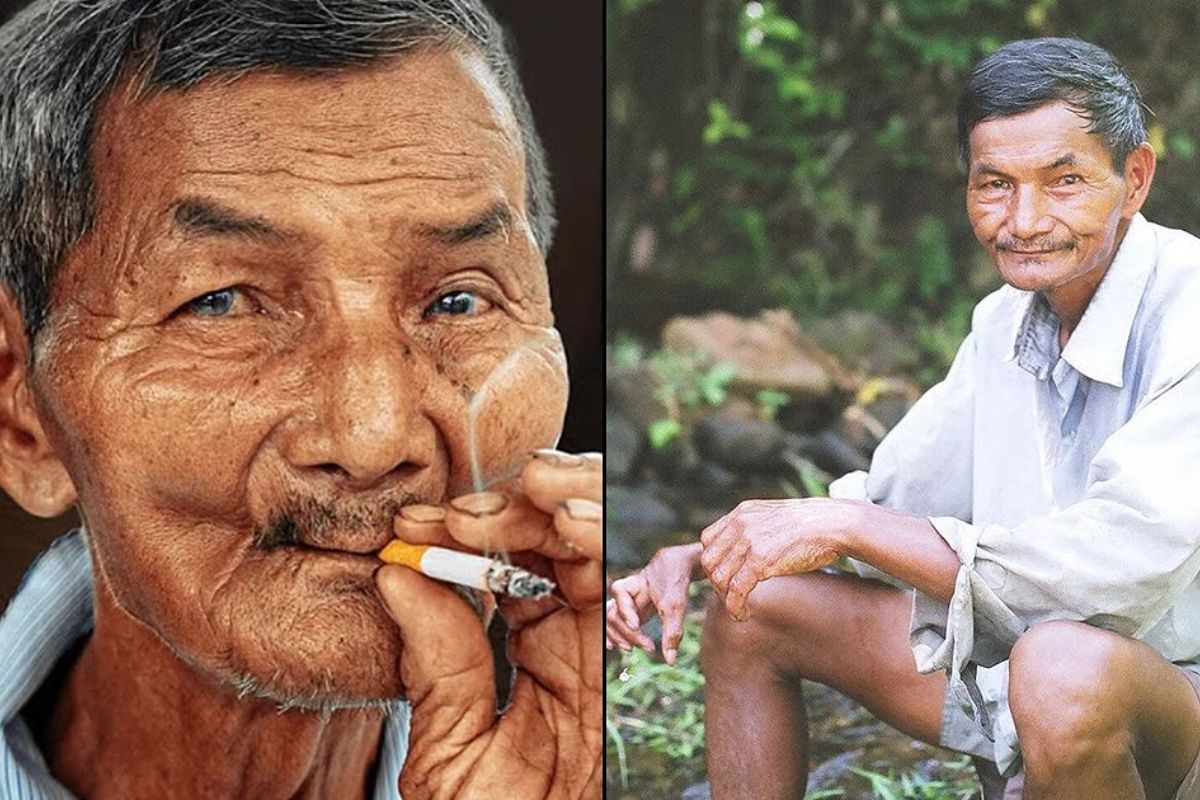


At 80, The Man Who Has Not Slept Since 1962 Turns Nights Into Workdays, Produces Rice Wine, Revives War Memories, and Challenges What Science Understands About Sleep and Survival
The man who does not sleep lives in a small rural village in Vietnam, surrounded by rice fields, mountains, and simple houses. At 80 years old, the Vietnamese Thai Ngoc claims to not have slept since 1962, the year when life in the country was still shaped by war and poverty. Doctors have examined him, journalists have interviewed him, but no one has been able to convincingly explain how he remains standing after decades awake almost all the time.
To understand who this man who does not sleep is, an American traveler crossed half the world, from Arizona to Central Vietnam, passing through Da Nang, Hoi An, and flooded roads, to reach a village hidden among valleys and plantations. There, he found a smiling, lucid, active gentleman who works in the fields, produces handcrafted alcohol, and leads a routine that contradicts any sleep medicine manual.
Who Is The Man Who Does Not Sleep

Thai Ngoc, known in the region as the man who does not sleep, currently lives with his wife in a simple, blue house in a village in southern Vietnam.
-
Drought may be creating stronger superbugs in the soil and helping antibiotic resistance reach hospitals, warns a study highlighting a problem that could grow alongside extreme weather.

-
The biggest scam in history: Napoleon’s France deceived the United States by selling them a territory that was Spanish.

-
Why is the Danakil Desert so dangerous? It has unstable terrain and how extreme temperatures and toxic gases turn the region into one of the most hostile environments on Earth.

-
With a height of 221 meters and a capacity for trillions of liters, Hoover Dam still holds a trick that makes water defy logic.

He introduces himself naturally, receives visitors with fruits, tea, and rice wine, and is willing to share his daily routine, although he remains silent about more sensitive parts of his history.
According to him and his family, no one can remember the last time they saw him in deep sleep. His son claims to have never seen him truly sleep.
His wife confirms that over the years, she has gotten used to seeing him always awake, whether during the day or in the middle of the night.
For them, what would be extraordinary anywhere else in the world has become an almost normal feature of domestic life.
The man who does not sleep is neither isolated nor does he seem fragile.
He talks, laughs, works, and moves between his three houses, all in the same rural area: one where he lives with his wife, another older one where his unmarried son resides, and a third that is directly related to the production of rice wine, with pigs, a wood stove, and the handmade equipment he uses every night.
The Journey to The Forgotten Village

Before reaching the man who does not sleep, the traveler had to reconstruct the path based on old reports translated from Vietnamese.
The trail indicated only a village and the vague description of a blue house.
From there, the work was done on the streets: showing flyers with the name Thai Ngoc, asking locals, insisting in alleys and markets.
The search combined tourist routes with an almost investigative mission.
On the way, iconic points emerged, such as the Golden Bridge and the Hindu temple complex of My Son, featuring ruins about 1,800 years old.
But the goal was not the postcard, but a human character who seemed to have come from an extreme clinical case.
The residents gradually recognized the face and the name. Many knew there was a man who does not sleep in the area but did not immediately indicate the exact address.
After back and forth, the definitive clue emerged: a blue house nearby, close to rice fields.
Upon arrival, the confirmation came in the most direct way possible. The photo on the flyer and the man at the door were the same person.
Routine of a Body Awakened All The Time
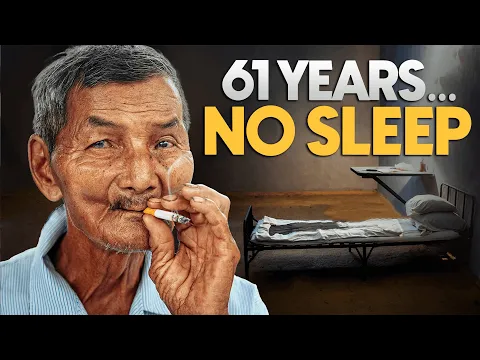

One of the most impressive parts of the story is the daily routine of the man who does not sleep.
While most of the village goes to sleep around ten at night, he starts another work shift.
Instead of resting, the night means producing rice wine, taking care of animals, maintaining the house, and tasks that require physical effort.
During the day, the pace is also not light. The man who does not sleep walks among the houses, helps his son in the rice field, crosses mud and ditches, climbs and descends small slopes.
The right hand bears significant scars from the war, which forces him to use the left hand more intensely, even in field activities.
Despite his age, he moves with agility. In the fields, he prepares the soil, tends to the rice, observes the weather. At night, he shifts from farmer to artisanal alcohol producer.
The feeling is that his life operates in a continuous shift, without sleep breaks, just brief pauses to lie down without being able to fully switch off.
The Homemade Rice Wine Factory
At the center of the routine is the rice wine. In the house where he keeps the main equipment, the man who does not sleep has organized a kind of artisanal microdistillery, set up with a wood stove, metal containers, and a simple distillation system.
The technique is repeated night after night: rice, water, fermentation, and a heating system that sends vapor through a tube to the bottles.
The production supplies his own consumption and generates small sales in the region, in volumes of five or ten liters, for modest amounts in local currency.
The rice wine is strong, with an alcohol content comparable to that of a simple vodka.
The visitor, when tasting successive shots alongside Thai Ngoc, describes the flavor as intense, rustic, with a strong smell of fermentation.
For the man who does not sleep, however, this drink seems to function as both fuel and anesthetic, something between cultural habit and survival mechanism in endless nights.
Besides the wine, the scene includes a large quantity of cigarettes.
The account estimates that he might smoke dozens of units a day, keeping his body in a constant state of stimulation.
The man who does not sleep thus passes the night among fire, smoke, alcohol, and repetitive tasks, while the village remains silent.
Lying Down Does Not Mean Sleeping
One of the most revealing images is that of the room where the man who does not sleep tries, in vain, to do what any nervous system would require.
Already in the early hours, he puts on comfortable clothes, lies down on the bed, partially closes his eyes, and remains still for a few minutes.
The visitor watches, in the dark, for any sign of deep sleep. There is none.
Shortly after, the man who does not sleep sits up again, stares at the environment in silence, and returns to his routine.
He reports that he lies down because he wants to sleep like anyone else, but his mind does not switch off. Thoughts remain active, and the sensation of full rest does not arrive.
In extreme situations, when he drinks large amounts of rice wine, he can sleep for one or two hours.
Even so, this is not a regular pattern, but rather rare episodes, described by the family as exceptions to the state of constant wakefulness.
For medicine, the case breaks basic expectations about the minimum need for sleep to maintain health.
War, Trauma, and an Enigma for Medicine
Before the war, according to Thai Ngoc himself, sleep existed and was normal.
At some point in the 1960s, a period when Vietnam experienced the peak of the conflict known there as the American War, the pattern broke.
Since then, the man who does not sleep claims to have never resumed a regular rest routine.
He fought in the war, was injured, had his hand hit, and lived through explosions, violence, and loss.
At a certain moment, he naturally pointed to his own scar and summarized the origin of the injury in two words: American war.
The specific details of combat, traumatic episodes, and the direct link between those events and his insomnia do not seem to be something he is willing to revisit.
Doctors have examined him, hospitals have treated him, but they have not provided a clear diagnosis.
The account indicates that local medicine has been unable to explain why the man who does not sleep remains alive, active, and relatively functional after decades without consistent sleep.
A hypothesis often mentioned by external observers is that of post-traumatic stress disorder, but this appears as an interpretation, not an official conclusion.
The objective fact is that his condition challenges the classical model that an adult needs a minimum number of hours of deep sleep to keep organs, brain, and immune system functioning long-term.
In the case of Thai Ngoc, the body seems to operate in a gray area between continuous wakefulness, micro-rests, and brief episodes of drowsiness induced by alcohol.
An Awakened Body and an Invisible Work Routine
When the village turns off the lights, the story of the man who does not sleep takes on silent and little-observed contours.
He walks in the dark, lights the fire, adjusts the distillation equipment, feeds the pigs, watches the alcohol drip, smokes, drinks, and repeats this cycle for hours, while the rest of the community recovers from the day.
The American visitor, trying to keep up with him for a night, reports extreme exhaustion around four in the morning. The local guide falls asleep.
The only one who remains active is precisely the man who does not sleep, alternating moments of conversation, physical tasks, and contemplation.
At dawn, when fatigue reaches the newcomers’ limit, Thai Ngoc simply continues his routine. He feeds chickens in another house, moves around the property, looks at the surroundings.
The body, apparently, does not collapse, despite his advanced age, risky habits, and workload.
Hospitality, Spirituality, and a Simple Request
The story of the man who does not sleep is also a story of rural hospitality. Without prior notice, a foreigner arrives at the door, accompanied by a guide, with fruits and curiosity.
The couple not only receives the visitors but also prepares meals, makes space to sleep, shares rice wine, and engages in conversation.
Religiousness occupies a central place in daily life. In the house, there is a Buddhist altar, offerings, and moments of prayer. The wife moves between the kitchen, altar, and household care.
Faith organizes the day, structures coexistence, and serves as symbolic reinforcement in decades marked by war, poverty, and uncertainty.
When asked about what he would like to ask the world, the man who does not sleep does not mention fame or scientific curiosity.
The main desire, mediated by the interpreter, is simple: he would like to receive help to be able to sleep again.
If there were financial or medical support, he would use it to try to treat his condition and regain something he lost over 60 years ago.
What The Case Reveals About Human Limits
The case of the man who does not sleep is not just an extreme curiosity.
It raises questions about the limits of the human organism, about the relationship between trauma and sleep, and about how science still knows little about the intermediate states between wakefulness, micro-sleep, and fragmented rest.
Beyond the medical dimension, Thai Ngoc’s trajectory exposes the adaptability of someone who has gone through war, seen the country change, aged working, and built a survival routine in a rural setting, far from referral hospitals and large laboratories.
The biological enigma coexists with very concrete habits: planting rice, producing alcohol, raising pigs, receiving visitors, praying before the altar.
In the end, the image that remains is not that of a “superhero” immune to sleep, but that of an elderly man who learned to exist without what most consider indispensable, yet still harbors simple desires for health, tranquility, and belonging.
Medicine may not have definitive answers for the man who does not sleep, but his story reinforces that each organism carries a unique set of scars, resistances, and adaptations.
And you, if you could sit one night beside the man who does not sleep, what would be the first question you would ask him?









Pergunta: como faz pra ler a notícia com tanta coisa na frente? Notícia é uma **** branca numa piscina de bolinha rosa
Dormir é um privilégio. Eu durmo no máximo 3 horas por dia
Impressionante
Talvez a hipnose ajudasse.