





 Portuguese
  English
  Spanish
  5 min of reading
  0 comments



Acceleration of B-21 Production Exposes Decisive Role of Industry, Contracts, and Production Cadence in Transforming the Stealth Bomber into Concrete Strategic Capacity, with Direct Impact on Quantity, Availability, and Long-Term Planning of the United States Air Force, According to Information Released by Executives and the Specialized Press.
The ability of the United States to expand its fleet of a new generation stealth bomber has become dependent mainly on one industrial factor: production cadence.
The B-21 Raider, developed by Northrop Grumman for the U.S. Air Force, has entered a stage where manufacturing capacity, contractual stability, and supply chain coordination take center stage alongside project performance.
This movement gained a public milestone when the CEO of Northrop Grumman, Kathy Warden, stated in a results teleconference that she expects to finalize an agreement with the Air Force to accelerate B-21 production by the end of March.
-
Friends have been building a small “town” for 30 years to grow old together, with compact houses, a common area, nature surrounding it, and a collective life project designed for friendship, coexistence, and simplicity.

-
This small town in Germany created its own currency 24 years ago, today it circulates millions per year, is accepted in over 300 stores, and the German government allowed all of this to happen under one condition.

-
Curitiba is shrinking and is expected to lose 97,000 residents by 2050, while inland cities in Paraná such as Sarandi, Araucária, and Toledo are experiencing accelerated growth that is changing the entire state’s map.

-
Tourists were poisoned on Everest in a million-dollar fraud scheme involving helicopters that diverted over $19 million and shocked international authorities.


According to reports published by the specialized press, the agreement is considered a significant piece in adjusting the program to a higher manufacturing pace and supporting investments in the industrial infrastructure necessary for increased deliveries.
Secrecy, Scale, and Fleet Predictability

Although the program is surrounded by secrecy and does not disclose detailed production targets or complete schedules, the negotiation regarding acceleration exposes a recurring aspect in large defense systems: the strategic impact often depends not just on development, but on the ability to produce in sequence.
In a common evaluation within industry coverage, the transition between initial batches and scale manufacturing is the point that makes the program more predictable in terms of quantity and availability.
The shift to a higher level generally involves practical adjustments in the manufacturing process.
In projects with a high degree of secrecy, there are additional requirements for physical security, access control, and segregation of areas and documents, which can influence workflows and timelines.
Even when the design is already established, moving to a steadier pace often requires process revisions, increased training, supplier qualifications, and control mechanisms to reduce bottlenecks.
Strategic Role and Long-Range Attack
The role assigned to the B-21 in the U.S. long-range strike strategy also weighs in this context.
Documents and public statements from the Air Force indicate the bomber as a central part of the modernization effort, aimed at operations in contested environments.
Military analysts and specialized outlets often associate this type of mission with the need to reduce detectability and maintain striking range, although specific details about the B-21 remain classified.
Contracts, Budget, and Delivery Pace
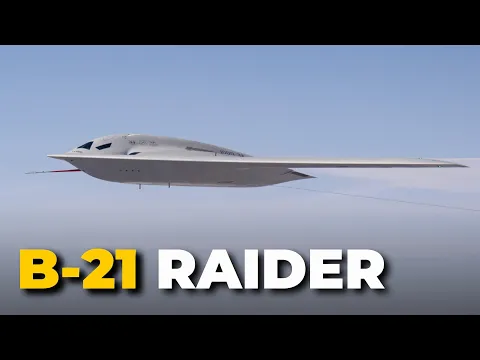

By placing production acceleration at the center of the discussion, the signaling of an agreement with a defined timeline introduces a concrete short-term element into a program designed for decades.
According to reports citing the executive’s statement, the goal is to establish terms that allow for increasing the pace of deliveries, which, consequently, tends to guide decisions regarding the expansion of industrial capacity.
In programs of this scale, this type of negotiation is usually linked to budget predictability and long-term commitments, especially when involving investments in facilities and equipment.
At the core of the issue is the sustained production rate, a metric closely monitored by industry observers.
A line with few units per year typically serves the initial and validation phase but does not necessarily guarantee the gradual replenishment of the fleet within a timeframe compatible with strategic planning.
Thus, when authorities and executives speak of “accelerating,” the topic usually involves contractual parameters, financing, and a sequence of batches capable of reducing uncertainties for the industry.
Industrial Investments and Quality Control
Northrop Grumman, according to reports, indicated that acceleration may require additional investments over several years, pointing to an expansion that goes beyond the contract itself.
Increasing cadence often includes preparation of tools and processes, increasing shifts, ensuring items with long lead times, and mitigating delays in critical components.
In aircraft with low observability requirements, industry literature often emphasizes that materials, treatments, and assembly tolerances tend to require rigorous quality controls, which can elevate the challenge of scaling up at pace without increasing rework.
Fleet Sustainment and Operational Availability
The issue is also connected to the total cost of operation and sustainment of a fleet of bombers.
Beyond acquisition, factors such as base infrastructure, simulators, crew training, parts inventory, and maintenance capability influence how many aircraft can be kept ready regularly.
Therefore, the expanded production phase is often viewed as the stage where abstract goals begin to translate into numbers of aircraft, delivery schedules, and support planning.

While public interest in programs like the B-21 often focuses on images and general characteristics, specialized coverage frequently points out that strategic performance appears when the fleet exists in sufficient quantity to sustain training, maintenance, and operational availability over time.
In this sense, production acceleration tends to be interpreted as an attempt to transition from the initial pace to a more stable industrial level, even if operational details are not disclosed.
International Impact and Strategic Perception
The scope of this debate is not limited to the U.S. because strategic bomber programs influence the perceptions and planning of other countries, even if most data remains classified.
Hence, the mere existence of a public negotiation to accelerate production and discuss industrial investments is regarded as relevant information by analysts and parts of the specialized press that monitor the priorities and execution capacity of the program.
If the agreement mentioned in reports is finalized and the industry can sustain a higher pace within the required standards, public discussion is likely to focus increasingly on availability and cadence, and less on the general characteristics of the aircraft.
For industry observers, in strategic programs, the delivery rate can become as relevant as development because it determines the effective size of the operational fleet.
When the decisive stage shifts from the bomber’s design to the factory’s speed, what tends to weigh more in long-range capability: technology, budget predictability, or industrial capacity to sustain deliveries?









-

-

-

-

-

-

62 pessoas reagiram a isso.