





 Português
  Inglês
  Espanhol
  6 min de leitura
  1 comentário


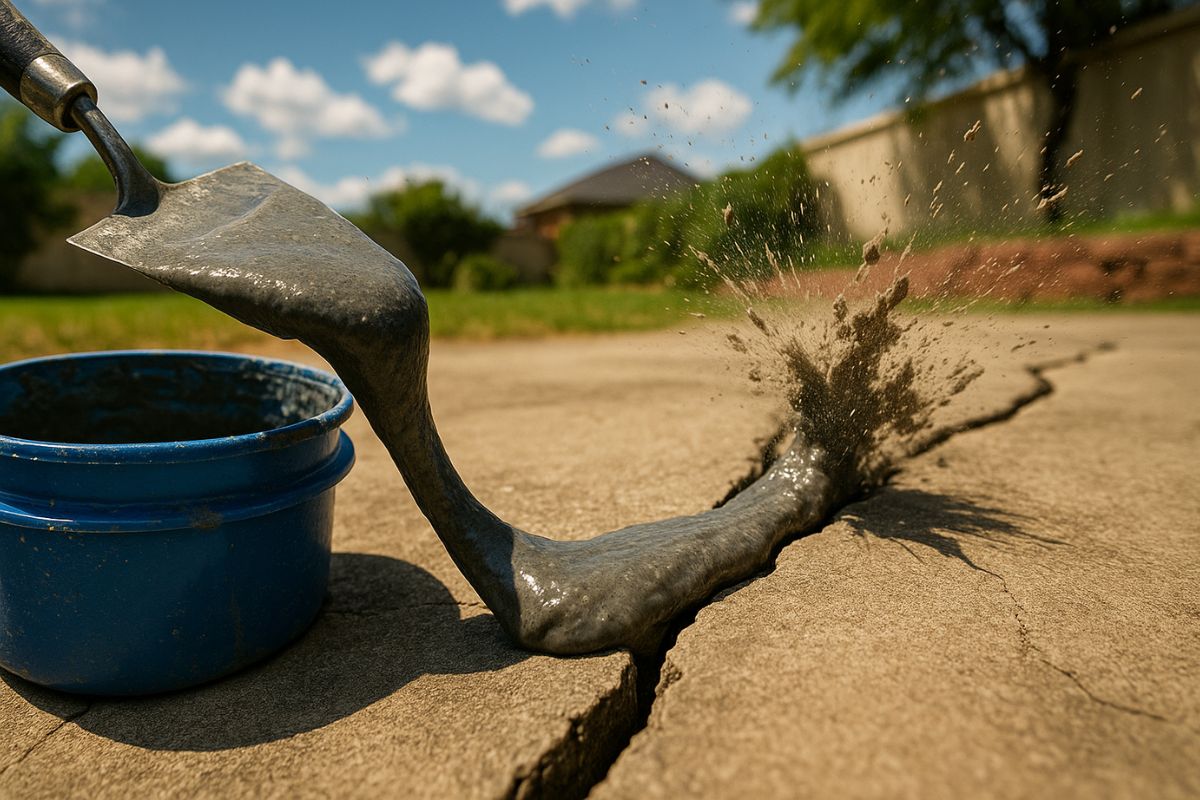


Homemade Ultra-Strong Glue Mixture Combines Sugar, Water, and Common Cement to Seal Cracks, Repair Floors, and Seal Leaks at Low Cost with Simple Application
The search for cheap and efficient solutions for home maintenance has led many residents to pay more attention to materials already in the cupboard or service area. In this context, an ultra-strong glue made from an unusual yet surprisingly functional combination of sugar, water, and common cement has gained prominence. The idea is not to replace industrial products in all scenarios, but rather to offer a practical alternative for small everyday repairs.
According to practical demonstrations in video form, this ultra-strong glue can be used to seal cracks, reinforce small infiltration points, repair concrete floors, and serve as a temporary sealant for roofs, water tanks, and rigid surfaces. The differentiating factor lies in the use of simple ingredients, which are low-cost and generally already available at home, reducing the need for expensive products or more complex interventions in emergency situations.
How to Make Ultra-Strong Glue with Sugar and Cement
The base of the ultra-strong glue is a simple solution of sugar and water that is later mixed with common cement until it achieves the consistency of an adhesive paste.
-
The world’s first octopus farm wants to open in the Canary Islands and is already provoking an international reaction: the plan aims to produce 3,000 tons per year.

-
Drought may be creating stronger superbugs in the soil and helping antibiotic resistance reach hospitals, warns a study highlighting a problem that could grow alongside extreme weather.

-
The biggest scam in history: Napoleon’s France deceived the United States by selling them a territory that was Spanish.

-
Why is the Danakil Desert so dangerous? It has unstable terrain and how extreme temperatures and toxic gases turn the region into one of the most hostile environments on Earth.


The preparation starts with a clean and sturdy container, such as a glass jar or thick plastic bucket.
In the example presented, three tablespoons of regular sugar, the type used in daily recipes, are dissolved in approximately 500 ml of room temperature water.
The idea is to stir until the grains are fully integrated into the liquid and form a homogeneous solution.
With this base ready, the cement is added.
The product is added gradually, always mixing, until the combination thickens and transforms from liquid into a creamy paste, without visible lumps and without excess water.
The goal is to achieve a firm texture that does not run, but still allows for spreading with a spatula, brush, or simple applicator.
To improve homogenization, the video even shows a makeshift tool: a homemade mixer made with a wooden rod and plastic clamps, attached to a drill, which transforms the mixture into a much more uniform paste.
Even so, the process can also be done manually, as long as the user has the patience to thoroughly integrate the cement into the sweet liquid.
After this step, the mixture is covered and left to rest for about 30 hours in a well-ventilated area, without exposure to intense sunlight or extreme cold.
The resting period allows the reaction between water, sugar, and cement to progress until it forms a thick, firm, and highly adhesive substance, with behavior similar to that of a technical glue for rigid surfaces.
The Role of Ingredients in Ultra-Strong Glue
Although the recipe is simple, each component has a clear function in the ultra-strong glue.
The sugar, dissolved in water, forms the initial liquid base and modifies the behavior of the cement in the mixture, helping to create a denser and stickier paste.
The water is the medium that allows both the dissolution of sugar and the hydration of the cement.
The common cement is the hardening agent, responsible for forming the rigid structure after drying, ensuring mechanical resistance and good adhesion to concrete, ceramics, fiber cement, and other compatible materials.
The result, after the resting period, is a highly adhesive glue capable of precisely filling small cracks and holes, remaining firm after complete curing.
In many cases, the final appearance can be sanded and painted, which facilitates the visual finish on floors, walls, and exposed elements.
Mixture with Styrofoam and Solvent for Sealing Larger Cracks
In addition to the ultra-strong glue made from sugar and cement, the base used in the video features a second complementary formulation, mainly indicated for larger cracks in concrete floors or slabs.
In this case, the process involves:
A sturdy container, partially filled with appropriate solvent.
The gradual addition of pieces of styrofoam, which dissolve quickly until forming a dense, sticky paste.
The incorporation of cement into this paste until a firm texture is achieved, similar to modeling clay, which does not run but can still be worked with a spatula.
The resulting product is applied directly to previously cleaned cracks, filling the entire gap with the aid of a metal spatula.
After curing, the surface gains a rigid layer with good adhesion to concrete and mechanical resistance suitable for use in areas with moderate traffic.
It is important to emphasize that whenever solvents or gasoline are used as a substitute, safety precautions must be increased: well-ventilated environment, absence of heat sources or sparks, use of gloves, and respiratory protection.
Although it is a functional homemade solution, it is a flammable mixture that requires responsibility in handling.
Where Ultra-Strong Glue Works Best in Practice
The ultra-strong glue made with sugar, water, and cement is more suitable for small repairs and targeted sealing, especially on rigid surfaces, such as:
Microcracks in existing concrete floors.
Small cracks in external or internal masonry walls.
Leak points in rigid tiles, joints of cement water tanks, or similar structures.
Emergency repairs on the edges of gutters and fiber cement elements.
Applied at the correct thickness and respecting the drying time, this glue forms a solid and well-adhered layer, which can be sanded for leveling and, if necessary, painted with compatible acrylic or enamel paint.
In the tests conducted, the recommended curing time is between 6 and 8 hours, depending on the ventilation and temperature conditions of the environment.
Only after this interval does the ultra-strong glue reach its maximum hardness and begin to behave like a rigid and stable layer.
Limits, Risks, and Precautions Before Using Ultra-Strong Glue
Despite the positive results observed in demonstrations, homemade ultra-strong glue has clear limits that need to be respected.
It does not replace structural projects, nor does it solve serious pathological problems in slabs, beams, foundations, or walls with serious impairment.
In situations such as:
- visible structural movements
- large openings in beams or columns
- extensive and old infiltrations
- advanced concrete disintegration
it is appropriate to consult a qualified professional, such as an engineer or building technician, and follow specific technical guidelines.
The sugar and cement mixture is a light maintenance solution aimed at localized repairs and low-risk interventions.
Moreover, the application must always be made on surfaces that are:
- clean, free of loose dust or grease
- minimally firm, without loose parts
- properly dry, except for specific instructions on adhesion to slightly damp substrates
In the case of the formulation with styrofoam and solvent, safety precautions are even more important.
Proper ventilation, use of gloves, safety goggles, and keeping children, pets, and ignition sources away are basic measures to reduce risks during preparation and application.
Advantages of Homemade Ultra-Strong Glue
Within its field of use, ultra-strong glue made from sugar and cement offers an interesting combination of benefits:
Low cost, as it uses sugar, water, and common cement, widely available materials.
Simple application, which can be done with basic tools like a spatula, spoon, or brush.
Good adhesion to concrete, ceramics, fiber cement, and other compatible surfaces.
Flexible finishing, allowing sanding and painting after complete curing.
Uncomplicated storage, as long as the mixture is kept in a well-sealed container and protected from moisture.
Curiously, the mixture has no strong odor and, when prepared solely with ultra-strong glue made from sugar and cement, does not require harsh solvents, making use more comfortable in indoor environments, always with minimum ventilation.
In the end, what we see is that a combination that seemed improbable transforms into a useful tool for those who enjoy solving small problems at home, saving on simple repairs and extending the lifespan of existing surfaces.
And you, have you ever thought about trying an ultra-strong glue made with such common materials, or do you prefer to stick with ready-made products from the hardware store?









Qualquer dilatação da fissura o adesivo rachará por não ser elástico.