





 Portuguese
  English
  Spanish
 5 min of reading
  19 comments


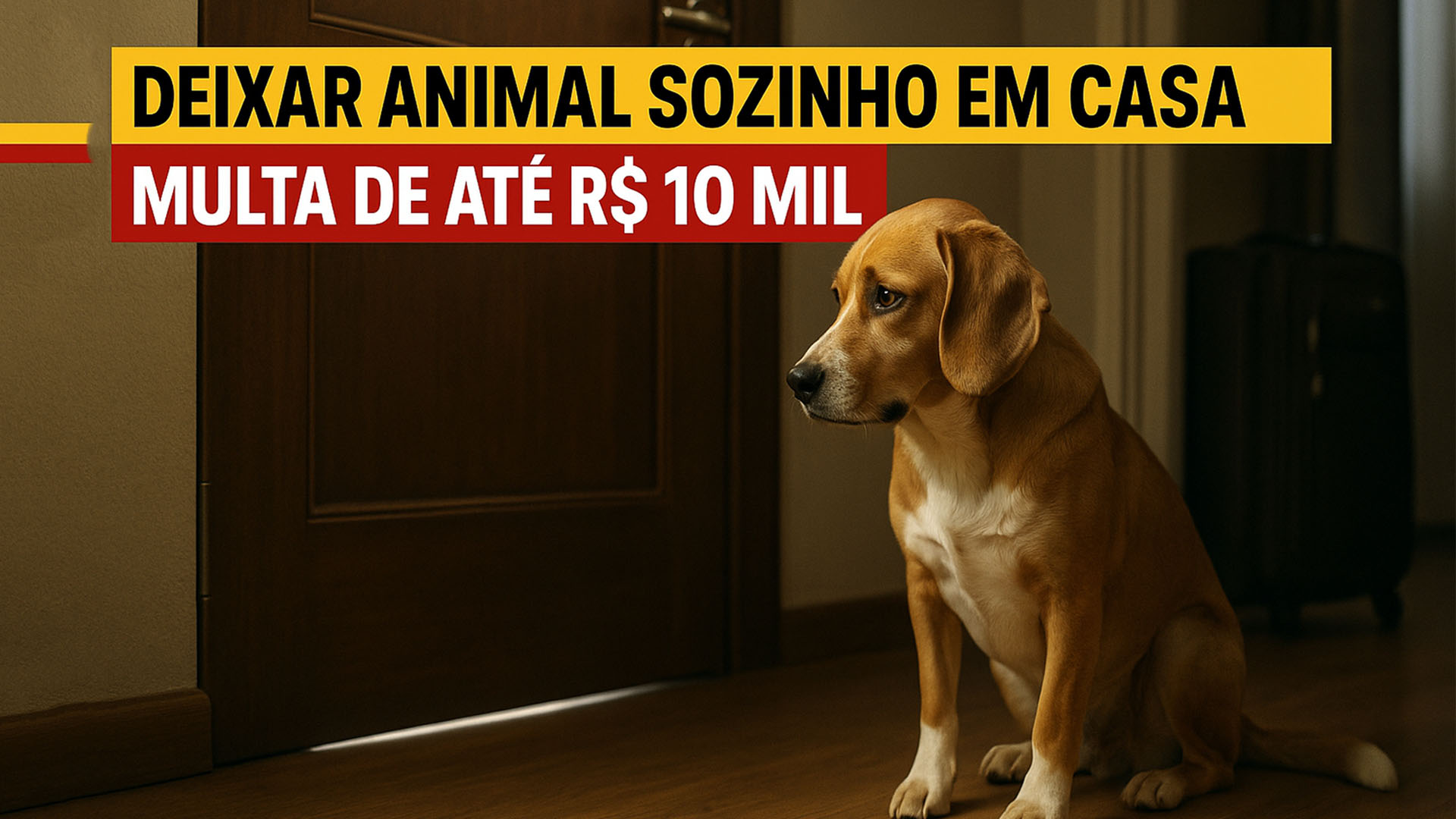


Coastal City Approves Rule Treating Prolonged Absence as Mistreatment, Establishes Fines from R$ 1,500 to R$ 10,000, and Aims to Become a Reference in Animal Protection in Brazil
Santos, on the coast of São Paulo, took an extra step in pet protection by approving a new rule for dog and cat guardians. Following the mayor’s sanction, leaving the pet alone for more than 36 hours could be classified as temporary abandonment and result in hefty fines.
The proposal was approved by the City Council and now awaits only the signature of Mayor Rogério Santos to become effective law in the city.
In practice, prolonged absence is now treated as mistreatment and an act of cruelty, rather than a mere oversight. The initiative seeks to respond to recurring cases of animals left alone in apartments or houses while their guardians travel. In some situations, there have been reports of hunger, dehydration, and even death of the animals, according to accounts presented at the Council.
-
The new Civil Code could revolutionize marriages in Brazil with “express divorce” and changes that could exclude spouses from inheritance.
-
Banco do Brasil sues famous influencer for million-dollar debt and intensifies debate on delinquency, risks of seizure, and direct impact on Gkay’s credibility.

-
The Senate approves a bill that criminalizes misogyny, hatred, or aversion towards women, and includes the crime in the Racism Law with a penalty of up to 5 years.

-
Chamber Approves Bill That Allows Pepper Spray for Women Over 16 and Imposes Strict Rules for Purchase, Possession, and Use as Self-Defense


The approved text alters Santos’ Code of Conduct (Supplementary Law No. 3,531/1968), including a new clause in article 300, which lists behaviors considered administrative infractions against animal welfare. The proposal is authored by councilman Benedito Furtado (PSB), who also leads the Animal Protection and Welfare Committee.
For the Brazilian public, the measure draws attention because it may serve as a reference for other municipalities. This type of local legislation often paves the way for new state and federal regulations on responsible guardianship, a theme that has been gaining traction in different regions of the country.
How the New Law Works in Santos
The approved text establishes that it will be an infraction to leave dogs or cats alone in properties, houses, or apartments for more than 36 hours when no one is residing or remaining at the location.
The idea is to prevent trips where the guardian simply “fills the food bowl” and leaves, without any human supervision for days on end.
This new provision is incorporated into article 300 of Supplementary Law No. 3,531, which addresses behaviors considered mistreatment and acts of cruelty. With the change, temporary abandonment ceases to be viewed solely as a moral failing of the guardian and now has direct administrative consequences, including fines and penalties.
According to councilman Benedito Furtado, it is not enough to leave food and water available when the guardian is absent for long periods. There have been cases where the animal knocked over the bowl, ran out of water, soiled the environment, and suffered extreme distress, which motivated the crafting of the project.
Fines, Recidivism, and Destination of Collected Funds
The penalty ranges from R$ 1,500 up to R$ 10,000, depending on the severity of the situation confirmed during inspections. In cases of recidivism, the amount can be doubled, reinforcing the punitive nature of the measure for those who persist in violating the rules.
A relevant point is the destination of the collected fines: the money from the fines will be directed towards animal protection programs in the municipality.
The expectation is to enhance actions such as spaying/neutering campaigns, rescuing animals in risky situations, supporting shelters, and educational policies for responsible guardianship, creating a cycle where the amounts paid by violators benefit pets.
Inspection: Neighbors, Complaints, and Responsible Authorities
The enforcement of the new rule will be handled by different municipal bodies already working in animal protection. These include the Animal Welfare Coordination, the Municipal Environmental Guard, and the Environmental Police, which can respond to complaints and verify the conditions of the animals on-site.
In practice, most reports are likely to come from neighbor complaints, who often notice incessant barking, meowing, unpleasant odors, closed windows, and clear signs that no one is caring for the animal.
The City Hall already has channels for receiving reports of mistreatment, and the trend is for the new rule to expand the use of these mechanisms.
A practical challenge will be proving the 36-hour period. Resident testimonies, videos, photos, call histories, and repeated inspection visits can be used as evidence. The city will also need to regulate the law, detailing the inquiry process to ensure due process and avoid injustices.
The inclusion of temporary abandonment as an infraction in article 300 of the Code of Conduct also serves an educational purpose. By explicitly labeling the issue as mistreatment, guardians are likely to reconsider the idea of leaving the animal alone “just for a weekend,” a practice that previously went almost unnoticed in the legislation.
For those who need to travel or be absent, the guidance is to seek alternatives such as pet hotels, pet sitting services, daycares, or to arrange for a trusted family member or neighbor to stay in the property or visit the animal frequently. The message of the new law is clear: adopting a pet means having a continuous care plan, even during periods of absence.
National Trend and Debate on the Limits of the Law
The initiative in Santos aligns with a broader movement for animal protection in São Paulo state. Recently, State Law No. 18,184/2025 was enacted, which prohibits the chaining of animals throughout the state and categorizes inadequate housing as mistreatment, reinforcing the notion of the animals’ physical and emotional well-being.
Other Brazilian cities are also discussing stricter rules against mistreatment and abandonment, even drawing inspiration from regulations adopted in capitals like Vitória, Espírito Santo, where similar measures to curb prolonged absence of guardians have already been approved. This scenario indicates a trend of gradual tightening of penalties for those who neglect pets.
At the same time, the new law in Santos is expected to fuel an important debate: to what extent can the government intervene in the relationship between guardians and their animals? Proponents of the measure argue that, without concrete penalties, severe cases of temporary abandonment will continue, and animals cannot rely solely on human goodwill.
Critics, on the other hand, raise concerns about potential overzealous inspections, conflicts between neighbors, and the difficulties faced by low-income families who may not always have the resources for hotels or specialized caregivers. The discussion surrounding the balance between animal protection and individual freedom is likely to gain traction on social media and in upcoming legislative discussions.
Do you think the fine of up to R$ 10,000 and the 36-hour limit are a necessary measure or an overreach by the government? Please leave your comment, share how you manage care for your pet when you need to travel, and let us know if you would support a similar law in your city.










ENQUANTO ISSO QUEM DEIXAR UM SER HUMANO SOZINHO NÃO PAGA **** NENHUMA NESSE PAÍS HIPÓCRITA DE POLÍTICOS HIPÓCRITAS
Isso é um absurdo. Vai aumentar o abandono de animais nas épocas de férias. Não é uma lei inteligente, pra dizer o mínimo. Parece que esse pessoal não tem nada pra fazer, aí ficam inventando leis burras.
Que lei mais esdrúxula! Parem de votar em pessoas sem ideias úteis a nação. Há pais que largam os filhos menores em casa, abandonam em abrigos e não pagam nada. Daí, vem um fulano ativista querer que pague por que largou o ****? Se toque! Pagar salário de deputado ou vereador desse nível não dá. Lei totalmente descabida em inviável. Arquivem essa bobagem logo.
Parabéns a criação da Lei. Não há nada de esdrúxula nas Leis de Proteção aos animais. Abandono de animais é uma questão ambiental e de saúde pública. Sou a favor da multa porque o brasileiro só repensa quando pesa no bolso. Também sou a favor da prisão ou prestação de serviço supervisionado em abrigos que cuidem de animais resgatados em situações de risco, para que possa viver o drama desses animais. Tenho 5 gatos que foram resgatados da rua. Eles são prioridades em minha vida e cada um é atendido em suas necessidades.