





 Portuguese
  English
  Spanish
  4 min of reading
  0 comments


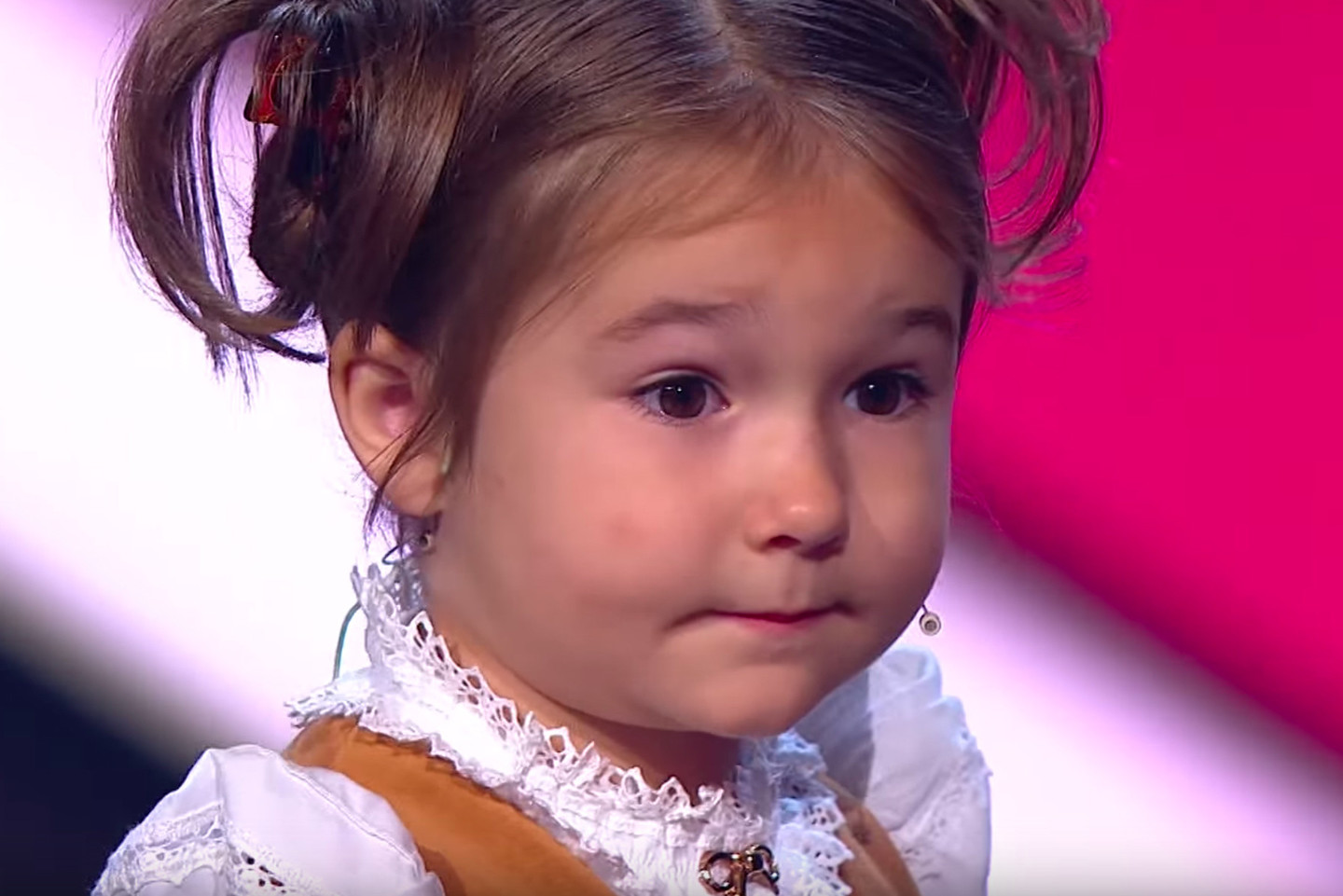
At 4 Years Old, Bella Deviatkina, the Russian Girl, Astonished the World by Speaking 7 Languages Fluently: Russian, English, French, Spanish, German, Chinese, and Arabic — Surprising Linguists and Challenging the Science of Early Learning.
In 2016, the world was surprised by news that seemed straight out of a movie script: Bella Deviatkina, a 4-year-old girl was said to speak seven different languages fluently, including Russian, English, French, Spanish, German, Chinese, and Arabic. The story was revealed on a television program in Russia and quickly spread to international outlets such as BBC, Daily Mail, and NewsChannel5. The performance left language experts speechless. After all, mastering even two languages is already challenging for an adult. But how could such a young child express herself naturally in seven distinct languages, each with its own grammatical structure, unique sounds, and different alphabets?
How It All Began
Bella Deviatkina grew up in a bilingual environment, but from an early age, her parents decided to expose her to multiple languages as a form of cultural enrichment.
With access to native teachers, translated children’s books, and interactive learning methods, what began as play turned into a real experiment in childhood polyglotism.
-
The Argentine government celebrates the lowest poverty rate in 7 years, but experts warn that the methodology has changed, real wages have fallen, unemployment has risen, and the number of people on the streets of Buenos Aires has increased by 57% since Milei took office.

-
7.8 magnitude earthquake in Indonesia frightens the population, triggers tsunami alert, and hits an island with over 200,000 inhabitants this Thursday.

-
Google will finally let you change that embarrassing Gmail address you created in your teenage years without losing any accounts, logins, or old emails: the feature is already available in the United States.

-
Heading to Brazil in a Bonanza F33 single-engine aircraft: a couple departs from Florida on a visual flight, makes technical stops in the Caribbean to refuel and organize paperwork, and begins the staged crossing until they reach the country.


According to reports from that time, her routine included games, songs, drawings, and daily conversations in different languages, which led her to acquire natural fluency in each of them.
The most impressive part: on TV shows, the child could spontaneously answer questions posed in English, German, or Arabic, without any sign of hesitation.
What Does It Mean to Speak Seven Languages at 4 Years Old?
Language learning at an early age is one of the most studied phenomena in linguistics. There is a concept called critical period of language, which spans from childhood to puberty.
At this stage, the human brain is extremely receptive to sounds, grammatical structures, and vocabulary, which explains why children can acquire languages more easily than adults.
However, the case of this girl goes beyond normal. Speaking seven distinct languages involves:
- Phonetic Recognition: distinguishing and reproducing sounds like the tones of Mandarin or the gutturals of Arabic.
- Multiple Grammar: dealing with word order in German, complex verb conjugations in Spanish, and the peculiarities of French.
- Contextual Vocabulary: being able to use words in real situations, not just repeating memorized phrases.


According to linguists interviewed by the BBC, this would not be possible through memorization alone. The child truly internalized each language as part of her cognitive repertoire.
International Impact
The presentation went viral in videos on YouTube, amassing millions of views in just a few days. The Daily Mail highlighted the achievement as “one of the greatest examples of early linguistic genius ever recorded.”
The NewsChannel5 questioned: “How is it possible for such a young child to speak languages that many adults spend years trying to learn?”
The case also sparked debates among experts: some argued that the girl was a unique example of prodigious talent, while others claimed that the right environment — immersion, native contact, and discipline — could yield similar results in other children.
Comparisons with Historical Prodigies
Throughout history, the world has known some child polyglots, but rarely at such a young age. The British boy Arpan Sharma, for example, made headlines for speaking 11 languages at the age of 10. In 2019, the Indian Niall Thoguluva, at 8 years old, was reported by NDTV as being able to read and write in over 100 languages.
Still, the case of the Russian girl gained unique proportions because it occurred when she was just 4 years old, an age when most children are still solidifying their command of their native language.
What Do Linguists Say?
Experts explain that there is no fixed limit to how many languages a child can learn in early childhood. The greater the immersion and consistency, the greater the capacity for absorption.
What makes this girl’s case extraordinary is the quality of fluency demonstrated. She not only repeated words, but responded to complex questions, understood contexts, and switched between languages in a matter of seconds.
For many researchers, this phenomenon reinforces the importance of introducing multiple languages early on, taking advantage of the brain’s plasticity in childhood.
The Cultural and Educational Impact
Besides media coverage, the story opened discussions about early childhood education and language teaching. If a child can learn seven languages before the age of 5, what prevents education systems from adopting more intensive bilingual methods?
Some schools in Brazil and abroad began citing the case as an example that exposing students to two or three languages from early literacy can yield lasting results.
Despite the genius, experts also warned of the risk of pressure on prodigious children. Child psychology reminds us that learning should always be accompanied by play and leisure moments, without turning talent into a burden.
In Bella Deviatkina’s case, her parents emphasized that exposure to languages happened in natural contexts, without excessive pressure, maintaining the spontaneity of learning.
The Future of Young Polyglots
Cases like this suggest that the future may see more and more children mastering multiple languages, thanks to access to technology, online classes, and digital immersion tools. If learning 7 languages seemed unattainable before, today, artificial intelligence applications already help children interact in different languages from early years.
However, the charisma and spontaneity of this girl at 4 years old will remain a landmark of modern linguistics — a living example that the limits of the human brain are still far from being fully understood.










-

-

-

-

-

-

47 pessoas reagiram a isso.