





 Portuguese
  English
  Spanish
  7 min of reading
  20 comments


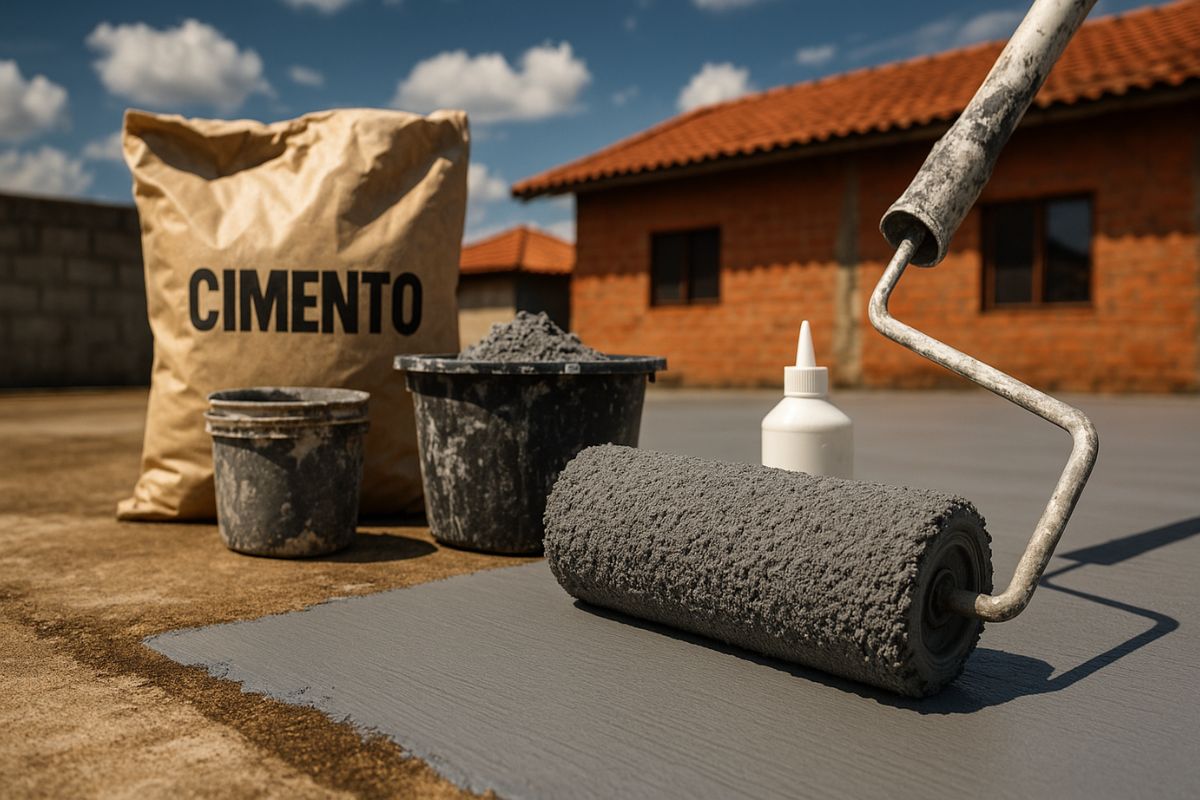


Homemade Paint Becomes a Trend in Construction with Simple Mixture of Mortar, Cement, and White Glue
With AC3 mortar, regular cement, powder pigment, and white wood glue, homemade paint becomes a trend among painters, remodelers, and homeowners who want to cover floors, slabs, and walls with high resistance, quick drying, and strong coverage while spending very little.
The proposal is to use leftover materials from construction, such as scraps of mortar and cement, to create a thicker textured paint capable of waterproofing small infiltrations, protecting exposed slabs, and renewing sidewalks and internal and external walls. In many tests shown in videos, this homemade paint becomes a trend precisely because it delivers a visually uniform finish and good adhesion at a much lower cost than conventional floor paints.
Why Homemade Paint Becomes a Trend in Construction and Renovations
The first reason why homemade paint becomes a trend is cost.
-
China has deployed more than 1,400 fishing boats in formation, creating a barrier of 320 kilometers at sea, and the whole world wants to know if this is fishing, a military exercise, or a message of war.

-
Spain surprises the world by erecting 62 artificial dunes, mixing sand with natural remains of posidonia, and causing the structure to lose only 1.4% of its volume in 1 year.

-
With 16 Bulava missiles, improvements in acoustic stealth, and a design focused on silent patrols, Russia’s nuclear submarine was born to ensure Moscow’s invisible retaliation and has become one of the pillars of its maritime strength.

-
‘Populous’ city in Rio among the worst in Brazil in national ranking and exposes silent development crisis.


With leftover AC3 mortar, cement, and a good quality white glue, the applicator can prepare a considerable amount of product spending less than ten reais per measure, taking advantage of materials that would usually be forgotten in the corner of the storage.
The second point is versatility.
This recipe is presented as a solution for floors, slabs, sidewalks, and walls, both indoors and outdoors, as long as the substrate is clean and well-prepared.
By applying two or three coats, the reported result is a resistant layer that even helps to hold infiltrations on more critical surfaces, such as walls with recurring moisture and exposed fiber cement tiles.
Basic Ingredients: What Goes into Homemade Paint
The base of the mixture that makes homemade paint become a trend is simple and is shown step by step:
The AC3 mortar acts as the skeleton of the mixture, ensuring adhesion to the floor, slab, or wall and contributing to the mechanical resistance of the film.
Next, the cement is added in the same container in a proportion close to half the measure in relation to the mortar.
The cement reinforces the hardness of the final layer and helps compose the background color, especially when the mixture used is gray.
Water is added in two stages, always in a controlled amount.
In the example shown, the mixture is made using a container full of water, applied initially by half and then completed to the appropriate point.
The powder pigment is added to define the color, and it can be red, green, or another shade, always well mixed to avoid stains.
The white wood glue is added only after the mixture is well homogenized with water and pigment.
Small measures in milliliters are used, added at the end, with the mixture already blended.
This glue acts as an extra binder, improving the paint’s adhesion to the substrate and reducing the risk of crumbling or peeling.
Measures for Homemade Paint
Solid Base
1 container full of AC3 mortar
The same container serves as the unit for all subsequent measures.
½ container of cement
Can be any regular cement. If using white mortar, the paint will already be light and facilitate pigmentation.
Water
1 container of water in total, divided as follows:
• First: ½ container of water
• Then: the other ½ container
The consistency variation depends on the water:
• Less water = thicker paint
• More water = thinner paint
Pigment
Powder pigment, quantity to taste — usually 1 to 2 tablespoons already give a strong color.
In the video, green pigment was used.
White Glue (PVA / Wood Glue)
The measure used is 180 ml of glue.
The reference is:
• Each small measurement in the video is equivalent to 60 ml
• He used 3 measures, totaling 180 ml
The glue is always added last, after the mixture is completely homogeneous.
Summary of Proportions
• 1 container of AC3 mortar
• ½ container of cement
• 1 container of water (half + half)
• Pigment until the desired color is achieved
• 180 ml of white glue
How to Prepare the Mixture for Homemade Paint to Work Well
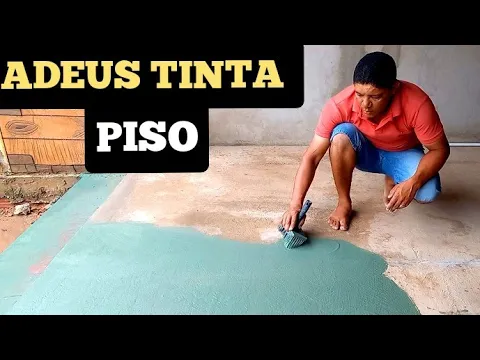

The mixing point is one of the secrets for homemade paint to become a trend among those testing the recipe.
The applicator recommends mixing the mass for four to five minutes, with a piece of wood or a specific mixer, until everything is uniform, without dry lumps.
The guidance is not to add all the water at once if the idea is to achieve thicker paint.
Those needing a denser coverage can reduce the water a bit, while those seeking more fluid application can add a little more liquid until reaching the desired viscosity.
The white glue is added only at the end, once the mixture is smooth, to avoid clumping.
When the right point is achieved, the paint is creamy, spreads well with a roller or brush and does not run excessively. This balance is essential to ensure good coverage with few coats and avoid waste.
Preparation of the Floor, Slab, or Wall Before Application
It is not enough that homemade paint becomes a trend on the internet if the surface is not prepared.
In the original video, care with the substrate is presented as an essential part of the process.
On the floor, the first step is to sweep well, removing loose dust and debris.
If the area is very dirty or stained, it is recommended to wash with soap, scrub with a brush, and rinse with a hose, letting it dry partially.
Once the area is clean, the applicator lightly moistens the floor with water before starting the painting, using a brush.
The same concept applies to walls and slabs: cleaning, removing loose dust, removing grease stains, and lightly moistening the surface helps with adhesion.
For fiber cement tiles, the same logic is used to address infiltrations, forming an extra layer of protection.
The important warning is that this paint is not recommended for glazed ceramic.
On this type of coating, adhesion is more difficult, and the result may not be satisfactory.
Conversely, on concrete sidewalks, rough slabs, plastered walls, and rustic floors, the anchoring tends to be much better.
How Many Coats to Apply, Drying Time, and Approximate Yield
One of the factors that make homemade paint become a trend is the balance between yield and visual result.
In the step-by-step, the recommendation is to apply at least two coats, which can go up to three in cases of more stubborn infiltrations.
The first coat is applied in a single direction, with a roller or brush.
After an interval of about 30 to 40 minutes, when the surface is drier to the touch, the second coat is applied, crossed with respect to the first.
If there are still signs of moisture or infiltration, two additional coats can be applied, always respecting the drying interval and alternating the direction of application.
Reports indicate that, after this reinforcement, many walls and slabs with recurring infiltration show much better performance, with a visible reduction in water passing through.
In terms of yield, one measure of mixture is estimated to cover around 10 square meters, depending on dilution and surface texture.
Since most ingredients can come from construction leftovers, the final cost per painted area is quite low compared to commercial paints specifically for floors or slabs.
Where Homemade Paint Has Been Standing Out in Practice
In the examples shown in videos, homemade paint becomes a trend mainly in low-cost renovations, simple houses, residential sidewalks, and exposed slabs in peripheral areas or self-construction.
The applicator reports using the batch as a kind of studio, painting, testing, and then removing it to show new recipes on different surfaces.
Furthermore, comments from those who reproduced the mixture indicate use in kitchens, bathrooms, service areas, and uncovered slabs, with reports that the paint holds well on rustic floors, facilitates cleaning, and improves the appearance of places previously marked by mold and infiltration.
The formula gains traction precisely because it is simple, repeatable, and adjustable, without relying on expensive equipment or professional tools.
It is not about replacing all professional painting and waterproofing solutions, but about offering a middle ground for those who need to renew an area and have a limited budget available.
In many cases, the main advantage is transforming leftover material into useful protection, extending the lifespan of surfaces that were already quite compromised.
Ultimately, this combination of AC3 mortar, cement, pigment, water, and white glue helps explain why homemade paint becomes a trend in so many renovation videos and among those who like to solve problems in their homes themselves.
And you, have you thought about trying a recipe where homemade paint becomes a trend to renew a floor, slab, or wall while spending the minimum possible?







Já fiz, só que no lugar da água usei fundo preparador de parede, diluído com 30% de água, o fundo preparador ajuda a aglutinar as partes que queiram ficar soltas, dando mais firmeza a todos o processo ok! Meu whatsapp é 48 991855018 Robson.
Está aí a prova de que a educação no Brasil é uma M*. A maioria das pessoas não consegue entender um texto simples e bem explicado. Quando se junta conceitos relacionados à matemática então aí é que a coisa fica f.e.i.a. A vasilha não tem medida definida porque depende da quantidade final de tinta que você deseja. Mas usando a mesma vasilha para todas as medidas esse dado não importa.
Vai Braziu!!ziu!!ziu!!
Achei bem interessante, porém surgiu uma duvida:
A medida informada da para qual metragem ?