





 Portuguese
  English
  Spanish
  5 min of reading
  0 comments


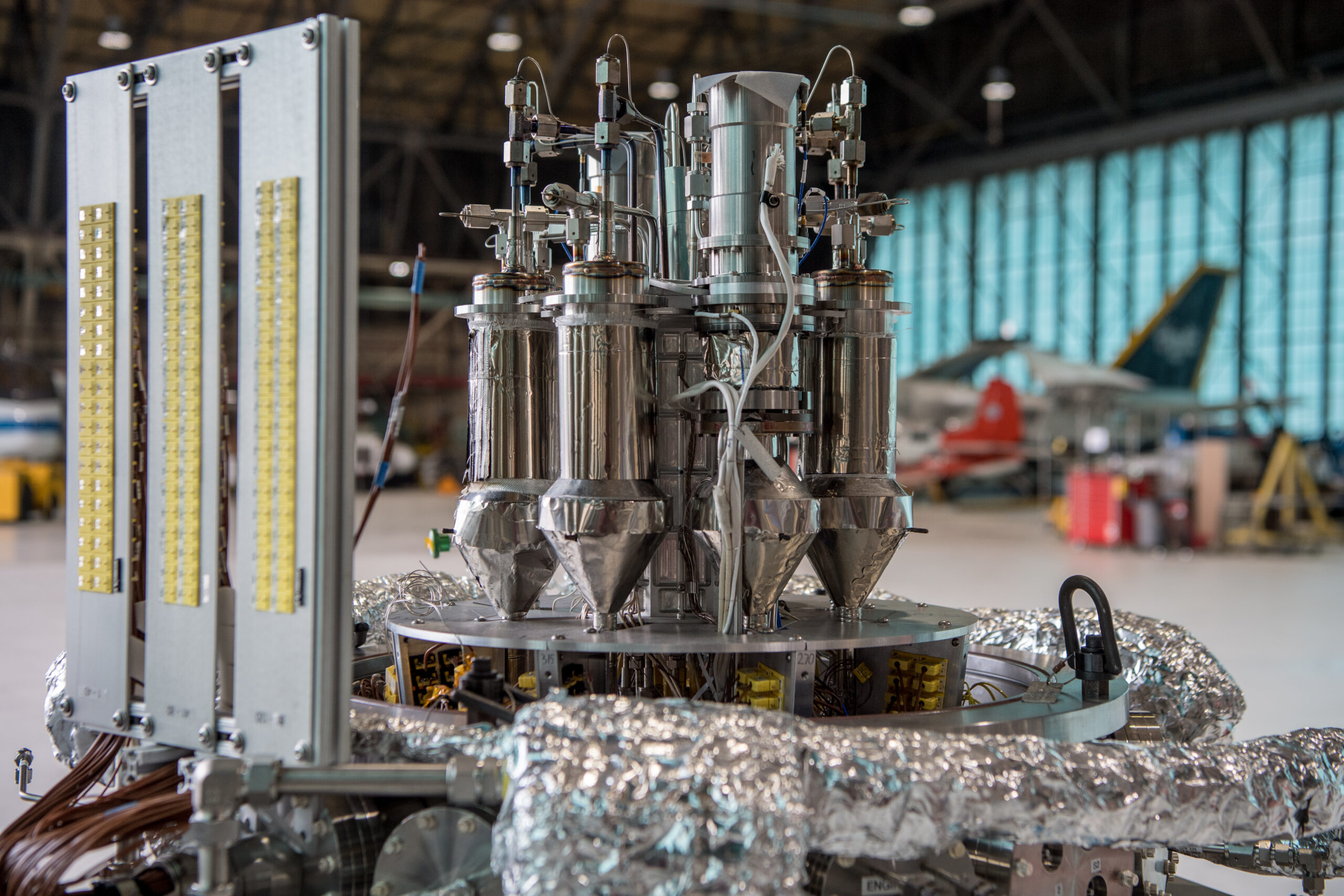
NASA’s Kilopower Project Tests Space Nuclear Reactor of Up to 10 kW to Provide Continuous Power to Bases on the Moon and Mars.
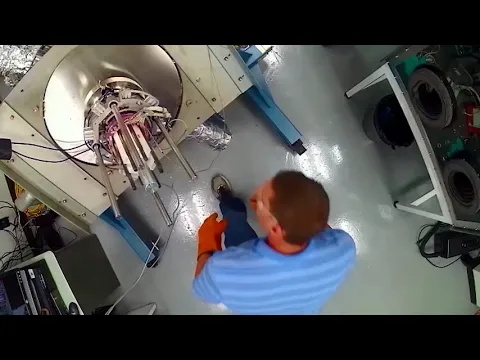
In January 2018, NASA, in partnership with the United States Department of Energy (DOE), announced the successful completion of the KRUSTY testing series (Kilopower Reactor Using Stirling Technology) at the Nevada National Security Site. The experiment validated the operation of the Kilopower space nuclear reactor, designed to generate up to 10 kilowatts of electrical power per module using a compact solid uranium-235 core. The information was officially disclosed by NASA and the DOE, confirming that the system achieved full power in a controlled test environment. The declared goal is to develop a reliable power source for long-duration missions on the Moon and Mars, especially in regions where solar power becomes intermittent or insufficient.
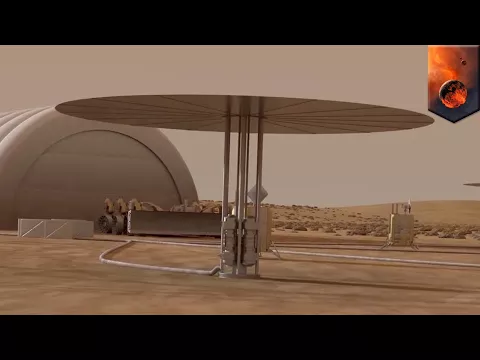
The Kilopower represents a strategic shift in space energy infrastructure. Unlike solar panels that depend on diurnal cycles and atmospheric conditions, a compact fission reactor can operate continuously, providing stable electricity for habitats, life support systems, communications, and scientific equipment.
Technical and Historical Context of Space Nuclear Energy
The use of nuclear energy in space is not new. Since the 1960s, NASA missions have employed radioisotope thermoelectric generators (RTGs) in probes like Voyager and Curiosity. These devices convert heat from radioactive decay into electricity, but they operate at relatively low powers, typically below 1 kW.
-
Motorola launched the Signature with a gold seal from DxOMark, tying with the iPhone 17 Pro in camera performance, Snapdragon 8 Gen 5 that surpassed 3 million in benchmarks, and a zoom that impresses even at night.

-
Satellites reveal beneath the Sahara a giant river buried for thousands of kilometers: study shows that the largest hot desert on the planet was once traversed by a river system comparable to the largest on Earth.

-
Scientists have captured something never seen in space: newly born stars are creating gigantic rings of light a thousand times larger than the distance between the Earth and the Sun, and this changes everything we knew about stellar birth.

-
Geologists find traces of a continent that disappeared 155 million years ago after separating from Australia and reveal that it did not sink, but broke into fragments scattered across Southeast Asia.

The Kilopower emerges as a higher power alternative, based on controlled nuclear fission, rather than just radioactive decay. While RTGs rely on small amounts of plutonium-238, the Kilopower uses enriched uranium-235 as fuel, allowing a controlled chain reaction.

The technical difference is fundamental. Nuclear fission releases energy from the splitting of atomic nuclei, generating intense heat that can be converted into electricity more efficiently than RTGs. This capability makes Kilopower suitable for permanent infrastructure on planetary surfaces.
Physical Process of Fission and Energy Generation in Kilopower
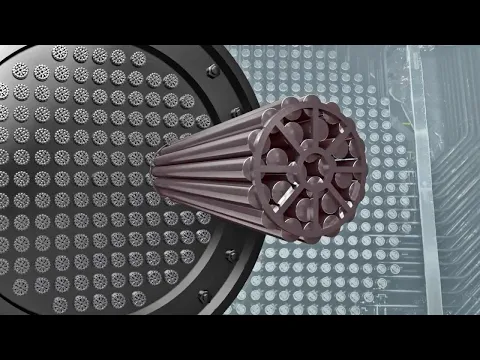
At the core of the system is a solid uranium-235 core with a compact cylindrical geometry. When neutrons hit the uranium nuclei, fission occurs, releasing thermal energy and new neutrons that sustain the chain reaction.
The control of the reaction is achieved through control rods and neutron reflectors. During the KRUSTY tests, the reactor was gradually raised to a maximum power of about 10 kW electrical, demonstrating thermal stability.
The heat generated by fission is transferred through passive heat pipes to a set of Stirling converters. These engines utilize the expansion and contraction of an internal gas to drive electrical generators. The Stirling conversion was chosen for its efficiency and mechanical reliability.
Thermal dissipation is a critical challenge in the space environment. In a vacuum, there is no atmospheric convection. The system relies on radiators to release residual heat through thermal radiation. Thermal balance is essential to prevent overheating of the core.
Applied Technology and Engineering of the Compact System
The Kilopower design prioritizes structural simplicity and reliability. Unlike complex terrestrial reactors, the system was designed for autonomous operation with minimal moving parts.
The compact core reduces the total mass of the system, a crucial factor for space launches. Each module of up to 10 kW can be combined with others to form a microgrid. For an initial lunar base, NASA estimates that four units could provide about 40 kW, sufficient power for habitats and basic scientific equipment.
Safety was one of the main focuses in the 2018 tests. The reactor remains subcritical until deployment at the operation site. The fuel is configured to prevent uncontrolled chain reactions during launch.
The conversion by Stirling engines also reduces the need for complex turbines. The system is designed to operate for at least 10 years without refueling, a crucial feature for Mars missions where direct maintenance is limited.
Energy Scale, Strategic Impact, and Future Applications
The 10 kW refers to the electrical capacity per individual module, not to national or industrial output. This is a unit capacity designed for space applications. For comparison, 10 kW can power dozens of small homes on Earth, but in an extraterrestrial environment, they represent critical infrastructure.
In the polar regions of the Moon, where nights can last approximately 14 Earth days, solar panels face severe limitations. A nuclear reactor ensures continuous supply, regardless of solar illumination.
In the case of Mars, global dust storms can drastically reduce solar generation, as occurred with the Opportunity rover. The Kilopower eliminates this energy vulnerability.
From a geopolitical perspective, the ability to maintain permanent bases with portable nuclear power enhances the strategic autonomy of the United States in future disputes over lunar presence. Other countries are also exploring nuclear alternatives for deep missions.
Technical Challenges and Future Implications of Space Nuclear Energy
Despite the success of the KRUSTY tests, challenges remain. The safe launch of nuclear material requires strict protocols. Any catastrophic failure during ascent could generate political controversy.
Heat dissipation in planetary environments with thin atmospheres, like Mars, requires careful thermal engineering. The radiation from the reactor must be adequately shielded to protect crews.
Another critical point is international acceptance. Space treaties impose limits and require transparency regarding the use of nuclear materials in space.
NASA, however, continues to view nuclear energy as an essential component of the Artemis program and future crewed missions to Mars. Recent studies indicate a need for energy systems between 40 and 100 kW for more robust bases.
The Kilopower represents the transition from episodic space exploration to permanent energy infrastructure beyond Earth. With up to 10 kW per module, a compact solid uranium-235 core, and efficient conversion via Stirling engines, the system demonstrates that nuclear fission can be miniaturized and adapted to the extraterrestrial environment.
The experimental validation at the Nevada National Security Site marked a decisive step toward energy autonomy on planetary surfaces. In a scenario of returning to the Moon and future human presence on Mars, energy shifts from being a technological accessory to becoming the structural foundation of space colonization.








Seja o primeiro a reagir!